AI
Investor`s perspective: highlights from ICE Barcelona 2026


The Investments team at RedCore held dozens of meetings at ICE Barcelona with projects from MarTech/Traffic, iGaming, AI/ML, and RegTech. We share our observations on the direction of the market and changes in the approach of startups.
Technology is the main trend
The products at the conference focused on offering fundamentally new solutions rather than competing head-on. There were a huge number of game providers, but the ones that attracted attention were those betting on technological innovation.
“The trend is clear: products are trying to offer something completely new, rather than just competing in their niche,” notes Andrei Alexandrov, Investment Portfolio Manager at RedCore.
The influx of incoming applications confirmed this: even without a targeted search, most projects fell within the fund`s priority areas — MarTech/Traffic, iGaming solutions, AI/ML, and RegTech.
AI and data are changing the traffic game
At iGB Affiliate, which ran parallel to ICE, AI solutions for traffic were everywhere: trackers, predictive models, player behavior analysis panels. This reflects the maturity of the market — traffic optimization is no longer possible without ML/AI approaches.
The main competitive asset today is data and segmentation. Those who segment more deeply, personalize, and truly understand the behavior of their audience will win. Granular data, behavior by micro-segments, is no longer a “nice-to-have” but a necessity.
“Affiliates are increasingly acting not just as CPA traffic partners, but as full-fledged marketing experts who use data and content to improve engagement,” notes Iryna Yeromenko, Investment Portfolio Manager at RedCore.
Startups have become more mature
Just a few years ago, conferences were often attended by teams with raw ideas. Now the situation has changed: founders come with well-developed pitches, clear business models, and a clear understanding of the market.
“Startups are particularly impressive this year: everyone comes prepared and tries to present themselves in the best way. There was almost no one who came with just an idea,” says Andrei Alexandrov. “Some said that we are their priority fund. This level of trust confirms that we are moving in the right direction.”
Record dealflow, but quality is more important
The volume of incoming applications for ICE Barcelona exceeded the total for all other events last year. But a large flow also means risk: without clear selection criteria, it is easy to waste time on irrelevant projects.
“There are a lot of introductions, pitches, and “let`s talk”. At the same time, it is important to remember that quantity does not equal quality. ICE reinforces the need for strict investment filtering, as without clear criteria, it is easy to get lost in the noise,” explains Oleksandr Briukhovetskyi, Investment Portfolio Manager at RedCore.
This principle also works in traffic: the best affiliates focus on data strategies, mobile-first and video-first content, as well as player behavior patterns. Affiliates get access to more metrics, which lets them buy better traffic.
Long-term value instead of quick deals
ICE Barcelona isn`t about closing deals on the spot. The main value of the conference lies in the opportunity to create the foundation for partnerships for the next 6–12 months.
“Conferences bring strategic value. In terms of the density of quality contacts, long-term deals, and relevant contextual conversations, they are confidently ahead of most other channels,” — notes Oleksandr Briukhovetskyi.
Industry boundaries are blurring
ICE attracts a large number of cross-industry projects that are not formally related to iGaming but seek to integrate into this market. This creates new opportunities for investors who can see synergies between different verticals.
“ICE is a rare case where all elements of the iGaming chain are gathered in one space: operators, providers, payments, RegTech, AI, traffic, media buying, crypto, Web3. The boundaries of the industry are blurring right in front of our eyes,” Oleksandr sums up.
Where is the market headed
The market is moving towards consolidation. The trend towards aggregators and super apps is growing stronger, and now AI has joined the mix. The greatest potential lies in automated management systems, data aggregators, big data products, and predictive analytics.
In iGaming, there is growing demand for infrastructure solutions: tools for Retention, Customer Support, Antifraud, Responsible Gaming, and regulation. There is particular interest in products that allow operators to independently create loyalty systems, custom games, and analytics.
The focus of investors has shifted. Previously, they pursued ideas, but now expertise and team stability matter more. The number of startups has grown, as it is easier than ever to create an MVP in the AI era. Therefore, Due Diligence is critical: how well does the product solve a real market problem, and whether the team is ready to develop and monetize it.
Are you building a product in MarTech, iGaming, AI/ML, or RegTech? Tell the Investments team at RedCore about your project: https://redcore.group/lets-cooperate/
The post Investor`s perspective: highlights from ICE Barcelona 2026 appeared first on Eastern European Gaming | Global iGaming & Tech Intelligence Hub.









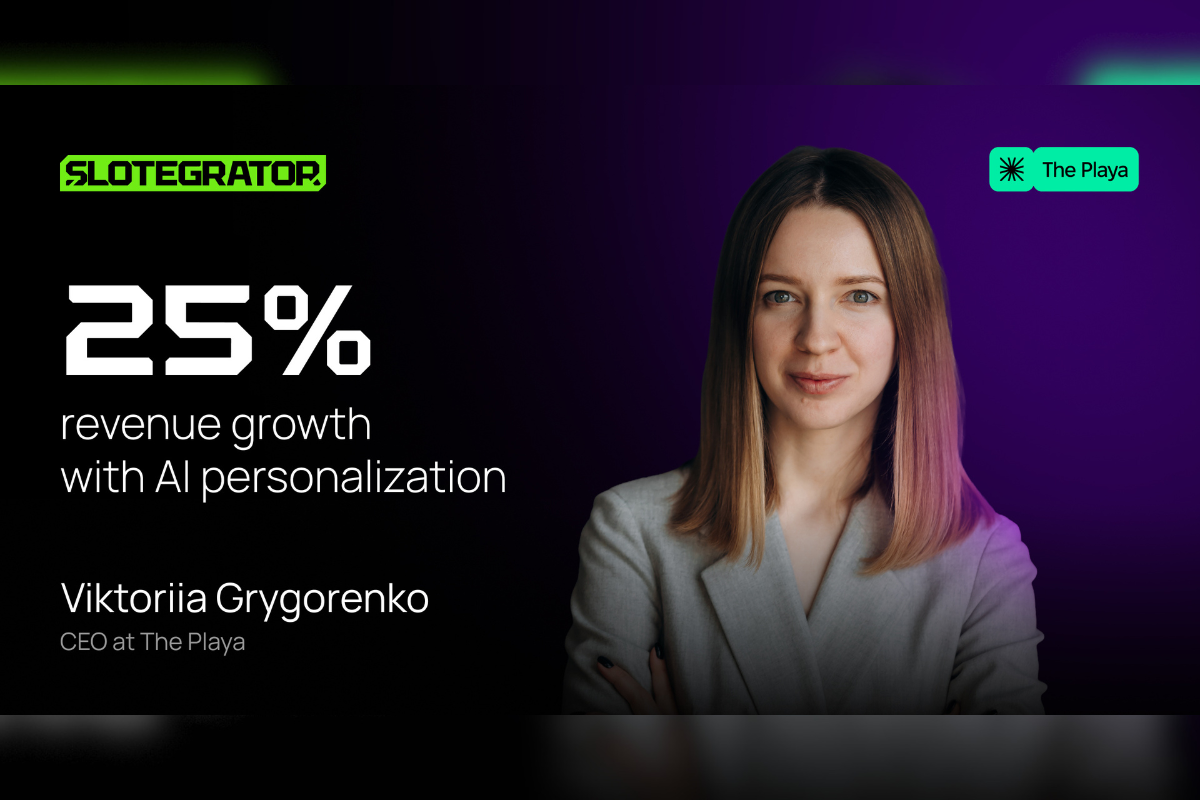
As player expectations rise, generic casino lobbies are no longer enough — AI-driven personalization is becoming essential to engage, retain, and grow audiences.
In this evolving landscape, The Playa is positioning itself at the forefront of iGaming personalization. Slotegrator spoke with Viktoriia Grygorenko, CEO, about the company’s journey, emerging industry trends, and how data-driven experiences can boost revenue by up to 25%, and often beyond.
Founded at the intersection of artificial intelligence and iGaming, The Playa started as a small experimental project and quickly grew into a full-scale platform. Today, the company delivers solutions across the entire player lifecycle — from lobby personalization and acquisition intelligence to VIP insights and retention optimization — serving operators with a monthly GGR of over $10 million.
According to Viktoriia, the industry has long underutilized one of its most valuable assets: player data. “iGaming generates enormous amounts of behavioral data — from game preferences to betting patterns — but most operators still rely on basic segmentation,” she explains. “That’s a missed opportunity.”
The gap is even more obvious compared to global entertainment platforms competing for audience attention. As Viktoriia points out, top companies invest billions in learning what their users want and delivering it instantly, while many online casinos offer identical experiences to all players. However, the industry is beginning to catch up.
Internal research by The Playa shows that 77% of iGaming companies leaders believe AI will be a key competitive advantage within the next two to three years. At the same time, major operators are rapidly expanding their data science capabilities — a clear signal of where the market is heading.
Beyond technology, player behavior itself is evolving. A new generation of users is entering the market, bringing different expectations around user experience. Behavioral data can reveal differences in preferences and risk patterns — opening the door to more effective personalization strategies.
Looking ahead to 2026, Viktoriia highlights three major trends shaping the industry: a stronger focus on retention, the rise of true one-to-one personalization, and a redefinition of loyalty. Retention, in particular, is becoming critical as rising acquisition costs and tighter regulations put pressure on margins.
Read the full interview to discover how The Playa is transforming player experiences with AI-driven personalization and why growth in iGaming depends on understanding players at every step of their journey.
Contact Slotegrator to learn how customized solutions can help grow your business.
Slotegrator
ABOUT THE COMPANY
Since 2012, Slotegrator has been one of the iGaming industry’s leading software and business solution providers for online casino and sportsbook operators.
The company’s main focus is software development and support for online casino platforms, as well as the integration of game content and payment systems.
The company works with licensed game developers and offers a vast portfolio of casino content: slots, live casino games, poker, virtual sports, table games, lotteries, casual games, and data feeds for betting.
Slotegrator also provides consulting services in gambling license acquisition and business incorporation.
ABOUT THE PLAYA
The Playa is a leading iGaming company specializing in AI-powered personalization solutions, enabling operators to deliver tailored player experiences across the full lifecycle — from lobby personalization and acquisition intelligence to VIP insights and retention optimization.
Through advanced behavioral profiling and personalized player recommendations, the company provides iGaming operators with the tools they need to grow, retain players, and maximize revenue.
The post The Playa for Slotegrator: why personalized player experiences are the future of growth appeared first on Eastern European Gaming | Global iGaming & Tech Intelligence Hub.

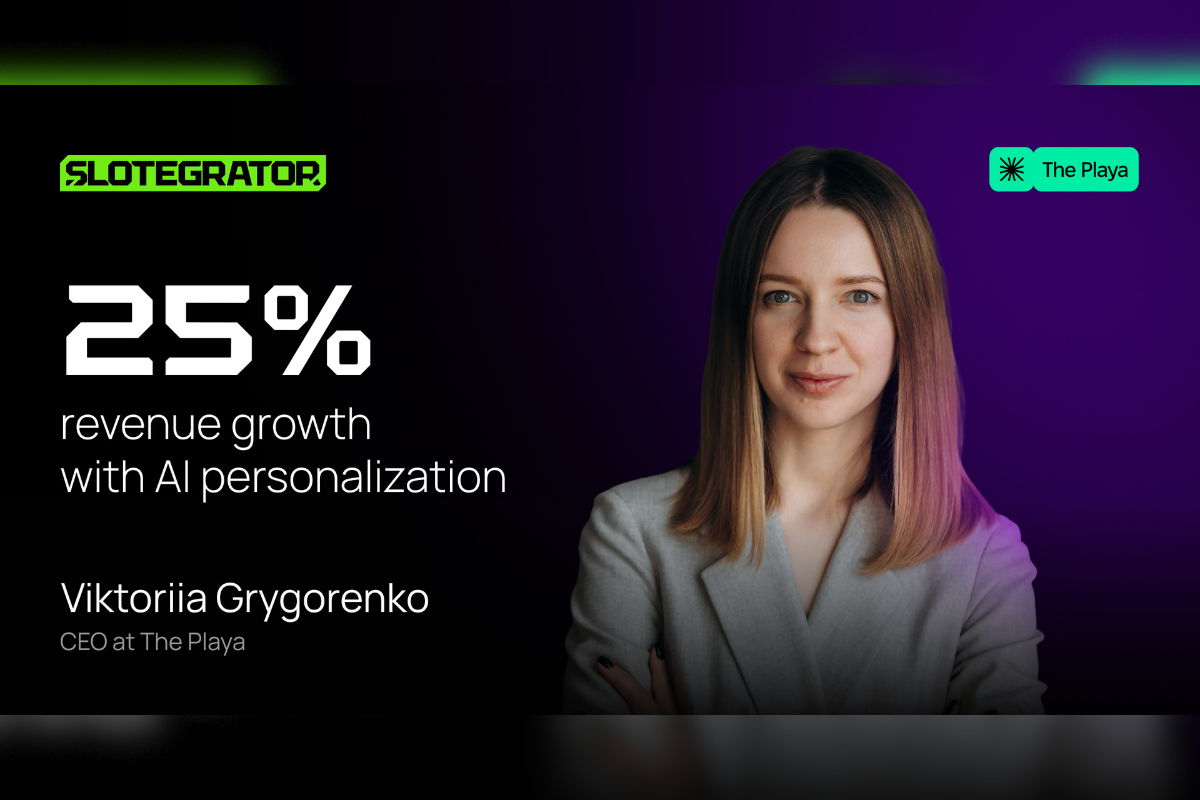
As player expectations rise, generic casino lobbies are no longer enough — AI-driven personalization is becoming essential to engage, retain, and grow audiences.
In this evolving landscape, The Playa is positioning itself at the forefront of iGaming personalization. Slotegrator spoke with Viktoriia Grygorenko, CEO, about the company’s journey, emerging industry trends, and how data-driven experiences can boost revenue by up to 25%, and often beyond.
Founded at the intersection of artificial intelligence and iGaming, The Playa started as a small experimental project and quickly grew into a full-scale platform. Today, the company delivers solutions across the entire player lifecycle — from lobby personalization and acquisition intelligence to VIP insights and retention optimization — serving operators with a monthly GGR of over $10 million.
According to Viktoriia, the industry has long underutilized one of its most valuable assets: player data. “iGaming generates enormous amounts of behavioral data — from game preferences to betting patterns — but most operators still rely on basic segmentation,” she explains. “That’s a missed opportunity.”
The gap is even more obvious compared to global entertainment platforms competing for audience attention. As Viktoriia points out, top companies invest billions in learning what their users want and delivering it instantly, while many online casinos offer identical experiences to all players. However, the industry is beginning to catch up.
Internal research by The Playa shows that 77% of iGaming companies leaders believe AI will be a key competitive advantage within the next two to three years. At the same time, major operators are rapidly expanding their data science capabilities — a clear signal of where the market is heading.
Beyond technology, player behavior itself is evolving. A new generation of users is entering the market, bringing different expectations around user experience. Behavioral data can reveal differences in preferences and risk patterns — opening the door to more effective personalization strategies.
Looking ahead to 2026, Viktoriia highlights three major trends shaping the industry: a stronger focus on retention, the rise of true one-to-one personalization, and a redefinition of loyalty. Retention, in particular, is becoming critical as rising acquisition costs and tighter regulations put pressure on margins.
Read the full interview to discover how The Playa is transforming player experiences with AI-driven personalization and why growth in iGaming depends on understanding players at every step of their journey.
Contact Slotegrator to learn how customized solutions can help grow your business.
Slotegrator
ABOUT THE COMPANY
Since 2012, Slotegrator has been one of the iGaming industry’s leading software and business solution providers for online casino and sportsbook operators.
The company’s main focus is software development and support for online casino platforms, as well as the integration of game content and payment systems.
The company works with licensed game developers and offers a vast portfolio of casino content: slots, live casino games, poker, virtual sports, table games, lotteries, casual games, and data feeds for betting.
Slotegrator also provides consulting services in gambling license acquisition and business incorporation.
ABOUT THE PLAYA
The Playa is a leading iGaming company specializing in AI-powered personalization solutions, enabling operators to deliver tailored player experiences across the full lifecycle — from lobby personalization and acquisition intelligence to VIP insights and retention optimization.
Through advanced behavioral profiling and personalized player recommendations, the company provides iGaming operators with the tools they need to grow, retain players, and maximize revenue.
The post The Playa for Slotegrator: why personalized player experiences are the future of growth appeared first on Americas iGaming & Sports Betting News.
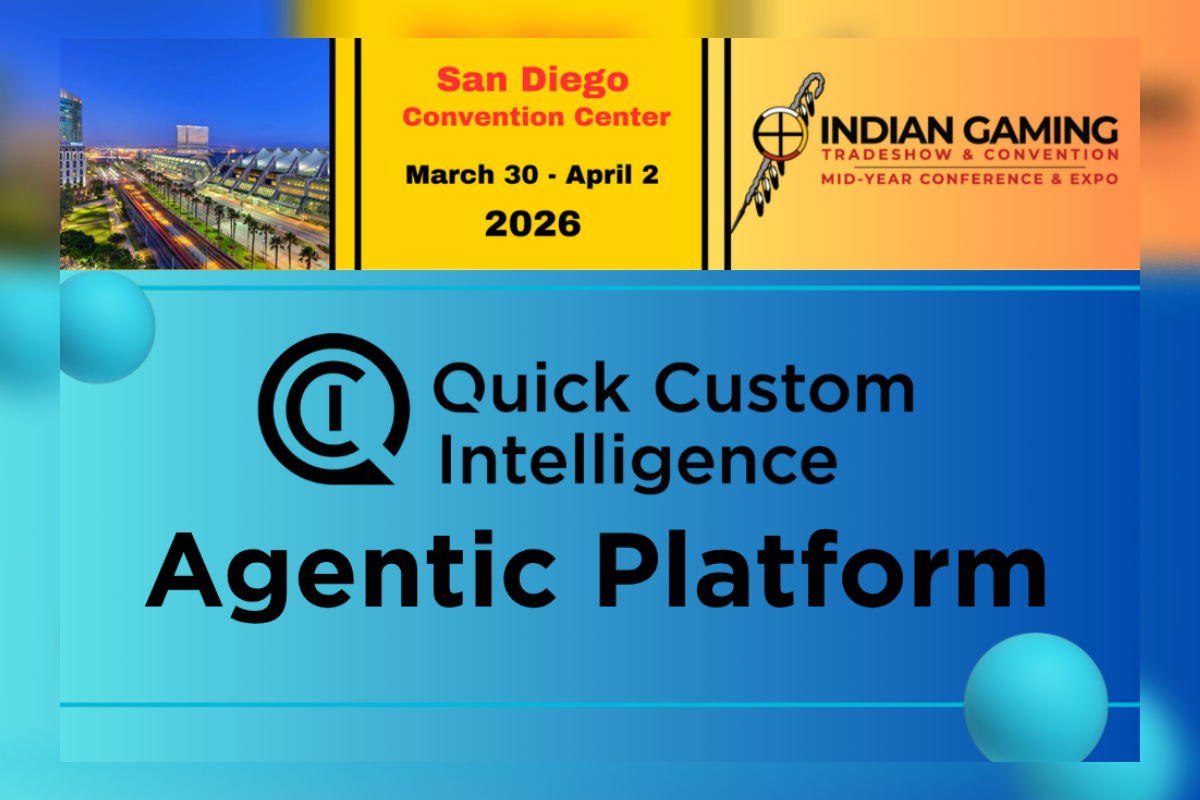
Quick Custom Intelligence (QCI), a leading provider of AI-driven operations software for tribal gaming resorts, announced it will showcase its evolving QCI Agentic Platform at the Indian Gaming Association (IGA) Tradeshow & Convention, March 31–April 2, 2026, at the San Diego Convention Center (Booth #2735).
The QCI Agentic Platform reflects the continued advancement of the company’s enterprise system, enabling operators to move from real-time insight to real-time action across gaming, marketing, player development, and hotel operations. Designed for on-premise and hybrid environments, the platform supports secure, property-level AI deployment while maintaining full operational control.
Rather than introducing a new system, QCI’s approach extends the capabilities operators already use—bringing analysis and execution closer together within a unified operational environment.
“This is a continuation of the platform our customers already rely on. We’re building on what works and extending it, so operators can act on information faster, without changing the way their business runs,” said Dr. Ralph Thomas, Co-Founder and CEO of QCI.
The QCI Agentic Platform builds on QCI’s established product suite, including:
• AGI56.1, a major platform release featuring more than 1000 enhancements across operations
• Chatalytics, QCI’s conversational analytics interface for real-time data access
• QCI Dispatch, a new core operational tool supporting real-time coordination and execution
Together, these capabilities enable operators to unify data, streamline workflows, and respond more quickly to changing conditions across the property.
Attendees will experience how QCI connects data, decision-making, and execution within a single operational system.
“We’re focused on practical improvements that help teams do their jobs more effectively. This is about making systems more responsive, more connected, and easier to use in day-to-day operations,” added Thomas.
The post QCI to Showcase Agentic Platform Capabilities at IGA 2026 appeared first on Americas iGaming & Sports Betting News.

-

 Booming Games6 days ago
Booming Games releases Ultra Buffalo Hold and Win
-
Baroness Fiona Twycross6 days ago
BGC AGM 2026 Discussed About Surging Illegal Gambling Black Market
-
Big Time Gaming6 days ago
BTG brings iconic board game action to the reels with MONOPOLY MEGAPOTS™
-
Latest News5 days ago
ELA Games Contributes to Discussions on Scalable iGaming Ecosystems and Studio Innovation at HIPTHER Prague Summit
-
Bonus Rush7 days ago
RAW iGaming launches BONUS RUSH® – a new family of feature-focused games
-
Arkansas7 days ago
CATALIST SPORTS SECURES NEW SUPPLIER LICENSES IN ARKANSAS AND NEBRASKA
-
Brazil7 days ago
EGT to showcase its gaming portfolio for Brazil at SiGMA Americas 2026
-
Brazil5 days ago
Brazil advances integrity agenda amid strong market growth