Europe
JOI gaming Teams Up with Trustly to Deliver Next-Level Payment Experience in the Netherlands


Reading Time: < 1 minute
JOI gaming, part of the JVH gaming & entertainment Group, has chosen Trustly as its main payment provider for the Dutch market. The partnership enables seamless iDEAL deposits and instant payouts, underscoring JOI gaming’s commitment to speed, security, and player convenience.
Elevating the Player Experience
Through Trustly’s open banking network and access to Dutch instant payment schemes, JOI gaming players can withdraw winnings 24/7, with funds transferred directly to their bank accounts in real time. With industry data showing that players view payout speed as critical, this move positions JOI gaming ahead in a highly competitive market.
Security and Compliance
In addition to speed, the collaboration enhances player trust. Trustly’s direct, encrypted transfers reduce fraud risk and support strict KYC and AML requirements, ensuring payments are both seamless and secure.
Executive Voices “At JOI gaming, we put players at the heart of our decisions. Partnering with Trustly means we can deliver the fast, secure, and seamless payment experience our customers value, 24/7,” said Eric Olders, CEO & Chairman of JVH gaming & entertainment Group and founder of JOI gaming.
Vasilije Lekovic, VP of Gaming at Trustly, added: “The partnership with JOI gaming strengthens our position as the leading payment provider for online gambling in The Netherlands. With instant payments, iDEAL, and open banking data in one package, we’re confident we’ll add value for JOI gaming and its players.”
The post JOI gaming Teams Up with Trustly to Deliver Next-Level Payment Experience in the Netherlands appeared first on European Gaming Industry News.













Groove says it has surpassed 20,000 casino titles on its aggregation platform, up from 15,000 games two years ago. The company said the library now includes content from more than 150 providers and is available to partners worldwide through a single API.
According to Groove, the portfolio spans slots, instant wins, table games, crash games, live dealer and arcade-style content, alongside “emerging verticals including sweepstakes and crypto-native content.” The company said the catalogue is delivered through “one API, one back office, one pipeline,” and positioned the milestone as a curated expansion rather than a volume play.
Rachel Tourgeman, Head of Partnerships at Groove, said: “Twenty thousand games is a number. What matters is what sits behind it…” She added: “We don’t add studios for the sake of volume. We add them because they bring something distinctive: a mechanical innovation, a visual language, a player-engagement hook that our operators can’t get elsewhere. Our partners trust us to curate, not just collect. That trust is why we keep growing, and why the quality curve keeps rising alongside the quantity curve.”
Groove pointed to recent integrations including KingMidas Games (150+ mobile-first titles), Urgent Games and Bryogames, which it said offers “proprietary mathematics with real-time RTP customisation.” For operators, Groove said the full library is accessible via Groove Command, its centralised back-office product, with tools including content matching, regional segmentation and automated tournaments.
Yahale Meltzer, Co-Founder and CEO of Groove, said: “The aggregation space is crowded with platforms that offer ‘access’ and little else,” adding: “Twenty thousand games through a single API is not just scale. It is a statement.” Meltzer also claimed Groove’s “technology stack with predictive auto-scaling, atomic transactions, real-time compliance mesh” supports execution “across fragmented regulatory landscapes with precision.”
The post Groove says its aggregator library passes 20,000 casino games appeared first on EE Gaming | Global iGaming & Tech Intelligence Hub.

The slow death of grey markets in Europe and the increasingly clear line between regulated spaces and the black market is set to divide the entire industry in two, including suppliers.
With almost all major European markets having adopted or being well on their way to enacting a full licensing regime for online gambling, the battle lines between what is on- and off-shore are clearer than ever.
For those nations that persist with restrictions on some sectors, like the continued monopoly in Norway or France’s ban on online casinos, it’s becoming nearly impossible to justify doing business in spite of these prohibitions – even for suppliers.
Regulators in the rest of Europe increasingly expect their licensees to follow not just their rules, but those of their fellow authorities across the continent.
Where once expectations of good behaviour were reserved exclusively for operators, B2B companies are now subject to the same scrutiny.
For the past few years, there has been a general building of pressure on suppliers, but this year B2B compliance has moved from a growing trend to become the status quo for the sector.
Where do you stand?
The industry is being asked to pick a side and even to play the role of regulator itself, in some cases.
“We understand that at least one piece of recent B2B regulatory enforcement [in the UK] may have come as a result of a B2C operator effectively reporting one of its suppliers,” said Andy Danson, the head of Bird & Bird’s international gambling practice.
It’s becoming clear that a meaningful percentage of operators have fully bought into the idea that those who continue to exist in European black or grey are threats to their bottom line.
Speaking on a recent webinar organised by his firm, Danson added: “There is an increasing use of commercial pressure and accountability alongside regulatory enforcement, and there is this growing expectation that licensed businesses consider who they support.”
Danson notes that, in his view, the burden on operators to self-police their industry is probably becoming too large.
“How much can a regulator really expect B2C licensees to regulate their suppliers? It is ultimately the regulator’s job to do that, and B2C really should be able to rely on their suppliers having a local license.”
This backwards pressure is also being exerted on suppliers in jurisdictions where they are required to obtain their own licenses.
Regulators expect suppliers not to sell their content to operators who service their local black market and look dimly on supplying companies active in illegal markets in any part of the world.
Gone are the days when these authorities would accept the excuse that aggregators are ultimately responsible for providing game content to these offshore operators. Instead, suppliers risk enforcement if they do not have oversight of the entire supply chain their products exist in.
Dealmakers
This pressure coming in from every angle leads to only one inevitable conclusion: M&A activity.
As suppliers are forced to choose either to abandon their high profit margin offshore clients or their reliable onshore customers, the possibility of dividing into two parts becomes more and more compelling.
“I think businesses will very likely look to separate and restructure, particularly where they currently have a real mix of regulated and unregulated market activities,” said Danson.
“We certainly saw similar trends five to ten years ago when the regulatory focus on this sort of issue was more on the B2B side,” he added.
This move would be driven partly by modern regulatory complexities, but also the impact of US investors entering the gambling market more prominently over the past five years.
US-based capital tends to be more skittish about any activity with uncertain regulatory backing and its law enforcement authorities are not shy about exerting their authority extraterritorially.
“International market exposure is becoming more and more relevant in an investment and M&A context,” Danson confirmed.
A dilemma
Those gambling businesses choosing the regulated environment are at least finding their authorities more willing than in previous years to take proactive action against the black market.
In the UK, the Gambling Commission has received a grant of £26m from the government to step up its work against illegal online gambling, for example.
Regulators are also understood to be sharing more information than ever before about the main bad actors afflicting their markets, through organizations like the Gambling Regulators Europe Forum (GREF).
Although it’s worth noting that officials also say they are swapping notes on the activities of their licence-holders as well, in yet a further example of international compliance becoming a local issue.
This, along with an atmosphere of zero compromise when it comes to tightening regulations, has created a situation where the choice between on- and off-shore is not a simple one.
Andy Danson summed up the problem: “By creating an environment which has become so burdensome and challenging for regulated markets to operate, and then challenging operators and suppliers to pick a side, regulators perhaps shouldn’t be all that surprised when some operators out there might not necessarily choose the side that they want them to.”
The post European Online Gambling Industry Faces Tough Offshore Choice appeared first on Eastern European Gaming | Global iGaming & Tech Intelligence Hub.

Neosurf has reorganised its operations as it prepares to scale products and expand across Europe and the Americas, the cash-to-digital payments provider said.
The company said the updated structure is intended to better support the rollout of “new market-ready products” and help it deliver its payment solutions “on a wider scale.” Neosurf did not disclose what specific organisational changes were made or whether the move affects headcount.
Neosurf also positioned the reorganisation as a way to improve agility in response to future regulatory changes, saying the company aims to remain flexible operationally and technologically as it moves into its “next major phase of its evolution.”
Andrea McGeachin, Global CEO at Neosurf, said: “As we continue to grow our new digital wallet products across Europe and the Americas, it’s important that our organisation evolves alongside our ambitions. Our new structure ensures that we’re built for agility, resilience, and long-term success, and we remain committed to our mission of bridging the gap between cash and digital payments with an optimised foundation that’s built to proactively anticipate and adapt to future regulatory change.”
Neosurf said it will share further updates on its plans “shortly.”
The post Neosurf reorganises operations as it targets Europe and the Americas expansion appeared first on Eastern European Gaming | Global iGaming & Tech Intelligence Hub.

-

 Affiliate Industry6 days ago
Hub Affiliations Triumphs at the iGB Affiliate Awards 2026: Winner of Programme/Network Campaign of the Year
-
Austria6 days ago
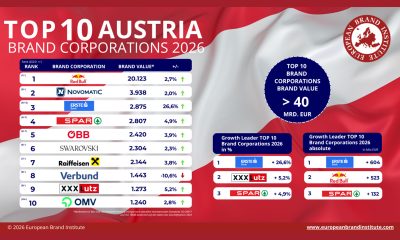
Austrian Brand Value Study: NOVOMATIC Defends Top Ranking
-
Latest News6 days ago
N1 Partners at iGB L!VE 2026: Bringing Together Affiliates, Art and Innovation
-
Africa7 days ago
PopOK Gaming sponsors Botswana’s TT Cup Challenge horse racing event
-
Amusnet6 days ago
Amusnet Releases its Latest Video Slot “Golden Snake”
-
Betsson CEO Pontus Lindwall7 days ago
Gaming in the Nordics launch event sets annual Copenhagen conference from 2027
-
Azerbaijani Parliament6 days ago
Azerbaijan to Impose Tougher Penalties for Illegal Online Gambling
-
Amusnet6 days ago
Weekend Reels | Week 27: Slot Drops & Trends