Latest News
SOFTSWISS Introduces Paid Participation Campaigns to Enhance Player Engagement


SOFTSWISS, a global tech company offering software solutions for the iGaming industry, announces the launch of a new feature within its Jackpot Aggregator: Paid Participation Campaigns. This major update is designed to expand entertainment options for players while creating additional revenue opportunities for operators.
The new functionality enables operators to launch Paid Participation Campaigns – a format in which players contribute an entry fee to join jackpots, prize drops, multi-prizes, or the Prime Network Jackpot. In addition to placing regular bets in the participating games, players voluntarily opt into these campaigns, creating a premium experience with a limited number of participants. This structure increases players’ chances of winning, making the experience more dynamic and personalised.
From the operator’s perspective, Paid Participation Campaigns unlock a new revenue stream. The fees collected from players are allocated toward funding the prize pool, reducing the operator’s financial exposure. In addition, operators benefit from long-term partnerships with game providers whose titles are featured in these campaigns, driving mutual engagement and promotion.
Building on the success of the Prime Network Jackpot, which utilised a shared prize pool funded by multiple operators, the new Paid Participation Campaigns introduce a sustainable model where the prize pool is financed directly through player contributions.
“Adding Paid Participation Campaigns expands our Jackpot Aggregator ecosystem with even more flexible engagement tools. Combined with existing mechanics like multi-prizes, drops, and others, operators now have a powerful toolkit to design retention strategies that match their brand goals and player preferences”, – says Angelina Stasiuk, Head of Business Line at SOFTSWISS Jackpot Aggregator.
With this launch, SOFTSWISS reinforces its position as a technology innovator in iGaming, offering operators new ways to create personalised, rewarding, and commercially sustainable player campaigns.
About SOFTSWISS
SOFTSWISS is an international technology company with over 15 years of experience developing innovative solutions for the iGaming industry. SOFTSWISS holds a number of gaming licences and provides comprehensive software for managing iGaming projects. The company’s product portfolio includes the Online Casino Platform, the Game Aggregator with over 30,000 casino games, the Affilka Affiliate Platform, the Sportsbook Software and the Jackpot Aggregator. In 2013, SOFTSWISS revolutionised the industry by introducing the world’s first Bitcoin-optimised online casino solution. The expert team counts over 2,000 employees.
The post SOFTSWISS Introduces Paid Participation Campaigns to Enhance Player Engagement appeared first on European Gaming Industry News.










ai game recommendations
Vegangster Integrates ZingBrain AI for Smart Game Recommendations Across Operator Lobbies

Vegangster has integrated ZingBrain AI‘s smart lobby personalisation into its platform, adding a new layer of game discovery for players across Vegangster-powered brands.
Casino lobbies now feature AI-driven recommendation sections tailored to each player’s preferences, much like those on Spotify or Netflix. Players see personalised rows such as “Picked for You”, “Because You Like…” and “Try Other Games With Similar Mechanics”, which point them to relevant titles. These recommendations can also be presented directly in Vegangster’s own Scroll & Play feed, giving each player a personalised discovery experience in a well-known format.
According to ZingBrain AI’s published results, smart lobby personalisation delivers a 5–15% uplift in GGR and turnover, 10–15% more games played, and a 5–10% increase in player active days, while cutting time spent on lobby management by 80%.
Michael Oziransky, Chief Product Officer at Vegangster, commented:
“ZingBrain works hand in hand with our own Scroll & Play feed: the engine decides which games are right for each player, and Scroll & Play puts them in front of them as gameplay clips they can watch and jump straight into.”
In practice, this changes how the lobby works for both sides. A player who keeps coming back to crash games sees fresh titles with similar mechanics instead of the same generic top grid, and players returning after a break land in a lobby built around what they already love. Operators, meanwhile, stop curating lobby positions by hand: a new game release reaches the players most likely to enjoy it from day one, without competing for a banner slot.
Another application of the engine is provider cost optimisation. Operators set priority levels for individual providers and games based on deals, campaigns, or new launches, and ZingBrain applies those priorities to personalised recommendations. In A/B tests across four brands, this redirected up to 20% of turnover and GGR to more profitable titles, with no drop in player performance.
The integration is now available to all Vegangster operator clients.
About Vegangster
Vegangster provides a full iGaming platform built for speed, scale, and operator control. Its turnkey, white-label, and sweepstakes solutions bring casino and sportsbook content, payments, CRM, compliance, and social features together in one mobile-first system. With Vegangster, operators can launch quickly and grow with confidence.
About ZingBrain AI
ZingBrain AI is an easy-to-integrate AI performance platform for the iGaming industry, providing smart lobby personalisation, player analytics, and churn and GGR predictions for online casinos and sportsbooks. The company is ISO 27001 certified and works with 60 live brands worldwide.
The post Vegangster Integrates ZingBrain AI for Smart Game Recommendations Across Operator Lobbies appeared first on EE Gaming | Global iGaming & Tech Intelligence Hub.

BC.GAME has signed Mexican footballer Guillermo “Memo” Ochoa as a brand ambassador to support its growth strategy in Mexico through BCGAME.mx.
The company said Ochoa will front football-led brand activity, including local promotions and fan engagement campaigns designed for Mexican audiences. BC.GAME positioned the partnership as part of its continued investment in what it described as the regulated Mexican market.
Kar Kheng Giam, CEO of BC.GAME, said: “Mexico is an important market for BC.GAME, and localisation is central to how we build meaningful relationships with users.
“Guillermo Ochoa is more than an outstanding goalkeeper. He is a figure who genuinely connects with Mexican football fans across generations, and that makes him an ideal ambassador for BCGAME.mx.
“As we continue to invest in our platform for the Mexican market, we want to work with partners who understand the culture, passion and community around football. Ochoa’s profile, professionalism and connection with fans make him a natural fit for BC.GAME.”
Ochoa said: “I am very happy to partner with BC.GAME at such a special time for Mexican football.
“Football has always been about passion, community and shared experiences. I look forward to working with BC.GAME and BCGAME.mx to connect with fans in new ways.”
BC.GAME said the agreement comes during a “landmark summer” for football across Mexico, the United States and Canada, and described the signing as part of a broader sports entertainment strategy spanning football, esports and entertainment partnerships. The company also said responsible gaming remains an important part of its platform experience in markets where it is permitted to operate.
The post BC.GAME names Guillermo Ochoa brand ambassador for Mexico push appeared first on EE Gaming | Global iGaming & Tech Intelligence Hub.

New Hold & Win title adds a collection meter, Bonus Buy options, and max win of 13,920x on a 5×3, 9-payline setup.
Tom Horn Gaming will launch Royal Ruby FeatureStorm worldwide on 14 July 2026, adding a new Hold & Win slot to its portfolio.
The game runs on a 5×3 reel layout with nine paylines and is positioned as a high-volatility release. Tom Horn Gaming said the title offers a maximum win potential of up to 13,920x the stake and is built around its Hold & Win FeatureStorm mechanic.
In the base game, a collection meter above the reels fills as Ruby symbols land. According to the company, completing the meter can trigger one of seven bonus combinations that include collectors, multipliers and jackpots, while landing three Ruby symbols triggers the Hold & Win Bonus Game immediately.
During the bonus, Ruby symbols convert into locked Value Coins on a 5×3 grid, with three respins awarded and the counter resetting when new symbols land. Tom Horn Gaming said Collector, Multiplier and Jackpot symbols can interact during the feature, and the game includes two Bonus Buy options: 50x total bet for direct access to the Hold & Win bonus, or a 120x option that “guarantees all three special symbols are active from the outset.”
Ondrej Lapides, CEO at Tom Horn Gaming, said: “Royal Ruby FeatureStorm builds on the enduring appeal of Hold & Win gameplay while introducing a collection mechanic that keeps players engaged throughout every session. Combined with rewarding bonus interactions and strong win potential, the game delivers an experience that resonates with players while offering operators a valuable addition to their content portfolios.”
The post Tom Horn Gaming ships Royal Ruby FeatureStorm slot worldwide on 14 July 2026 appeared first on EE Gaming | Global iGaming & Tech Intelligence Hub.

-

 Affiliate Industry6 days ago
Hub Affiliations Triumphs at the iGB Affiliate Awards 2026: Winner of Programme/Network Campaign of the Year
-
Asia7 days ago
The UAE Lottery joins SAGIP outreach with Philippine Consulate and Infinite Communities
-
Canada7 days ago
St8 extends Octoplay partnership into Ontario and the UK
-
Latest News6 days ago
N1 Partners at iGB L!VE 2026: Bringing Together Affiliates, Art and Innovation
-
Austria6 days ago
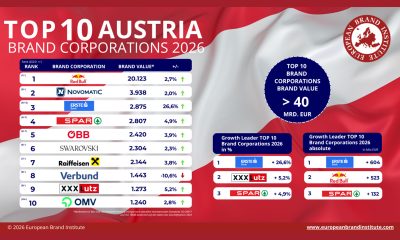
Austrian Brand Value Study: NOVOMATIC Defends Top Ranking
-
Latest News7 days ago
LEON announces LEON.bet Masters, a new CS2 tournament in Portugal
-
Canada7 days ago
St8 expands Octoplay aggregation deal to Ontario and the UK
-
Amusnet6 days ago
Amusnet Releases its Latest Video Slot “Golden Snake”