Cryptocurrency
Dive Deep into Crypto: SOFTSWISS and Next.io Launch Crypto Series of Podcasts

How do crypto players deal with volatility? Does implementing crypto technologies simplify cyber-attacks? How will crypto tools change the iGaming industry? Addressing these and more, SOFTSWISS, an international software supplier, and Next.io, a well-known events and media company, have joined forces to launch the Next.io Crypto Series.
Despite the prejudice, according to the SOFTSWISS State of Crypto, during the first three quarters of 2023, crypto bets experienced 18.7% monetary growth compared to the same period in 2022. The four-episode podcast journey will provide more valuable insights into cryptocurrencies in iGaming.
During each episode, Pierre Lindh, Co-Founder and Managing Director of Next.io and the podcast host, and an invited expert, will cover a particular aspect of the topic. The first episode aims to shed light on the history and evolution of crypto gambling, while the second episode will dive into the specifics of launching a crypto project. In the third episode, experts will discuss behaviours of crypto players, and the final episode will focus on the future of crypto tools.
The Next.io Crypto Series will kick off on 31 January with its first episode, “Evolution of Crypto in iGaming”, featuring Ivan Montik, Founder of SOFTSWISS, as a special guest. Listeners can expect a captivating journey through the evolution of crypto, stories about the first crypto project launches, challenges the pioneers overcame, and discussions on such vital topics as cyber security.
Andrey Starovoitov, Co-CEO at SOFTSWISS, comments: “In 2013, SOFTSWISS made a historic introduction of a Bitcoin-optimised online casino solution. In 2024, celebrating our 15th anniversary, we still see the enduring relevance and massive potential of crypto solutions for iGaming. Nowadays, a project without crypto support loses a broad audience and the image of a top-notch product, not to mention additional regulatory freedom. I am delighted to announce the launch of the podcast series, full of valuable information and capturing stories.”
Pierre Lindh comments: “We are grateful for SOFTSWISS’ willingness to share their insights and success stories related to the integration of cryptocurrency in iGaming. This technology is rapidly emerging as a foundational element within our industry. It is crucial, therefore, that we initiate meaningful dialogues to fully comprehend how this technology can be leveraged to positively transform and shape the future of our sector.”
Listeners can tune in to the Next.io Crypto Series on popular platforms such as Spotify, Apple Podcasts, YouTube, and LinkedIn, making it easily accessible to a wide audience.
About SOFTSWISS
SOFTSWISS is an international tech company supplying software solutions for managing iGaming projects. The expert team, which counts over 2,000 employees, is based in Malta, Poland, and Georgia. SOFTSWISS holds a number of gaming licences and provides one-stop-shop iGaming software solutions. The company has a vast product portfolio, including the Online Casino Platform, the Game Aggregator with thousands of casino games, the Affilka affiliate platform, the Sportsbook and the Jackpot Aggregator. In 2013, SOFTSWISS was the first in the world to introduce a Bitcoin-optimised online casino solution.













Kerma Games, a premium casino game provider, has announced a new partnership with Dustbit, marking its official expansion into the crypto casino space.
Through the collaboration, Dustbit will become the first crypto casino to feature the Kerma Games portfolio during an initial rollout period, giving its players early access to a selection of the studio’s premium content, including the newly released Snoop Olympus.
Inspired by the world of Snoop Dogg, Snoop Olympus combines iconic mythology with unmistakable West Coast style, showcasing Kerma Games’ vision of creating casino experiences that blend entertainment, cultural relevance and engaging gameplay.
The partnership represents another milestone in Kerma Games’ international growth strategy as the company continues to expand the reach of its portfolio across new markets and distribution channels.
Simone Bacchin, Sales Manager at Kerma Games, said: “We’re excited to partner with Dustbit as we bring Kerma Games into the crypto casino space. This collaboration allows a new audience to discover our entertainment-driven approach to game development, with standout titles like Snoop Olympus leading the way. We believe players are looking for experiences that feel memorable and culturally relevant, and that’s exactly what we aim to deliver.”
Arman Movsesyan, Casino Product Manager at Dustbit, said: “We are excited to welcome Kerma Games to Dustbit and to become the first crypto casino operator to offer their portfolio to our players. At Dustbit, we continuously seek innovative and engaging content that differentiates us from the competition, and Kerma Games perfectly aligns with that vision.
“Their unique approach to game development, combined with celebrity-driven entertainment and strong player engagement mechanics, brings a fresh experience to our community. We believe this partnership will not only enhance our gaming portfolio but also strengthen Dustbit’s position as a leading destination for crypto casino entertainment.
“We look forward to working closely with the Kerma Games team and delivering exciting new experiences to our players over the coming months.”
Beyond Snoop Olympus, Dustbit players will gain access to a growing portfolio of slots, crash games and table games developed with a focus on engagement, retention and premium production values. Kerma Games continues to differentiate itself through a combination of original content and globally recognised celebrity collaborations featuring names such as Snoop Dogg, Lil Baby and Sexyy Red.
The partnership also reinforces Kerma Games’ broader mission to redefine casino entertainment by creating games that capture attention long before the first spin and remain memorable long after the session ends.
As the company continues its global expansion, additional launches, partnerships and new celebrity-powered experiences are already in the pipeline.
The post Kerma Games Announces New Partnership with Dustbit appeared first on EE Gaming | Global iGaming & Tech Intelligence Hub.
BurraPay
Byte Federal Announces Successful Launch of Custom-Built Integration Supporting BurraPay’s Historic Entry into America’s Regulated Gaming Market

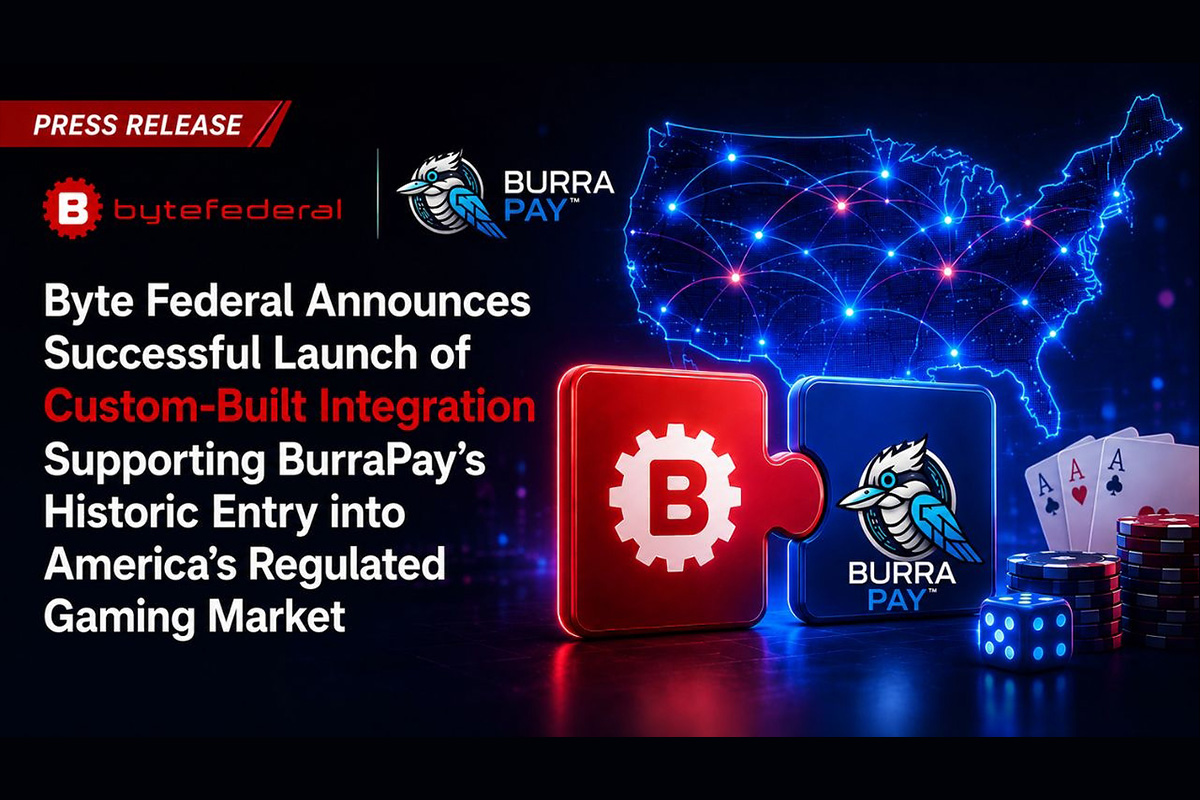
Byte Federal Inc. announced the integration of its payment and exchange services with BurraPay, the first cryptocurrency payments processor to operate inside Nevada’s regulated gaming market. Byte Federal is enabling BurraPay’s secure, compliant cryptocurrency transactions within licensed casino and sportsbook environments – a barrier that, until now, has kept digital assets entirely out of the regulated U.S. gaming ecosystem.
BurraPay announced its U.S. debut last week with its first client, Circa Resort & Casino in downtown Las Vegas, home of The World’s Largest Sportsbook. On June 4, the platform processed the first legal cryptocurrency-funded sports wager in Nevada history.
“The Nevada Gaming Control Board’s willingness to engage with compliant crypto infrastructure reflects the forward-thinking regulatory leadership that has kept Nevada at the forefront of the global gaming industry for decades. Nevada has set a blueprint. Our focus now is to continue working directly with regulators in other jurisdictions to replicate that – giving them full visibility into our compliance framework and the proven infrastructure we’ve deployed with Byte Federal, so they can move forward with confidence,” said Luke Millanta, CTO and Co-Founder of BurraPay.
Players wishing to fund their wagering activity using cryptocurrency, including Bitcoin, Ethereum and Litecoin, can now do so by visiting the sportsbook at Circa Las Vegas.
28% of U.S. adults own cryptocurrency and nearly half of all global crypto holders use digital assets for gambling. Yet billions in wagering volume has been flowing offshore to unregulated operators – outside the consumer protections, outside the tax base, outside the rules. BurraPay built the compliance-first platform to bring that activity onshore. Byte Federal provides the purpose-built exchange layer to make it run.
“This is what we’ve been building toward since 2016: digital assets that aren’t just held, but used. A patron walking into a Las Vegas sportsbook and funding a wager with Bitcoin, fully compliant, fully legal – that’s the promise of this technology meeting physical reality. We’re proud our infrastructure is part of the stack,” said Paul Tarantino, CEO of Byte Federal.
Byte Federal will continue working alongside BurraPay as it signs new operators, expands into additional jurisdictions on a state-by-state basis, and scales to meet growing demand – with BurraPay now approved in five key gaming states across the US.
“Earlier this month, a patron walked into a Las Vegas casino and funded a sports wager with Bitcoin. That has never happened before. That’s what a compliance-first platform makes possible. Byte Federal’s exchange solution is key to making this work, and as BurraPay expands into every state in the country, they’ll be right there with us,” said Millanta.
And the opportunity doesn’t stop with gaming: Byte Federal is already in talks with other industries about facilitating custom builds tailored to their unique needs.
The post Byte Federal Announces Successful Launch of Custom-Built Integration Supporting BurraPay’s Historic Entry into America’s Regulated Gaming Market appeared first on Americas iGaming & Sports Betting News.
The World Series of Poker (WSOP), the longest-running and most prestigious poker tournament series in the world, announced a first-of-its-kind collaboration with the Solana Foundation to bring cryptocurrency directly into the global poker experience.
This will be the first time in WSOP history where players can purchase tickets to tournaments directly with cryptocurrency, and by leveraging Solana’s technology, this payment method will have zero processing fees.
The integration will expand further at the 2026 WSOP Paradise in The Bahamas this December, where tournament winners can receive settlements in stablecoins on Solana, enabling near-instant access to payments and reducing the friction traditionally associated with international tournament settlements.
As part of this collaboration, Solana Foundation will also serve as the official Presenting Sponsor of the 2026 World Series of Poker and 2026 World Series of Poker Paradise.
The World Series of Poker, Dealt by Solana
The poker community has long been at the forefront of cryptocurrency adoption, with players embracing decentralized technology, like Solana, for its efficiency and transparency. As a high-performance blockchain, Solana is celebrated for its industry-leading transaction speeds – capable of processing thousands of transactions per second – and ultra-low costs, with average fees remaining below $0.001. By enabling players to make purchases through Moonpay, and cashout in stablecoins on Solana, these initiatives allow:
• Faster settlement and streamlined payment processing for eligible events
• Greater accessibility for international players traveling to WSOP events
• Near-instant global settlement, with reduced friction for users
• Expanded payment flexibility for players participating in marquee tournaments worldwide
Introducing Solana-powered purchases and settlements modernizes how money moves through the poker ecosystem and reduces friction for players around the world.
Where Poker and Cryptocurrency Converge
This initiative bridges the digital space and the poker world, reinforcing the growing demand among players for faster financial tools that simplify participation in global events. Beyond payments, the collaboration brings together communities that are closely aligned.
“We are incredibly proud to bring such an innovative and passionate community into the fold. Solana’s ecosystem, like the WSOP, constantly challenges conventions and remains laser-focused on the consumer experience. Solana’s speed and efficiency mirror the fast-paced energy of our tournaments, and we are excited to showcase their technology to our global audience,” said Ty Stewart, Chief Executive Officer of WSOP.
“Solana is a digital economy where people can own and trade millions of assets, make payments, earn on their money, and more. Trading in particular has been a huge area of growth on Solana over the last few years, generating over $4 trillion in volume. At its core, trading shares many of the same characteristics as poker: hard decisions, incomplete information, minding your bankroll. We’re incredibly excited to grow the game of poker with the WSOP and bring these two worlds together,” said Vibhu Norby, Chief Product Officer, Solana Foundation.
“Poker players have always lived at the forefront of innovation. They think in probabilities, move fast, and adopt the tools that give them an edge. Cryptocurrency is a natural fit. By powering purchases and settlements through MoonPay on Solana, we’re meeting that demand directly: faster, borderless payments that make it simple for players anywhere to take their seat at the world’s biggest tables,” said Jim Walker, President of MoonPay Commerce.
Beyond the Felt: Ambassadors and Hospitality
The Solana Foundation is set to sponsor a select group of individual poker player ambassadors who will represent the ecosystem at this summer’s WSOP event. Additionally, the Solana ecosystem will host exclusive hospitality events at the Paris and Horseshoe venues in Las Vegas, as well as a premier experience during WSOP Paradise in The Bahamas this winter. Solana users can also look forward to collaborative onchain poker products, developed with WSOP, to follow.
The post WSOP to Bring Crypto to Events Through Solana Tournament Purchases appeared first on Americas iGaming & Sports Betting News.

-

 10bet7 days ago
Ellis Park Stadium signs five-year naming rights deal with 10bet
-
central asia7 days ago
Groove confirms attendance at SBC Summit Tbilisi 2026
-
Bucharest6 days ago
Eeze opens 1,200 sqm Bucharest hub for technical teams
-
AB Trav och Galopp5 days ago
BetMakers Technology Group Selected to Distribute ATG Horse Racing Content Across Australia and New Zealand
-
API integration5 days ago
Belatra signs cooperation deal to distribute slots via VeliGames
-
BETANO6 days ago
Play’n GO strengthens Latin American presence with Betano Colombia launch
-
affiliate marketing6 days ago
SEOBROTHERS’ Aleksandra Drigo flags higher barriers for affiliates in regulated Alberta
-
Aviator5 days ago
Pernambuco court revokes Spribe’s interim relief in Aviator trademark dispute