Brazil
Brazil-Focused Operator Galera.bet Joins Betting Integrity Body IBIA

A non-profit organization, the IBIA is active on six continents and operates a highly effective anti-corruption monitoring and alert network
Galera.bet, a sports betting brand of Match Time Solutions BV, has joined the International Betting Integrity Association (IBIA). The online operator is primarily focused on Brazil and this decision fulfils its regulatory obligation under the recently-published Provisional Measure to join an international body for monitoring sports integrity.
Galera.bet is an official sponsor of the Campeonato Brasileiro Série A, the Brazilian Basketball Confederation and Brazilian 3×3 Basketball Tour. The operator joins nearly 50 companies and over 125 leading sports betting brands in IBIA, further strengthening its position as the world’s leading operator-run integrity monitoring body.
The IBIA announced its expansion into Brazil earlier this year ahead of the expected regulation of the market. The Brazilian government’s subsequent Provisional Measure published on July 25 includes a requirement for licensed operators to be part of an international body for monitoring sports integrity.
According to H2 Gambling Capital, the leading independent authority on global gambling market data, IBIA members are estimated to already account for over 60% of the Brazilian remote gambling market. That leading market position will enable the IBIA to provide a highly accurate analysis and effective deterrent against betting related fraud, making it uniquely positioned to support a crack-down on match-fixing in Brazil.
Galera.bet is committed to working in partnership with the IBIA to prevent and detect corruption in sport and to offer a reliable product to its customers.
“We are honored to work with the IBIA and to be able to reinforce our purpose of developing business with integrity as our priority,” the Chief Executive Officer for Galera.bet, Marcos Sabiá, said. “We believe that collaboration between partners is extremely important to protecting the integrity of sport and betting markets from corruption. We hope this is the beginning of a long and successful partnership.”
“We welcome Galera.bet’s decision to join the IBIA, which further strengthens the IBIA’s position ahead of the Brazilian market opening,” the Chief Executive Officer for the IBIA, Khalid Ali, said. “It recognizes the unique benefits of the IBIA’s operator-run integrity monitoring network and its ability to track members’ individual consumer transactional activity rather than just analyzing simple odds movements. No other sports integrity solution provides access to this data which covers over US$137 billion in annual betting turnover, making the IBIA the largest and most effective integrity network of its kind globally.”
The IBIA is a not-for-profit body that has no competing conflicts with the delivery of commercial services to other sectors and is run by operators for operators to protect regulated sports betting markets, especially for sports and consumers, from match-fixing. The IBIA’s global monitoring network is a highly effective anti-corruption tool, detecting and reporting suspicious activity in regulated betting markets. Through the IBIA monitoring network, it is possible to track transactional activities linked to individual customer accounts.
Responsible regulated sports betting operators have a significant incentive to help crack-down on match-fixing and the IBIA intends to be at the forefront of that preventative action in Brazil. As part of that process, the IBIA has signed a sports betting integrity protection agreement with the Brazilian Institute of Responsible Gaming (IBJR). The IBIA will be providing integrity services for its members licensed in Brazil and is open to membership applications from other operators seeking to be active in this and other markets.
All IBIA members are required to pass a strict due diligence process and commit to its code of conduct. The association recently released its Q2 integrity report detailing 50 alerts reported in the quarter. The IBIA reported 268 alerts to the authorities in 2022 with successful sporting or criminal sanctions against 15 teams, officials or players where the IBIA had reported suspicious activity on their matches.













Veteran executive tasked with expanding PG Soft across Latin America and leading strategy in Brazil as regulation evolves.
PG Soft has appointed Hugo Baungartner as General Manager LatAm, handing him responsibility for the supplier’s commercial expansion across Latin America and its strategy in Brazil.
The company said Baungartner will focus on growing the business in Brazil, where PG Soft says it has already captured a “significant share of the market,” while building presence across regulated markets in the wider region.
Baungartner brings more than 29 years of experience across technology and gaming. He has held leadership roles at Grupo Aposta Ganha, RCT Gaming, Prohards and most recently Esportes Gaming Brasil, according to the company.
PG Soft also pointed to Baungartner’s network across Latin America’s regulatory landscape, including relationships with Brazil’s Secretariat of Prizes and Betting (SPA/MF), the Federal Revenue Service, and COAF, as well as Mexico’s Dirección General de Juegos y Sorteos and AIEJA (the Mexican Gaming Association).
Hugo Baungartner, General Manager LatAm at PG Soft, commented: “PG Soft’s brand needs no introduction in Latin America thanks to its extensive portfolio of world-class, mobile-first games that resonate strongly with players. The company is only just getting started in the region, and I look forward to building on its success in Brazil while expanding PG Soft’s presence across regulated markets throughout Latin America.”
The post PG Soft appoints Hugo Baungartner as General Manager LatAm appeared first on EE Gaming | Global iGaming & Tech Intelligence Hub.
TJPE cites a Brasília federal ruling that suspended the legal effects of Spribe’s AVIATOR registration and barred exclusivity claims during nullity proceedings.
The Court of Justice of Pernambuco (TJPE) has revoked preliminary appellate relief previously granted to Spribe OÜ in litigation over the AVIATOR trademark in Brazil.
In a monocratic decision, Justice Andrea Epaminondas Tenorio de Brito held that the factual and legal basis for the earlier injunction no longer exists. The court pointed to a subsequent decision by the Federal Court in Brasília that provisionally suspended the legal effects of Spribe’s Brazilian AVIATOR trademark registration and ordered Spribe to refrain from asserting exclusivity based on that registration while federal nullity proceedings are ongoing.
TJPE said its earlier relief relied on the presumption that Spribe’s trademark registration before Brazil’s National Institute of Industrial Property (INPI) was fully valid and enforceable. With the federal court suspending the registration’s effects, the Pernambuco court found the underlying circumstances had materially changed.
The court cited Article 296 of the Brazilian Code of Civil Procedure as the basis for revoking the preliminary relief in light of the changed legal situation.
The post Pernambuco court revokes Spribe’s interim relief in Aviator trademark dispute appeared first on EE Gaming | Global iGaming & Tech Intelligence Hub.

The Court of Justice of Pernambuco (TJPE) has revoked preliminary appellate relief previously granted to Spribe OÜ in ongoing litigation over the use of the AVIATOR trademark in Brazil, citing a change in the legal circumstances supporting the earlier decision.
In a monocratic decision, Justice Andrea Epaminondas Tenorio de Brito concluded that the factual and legal basis for the prior injunction no longer exists. The ruling follows a decision by the Federal Court in Brasília that provisionally suspended the legal effects of Spribe’s Brazilian AVIATOR trademark registration.
According to the press release, the federal court also ordered Spribe to refrain from asserting exclusivity based on that registration until the federal nullity proceedings are resolved.
TJPE said its earlier decision had relied on the presumption that Spribe’s trademark registration with the Brazilian National Institute of Industrial Property (INPI) was fully valid and enforceable. With the federal court now suspending the legal effects of that registration, the Pernambuco court held that the foundation for interim relief had materially changed, prompting revocation under Article 296 of the Brazilian Code of Civil Procedure.
The post Pernambuco court revokes Spribe interim relief in AVIATOR trademark dispute appeared first on Americas iGaming & Sports Betting News.

-

 Affiliate Industry6 days ago
Hub Affiliations Triumphs at the iGB Affiliate Awards 2026: Winner of Programme/Network Campaign of the Year
-
Austria6 days ago
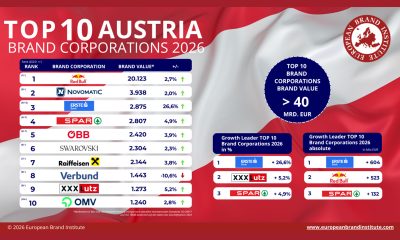
Austrian Brand Value Study: NOVOMATIC Defends Top Ranking
-
Latest News6 days ago
N1 Partners at iGB L!VE 2026: Bringing Together Affiliates, Art and Innovation
-
Africa7 days ago
PopOK Gaming sponsors Botswana’s TT Cup Challenge horse racing event
-
Amusnet6 days ago
Amusnet Releases its Latest Video Slot “Golden Snake”
-
Betsson CEO Pontus Lindwall7 days ago
Gaming in the Nordics launch event sets annual Copenhagen conference from 2027
-
Azerbaijani Parliament6 days ago
Azerbaijan to Impose Tougher Penalties for Illegal Online Gambling
-
Amusnet6 days ago
Weekend Reels | Week 27: Slot Drops & Trends