Brazil
F12 Mania Scores a Goal in Brazil, with WeAreLottery

Brazilian lottery site F12 Mania is now live, thanks to WeAreLottery and WeAreGame’s white-label platform solution. It’s bound to be a huge hit in South America’s biggest country.
F12 Mania – the Home of Mega F12 Lottery!
The impressive new website is packed with plenty for Brazilian players to get excited about. Simple and easy to use, the eye-catching design showcases the biggest online lotteries from around the world. Not satisfied with small-win games, big names such as PowerBall, MegaMillion, Euro Jackpot, EuroMillions, Super Enalotto, New York Lotto, Florida Lotto, and MEGA Millions can all be played. Best of all, F12 Mania’s lotteries all come equipped with eye-watering jackpots of seriously life-changing proportions.
The most special of all has to be the official and exclusive Mega F12 lottery, which takes place every Wednesday and Saturday at 8pm (Brasília time). It has mega big-win potential to keep even the most seasoned lottery players happy.
Players can quickly check all lottery results on the site after each draw in one simple click. They also have the option to buy packages to make it easier to take part regularly and can even buy F12 Mania Gift Cards. F12 Mania already has plenty of enticing special offers and promotions in the pipeline and players can get all the latest news from their News Blogs page.
Futsal Ambassador – Falcão
One of the first things visitors to the site will see is the face of brand ambassador Alessandro Rosa Vieira, or as millions of people across the globe will know him, Falcão!
Falcão is a national hero to millions of futsal fans. Now retired, he is not only known for his powerful left foot and dynamic skills on the court, but he’s also the world’s all-time leading futsal goalscorer in men’s international matches.
Iconic Falcão was named the Best Futsal Player in the World, not once but four times (2004, 2006, 2011 and 2012) and won the FIFA Futsal World Cup Golden Shoe in 2004 and the Golden Ball twice, in 2004 and 2008. His YouTube channel currently has over one million subscribers who enjoy learning futsal tricks and hearing tales from his epic career.
Falcão is already the face and ambassador of the main F12 Bet betting site where futsal is a big draw for fans across all of Brazil.
WeAreLottery & White Label Solutions
F12 uses our custom-designed lottery white-label solution. Our white-label solutions can create a standalone lottery product or complement your existing iGaming venture. Being a mobile-first provider means players can enjoy their favourite games seamlessly across all devices.
Our lottery solutions offer cross-sell opportunities for clients, prizes, sweepstakes, auctions, instant win games for players, and even the potential to sell branded merchandise. Clients get the most out of their money with tailored marketing automation, fast and secure payments, full insurance, clear analytics, and great customer management. We provide a hassle-free experience that’s rewarding and enjoyable for everyone.
WeAreGame Partnership
According to F12 Mania’s News Blog about lotteries in Brazil, a recent survey of over 3,000 people showed Brazilians play the most online lotteries – more than anywhere else in the world. With this in mind, we can’t wait to see what’s in store for everyone at F12 Mania. This is only the start of our exciting journey together.
Powered by WPeMatico

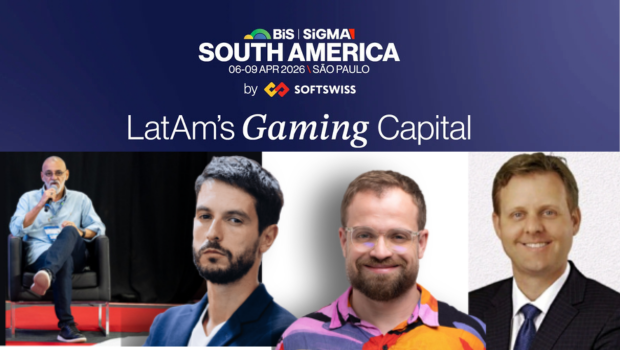
The 2026 edition of SiGMA South America kicked off today in São Paulo, bringing together some of the leading figures in the iGaming industry in Latin America.
The event takes place from April 6 to 9 at the Transamerica Expo Center, with a program spread across the Itaim, Jardins and Paulista stages.
Over three days, experts will address key topics for the current moment of the Brazilian market, such as regulation, sports integrity, responsible gambling and innovation in user experience.
Responsible gambling and mental health in focus
Among the highlights is the panel “Mental Health and Responsible Gambling: The Search for Solutions to the Invisible Challenge of the Gaming and Betting Market”, which proposes an integrated approach between regulation, mental health and public management.
Participants include Leandro Pamplona, partner and lawyer at BKP Advogados; Marcus Vinícius de Almeida, state deputy at the Legislative Assembly of Rio Grande do Sul; Cristiano Costa, CKO of EBAC – Brazilian Company for Support to Compulsivity; Daniel Romanowski, president of Lottopar; and Ana Bárbara Teixeira, Director of Government Relations and founder of ABRAJOGO/AMIG.
Pamplona states that the balance between protection and autonomy lies in “responsible freedom”.
“The operator cannot assume an absolute paternalistic position, but cannot be passive in the face of potentially problematic behaviors either”, he says.
According to him, the operator begins to exercise a delegated regulatory role, based on three pillars: clear information, mandatory preventive tools and effective monitoring.
Regarding Brazilian legislation, he believes there is already a relevant foundation, although still under consolidation.
“The integration of data between operators, regulators and the clinical field will be key to measuring the effectiveness of the rules”, he says.
“Brazil already has a relevant regulatory framework, but it is still in the process of practical consolidation. Until now, these issues were treated in isolation.
There is still no precise data to identify potential regulatory gaps.”
“Going forward, there will be integration of data between operators, regulators and the clinical or medical field. Based on this data, we will be able to verify the effectiveness or not of the current legislation.”
Sports integrity and real-time monitoring
The panel “Integrity on the Field: Preparing the Regulated Market for a World Cup of Safe Betting” brings together Felippe Marchetti, Director of Integrity Partnerships at Sportradar LATAM; André Megale, representative of SIGA Latin America; Michelle Ramalho, executive at the CBF; Carla Dualib, executive at SOFTSWISS; and Caio Porto Ferreira, representative of the Brazilian Federal Police and the STJD.
Marchetti explains that risk monitoring currently combines advanced technology and cooperation with operators.
“Tools based on artificial intelligence identify unusual betting volumes and significant deviations in odds, both in legal and illegal markets”, he says.
According to him, the detection of warning signals is based on a combination of advanced technology and cooperation with operators.
“Today we have tools such as the AI-based FDS, which monitors both legal and illegal markets and generates alerts when there is an unusual volume of bets or significant deviations between expected and actual odds”, he noted.
This type of system makes it possible to identify atypical patterns that may indicate potential manipulation risks.
Marchetti also highlighted the importance of information sharing with operators as a fundamental part of the integrity process.
“Another key indicator is when operators’ own risk teams detect suspicious behavior and share that information with us, allowing us to carry out a double verification of the markets”, he explained.
This is complemented by signals linked to the sports ecosystem itself.
“For example, when there is a concentration of athletes with a history of manipulation within the same team, this generates additional alerts and leads us to monitor the situation more closely”, he added.
Regarding collaboration between operators, sports entities and authorities, Marchetti stressed that the Brazilian scenario has evolved significantly following market regulation.
“Today Brazil is in a much more advanced position than in the pre-regulation period, starting with the legislation, which requires operators to maintain agreements with integrity entities”, he stated.
In this regard, he highlighted that Sportradar already works with dozens of regulated operators in the country, facilitating a constant flow of information on suspicious matches and atypical behavior.
This cooperation model also extends to public bodies and sports entities.
“We have agreements with regulatory authorities and work together with state federations, the CBF, CONMEBOL and other organizations, both in market monitoring and in educational initiatives”, he explained.
He also highlighted progress in building a national policy to combat match-fixing, which includes training for security forces and institutional coordination spaces.
User experience and personalization on the rise
The panel “Beyond the Screen: The Impact of the World Cup Betting Experience” will feature Natalia Nogues, CEO and founder of Control F5; and Dario Leiman, Head of Business Development LATAM at SOFTSWISS.
On the topics of the discussion, Felipe Costa Nadalini, Senior Account Executive at Optimove, points out that there is still limited understanding of the concept of real time in the sector.
“Real-time engagement does not mean responding immediately without relevance. The differentiator lies in personalization based on data and user behavior”, he says.
“Let’s imagine a scenario: you enter an e-commerce site and, as soon as you leave, you receive an email, a push notification or an SMS with an offer that has nothing to do with what you were looking for or your history. That is not effective engagement. Today, operators not only compete among themselves, but also with a huge indirect competition for the user’s attention.”
“Real-time engagement is important, but personalization is equally, or even more, relevant. We need to understand who the player is, their history with the brand and their behavior in order to deliver the right content at the right moment.”
“True real time happens in the background. It is the crossing of historical data that allows the action, when the moment comes, to be truly relevant. It is not just about sending an offer. It can also be a responsible action, such as detecting unusual behavior and offering responsible gambling content.”
“In addition, it is key to understand the channel. Some players interact more via email, others via SMS or push. Choosing the right channel is just as important as the message.”
When asked about underutilized technologies, Nadalini noted: “Data alone does not perform miracles. Many operators in Brazil still use their tools in a limited way, replicating competitors’ strategies instead of building something of their own.”
“There is no point in having a mountain of data if it is not used intelligently. The real differentiator lies in crossing that information to understand what content, in which channel and at what moment makes sense for each player.”
“If I do not personalize the experience, everything becomes white noise. And when that happens, the player simply stops paying attention.”
Convergence between physical and digital
The panel “Physical or Digital? Between Boundaries and Convergences in the Casino Industry” will feature Leonardo Benites, founding director of ANCASSINOS; Luiz Felipe Maia, partner at Maia Yoshiyasu Advogados; and Bryan Ortiz, director of Zitro Digital Brasil, in addition to Marco Pequeno, country manager at Amusnet; and Fernando Mora, Business Development Executive at Sportradar Brasil.
The discussion will address the growing convergence between physical and digital operations, driven by omnichannel strategies and the evolution of consumer behavior.
The role of the media in the regulatory debate
The panel “The Role of the Media in the Debate on the Restriction of Betting Advertising” will feature Magnho José, editor-in-chief of BNLData; Paulo Saad, vice president of Grupo Bandeirantes; and João Gallucci Rodrigues, managing partner at Poder360.
According to Magnho, Brazil is still going through a process of adaptation after decades of gambling prohibition.
“The Brazilian media, like the Judiciary, is still learning to coexist with sports betting and online gaming”, he said.
“A large part of the media that currently covers the sector does not understand it, and in many cases does not even try to understand it, which results in superficial and often biased coverage.”
The journalist and editor also warned about the impact of these narratives on regulation: “There is a real risk that misguided coverage may push for advertising restrictions and end up favoring the illegal market.”
For him, advertising plays a key role: “Bettors often cannot distinguish between what is legal and illegal, and advertising plays a fundamental role in that distinction.”
Finally, he concluded: “It is not about stricter regulation, but about misinformation. It is a lack of knowledge about the sector.”
To view the full agenda: https://sigma.world/summits/south-america/agenda/
BiS SiGMA South America 2026
BiS SiGMA South America is part of the SiGMA Group’s global event portfolio, one of the leading international platforms dedicated to the gaming, betting, and technology industry, with editions held in various regions across the globe.
Held annually in São Paulo, BiS SiGMA South America has consolidated its position as the largest and most traditional business event for the iGaming and betting sector in Latin America.
It gathers operators, technology providers, platforms, investors, government representatives, and specialized media in an environment geared toward business generation, knowledge exchange, and market development.
For the 2026 edition, the event is expected to host 18,500 participants, featuring more than 400 exhibitors and sponsors, and a content program with 250+ speakers—reinforcing the event’s scale, its international relevance, and São Paulo’s role as the region’s primary business hub for the industry.
Beyond the trade exhibition, BiS SiGMA South America offers a robust lineup of content, panels, workshops, and awards, covering topics such as innovation, operations, market trends, and industry best practices, actively contributing to the evolution and professionalization of the ecosystem.
The post SiGMA South America panels focus on key debates to Brazil appeared first on Americas iGaming & Sports Betting News.
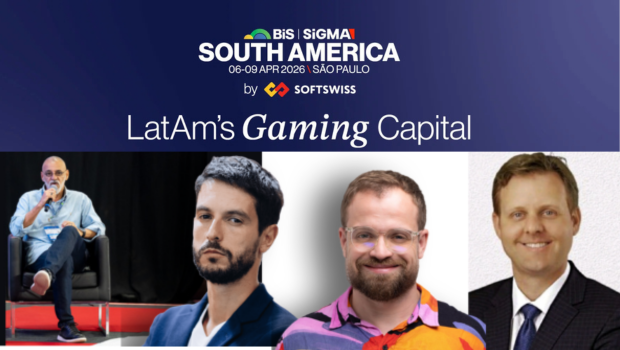
La edición 2026 del SiGMA South America comenzó hoy en São Paulo, reuniendo a algunos de los principales referentes de la industria del iGaming en América Latina.
El evento se celebra entre el 6 y el 9 de abril en el Transamerica Expo Center, con una programación distribuida en los escenarios Itaim, Jardins y Paulista.
A lo largo de tres días, especialistas abordarán temas centrales para el momento del mercado brasileño, como regulación, integridad deportiva, juego responsable e innovación en la experiencia del usuario.
Juego responsable y salud mental en foco
Entre los puntos destacados se encuentra el panel “Mental Health and Responsible Gambling: The Search for Solutions to the Invisible Challenge of the Gaming and Betting Market”, que propone un enfoque integrado entre regulación, salud mental y gestión pública.
Participan Leandro Pamplona, socio y abogado de BKP Advogados; Marcus Vinícius de Almeida, diputado estadual de la Asamblea Legislativa de Rio Grande do Sul; Cristiano Costa, CKO de EBAC – Empresa Brasileña de Apoyo a la Compulsividad; Daniel Romanowski, presidente de Lottopar; y Ana Bárbara Teixeira, directora de Relaciones Gubernamentales y fundadora de ABRAJOGO/AMIG.
Pamplona afirma que el equilibrio entre protección y autonomía pasa por la “libertad responsable”.
“El operador no puede asumir una posición paternalista absoluta, pero tampoco puede ser pasivo frente a comportamientos potencialmente problemáticos”, señala.
Según él, el operador pasa a ejercer una función regulatoria delegada, basada en tres pilares: información clara, herramientas preventivas obligatorias y monitoreo efectivo.
Sobre la legislación brasileña, considera que ya existe una base relevante, aunque aún en consolidación.
“La integración de datos entre operadores, reguladores y el área clínica será determinante para medir la eficacia de las normas”, afirma.
“El Brasil ya cuenta con una base normativa relevante, pero todavía en proceso de consolidación práctica. Hasta ahora, estas cuestiones se trataban de forma aislada. Aún no existen datos precisos que permitan identificar posibles vacíos regulatorios.”
“Posteriormente habrá una integración de datos entre operadores, reguladores y el ámbito clínico/médico. A partir de estos datos podremos verificar la eficacia, o no, de la legislación vigente.”
Integridad deportiva y monitoreo en tiempo real
El panel “Integrity on the Field: Preparing the Regulated Market for a World Cup of Safe Betting” reúne a Felippe Marchetti, director de Integrity Partnerships de Sportradar LATAM; André Megale, representante de SIGA Latin America; Michelle Ramalho, ejecutiva de la CBF; Carla Dualib, ejecutiva de SOFTSWISS; y Caio Porto Ferreira, representante de la Policía Federal de Brasil y del STJD.
Marchetti explica que el monitoreo de riesgos combina actualmente tecnología avanzada y cooperación con operadores.
“Herramientas basadas en inteligencia artificial identifican volúmenes atípicos de apuestas y desviaciones relevantes de cuotas, tanto en mercados legales como ilegales”, afirma.
Según explicó, la detección de señales de alerta se basa en una combinación de tecnología avanzada y cooperación con operadores.
“Hoy contamos con herramientas como el FDS basado en inteligencia artificial, que monitorea tanto mercados legales como ilegales y genera alertas cuando hay un volumen inusual de apuestas o desviaciones significativas entre la cuota esperada y la real”, señaló.
Este tipo de sistema permite identificar patrones atípicos que pueden indicar posibles riesgos de manipulación.
Marchetti también destacó la importancia del intercambio de información con los operadores como parte fundamental del proceso de integridad.
“Otro indicador clave es cuando los propios equipos de riesgo de los operadores detectan comportamientos sospechosos y comparten esa información con nosotros, lo que nos permite realizar una doble verificación de los mercados”, explicó.
A esto se suman señales vinculadas al propio ecosistema deportivo.
“Por ejemplo, cuando hay una concentración de atletas con antecedentes de manipulación en un mismo equipo, eso genera alertas adicionales y nos lleva a monitorear más de cerca esa situación”, añadió.
En relación con la colaboración entre operadores, entidades deportivas y autoridades, Marchetti subrayó que el escenario brasileño ha evolucionado significativamente tras la regulación del mercado.
“Hoy Brasil está en una posición mucho más avanzada que en el período previo a la regulación, empezando por la legislación, que exige que los operadores mantengan acuerdos con entidades de integridad”, afirmó.
En este sentido, destacó que Sportradar ya trabaja con decenas de operadores regulados en el país, facilitando un flujo constante de información sobre partidos sospechosos y comportamientos atípicos.
Este modelo de cooperación se extiende también a organismos públicos y entidades deportivas.
“Tenemos acuerdos con autoridades regulatorias y trabajamos junto a federaciones estatales, la CBF, CONMEBOL y otras organizaciones, tanto en el monitoreo de mercados como en iniciativas de educación”, explicó.
Asimismo, resaltó los avances en la construcción de una política nacional de combate a la manipulación de resultados, que incluye capacitaciones a fuerzas de seguridad y espacios de coordinación institucional.
Experiencia del usuario y personalización en alza
El panel “Beyond the Screen: The Impact of the World Cup Betting Experience” contará con Natalia Nogues, CEO y fundadora de Control F5; y Dario Leiman, Head de Business Development LATAM de SOFTSWISS.
Sobre los temas de la discusión, Felipe Costa Nadalini, Senior Account Executive de Optimove, destaca que aún existe una comprensión limitada sobre el concepto de tiempo real en el sector.
“El engagement en tiempo real no significa responder inmediatamente sin relevancia. El diferencial está en la personalización basada en datos y comportamiento del usuario”, afirma.
“Imaginemos un escenario: entras en un sitio de e-commerce y, apenas sales, recibes un e-mail, un push o un SMS con una oferta que no tiene nada que ver con lo que estabas buscando ni con tu historial. Eso no es engagement efectivo. Hoy, los operadores no solo compiten entre ellos, sino también con una competencia indirecta enorme por la atención del usuario.”
“El engagement en tiempo real es importante, pero la personalización es igual —o incluso más— relevante. Necesitamos entender quién es el jugador, su historial con la marca y su comportamiento para ofrecer el contenido adecuado en el momento correcto.”
“El verdadero tiempo real ocurre en el background: es el cruce de datos históricos lo que permite que, cuando llegue el momento de actuar, la acción sea realmente relevante. No se trata solo de enviar una oferta. También puede ser una acción responsable, como detectar un comportamiento fuera de lo normal y ofrecer contenido sobre juego responsable.”
“Además, es clave entender el canal: hay jugadores que interactúan más por e-mail, otros por SMS o push. Elegir el canal correcto es tan importante como el mensaje.”
Al ser consultado sobre tecnologías subutilizadas, Nadalini señaló: “Los datos, por sí solos, no hacen magia. Muchos operadores en Brasil aún utilizan sus herramientas de forma limitada, replicando estrategias de la competencia en lugar de construir algo propio.”
“No sirve de nada tener una montaña de datos si no se utilizan de forma inteligente. El verdadero diferencial está en cruzar esa información para entender qué contenido, en qué canal y en qué momento tiene sentido para cada jugador.”
“Si no personalizo la experiencia, todo se convierte en ruido blanco. Y cuando eso ocurre, el jugador simplemente deja de prestar atención.”
Convergencia entre físico y digital
El panel “Physical or Digital? Between Boundaries and Convergences in the Casino Industry” contará con Leonardo Benites, director fundador de ANCASSINOS; Luiz Felipe Maia, socio de Maia Yoshiyasu Advogados; y Bryan Ortiz, director de Zitro Digital Brasil, además de Marco Pequeno, country manager de Amusnet; y Fernando Mora, Business Development Executive de Sportradar Brasil.
El debate abordará la creciente convergencia entre operaciones físicas y digitales, impulsada por estrategias omnicanal y por la evolución del comportamiento del consumidor.
El papel de los medios en el debate regulatorio
El panel “The Role of the Media in the Debate on the Restriction of Betting Advertising” contará con Magnho José, editor jefe de BNLData; Paulo Saad, vicepresidente del Grupo Bandeirantes; y João Gallucci Rodrigues, managing partner de Poder360.
Según Magnho, Brasil aún atraviesa un proceso de adaptación tras décadas de prohibición del juego.
“La media brasileña, al igual que el Poder Judicial, todavía está aprendiendo a convivir con las apuestas deportivas y los juegos online”, afirmó.
“Una gran parte de la media que hoy cubre el sector no lo entiende —y, en muchos casos, ni siquiera intenta entenderlo—, lo que se traduce en una cobertura superficial y, a menudo, sesgada.”
El periodista e editor también advirtió sobre el impacto de estas narrativas en la regulación: “Existe un riesgo real de que una cobertura equivocada presione por restricciones a la publicidad y termine favoreciendo el mercado ilegal.”
Para él, la publicidad cumple un rol clave: “El apostador muchas veces no sabe diferenciar entre lo legal y lo ilegal, y la publicidad cumple un papel fundamental en esa distinción.”
Finalmente, concluyó: “No se trata de mayor rigor, sino de desinformación; es desconocimiento del sector.”
Para ver la agenda completa: https://sigma.world/summits/south-america/agenda/
BiS SiGMA South America 2026
BiS SiGMA South America integra el portafolio global de eventos de SiGMA Group, una de las principales plataformas internacionales dedicadas a la industria del juego, las apuestas y la tecnología, con ediciones realizadas en diversas regiones del mundo.
Realizado anualmente en São Paulo, BiS SiGMA South America se ha consolidado como el mayor y más tradicional evento de negocios del sector de iGaming y apuestas de América Latina.
El encuentro reúne a operadores, proveedores de tecnología, plataformas, inversores, representantes del sector público y prensa especializada en un entorno enfocado en la generación de negocios, el intercambio de conocimientos y el desarrollo del mercado.
Para la edición de 2026, se espera recibir a 18.500 participantes, contar con más de 400 expositores y patrocinadores, y una agenda de contenidos con más de 250 ponentes.
Estas cifras refuerzan la magnitud del evento, su relevancia internacional y el papel de São Paulo como el principal hub de negocios del sector en la región.
Además de la feria comercial, BiS SiGMA South America ofrece una sólida programación de contenidos, paneles, talleres y premios.
En estos espacios se abordan temas clave como innovación, operaciones, tendencias del mercado y mejores prácticas de la industria, contribuyendo activamente a la evolución y profesionalización del ecosistema.
The post Paneles SiGMA South America concentran debates claves para Brasil appeared first on Americas iGaming & Sports Betting News.
Brazil’s regulated betting market continues to gain structure and momentum, as the country balances regulatory consolidation, integrity safeguards, and commercial growth.
Over the past week, key developments, from federal policy implementation to strategic partnerships and product innovation, highlight how the ecosystem is maturing ahead of major global sporting events.
Government launches national policy to combat match-fixing
A major regulatory milestone was reached with the creation of the National Policy for the Prevention and Combating of Sports Manipulation (PNPEMR). Established through a joint ordinance by the Ministries of Sports, Finance, and Justice, the policy introduces a comprehensive national framework designed to address integrity risks in sports.
The initiative is structured around four central pillars: regulation, prevention, monitoring and enforcement, aiming to protect the credibility and unpredictability of sporting competitions in Brazil.
The policy emphasizes interinstitutional cooperation, bringing together public authorities, sports organizations, betting operators and international bodies.
Among its key measures are:
- Standardization of reporting flows for suspicious betting activity
- Continuous education programs for athletes, referees and sports officials
- Protection mechanisms for whistleblowers
- Strengthening of criminal investigations targeting organized match-fixing networks
Under the framework, the Ministry of Sports will coordinate implementation, while the Ministry of Finance will oversee betting regulation and operator compliance. The Ministry of Justice and Public Security, alongside the Federal Police, will lead intelligence-sharing and enforcement efforts, particularly in cases with interstate or international scope. See DOU
A multi-stakeholder governance committee will be responsible for monitoring progress and proposing adjustments, ensuring that the policy evolves alongside the market.
This move reinforces Brazil’s intention to align regulatory oversight with global integrity standards, particularly relevant as the country prepares for high-volume betting scenarios during major international competitions.

Sportradar expands iGaming strategy with Playradar launch
On the corporate front, Sportradar announced the launch of Playradar, a new brand dedicated to its iGaming vertical, signaling a strategic shift toward more integrated and immersive betting experiences.
The new offering is built around hybrid gaming concepts, combining real-time and historical sports data with live streaming and casino content.
Among the key features is a 24/7 live experience hub, where users can engage simultaneously with sports events and interactive gaming formats.
The initiative will be led by Edo Haitin, a seasoned executive with over two decades of experience in live gaming and product development.
The company plans to roll out Playradar starting in 2026, initially targeting regulated markets in the UK, North America and Latin America.
According to CEO Carsten Koerl, the move represents a natural evolution of the company’s capabilities, leveraging its existing infrastructure in data, streaming and user behavior analytics to enhance engagement and monetization across the player lifecycle.
Haitin also emphasized the strategic vision behind the launch, highlighting the ability to combine technology and content in line with evolving market demands, particularly as operators look for differentiated and immersive user experiences.
Importantly, Playradar will operate exclusively in regulated environments, maintaining a strong focus on responsible gaming and integrity, aligning with broader industry and regulatory trends.
Playson strengthens Brazilian footprint through Betnacional partnership
Further reinforcing Brazil’s position as a high-growth market, Playson expanded its regional presence through a new partnership with Betnacional, a leading local operator owned by Flutter Entertainment.
The agreement will see a portfolio of Playson’s top-performing titles integrated into Betnacional’s platform, including 4 Pots Riches, Diamonds Power, and Sugar Teddy x1000, all recognized for their strong performance in regulated markets and engaging gameplay mechanics such as Hold and Win.
The partnership reflects a broader industry trend toward localization and mobile-first strategies, as operators seek to better align content with regional player preferences.
Cristhian Zito, Head of LatAm at Playson, highlighted the strategic importance of the deal:
“Partnering with Betnacional is an important milestone for us in Brazil. It is a highly respected local brand with a deep understanding of its audience, and we are confident our content will resonate strongly with its players.
This launch further strengthens our position in the market and reflects our commitment to delivering engaging, high-performing games to operators across Latin America.”
From the operator’s perspective, Frederico Cunha, Head of Commercial at Betnacional, also emphasized the value of the collaboration:
“We are delighted to welcome Playson’s portfolio to Betnacional. Their games are recognised for their quality, strong mechanics, and consistent performance, making them a valuable addition to our offering.
We look forward to working closely together and bringing an enhanced entertainment experience to our players.”
A market balancing integrity and growth
Taken together, this week’s developments illustrate a clear dual trajectory in Brazil’s betting sector: strengthening institutional and integrity frameworks while simultaneously attracting investment, innovation and international partnerships.
As regulatory structures become more sophisticated and collaboration between stakeholders deepens, Brazil is positioning itself not only as a compliant and secure market, but also as a central hub for growth in Latin America’s gaming industry.
SportyBet appoints DJ Khaled as global ambassador to expand connection between sports, culture and entertainment
SportyBet has announced DJ Khaled as its new global ambassador, strengthening its positioning at the intersection of sports, music, and contemporary culture.
He joins a global roster that includes José Mourinho and Éder Militão, reinforcing the company’s strategy of connecting with audiences through entertainment. The partnership will roll out across key markets such as Brazil, the United States, Mexico, and parts of Africa, supporting SportyBet’s expansion as an experience-driven platform.

According to Elias Gallego, Vice President of Sporty Group, the collaboration reflects the company’s focus on partnering with culturally relevant figures to engage diverse audiences, particularly in markets like Brazil where sports and lifestyle are closely linked.
Deeper push into music and entertainment
The move also signals a broader effort by Sporty Group to integrate music into its entertainment ecosystem. Earlier this year, the company partnered with Burna Boy on the “For Everybody” project, blending music, football, and global culture.
In this context, DJ Khaled’s appointment further strengthens a strategy centered on storytelling and fan engagement, especially in regions where sports and music are deeply connected.
Global mindset and brand evolution
DJ Khaled highlighted the shared vision behind the partnership, emphasizing mindset, authenticity, and global connection with fans.
The agreement reinforces SportyBet’s evolution beyond sports betting, positioning the brand within a broader entertainment ecosystem. In Brazil, it aligns with the company’s ongoing growth and its focus on delivering integrated experiences that combine content, culture, and user engagement.
The post Brazil advances integrity agenda amid strong market growth appeared first on Americas iGaming & Sports Betting News.

-

 bingo7 days ago
 -
Compliance Updates7 days ago
EGBA Urges EC to Tackle Rising Online Fraud in Gambling Sector
-
Baroness Fiona Twycross5 days ago
BGC AGM 2026 Discussed About Surging Illegal Gambling Black Market
-
Greentube7 days ago
Greentube hauls in big wins with Rumble Riches™ Haulin’ Gold™
-
DEGEN Studios7 days ago
DEGEN Studios ignites a brutal blood feud with Vendetta Fury
-
Booming Games5 days ago
Booming Games releases Ultra Buffalo Hold and Win
-
Adam Pentecost Chief Revenue Officer at Gaming Corps7 days ago
Gaming Corps Taps Betty to Boost Content Options for Ontario Players
-
Big Time Gaming5 days ago
BTG brings iconic board game action to the reels with MONOPOLY MEGAPOTS™