Latest News
2022 Football World Cup and sports betting: the ANJ presents the results of the competition

As expected, the Football World Cup was a highlight in the 2022 sports betting calendar, with online stakes breaking records. This economic result confirms the real craze for sports betting, which is, for many gamblers, an inseparable practice from football. As far as advertising is concerned, the content has become more normalized, and the commitments made by the operators to reduce advertising pressure have generally been respected. Nevertheless, the massive recourse to programme sponsorship and influence are points of vigilance for the regulator and answers will have to be provided in the near future.
Economic results: a major World Cup, but in the context of a global slowdown in the growth of the online sports betting market in 2022
The Football World Cup has recorded several records for online sports betting:
– €597 million in stakes and €70 million in GGPs (Gross Gaming Revenue), a record performance for a competition of this scale. Stakes were 56% higher than for the 2018 World Cup and 37% higher than for the Euro, which was held in 2021 but featured fewer matches. The results recorded in FDJ sales outlets will be communicated in mid-February. Nevertheless, it can be estimated that the total amount of bets recorded online and in sales outlets could exceed €900 million.
– With €51 million in stakes placed, the France / Argentina final is the match that holds the record for bets, dethroning the 2018 France / Croatia final (€38million).
However, this result should be seen in a more global context of slowing down the growth of online sports betting in 2022. In fact, in 2022, the online sports betting segment saw a 2.5% growth in GGR, compared to 44% in 2021 and 7% in 2020, marked by Covid. Stakes on the 2022 World Cup represent 7.2% of total stakes placed in 2022, compared with 10% in 2018. Two explanations for this drop in the weight of stakes associated with the World Cup can be put forward: on the one hand, the number of players who opened an account during the World Cup was greater in 2018 than in 2022. Their weight in the total number of player accounts opened has therefore decreased. On the other hand, it seems that players who were already active before the World Cup have spread their bets more throughout the year and are diversifying them to other football competitions and sports, such as basketball.
Profile of players and betting practices: more women and 18-24 year olds among new bettors
– 177,000 new gamblers created an account during the competition. This is less than in 2018 (232,000 accounts opened);
– A more feminine pool of players: twice as many women aged 18-24 were recruited than during a normal period of activity, i.e. outside a major sporting and popular event;
– 54 million bets were placed, more than double the number in 2018;
– While players bet more than in 2018, the amount of unit bets was €11, which is slightly lower than the amount of unit bets seen in 2018;
– The average stake placed during the entire competition remained stable compared to that observed during the 2018 World Cup, at €234;
– 2.6 million player accounts placed a bet during the competition (players have an average of 1.2 accounts). This represents 2.2 million unique players;
– 70% of these accounts were negative, 23% were positive and 6% were balanced; only 1% won more than 10 times their stake.
– The 18-24 year olds represent 53% of new players, which is higher than in a normal period of activity.
It is still too early to assess the effects of competition on loss of control and addiction. An ANJ/OFDT (Observatoire Français des Drogues et des Tendances Addictives) study project will make it possible to observe this phenomenon over the medium and long term on new and regular players.
Preventive campaigns
For the first time, several prevention campaigns were conducted by public institutions before and during a major sporting event. These three campaigns, launched by Santé publique France, the Seine-Saint-Denis General Council and the ANJ, raised awareness among the general public of the risks of problem gambling and excessive gambling, using different approaches. The ANJ campaign “T’as vu, t’as perdu” (You saw, you lost) was aimed at sports bettors by mobilising their media and their codes.
46% of French people said they had seen prevention campaigns during the World Cup and more than 7 out of 10 gamblers. 82% of them consider that these campaigns are useful and 47% think that there are not enough of them.
Assessment of the regulatory mechanism put in place for operators’ commercial communications: an action plan that has made it possible to change the tone and to contain advertising pressure
After noticing an unprecedented advertising pressure in favour of sports betting during the Euro football tournament in 2021, the ANJ launched an ambitious action plan to “de-intensify” the advertising pressure on all communication media (television, radio, billboards and digital) and to reinforce the protection of minors and at-risk audiences, particularly on digital levers.
This two-part plan included guidelines for advertising content and financial incentives on the one hand, and recommendations for reducing advertising pressure across all media channels and moderating bonus offers on the other, in order to better protect vulnerable audiences.
In order to demonstrate their willingness to apply the recommendations of the ANJ, all the actors of the ecosystem – advertising agencies, audiovisual professionals and gambling operators – signed in November 2022 four commitment charters to moderate advertising pressure and promote responsible commercial communications in television, radio, billboards and digital. The World Cup was the first major event to test the effectiveness of the commitments made.
- As regards the content of the advertisements, a change in tone was observed. There is less emphasis on external signs of wealth or false beliefs about the possibility of changing social status through sports betting and less blatant targeting of young people from working class neighbourhoods. According to a study carried out by Toluna – Harris Interactive for the ANJ, sports betting advertisements are considered as “slightly less disturbing and aggressive” than during Euro 2021;
- The commitments made in TV, radio and billboards were generally respected and made it possible to contain the pressure on traditional media;
- The pressure on the digital world seems to be slightly less important than during the Euro, but this point needs to be confirmed on the basis of the figures expected in February;
- The transparency of financial incentives (welcome and loyalty bonuses) has improved. In addition, the €100 limit on the welcome bonus recommended by the ANJ was generally applied by sports betting operators.
Lastly, the ANJ carried out an audit of the four main sports betting operators in order to ensure compliance with the commitments they have made. The checks are in progress.
A need to go further
There are still points of vigilance insofar as the ANJ has noted that some operators are using circumvention strategies with massive recourse to sponsorship of sports programmes and influence, which are particularly invasive and popular with young people. During the World Cup, around 100 influencers were mobilised to promote sports betting, mainly on Instagram, YouTube and Twitter. 80% of the influencers’ audience is under 34 years old and 50% under 25 years old.
The working group on sponsorship initiated by the ANJ in July 2022 will deliver its conclusions and proposals in March; they will focus in particular on jersey partnerships, competition naming, but also programme sponsorship on radio, television or streaming sites.
The ANJ is also actively participating in the various initiatives of the public authorities aiming to better regulate the use of influence.
Finally, although advertising pressure was contained during the World Cup, it remains at a high level, particularly on television, billboards and social networks. The study carried out by Toluna – Harris Interactive indicates that 49% of people who saw sports betting advertisements during the World Cup believe that “there are too many” (compared to 54% during the Euro). 88% of those who saw the ads said they saw them on TV and 54% on social networks, with the proportion rising quite logically to 79% among the under-35 years old.
The review by the ANJ Board in February 2023 of the promotional strategies of gambling operators aims to assess the regulation of advertising in 2022 and to provide new answers to the marketing ambitions of the operators, in particular concerning their important presence on social networks which are very popular with young people and excessive gamblers, the massive use of influence and sponsoring
For Isabelle Falque-Pierrotin, Chairwoman of the ANJ: “The regulatory mechanism set up by the ANJ in the run-up to the World Cup made it possible, with the tools at its disposal, to contain advertising pressure, and the operators generally played along. Nevertheless, this pressure remains strong and concerns the regulator, in a context where the latest OFDT studies show an increase in excessive gambling. The ANJ is therefore considering additional measures that it will propose to the public authorities in the coming months to strengthen the supervision of gambling advertising.”
Powered by WPeMatico


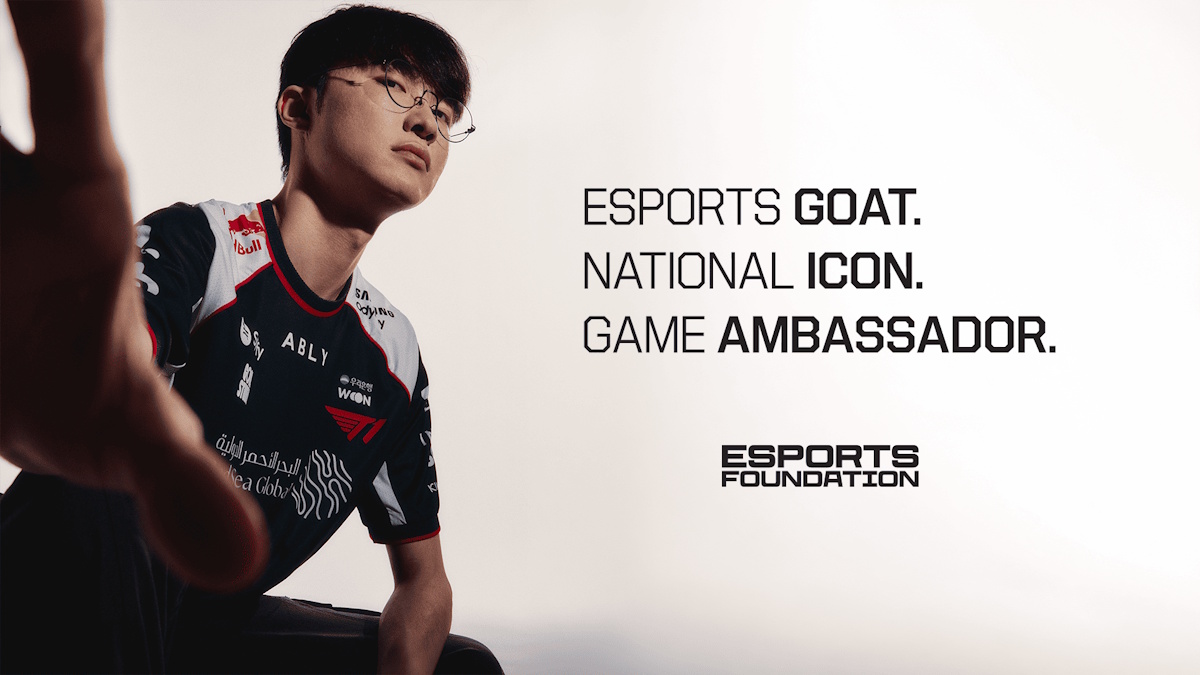
Lee “Faker” Sang-hyeok joins Cristiano Ronaldo and Magnus Carlsen in the Esports Foundation’s Ambassador Program.
The Esports Foundation (EF) has appointed Lee “Faker” Sang-hyeok as a Game Ambassador for the Esports World Cup (EWC) and Esports Nations Cup (ENC) through 2028, the organization said on July 15, 2026 in a statement issued from Riyadh and Paris.
EF said Faker joins Cristiano Ronaldo, listed as the Foundation’s Global Ambassador, and Magnus Carlsen as part of the Esports Foundation Ambassador Program. The Foundation said Faker will represent “the perspective of esports players” across its international events, athlete initiatives, media engagements and leadership forums.
“You can’t talk about esports without mentioning Faker. He is the defining athlete of competitive gaming: a champion whose excellence, discipline and longevity have inspired an entire generation,” said Ralf Reichert, Chief Executive Officer of the Esports Foundation. “As our Game Ambassador, Faker represents something fundamental to the Ambassador Program: esports creates its own global sporting icons. Across EWC, ENC and NGSC, he will help ensure that the players who built this sport have a voice in shaping where it goes next.”
Faker said: “Competition has shaped my life, and I am proud to join the Esports Foundation as Game Ambassador. I want to continue competing for the biggest titles with T1 while representing the players and fans who have helped esports grow worldwide. Through the Esports World Cup, Esports Nations Cup and the Foundation’s wider platforms, I hope to inspire the next generation to pursue excellence, remain resilient and believe in how far competitive gaming can take them. There is still much more to achieve.”
EF highlighted Faker’s competitive record, describing him as a six-time League of Legends World Champion, EWC 2024 winner, two-time MSI champion and ten-time domestic champion with T1. The Foundation also said Faker became the first esports athlete to receive the Blue Dragon Medal in 2026, describing it as the Republic of Korea’s highest sporting honor awarded by President Lee Jae-myung.
The post Esports Foundation names Faker Game Ambassador for EWC and ENC through 2028 appeared first on EE Gaming | Global iGaming & Tech Intelligence Hub.

Midnite has agreed a partnership with Middlesbrough FC that will see the UK bookmaker become the club’s principal partner and front-of-shirt sponsor for the 2026/27 campaign, which Middlesbrough describes as its landmark 150th season.
The companies announced the deal alongside a fan activation at Riverside Stadium on Thursday, July 9, branded “This Season’s On Us”. The initiative offered supporters prizes including 2026/27 season tickets, 2026/27 shirts, match tickets, or a £25 club shop voucher, with fans required to answer Middlesbrough trivia and complete a football challenge.
Middlesbrough former players Craig Hignett and David Wheater attended the event, and, according to the company, took bonus attempts on behalf of participants who missed out.
Andrew Mook, Midnite’s Head of Brand Marketing, said:
“Middlesbrough have a storied history and we’re delighted to announce this partnership during such a monumental year with the club celebrating their 150th anniversary.
“It was great to see so many Middlesbrough fans at the “This Season’s On Us” activation, we hope they enjoyed taking part and meeting club legends, with David Wheater hitting top bins on several occasions and allowing fans to win big with season tickets.
“We can’t wait to get to Riverside Stadium in August to kick-off a new season and we’re excited to say that we have plenty of new and captivating campaigns planned.”
Lee Fryett, Middlesbrough FC Chief Commercial Officer, added:
“We’re delighted to welcome Midnite as our new Principal Partner.
“We’re looking forward to working closely with Midnite to develop engaging campaigns, content and unique experiences that bring our fans even closer to the club.
“We’re confident this partnership will provide real value for our supporters while supporting our ambitions both on and off the pitch.”
The post Midnite signs as Middlesbrough FC principal partner for 2026/27 season appeared first on EE Gaming | Global iGaming & Tech Intelligence Hub.
ThrillTech has been awarded a Gaming-Related Supplier licence by the Alcohol and Gaming Commission of Ontario (AGCO), clearing the company to launch in Ontario’s regulated market.
The licence allows ThrillTech to deploy its opt-in side bet jackpots technology with regulated online casino, sports betting and lottery operators across the province.
Benjamin Bradtke, Co-Founder of ThrillTech, said: “Securing our AGCO licence is a major step in our mission to transform how jackpots are delivered at scale across regulated markets. This latest certification is testament to our robust technology and trusted compliance frameworks, allowing us to continue our global growth trajectory. We are thrilled to bring our proven, compliant jackpot technology to Ontario, empowering locally licensed operators to uplift revenue without cannibalising existing spend.”
The company said its “ThrillPots” mechanics sit as an independent, player-funded side bet and do not alter the underlying game’s return-to-player mathematics.
ThrillTech said the Ontario approval enables its existing multinational partners that also operate in the province to launch its side bet jackpots locally, while it also holds talks with potential new operator partners. The company lists its regulated footprint as including the United Kingdom, Sweden, the Netherlands, Romania, Malta, Gibraltar, Brazil and Peru.
The post ThrillTech secures AGCO supplier licence for Ontario launch appeared first on EE Gaming | Global iGaming & Tech Intelligence Hub.

-

 Compliance Updates5 days ago
Arizona Department of Gaming Issues Cease-and-Desist Orders to Multiple Operators Linked to Underage Gambling and Illegal Activity
-
 Latest News7 days ago
ELA Games releases Flames Fruits Frenzy Hold and Win slot
-
Compliance Updates6 days ago
KONAMI GROUP’s Konami Gaming Inc. First to Submit Manufacturer License Application in Japan’s Emerging IR Market
-
Latest News7 days ago
PG Soft appoints Hugo Baungartner as General Manager LatAm
-
Canada7 days ago
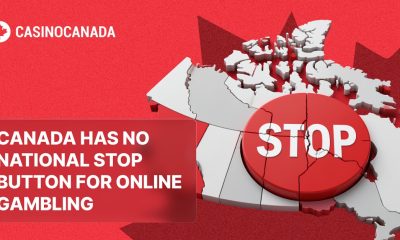
Canada’s Safer Gambling Gap: Why Market Success Doesn’t Always Equal Player Safety
-
Latest News7 days ago
Tom Horn Gaming ships Royal Ruby FeatureStorm slot worldwide on 14 July 2026
-
Latest News7 days ago
Booming Games launches Fish Tales: Double Catch Max Scatter
-
Latest News7 days ago
BC.GAME names Guillermo Ochoa brand ambassador for Mexico push