Latest News
INTERNATIONAL GAME TECHNOLOGY PLC REPORTS SECOND QUARTER 2022 RESULTS

- Revenue of $1.02 billion, down 2% as reported and up 3% at constant currency, led by 23% growth in Global Gaming
- Operating income of $228 million; operating income margin of 22% at high end of outlook on substantial increase in Global Gaming profitability and resilience in Global Lottery margin
- Adjusted EBITDA of $409 million, in line with prior year’s record level at constant currency as Global Gaming performance offsets Lottery discrete benefits in the prior year; 40% adjusted EBITDA margin remains among the highest in Company history
- Recognized a non-operating expense of $150 million representing the probable loss associated with legal proceedings related to Double Down Interactive LLC and its social gaming business sold in 2017
- Diluted EPS from continuing operations of $(0.02); Adjusted diluted EPS from continuing operations of $0.57, up 78% from the prior year
- Compelling shareholder returns with $135 million deployed for cash dividends and share repurchases year-to-date
- Tightening full-year 2022 revenue outlook to reflect currency movements and perimeter impact from previously announced divestiture; reconfirming operating income margin outlook as fundamentals remain strong
International Game Technology PLC reported financial results for the second quarter ended June 30, 2022. Today, at 8:00 a.m. EDT, management will host a conference call and webcast to present the results; access details are provided below.
“Strong customer and player demand for IGT’s products and solutions drove some of our strongest profit results ever in the second quarter and first half of the year,” said Vince Sadusky, CEO of IGT. “Our business profile is supported by significant recurring revenue streams backed by long-term contracts and resilient end markets, providing a solid foundation on which to grow. We are laser focused on executing our strategic objectives and creating compelling value for our stakeholders.”
“Our first half results set us firmly on the path to achieving our 2022 financial targets,” said Max Chiara, CFO of IGT. “Rigor on costs and incremental revenue opportunities allow us to maintain our full-year operating income margin outlook despite unfavorable currency movements and macroeconomic challenges. At the same time, we are returning significant capital to shareholders via dividends and share repurchases.”
Overview of Consolidated Second Quarter 2022 Results
|
Quarter Ended |
Y/Y |
Constant |
|||
|
All amounts from continuing operations |
June 30, |
||||
|
2022 |
2021 |
||||
|
($ in millions) |
|||||
|
GAAP Financials: |
|||||
|
Revenue |
|||||
|
Global Lottery |
648 |
725 |
(11) % |
(4) % |
|
|
Global Gaming |
330 |
274 |
21 % |
23 % |
|
|
Digital & Betting |
43 |
42 |
1 % |
4 % |
|
|
Total revenue |
1,021 |
1,041 |
(2) % |
3 % |
|
|
Operating income (loss) |
|||||
|
Global Lottery |
230 |
300 |
(23) % |
(16) % |
|
|
Global Gaming |
57 |
1 |
NM |
NM |
|
|
Digital & Betting |
8 |
9 |
(11) % |
(10) % |
|
|
Corporate support expense |
(29) |
(26) |
(11) % |
(26) % |
|
|
Other(1) |
(39) |
(40) |
3 % |
2 % |
|
|
Total operating income |
228 |
244 |
(7) % |
1 % |
|
|
Operating income margin |
22 % |
23 % |
|||
|
Net cash provided by operating activities |
196 |
249 |
(21) % |
||
|
Cash and cash equivalents |
673 |
639 |
5 % |
||
|
Earnings per share – diluted |
$(0.02) |
$(0.48) |
96 % |
||
|
Non-GAAP Financial Measures: |
|||||
|
Adjusted EBITDA |
|||||
|
Global Lottery |
330 |
414 |
(20) % |
(13) % |
|
|
Global Gaming |
87 |
35 |
145 % |
150 % |
|
|
Digital & Betting |
12 |
13 |
(7) % |
(6) % |
|
|
Corporate support expense |
(20) |
(21) |
4 % |
(14) % |
|
|
Total Adjusted EBITDA |
409 |
442 |
(7) % |
(1) % |
|
|
Adjusted EBITDA margin |
40 % |
4 % |
|||
|
Adjusted earnings per share – diluted |
$0.57 |
$0.32 |
78 % |
||
|
Free cash flow |
117 |
176 |
(34) % |
||
|
Net debt |
5,722 |
6,312 |
(9) % |
||
|
(1) Primarily includes purchase price amortization |
|
Note: Reconciliations of non-GAAP financial measures to the most directly comparable GAAP financial measures are provided at the end of this |
Key Highlights:
- Recently completed acquisition of iSoftBet, a leading iGaming content provider and third-party aggregator, greatly expanding the Company’s proprietary content library and providing a world-class game aggregation platform
- Won “Lottery Supplier of the Year” at 2022 SBC Awards North America in July
- Introduced high-performing Money Mania wide area progressive game to commercial gaming jurisdictions following a successful launch in tribal casinos
- Signed agreement with NUSTAR Resort & Casino to deploy IGT ADVANTAGE™ casino management system and a variety of leading games and cabinets
- Announced expanded sports betting partnership with SuperBook® Sports to Tennessee, the fourth state where IGT’s PlaySports platform is powering the SuperBook Sports mobile betting app
- Awarded a gold medal sustainability rating from EcoVadis, a leading sustainability rating agency
- Recently released 2021 Sustainability Report which outlines the Company’s demonstrated environmental, social, and governance (ESG) performance
Financial Highlights:
Consolidated revenue of $1.02 billion, down 2% as reported, or up 3% at constant currency, from $1.04 billion in the prior year
- Global Lottery revenue of $648 million compared to $725 million in the prior-year period, which included $70 million in prior-year benefits primarily from the closure of gaming halls in Italy
- Global Gaming revenue increases 21%, or 23% at constant currency, to $330 million, driven by strong U.S. & Canada replacement unit demand, higher average selling prices, and increased installed base yields
- Digital & Betting revenue of $43 million, stable with the prior year, as iCasino growth in the U.S. is partially offset by softness in other markets; North America sports betting market gross gaming revenue impacted by lower hold levels
Operating income of $228 million, down 7% as reported, or up 1% at constant currency, from $244 million in the prior-year period
- Global Lottery operating income down, primarily due to about $60 million related to prior-year benefits referenced above
- Global Gaming rises on higher revenue and profit flow through, partially offset by increased supply chain costs
- Digital & Betting operating income of $8 million was relatively stable with the prior year
Adjusted EBITDA of $409 million matches prior year’s record level at constant currency; Adjusted EBITDA margin of 40% remains among the highest in Company history
Net interest expense of $75 million compared to $91 million in the prior year, driven by lower average debt balances and interest rates
During the second quarter, the Company recognized a pre-tax non-operating expense of $150 million ($114 million after tax) representing the probable loss associated with ongoing litigation (Benson v. Double Down Interactive LLC, No. 2:18-cv-00525 (W.D. Wash.)) and associated claims related to Double Down Interactive LLC and its social gaming business sold in 2017 by International Game Technology, a wholly-owned subsidiary of the Company
Income tax benefit of $11 million compared to a provision of $32 million in the prior year, primarily driven by recognition of the non-operating expense mentioned above and foreign exchange losses in the prior year with no tax benefit
Income from continuing operations of $34 million versus a loss from continuing operations of $39 million in the prior-year period, driven by income tax benefit, gains in foreign exchange, and lower debt retirement costs
Net loss attributable to IGT PLC of $4 million compared to net income of $306 million in the prior year due to gain on sale and income from discontinued operations in the prior-year period
Net loss from continuing operations attributable to IGT PLC per diluted share of $0.02 compared to a net loss from continuing operations attributable to IGT per diluted share of $0.48 in the prior year, on higher net income; adjusted net income per diluted share increased 78% to $0.57
Net debt of $5.7 billion compared to $5.9 billion at December 31, 2021; Net debt leverage of 3.5x was stable compared to December 31, 2021
Cash and Liquidity Update
- Total liquidity of $2.1 billion as of June 30, 2022; $0.7 billion in unrestricted cash and $1.5 billion in additional borrowing capacity
- Executed amendment and extension of revolving credit facilities in July 2022
- Increased liquidity by $150 million to $1.83 billion and rebalanced EUR/USD mix to match operational exposure
- Extended maturities to July 2027
- Lowered interest margin and added ESG provision to allow for further potential reductions
- Raised annual permitted restricted payments basket from $300 million to $400 million at current credit rating; potential to increase to $550 million
Other Developments
The Company’s Board of Directors declared a quarterly cash dividend of $0.20 per common share
- Ex-dividend date of August 15, 2022
- Record date of August 16, 2022
- Payment date of August 30, 2022
Repurchased 750,000 shares for $15 million in the second quarter at an average price of $20.48 per share; 2.2 million shares repurchased for $54 million on a year-to-date basis at an average price of $24.89 per share
The Company expects to close on the sale of its Italian proximity payments/commercial services business in mid-to-late September
Tightening Full-year Revenue Outlook for Currency Rates and Business Disposition; Introducing Third Quarter 2022 Outlook
Full Year
- Revenue of $4.1 billion – $4.2 billion
- Lowered high end of range by $100 million
- Reflecting changes in currency rates and impact from sale of Italian proximity payments/commercial services business in Q3’22
- Operating income margin of 20% – 22% remains unchanged
- Cash from operations of $850 – $950 million
- Lowered high end of range by $50 million
- Primarily driven by a working capital investment in higher inventory levels to proactively manage supply chain disruptions
- Capital expenditures of approximately $350 million, lowered by $50 million to adjust for updated timing of spending
- Free cash flow outlook remains unchanged
Third Quarter
- Revenue of approximately $1.0 billion – $1.1 billion
- Operating income margin of 18% – 20% includes approximately 150 – 200 basis point impact from project-related expenses
Outlook assumptions
- EUR/USD exchange rate of 1.00 in the second half of 2022
- Impact from sale of Italian proximity payments/commercial services business in mid-to-late September 2022
- Operating income margin includes approximately 150 – 200 basis point impact from project-related and restructuring expenses expected in the second half of 2022
Powered by WPeMatico


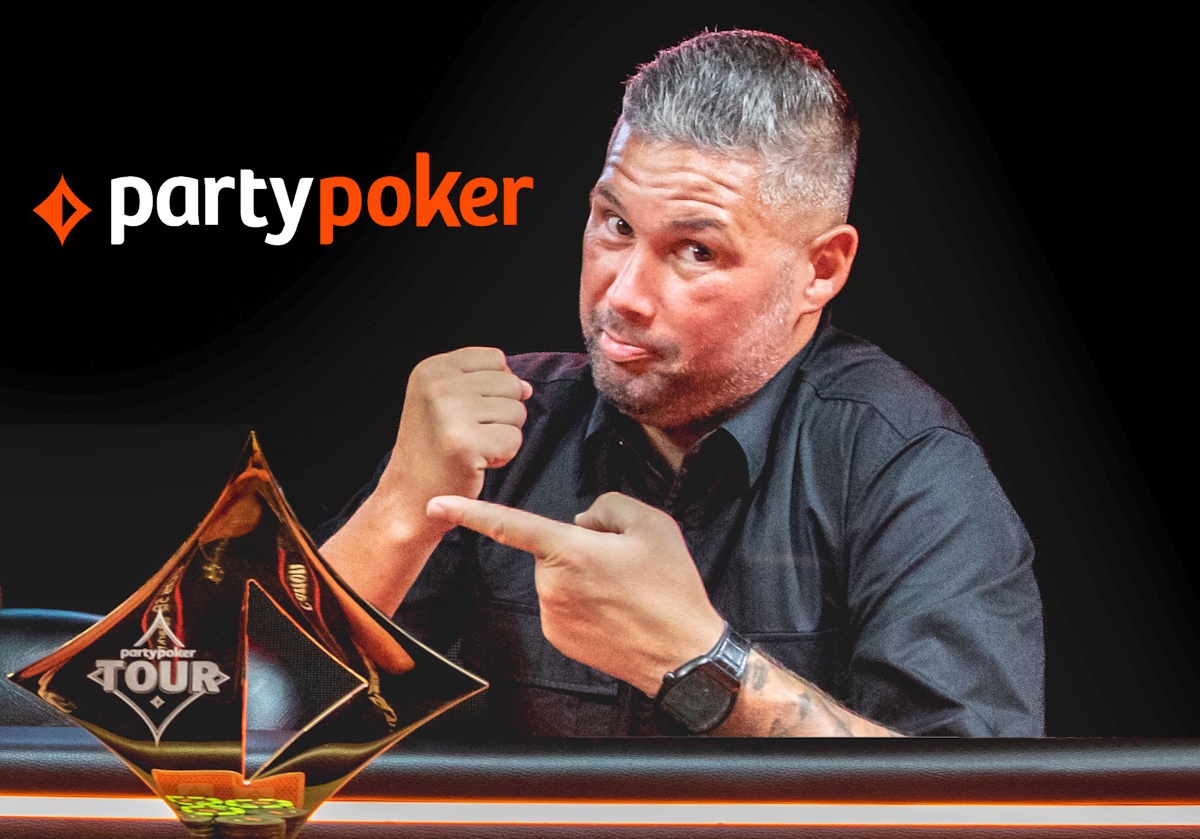
Former WBC cruiserweight champion to appear at PartyPoker Tour UK stops and take part in online activations.
PartyPoker has appointed former WBC Cruiserweight World Champion Tony Bellew as a brand ambassador for the remainder of 2026, with appearances tied to the operator’s live PartyPoker Tour and online poker offering.
The company said Bellew will be “a regular face” at its remaining UK tour stops this season following an earlier appearance at the PartyPoker Tour Birmingham. Bellew will also take part in online activity linked to the PartyPoker schedule.
“I had such a great time at the PartyPoker Tour Birmingham. The atmosphere, the people and the passion for the game were incredible. I’m really excited to be joining the PartyPoker team for the rest of the year, getting involved at the live events, meeting players and seeing where the cards take me,” Bellew said.
PartyPoker said Bellew is scheduled to attend each remaining UK stop on the 2026 PartyPoker Tour: London in July, Glasgow in August, Cork in November, and London in December. The operator also referenced a series of exclusive online events running alongside the live calendar.
The post Tony Bellew signs as PartyPoker brand ambassador through 2026 appeared first on EE Gaming | Global iGaming & Tech Intelligence Hub.

Cease-and-desist letters cite alleged felonies and underage access tied to BetOpenly, Bookmaker, Club WPT Online Poker, Kutt Inc., and Raffle Creator.
The Arizona Department of Gaming said it has issued cease-and-desist orders to five online platforms—BetOpenly, Bookmaker, Club WPT Online Poker, Kutt Inc., and Raffle Creator—after investigations that the Department says involved alleged illegal gambling activity and underage access in Arizona.
In its announcement, the Department said each enforcement action alleges conduct giving rise to three felonies under Arizona law: promotion of gambling, illegal control of an enterprise, and money laundering. The agency cited Arizona’s prohibition on gambling unless specifically authorized (Ariz. Rev. Stat. Tit. 13, Ch. 33) and said the legal gambling age in the state is 21.
“Arizona is taking decisive action against illegal gambling operators that put Arizonans at risk,” said Jackie Johnson, Department Director. “Our top priority is protecting Arizonans and I’m grateful for the efforts of our intelligence unit led by Chief Law Enforcement Officer Doug Jensen to do just that. Through these cease-and-desist orders we are putting operators on notice: their conduct runs contrary to Arizona law and they must stop promoting illegal gambling.”
The Department’s letters describe different alleged violations by operator. For BetOpenly, the Department said peer-to-peer gambling rules prohibit third-party benefit, and alleged the platform benefited via a commission structure while enabling event wagering and daily fantasy sports contests without the required state licenses, including availability to underage Arizonans. For Bookmaker, the Department said its investigation found wagering on horse racing, casino games, and sports betting without an event wagering license or an advanced deposit wagering provider license, adding that online casino games are not legal in Arizona.
For Club WPT Online Poker, the Department alleged the platform enabled individuals under 21 in Arizona to enter pay-to-play online poker tournaments for prizes while using deceptive “no purchase necessary” language; the Department said online poker is illegal in Arizona. For Kutt Inc., the Department said Arizona “social” gambling prohibits third-party benefit and directed the operator to stop allowing Arizona users to deposit money and wager on sports, politics, pop culture, and casino-style games. For Raffle Creator, the Department said the operator did not meet requirements that allow Arizona nonprofits to conduct lawful raffles and alleged it allowed people under 21 to purchase tickets for prize chances.
The Department said the notified entities are directed to immediately stop all gambling operations and activities in Arizona “whether through mobile applications, online, or otherwise,” and to cease any future illegal gambling in the state. It added that future actions may include criminal charges or civil action against entities, principals, and employees, and that operators “may be subject to a potential award of restitution” and forfeiture of monies acquired due to the alleged conduct.
The post Arizona regulator orders five operators to stop alleged illegal gambling activity appeared first on EE Gaming | Global iGaming & Tech Intelligence Hub.

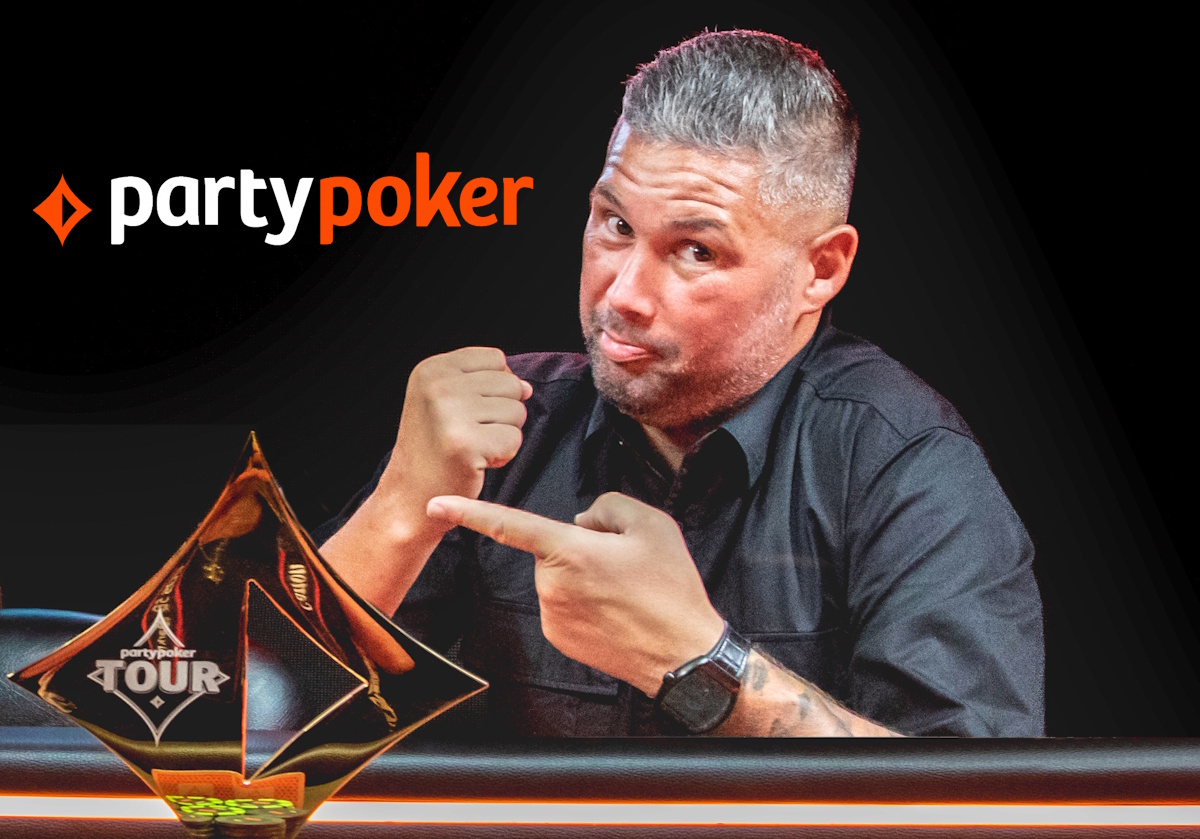
Tony Bellew has officially joined the PartyPoker Brand Ambassador team for the remainder of 2026, strengthening the brand’s growing roster of ambassadors and reinforcing its commitment to bringing poker to a wider audience.
A former WBC Cruiserweight World Champion and one of Britain’s most recognisable sporting personalities, Bellew will play an active role across both PartyPoker’s live tour and online offering throughout the rest of the year.
Speaking about joining the team, Tony Bellew said: “I had such a great time at the PartyPoker Tour Birmingham. The atmosphere, the people and the passion for the game were incredible. I’m really excited to be joining the PartyPoker team for the rest of the year, getting involved at the live events, meeting players and seeing where the cards take me.”
His return follows a hugely successful appearance at the PartyPoker Tour Birmingham earlier this year, where he embraced the atmosphere, spent time with players and immersed himself in the event. After thoroughly enjoying the experience, Bellew will now become a regular face at the remaining UK stops on the PartyPoker Tour throughout the rest of the 2026 season.
As part of his ambassadorial role, Bellew will attend every remaining UK stop PartyPoker Tour in 2026:
- London – July
- Glasgow – August
- Cork – November
- London – December
With four live festival stops and a series of exclusive online events still to come, players will have plenty of opportunities to meet Bellew at the tables throughout the remainder of the 2026 PartyPoker calendar. Look out for opportunities to take him on online, and at the PartyPoker Tour in Glasgow, Cork and London.
Stay Connected PartyPoker
- Instagram: @partypoker
- Twitter/X: @partypoker
- YouTube: partypokeryt
- Facebook: partypoker
- Discord: PartyPoker Tour
The post Former WBC World Champion Tony Bellew Joins PartyPoker as Brand Ambassador appeared first on Americas iGaming & Sports Betting News.

-

 10bet5 days ago
Ellis Park Stadium signs five-year naming rights deal with 10bet
-
central asia5 days ago
Groove confirms attendance at SBC Summit Tbilisi 2026
-
Bucharest4 days ago
Eeze opens 1,200 sqm Bucharest hub for technical teams
-
API integration4 days ago
Belatra signs cooperation deal to distribute slots via VeliGames
-
affiliate marketing5 days ago
SEOBROTHERS’ Aleksandra Drigo flags higher barriers for affiliates in regulated Alberta
-
AB Trav och Galopp3 days ago
BetMakers Technology Group Selected to Distribute ATG Horse Racing Content Across Australia and New Zealand
-
Big Bass Blast5 days ago
Pragmatic Play adds Big Bass Blast to Big Bass slot series
-
Compliance Updates5 days ago
KSA Updates Guidelines for Conducting Means Test