Latest News
Livespins welcomes Booming Games to its platform

Studio’s slots now available to the provider’s team of streamers for the first time as the popularity of streaming continues to rise
Livespins is continuing with its mission to socially charge the online casino space and to deliver new player experiences by adding yet another popular slot developer, Booming Games, to its highly innovative streaming platform.
Livespins is already live on casinofridayand have proved to be a big hit with players seeking engaging and exciting ways to enjoy online casino.
The partnership will see Booming Games integrate its entire slot portfolio into the Livespins platform so that the provider’s growing lineup of super-star streamers can use the developer’s content in their broadcasts to players. This includes chart-toppers such as Cash Pig, Buffalo Hold and Win and Mighty Gorilla.
Livespins has taken the online casino market by storm with players not only able to watch thrilling slots streams, but also get directly involved by betting behind the action in real-time. This creates a group bet and a shared experience but with each player choosing their bet value and number of spins.
Social interaction is also a key part of the Livespins experience, and this is provided by players being able to communicate with the streamer and each other throughout. Players can also add reactions to the explosive action taking place during each broadcast.
While the streamer plays a vital role in the success of the stream, so too does that content and that is why Livespins is partnering with studios whose games are popular with players.
Michael Pedersen, CCO at Livespins, said: “Booming Games is renowned for developing slots that pack a punch and they will undoubtedly prove to be a big hit with our streamers and of course the players they broadcast to.
“To deliver the action and excitement that players are seeking it is important for our streamers to be able to access slots that offer high levels of anticipation and entertainment with each spin, and Booming Games’ suite of titles do just that.
“This is yet another great studio partnership for us and we look forward to working with Booming Games and helping them fully leverage the power of live streaming.”
Frederik Niehusen, CCO at Booming Games, added: “Livespins really is changing the way players experience online casino and we absolutely wanted to be a part of its revolution. We can’t wait to see the first of its streamers broadcast our games to players and for us to reach a wider audience than ever before.”
Powered by WPeMatico


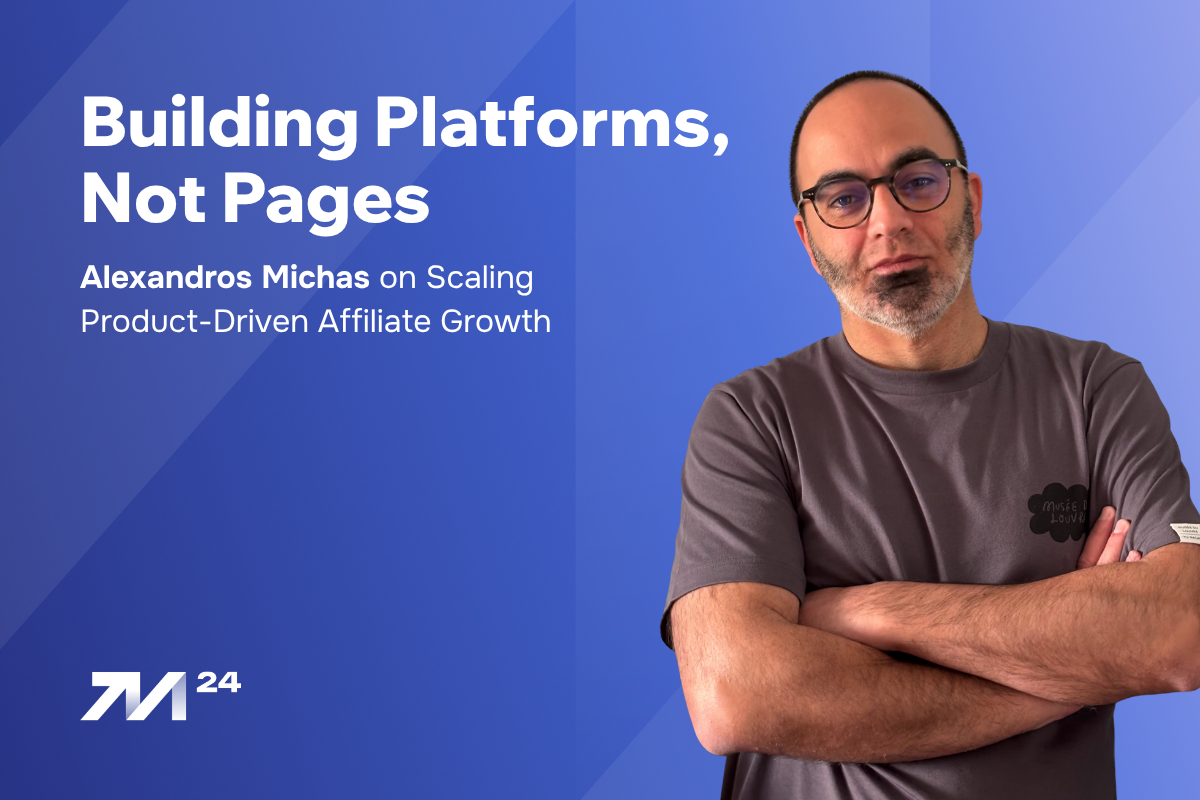
In the world of affiliate marketing, a little chaos is usually the norm. Managing dozens of websites across different regions often means endless firefighting. Enter Alexandros Michas, who was recently appointed as the Head of Website Operations at Media 24. In this interview, we talked with Alexandros about how he is replacing chaotic, site-by-site fixes with a single blueprint to turn standard affiliate sites into true digital platforms.
A few months ago, you were appointed as the Head of Website Operations at Media 24. To give our readers a look behind the scenes, what exactly does this role involve, and what are the main things you focus on in this position?
My job is to take the big-picture goals discussed with our CEO and figure out how we actually build them. I translate high-level business strategy into a concrete technical roadmap and take responsibility for it and everything that goes into our websites.
Day-to-day, I am leading our talented and experienced team of site managers. Together, we look at our portfolio of websites not just as platforms, but as products. We are constantly tweaking site functionality, brainstorming new product features, and upgrading the user experience. The ultimate goal is to move past standard affiliate landing pages and build something stickier. We want our websites to be the definitive, go-to destination where sports bettors in any given region don’t just visit once to find a bookmaker, but actively want to return to for value.
With dozens of websites in the portfolio, how do you prevent operational chaos? What does a scalable architecture look like for a modern affiliate house?
Honestly, if you treat every site like its own special project, you’ll drown in chaos overnight. The secret is standardisation.
Of course, every region has its own local specifics that we have to adapt to, and we do so by having locals as website managers. But underneath it all, we build everything on a single, shared blueprint. When we design a new feature, we don’t just build it for one site. We build it to level up the whole portfolio at once. It also makes expanding into a new market much easier. If a promising new region opens up tomorrow, we don’t have to start from scratch. We just drop in a product that’s already battle-tested and ready to go.
I’ve also set up teams around each GEO and manager, which include SEO specialists, content managers, and others, to ensure a smooth and efficient workflow.
Since you rely on a single blueprint, how do you manage the human element? How much freedom do your site managers have to experiment in their local markets versus sticking to the playbook?
Our site managers are the true experts in their specific regions, so they have total autonomy over their local content plans and figuring out what makes bettors in their area tick. They own that local strategy completely, while the blueprint just ensures they are building on a rock-solid foundation.
Because they are on the ground, I actually encourage them to constantly pitch product improvements. I always listen to their suggestions because a great idea shouldn’t just stay on one site. If a manager finds a feature that works incredibly well for their audience, we don’t just keep it there. We roll it into our core blueprint so the entire portfolio benefits from it.
The company has shifted toward building true digital platforms rather than just simple affiliate sites that rank. In practice, what is the biggest difference between those two approaches?
The biggest difference is value and retention. A simple affiliate site is transactional. It’s built entirely around SEO keywords just to capture a click, send the user to a sportsbook, and hope for a conversion. If Google tweaks its algorithm, that site is incredibly vulnerable because users have no real loyalty to it.
A digital platform, on the other hand, is an actual product. We aren’t just trying to get a click. We are trying to be a helpful place for the sports bettor. That means building features, community, and data hubs. It takes a lot more time and energy to maintain, but it turns a casual visitor into a loyal user. They don’t just find us on Google once. They bookmark the site and keep coming back because the product itself is valuable.
The World Cup is live right now. An event of this scale is a massive test for any affiliate. How did you approach the preparation for this global tournament from a product perspective, and what features did you ship to keep bettors engaged?
We knew the traffic spikes would be insane, so preparation actually started months ago. From a product perspective, the ultimate goal was instant utility. During a massive event like this, users want their information immediately, without any friction.
Feature-wise, we shipped an advanced match centre, a tournament bracket simulator, and worked heavily on upgrading our entire content strategy specifically for the World Cup. Because of the shared framework we talked about earlier, we didn’t have to build these tools site-by-site. Our blueprint allowed us to deploy these advanced features across all of our sports betting properties simultaneously, giving every region a premium product at the same time.
When the final whistle blows on the World Cup and we look back at the rest of 2026, what will have to happen for you to look back and say we absolutely nailed it?
On the data side, I want to look at our metrics and see a clear spike in returning users. That will be the ultimate proof that our platform strategy is actually working.
But our upgrades and feature improvements don’t just stop with the World Cup. We already have plenty of things in the pipeline, and we are planning a massive push right before the main European leagues kick off late this summer.
At the end of the day, I’ll know we nailed it if our site managers are effortlessly launching these new features, seeing the direct results of their work, and feeling like they have the absolute best tools in the industry to win their markets. That would be proof that we didn’t just build websites. We built a highly scalable affiliate product.
The post Alexandros Michas on Building Platforms, Not Pages appeared first on EE Gaming | Global iGaming & Tech Intelligence Hub.

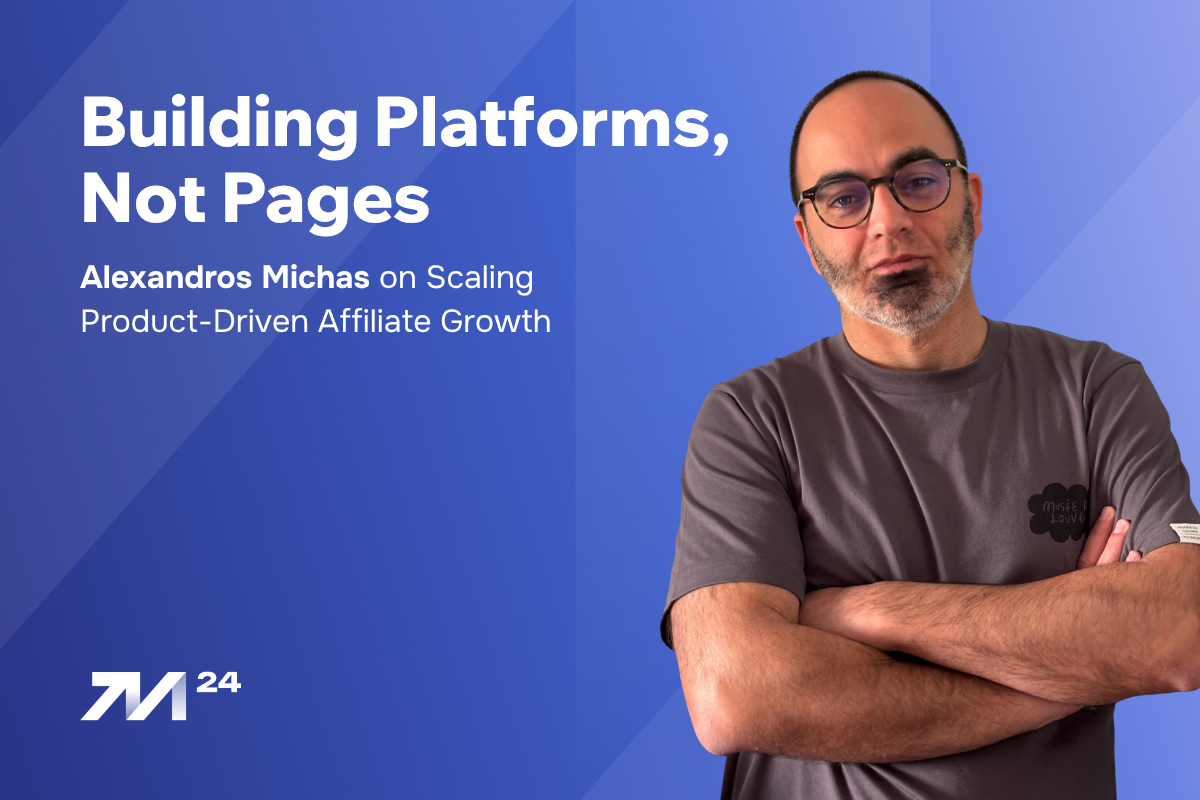
In the world of affiliate marketing, a little chaos is usually the norm. Managing dozens of websites across different regions often means endless firefighting. Enter Alexandros Michas, who was recently appointed as the Head of Website Operations at Media 24. In this interview, we talked with Alexandros about how he is replacing chaotic, site-by-site fixes with a single blueprint to turn standard affiliate sites into true digital platforms.
A few months ago, you were appointed as the Head of Website Operations at Media 24. To give our readers a look behind the scenes, what exactly does this role involve, and what are the main things you focus on in this position?
My job is to take the big-picture goals discussed with our CEO and figure out how we actually build them. I translate high-level business strategy into a concrete technical roadmap and take responsibility for it and everything that goes into our websites.
Day-to-day, I am leading our talented and experienced team of site managers. Together, we look at our portfolio of websites not just as platforms, but as products. We are constantly tweaking site functionality, brainstorming new product features, and upgrading the user experience. The ultimate goal is to move past standard affiliate landing pages and build something stickier. We want our websites to be the definitive, go-to destination where sports bettors in any given region don’t just visit once to find a bookmaker, but actively want to return to for value.
With dozens of websites in the portfolio, how do you prevent operational chaos? What does a scalable architecture look like for a modern affiliate house?
Honestly, if you treat every site like its own special project, you’ll drown in chaos overnight. The secret is standardisation.
Of course, every region has its own local specifics that we have to adapt to, and we do so by having locals as website managers. But underneath it all, we build everything on a single, shared blueprint. When we design a new feature, we don’t just build it for one site. We build it to level up the whole portfolio at once. It also makes expanding into a new market much easier. If a promising new region opens up tomorrow, we don’t have to start from scratch. We just drop in a product that’s already battle-tested and ready to go.
I’ve also set up teams around each GEO and manager, which include SEO specialists, content managers, and others, to ensure a smooth and efficient workflow.
Since you rely on a single blueprint, how do you manage the human element? How much freedom do your site managers have to experiment in their local markets versus sticking to the playbook?
Our site managers are the true experts in their specific regions, so they have total autonomy over their local content plans and figuring out what makes bettors in their area tick. They own that local strategy completely, while the blueprint just ensures they are building on a rock-solid foundation.
Because they are on the ground, I actually encourage them to constantly pitch product improvements. I always listen to their suggestions because a great idea shouldn’t just stay on one site. If a manager finds a feature that works incredibly well for their audience, we don’t just keep it there. We roll it into our core blueprint so the entire portfolio benefits from it.
The company has shifted toward building true digital platforms rather than just simple affiliate sites that rank. In practice, what is the biggest difference between those two approaches?
The biggest difference is value and retention. A simple affiliate site is transactional. It’s built entirely around SEO keywords just to capture a click, send the user to a sportsbook, and hope for a conversion. If Google tweaks its algorithm, that site is incredibly vulnerable because users have no real loyalty to it.
A digital platform, on the other hand, is an actual product. We aren’t just trying to get a click. We are trying to be a helpful place for the sports bettor. That means building features, community, and data hubs. It takes a lot more time and energy to maintain, but it turns a casual visitor into a loyal user. They don’t just find us on Google once. They bookmark the site and keep coming back because the product itself is valuable.
The World Cup is live right now. An event of this scale is a massive test for any affiliate. How did you approach the preparation for this global tournament from a product perspective, and what features did you ship to keep bettors engaged?
We knew the traffic spikes would be insane, so preparation actually started months ago. From a product perspective, the ultimate goal was instant utility. During a massive event like this, users want their information immediately, without any friction.
Feature-wise, we shipped an advanced match centre, a tournament bracket simulator, and worked heavily on upgrading our entire content strategy specifically for the World Cup. Because of the shared framework we talked about earlier, we didn’t have to build these tools site-by-site. Our blueprint allowed us to deploy these advanced features across all of our sports betting properties simultaneously, giving every region a premium product at the same time.
When the final whistle blows on the World Cup and we look back at the rest of 2026, what will have to happen for you to look back and say we absolutely nailed it?
On the data side, I want to look at our metrics and see a clear spike in returning users. That will be the ultimate proof that our platform strategy is actually working.
But our upgrades and feature improvements don’t just stop with the World Cup. We already have plenty of things in the pipeline, and we are planning a massive push right before the main European leagues kick off late this summer.
At the end of the day, I’ll know we nailed it if our site managers are effortlessly launching these new features, seeing the direct results of their work, and feeling like they have the absolute best tools in the industry to win their markets. That would be proof that we didn’t just build websites. We built a highly scalable affiliate product.
The post Alexandros Michas on Building Platforms, Not Pages appeared first on Americas iGaming & Sports Betting News.

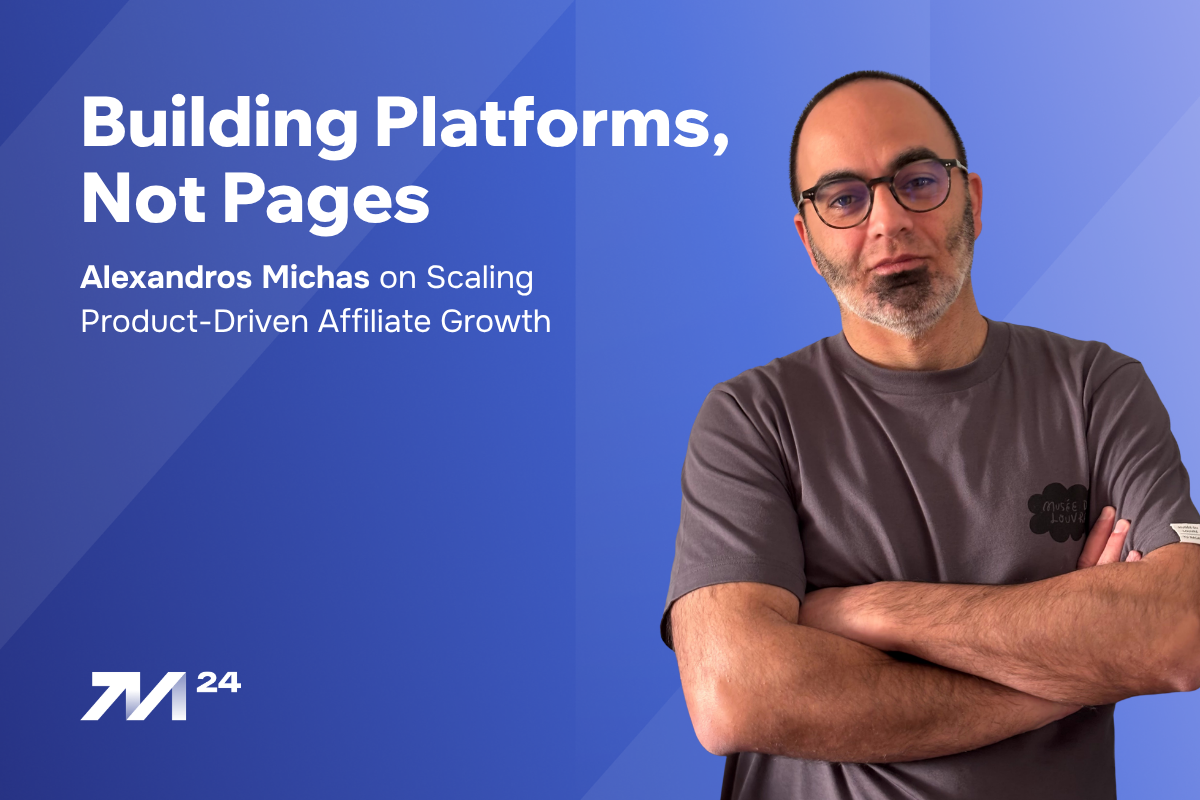
In the world of affiliate marketing, a little chaos is usually the norm. Managing dozens of websites across different regions often means endless firefighting. Enter Alexandros Michas, who was recently appointed as the Head of Website Operations at Media 24. In this interview, we talked with Alexandros about how he is replacing chaotic, site-by-site fixes with a single blueprint to turn standard affiliate sites into true digital platforms.
A few months ago, you were appointed as the Head of Website Operations at Media 24. To give our readers a look behind the scenes, what exactly does this role involve, and what are the main things you focus on in this position?
My job is to take the big-picture goals discussed with our CEO and figure out how we actually build them. I translate high-level business strategy into a concrete technical roadmap and take responsibility for it and everything that goes into our websites.
Day-to-day, I am leading our talented and experienced team of site managers. Together, we look at our portfolio of websites not just as platforms, but as products. We are constantly tweaking site functionality, brainstorming new product features, and upgrading the user experience. The ultimate goal is to move past standard affiliate landing pages and build something stickier. We want our websites to be the definitive, go-to destination where sports bettors in any given region don’t just visit once to find a bookmaker, but actively want to return to for value.
With dozens of websites in the portfolio, how do you prevent operational chaos? What does a scalable architecture look like for a modern affiliate house?
Honestly, if you treat every site like its own special project, you’ll drown in chaos overnight. The secret is standardisation.
Of course, every region has its own local specifics that we have to adapt to, and we do so by having locals as website managers. But underneath it all, we build everything on a single, shared blueprint. When we design a new feature, we don’t just build it for one site. We build it to level up the whole portfolio at once. It also makes expanding into a new market much easier. If a promising new region opens up tomorrow, we don’t have to start from scratch. We just drop in a product that’s already battle-tested and ready to go.
I’ve also set up teams around each GEO and manager, which include SEO specialists, content managers, and others, to ensure a smooth and efficient workflow.
Since you rely on a single blueprint, how do you manage the human element? How much freedom do your site managers have to experiment in their local markets versus sticking to the playbook?
Our site managers are the true experts in their specific regions, so they have total autonomy over their local content plans and figuring out what makes bettors in their area tick. They own that local strategy completely, while the blueprint just ensures they are building on a rock-solid foundation.
Because they are on the ground, I actually encourage them to constantly pitch product improvements. I always listen to their suggestions because a great idea shouldn’t just stay on one site. If a manager finds a feature that works incredibly well for their audience, we don’t just keep it there. We roll it into our core blueprint so the entire portfolio benefits from it.
The company has shifted toward building true digital platforms rather than just simple affiliate sites that rank. In practice, what is the biggest difference between those two approaches?
The biggest difference is value and retention. A simple affiliate site is transactional. It’s built entirely around SEO keywords just to capture a click, send the user to a sportsbook, and hope for a conversion. If Google tweaks its algorithm, that site is incredibly vulnerable because users have no real loyalty to it.
A digital platform, on the other hand, is an actual product. We aren’t just trying to get a click. We are trying to be a helpful place for the sports bettor. That means building features, community, and data hubs. It takes a lot more time and energy to maintain, but it turns a casual visitor into a loyal user. They don’t just find us on Google once. They bookmark the site and keep coming back because the product itself is valuable.
The World Cup is live right now. An event of this scale is a massive test for any affiliate. How did you approach the preparation for this global tournament from a product perspective, and what features did you ship to keep bettors engaged?
We knew the traffic spikes would be insane, so preparation actually started months ago. From a product perspective, the ultimate goal was instant utility. During a massive event like this, users want their information immediately, without any friction.
Feature-wise, we shipped an advanced match centre, a tournament bracket simulator, and worked heavily on upgrading our entire content strategy specifically for the World Cup. Because of the shared framework we talked about earlier, we didn’t have to build these tools site-by-site. Our blueprint allowed us to deploy these advanced features across all of our sports betting properties simultaneously, giving every region a premium product at the same time.
When the final whistle blows on the World Cup and we look back at the rest of 2026, what will have to happen for you to look back and say we absolutely nailed it?
On the data side, I want to look at our metrics and see a clear spike in returning users. That will be the ultimate proof that our platform strategy is actually working.
But our upgrades and feature improvements don’t just stop with the World Cup. We already have plenty of things in the pipeline, and we are planning a massive push right before the main European leagues kick off late this summer.
At the end of the day, I’ll know we nailed it if our site managers are effortlessly launching these new features, seeing the direct results of their work, and feeling like they have the absolute best tools in the industry to win their markets. That would be proof that we didn’t just build websites. We built a highly scalable affiliate product.

-

 AGCO6 days ago
AGCO Fines Great Canadian Entertainment $120,000 for Using Unauthorised Gaming System Software at Four Casinos
-
Affiliate Industry5 days ago
Hub Affiliations Triumphs at the iGB Affiliate Awards 2026: Winner of Programme/Network Campaign of the Year
-
Latest News5 days ago
N1 Partners at iGB L!VE 2026: Bringing Together Affiliates, Art and Innovation
-
Canada6 days ago
St8 expands Octoplay aggregation deal to Ontario and the UK
-
Asia6 days ago
The UAE Lottery joins SAGIP outreach with Philippine Consulate and Infinite Communities
-
Latest News6 days ago
LEON announces LEON.bet Masters, a new CS2 tournament in Portugal
-
Canada6 days ago
St8 extends Octoplay partnership into Ontario and the UK
-
0006 days ago
Booming Games launches Booming Buffalo Hold and Win Extreme 25,000