Compliance Updates
UKGC Chief Executive, Andrew Rhodes speech to ICE World Regulatory Briefing

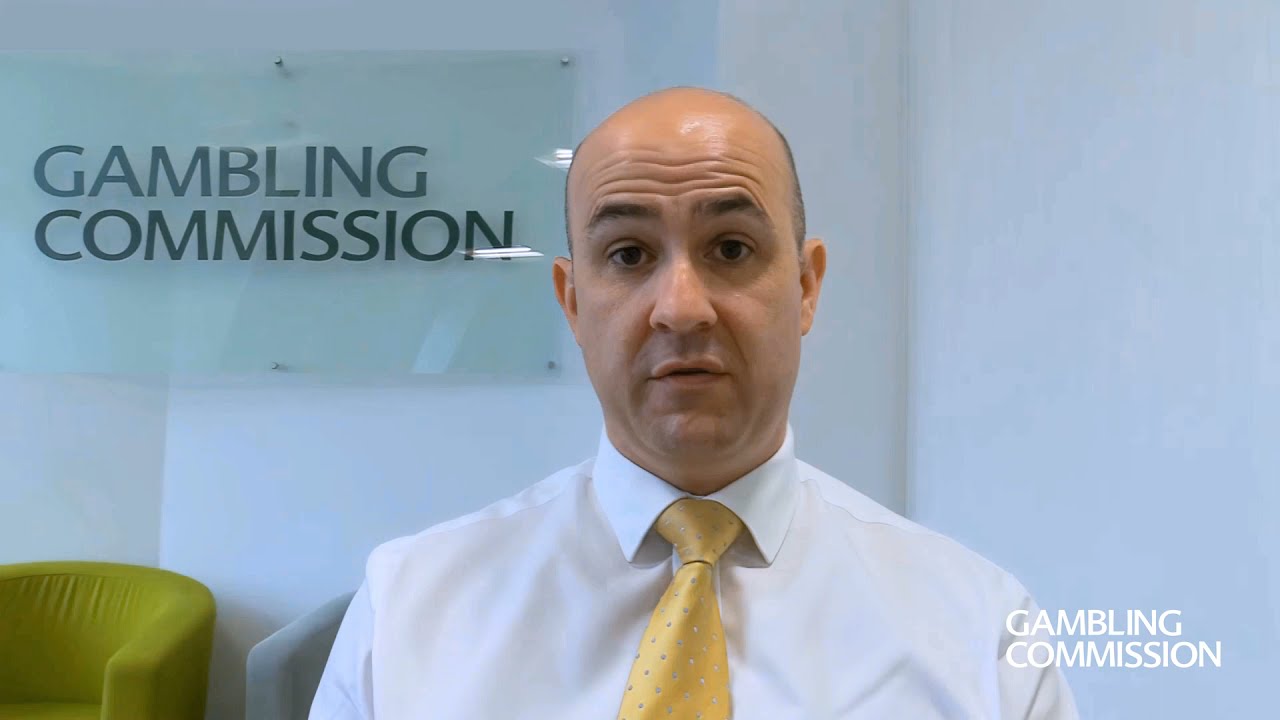
Chief executive Andrew Rhodes’ speech, delivered at the 2022 ICE World Regulatory Briefing.
Thank you, it’s great to be able to gather in person again after a difficult few years. The pandemic is still here but being able to meet in person again like today is really valuable.
Thank you to the staff and the venue for making it safe for us to do so. The world has changed since we last met and so has gambling. There is a danger in a speech such as this, of saying what we are expected to say and to reinforce the messages we often feel we need to reinforce.
There are some universal truths about the industry we regulate, but we also need to be realistic about those truths and not lose sight of what else is happening in this sector.
There is a whole new frontier of novel products out there now, and I want to talk about these unregulated products also.
Like traditional gambling though, these novel products can and do cause harm, so I will update you on where we see our work in tackling gambling harms right now.
Increasingly it’s also true that gambling is a global tech industry, and tackling harm, crime and fairness in global tech requires an innovative response from regulators. So, I will talk through how we are rising to that challenge as well.
But first, let’s take stock of where we are and how the changed world we now live in presents both new opportunities and new threats.
The gambling market in Great Britain had already gone through radical changes before the pandemic struck. But Covid unavoidably accelerated the changes that were taking place.
I mentioned universal truths – gambling is a rental economy – it is based around taking money in exchange for an experience. In Great Britain, the gross yield for the gambling industry equates to taking £450 a second off customers.
The industry is worth some £14bn, roughly the same size as the UK agricultural industry.
Even before the pandemic, online and remote gambling was bigger than traditional bricks and mortar gambling. That’s an important share of a financially significant market.
Nearly half the population gamble in one way or another each month. And that shift to online includes an equally important move to mobile. Gambling can be (and for some people is) with them every waking hour.
These are challenges the Gambling Commission has been tackling for a number of years already:
- we have banned gambling with credit cards
- through our industry challenges we strengthened protections for High Value Customers or ‘VIPs’, made online games safer by design and improved the use of ad-tech to protect children, young and vulnerable people
- we strengthened age and identity verification and we made offering the online self-exclusion tool GAMSTOP mandatory for online operators in Great Britain.
What’s more, we continue to look for new ways to make gambling fairer and safer.
For example, we will shortly be publishing the next steps following last year’s customer interaction consultation. And we continue to make progress on the development of a ‘Single Customer View’, which I will touch on again later. But possibly more concerning is what is happening beyond the regulated spaces that we patrol.
I don’t mean the ‘Black Market’ of unlicensed gambling when I say that either. That is a concern and one that the Commission also tackles day in, day out. And we are deploying more resources to combat illegal online gambling.
But this is not the overwhelming risk it is sometimes painted to be, nor can it be the excuse for not addressing some of the extremes we see in the regulated industry.
When we licence something, we are indicating it comes with some safeguards, standards and consequences. Consumers expect to take some value from that and when someone argues that we should not address the issues we see, they are asking us to sanction something simply because someone else on the black market is worse.
In terms of the unregulated space, however, what I’m talking about are the spate of novel products we now see coming to market, often in the unregulated spaces between established markets.
These products often have many of the hallmarks of gambling, but may not meet the definition. Some deliberately stress they are not regulated as gambling.
Products such as non-fungible tokens (or NFTs), ‘synthetic shares’, crypto currency are becoming increasingly widespread and the boundaries between products which can be defined and regulated as gambling are becoming increasingly blurred.
Language has changed in these products, with talk of ‘investment’ and trading, yet with none of the safeguards or standards those terms should bring with them.
These products have many of the hallmarks of gambling as we know it, but the pattern of harm is different. We are accustomed to thinking about a pattern of deposit and losses. Chasing losses, escalating deposits, and deepening financial problems in the worst cases. Remember – this is an industry yielding £450 a second – the money is only moving one way.
With these evolving products, the pattern is different – it sees more and more deposits – sometimes wildly unaffordable levels, with theoretical increases in value and ever-increasing exposure to loss. When the harm occurs it can be instant and catastrophic, with little or no recourse.
We are likely to see more and more integration of these types of products into sport and other areas of lifestyle, as well as the legitimate gambling industry. These are lucrative growth areas, and we ignore them at our peril.
We are in the process of changing how we regulate and deal with novel products. Many of these products are not gambling as defined by law, and I am not suggesting we should be regulating them, but I am suggesting we will see this pattern continue and we are likely to see more and more tests of what is and is not gambling, in a way we have not faced before.
It’s important to make clear that gambling harms can impact anyone and do. Our recent figures suggest we are making progress in reducing the number of problem gamblers in Great Britain. More on those later, but even so our latest data still represents hundreds of thousands of people suffering from severe gambling related harms.
It’s also a churning, changing group of people too. There is nothing static about it. As some people recover, others sadly spiral.
And you don’t need to gamble to suffer the harms. Family members, friends, communities; all can be blighted by problem gambling.
Gambling remains a leisure product in British law. But the truth is in many ways – and almost every way that counts for its regulation – gambling is now another global tech industry, like communications or finance.
Its thirst for innovation is unending, and operator’s drive to compete in what is a very dynamic market leads to new opportunities being sought all the time.
For those members of the public who enjoy gambling as a pastime this presents opportunities for them. But we are also determined to make sure that the new risks that come with this innovation don’t lead to further harms.
Here in Great Britain, the Government is approaching the publication of its Gambling Act Review White Paper. We welcome this and we will continue our close working relationship with our sponsoring department, DCMS, as the Review proceeds.
But we aren’t waiting for its outcome to make progress.
Last week we published our Business Plan for the year ahead. We are determined to continue to raise our game to meet the challenges of regulating a global tech industry.
We will increase the effective use of data by the Commission and the gambling industry to provide the information and insight necessary to meet these regulatory goals.
We continue to work with industry and the Information Commissioner’s Office to develop a ‘Single Customer View’. The goal to make use of operator data to better protect consumers from harm, whilst protecting their personal data. The principles behind this are very simple. We know the average consumer who gambles has multiple accounts. For those at risk of harm, they will often have many accounts with many operators.
Today, it is possible for someone who is experiencing gambling harm and gambling out of control with one operator, to simply move on to another operator as soon as there is an intervention that stops or inhibits their gambling.
This can continue an almost infinite number of times, despite potentially every operator doing the ‘right thing’.
What we are hoping will be possible through the Single Customer View is a position where those who are being flagged as being in distress can be intercepted at a much earlier stage as operators are able to safely alert each other.
Of course, this will be complicated and there are many things to navigate, but we have the opportunity to stop the spiral of damaging levels of gambling much, much sooner than before.
And we are also improving how we measure participation in gambling and the prevalence of gambling harms, trialling a new methodology as we speak. We will be publishing the results of that trial in the coming months and if successful will look to build the new methodology into a new gold standard set of official statistics going forwards from next year.
All this work, this innovation, of course costs. In people, in time and in money. But we know the investment we make now will make gambling fairer and safer in the future. That’s not a bet, that’s a fact.
We also know that collaboration leads to better outcomes. The Commission has long looked to work with partners in the pursuit of fairer, safer gambling in Great Britain. The National Strategy to Reduce Gambling Harms was designed and delivered through collaboration.
Through collaboration with industry, we delivered improvements through ad-tech, game design and the treatment of High Value Customers, before underpinning it all in regulation. And it is only through collaboration with other regulators such as our work with the ICO, ASA and CMA in Britain that we can fully protect consumers.
But we see a focus on collaboration amongst gambling regulators across the globe, as the essential next step in tackling the challenges we all face.
The gambling industry has been consolidating for some time. In Great Britain, we are seeing an increasing number of mergers and acquisitions and ever more complex ownership structures. We are not only regulating global tech companies, but often multinationals with huge resources and complex interests and drivers.
Across markets, across jurisdictions, across cultures, collaboration will need to be a key tool in our work to make gambling fairer and safer for consumers worldwide.
And we as regulators now need to grasp those opportunities to work together in a more joined up way. Let’s do more to share practices, share understandings and share outcomes of our work.
Many of the operators we deal with in Great Britain will be the same as those dealt with in other jurisdictions. Things that are not being done well here, are likely to be issues in other countries too, when you consider these are multinationals. I hope that we can get to a point of joint investigations and joint action and move beyond some of the good things we already to.
We often talk a lot about what is wrong in the industry we regulate and the challenges we face. We are still too far away from where we need to be, but when I said earlier there are some universal truths, one of those for us is that we have seen a lot of improvements.
Our compliance investigations are starting to find more evidence of good practice and clever interventions to make gambling safer.
Gambling is a very politically, commercially and socially contested space though.
I am struck by how much misinformation there can be, how statistics are sometimes misused or misinterpreted in order to support an argument. Allegations are far more commonplace, and the seeds of mistrust are sown so easily on all sides.
Of course, none of this is new in life, but as this industry continues to evolve rapidly and we see the continuing pattern of the gamblification of entertainment, having trusted, impartial and reliable voices will become ever more important, but harder to achieve.
Gambling is a fast moving, dynamic industry. It is more and more a global tech industry. And it has many hangers-on, trying to make a quick buck in the unregulated spaces nearby.
The potential for innovation has never been so great. But neither has the potential for risk or harm.
But we can make gambling fairer, safer and crime free.
The progress we’ve made during a global pandemic is proof of that.
So let’s push each other forward. Let’s share more of what works with each other and let’s help each other guard against new risks.
The Gambling Commission will keep striving for fairer and safer gambling. We look forward to working with you all to achieve just that.
Powered by WPeMatico



ThrillTech has been awarded a Gaming-Related Supplier licence by the Alcohol and Gaming Commission of Ontario (AGCO), clearing the company to launch in Ontario’s regulated market.
The licence allows ThrillTech to deploy its opt-in side bet jackpots technology with regulated online casino, sports betting and lottery operators across the province.
Benjamin Bradtke, Co-Founder of ThrillTech, said: “Securing our AGCO licence is a major step in our mission to transform how jackpots are delivered at scale across regulated markets. This latest certification is testament to our robust technology and trusted compliance frameworks, allowing us to continue our global growth trajectory. We are thrilled to bring our proven, compliant jackpot technology to Ontario, empowering locally licensed operators to uplift revenue without cannibalising existing spend.”
The company said its “ThrillPots” mechanics sit as an independent, player-funded side bet and do not alter the underlying game’s return-to-player mathematics.
ThrillTech said the Ontario approval enables its existing multinational partners that also operate in the province to launch its side bet jackpots locally, while it also holds talks with potential new operator partners. The company lists its regulated footprint as including the United Kingdom, Sweden, the Netherlands, Romania, Malta, Gibraltar, Brazil and Peru.
The post ThrillTech secures AGCO supplier licence for Ontario launch appeared first on EE Gaming | Global iGaming & Tech Intelligence Hub.


ThrillTech said it has been awarded a Gaming-Related Supplier licence by the Alcohol and Gaming Commission of Ontario (AGCO), clearing the company to offer its side-bet jackpot technology to regulated online casino, sports betting, and lottery operators in Ontario.
Benjamin Bradtke, Co-Founder of ThrillTech, said: “Securing our AGCO licence is a major step in our mission to transform how jackpots are delivered at scale across regulated markets. This latest certification is testament to our robust technology and trusted compliance frameworks, allowing us to continue our global growth trajectory. We are thrilled to bring our proven, compliant jackpot technology to Ontario, empowering locally licensed operators to uplift revenue without cannibalising existing spend.”
The company said its ThrillPots product lets operators add player-funded, opt-in side-bet jackpots on top of existing games, without changing gameplay or the underlying return-to-player (RTP) calculations. ThrillTech positions the mechanic as a way to drive incremental engagement and revenue.
ThrillTech said the Ontario licence enables existing multinational partners that also operate in the province to roll out ThrillTech-powered jackpots locally, and added it is in discussions with potential new operator partners. The company listed other regulated jurisdictions it serves as the United Kingdom, Sweden, the Netherlands, Romania, Malta, Gibraltar, Brazil, and Peru.
The post ThrillTech wins AGCO supplier licence to enter Ontario market appeared first on Americas iGaming & Sports Betting News.
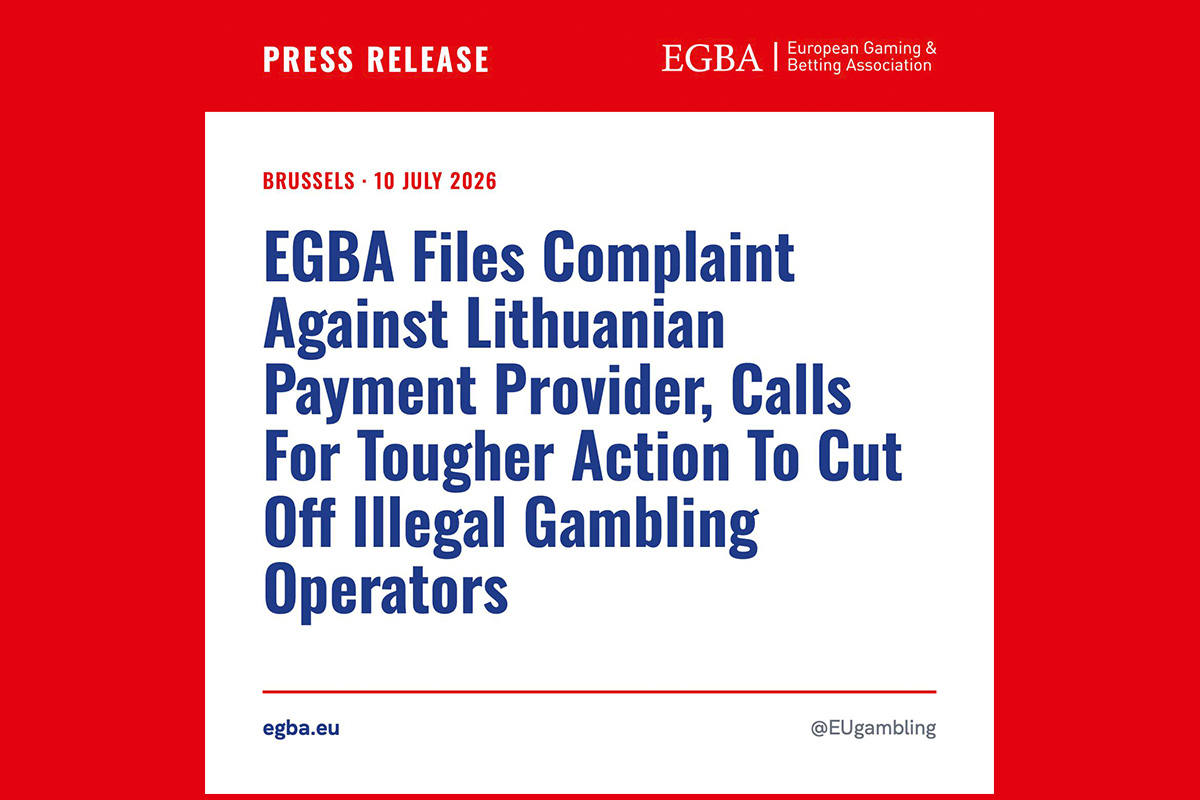
The European Gaming and Betting Association (EGBA) has filed a formal complaint with the Bank of Lithuania against Walletto, a Lithuania-based payment service provider, over the alleged processing of payments linked to illegal online gambling operators. The complaint follows an EGBA investigation into illegal gambling websites and apps targeting European consumers. The complaint cites test transactions during the investigation that found evidence suggesting Walletto’s services were used in connection with deposits on a number of these platforms.
While the complaint concerns one provider, it points to a wider problem across the payments chain. Illegal gambling operators cannot operate at scale without access to payments – they depend on the same mainstream payment methods and card networks consumers use every day. As long as illegal operators can accept deposits and process transactions, they will continue to function outside legally compliant licensing regimes in the EU, evade regulatory controls, and expose consumers to harm.
Illegal platforms offer none of the safeguards required of regulated operators. Consumers using them do not benefit from basic protections – there is no robust identity verification, no safer gambling tools, no anti-money laundering controls and no guarantee their winnings will be paid. With no effective identity checks, minors and self-excluded players can access these sites unimpeded.
A problem across the payments chain
Illegal operators exploit weaknesses across the payments chain – among payment service providers, acquirers, and card networks – to keep reaching European consumers. Tackling this problem requires a more coordinated approach across policymakers, gambling and financial regulators, payment service providers, acquirers and card schemes. Card schemes in particular are uniquely placed to act: they are the rule-setters for the networks through which payments to illegal platforms flow and have access to transaction-level data that other stakeholders cannot see.
The principle is simple: payment providers should not process transactions for illegal gambling operators. EGBA is calling for stronger action to make that a reality. Financial regulators should fully and consistently enforce existing rules – such as the EU’s Payment Services Directive and anti-money laundering laws – against payment providers. Card schemes should also take the necessary steps to prevent payment providers from using their networks to process illegal gambling transactions.
Maarten Haijer, Secretary General of EGBA, said: “Payment providers should not be allowed to process transactions for illegal gambling operators. Illegal operators flourish by exploiting legitimate financial channels and the mainstream payment networks that consumers rely on every day. Our aim is simple: to leave them no room to manoeuvre, and to cut off the payment channels they use to reach European consumers. Card schemes also have a crucial role to play in combatting illegal transactions: they are better placed than anyone, as they set the rules for these payment networks and see transaction flows no one else can.”
The post EGBA Files Complaint Against Fintech Walletto Over Illegal Gambling Payments appeared first on EE Gaming | Global iGaming & Tech Intelligence Hub.

-

 Compliance Updates5 days ago
Arizona Department of Gaming Issues Cease-and-Desist Orders to Multiple Operators Linked to Underage Gambling and Illegal Activity
-
 Latest News7 days ago
ELA Games releases Flames Fruits Frenzy Hold and Win slot
-
Compliance Updates6 days ago
KONAMI GROUP’s Konami Gaming Inc. First to Submit Manufacturer License Application in Japan’s Emerging IR Market
-
Latest News7 days ago
PG Soft appoints Hugo Baungartner as General Manager LatAm
-
Canada7 days ago
Canada’s Safer Gambling Gap: Why Market Success Doesn’t Always Equal Player Safety
-
Latest News7 days ago
Booming Games launches Fish Tales: Double Catch Max Scatter
-
Latest News7 days ago
Tom Horn Gaming ships Royal Ruby FeatureStorm slot worldwide on 14 July 2026
-
Latest News7 days ago
BC.GAME names Guillermo Ochoa brand ambassador for Mexico push