Latest News
Cash Automation Solution Success for ITL Germany Partner, PerfectMoney

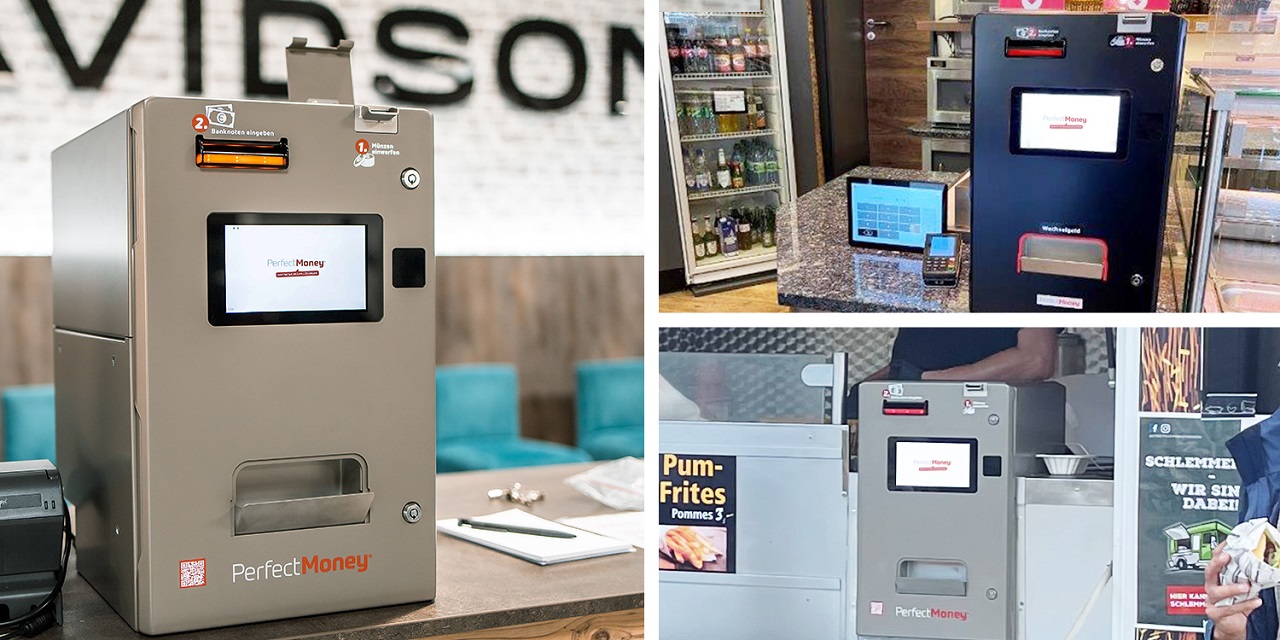
UK based cash handling provider, Innovative Technology (ITL) have secured several distribution suppliers for their CashGenic hygienic cash automation solution both in the UK and throughout Europe including Germany-based PerfectMoney.
Commenting on the success of the roll-out, Thorsten Labusch, VP of Sales said, “We are delighted with the fast pace of the CashGenic partner acquisition programme. It was first launched in May 2020 during the COVID pandemic to enable customers to pay with cash hygienically and safely. One of our partners, PerfectMoney, an innovative payment solutions provider based in South Germany are proudly building their own machines which they have rebranded ‘Vicky’. This high-performance, smart cash dispenser has space-saving dimensions so fits onto any counter making installations quick and easy.”
Christian Dieterich, CEO, PerfectMoney commented, “Last year we made the decision to expand our product portfolio to include ITL’s CashGenic kit built into our own payment machine. We are pleased with the success of the roll-out so far with several businesses reporting an uplift in cash takings after Vicky was installed. Although COVID may have initially triggered this development for hygiene reasons to reduce staff handling money, it brings many more advantages to the retailer. Securing cash payments, reducing accounting errors and cost efficiency continue to be key for the retail industry. Plus, cash remains the preferred payment of choice here in Germany, so we foresee take-up growing significantly over the coming years.”
One such customer, Rolf Otto from Harley-Davidson, based in Viersen commented on his motivations for buying the PerfectMoney Vicky cash machine, “The time we save justifies the device alone. I would definitely recommend it, especially in retail, even just for the additional security it gives.”
Thorsten concluded, “PerfectMoney are working with various retail outlets such as butchers, bakers, food trucks, farm shops, takeaways, fast-food restaurants, motorcycle shops, pharmacies, coffee shops and opticians to implement Vicky as their point-of-sale solution. Cash handling can traditionally be time-consuming, resource heavy and expensive. By automating payment processes retailers can eliminate cash register handovers and staff no longer need to count cash as the machine automatically does this, therefore saving time and generating greater efficiencies for the business. Following the success of our partnership with PerfectMoney, we are collaborating further, enhancing our relationship with them to supply a broader range of our cash handling products in the future.”
Powered by WPeMatico


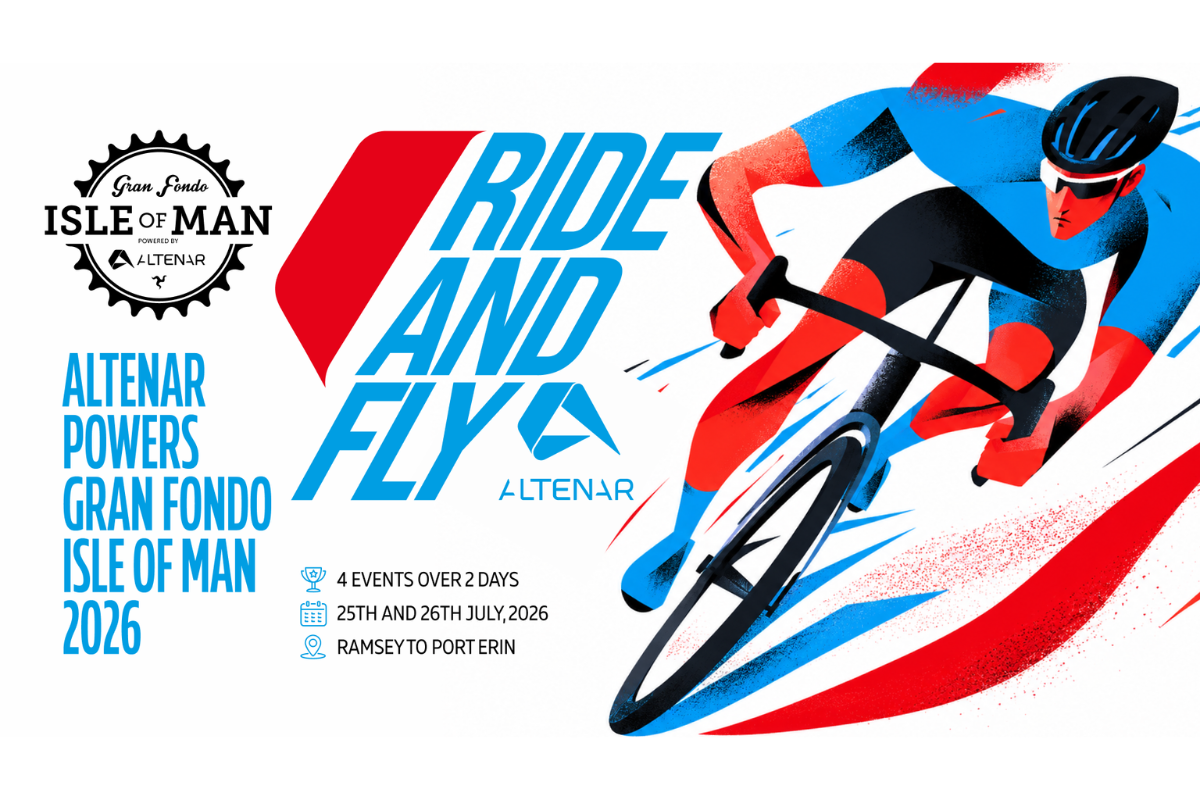
Altenar, a global leader in sportsbook technology is sponsoring Gran Fondo Isle of Man as title sponsor for the 2026 event, which returns with a refreshed format.
Taking place on July 25-26, this year’s festival embraces the growing popularity of off-road cycling, introducing dedicated gravel and cross-country mountain bike events alongside participation rides designed for cyclists of all ages and abilities.
Based in Ramsey, the weekend culminates with the flagship 100 km races, which take riders across some of the Isle of Man’s most spectacular landscapes before finishing in Port Erin.
The partnership reflects Altenar’s commitment to supporting sport and the local community on the Isle of Man, where the company is headquartered.
Alongside its sponsorship of the Isle of Man Marathon and Half Marathon, backing Gran Fondo Isle of Man forms part of Altenar’s wider investment in initiatives that promote healthy lifestyles while showcasing the island to an international audience.
Elena Zhuli, Event’s Director at Altenar, said:
“We’re delighted to support Gran Fondo Isle of Man as it returns with an exciting new format for 2026. The event has built a fantastic reputation over the years by bringing together riders from around the world while celebrating everything that makes the Isle of Man such a unique place to cycle.
“As a company proudly based here, we’re pleased to continue supporting an event that encourages participation, strengthens the local community and showcases the island on the international stage.”
Since its launch, Gran Fondo Isle of Man has welcomed more than 8,000 participants from countries including Japan, Australia, South Africa and the USA, earning recognition as one of the British Isles’ leading participation cycling events.
The refreshed 2026 format builds on that legacy, combining gravel riding, cross-country mountain biking and family-friendly cycling experiences into a weekend that celebrates the island’s outstanding natural landscape.
The post Altenar powers Gran Fondo Isle of Man in 2026 appeared first on EE Gaming | Global iGaming & Tech Intelligence Hub.
Infingame, a leading aggregator in the iGaming industry, has revealed new operational insights into why some casino promotions significantly outperform others, with the strongest campaigns generating up to five times higher player participation compared to standard bonus-led activities.
According to Infingame, the gap between average and high-performing promotions is widening as operators move away from one-size-fits-all bonus campaigns and begin treating engagement as a data-led lifecycle strategy.
Based on aggregated observations across operator activity, Infingame found that campaigns built around segmentation, clear progression, time-sensitive mechanics, and real-time visibility consistently outperform static promotions. In some cases, segmented tournament and challenge-based campaigns delivered participation rates up to 5x higher than broad campaigns launched across an entire player base.
“The biggest difference is no longer the prize pool,” said Kateryna Korniienko, Promo Tool Manager at Infingame. “Operators often assume that a larger reward automatically means stronger participation, but our data shows that structure, timing, relevance, and visibility have a much greater impact on whether players actually join and return.”
Infingame notes that traditional casino promotions often underperform because they are too broad, too passive, or disconnected from player behaviour. A campaign offering the same reward to new, active, VIP, and lapsed players may reach a large audience, but it rarely creates the same level of response as a campaign tailored to specific player groups.
The strongest-performing promotions usually share four key characteristics. First, they are built around clear player segments. Campaigns targeted at specific groups, such as new depositors, high-frequency players, VIPs, or dormant users, tend to generate higher participation because the mechanic matches the player’s stage in the lifecycle. For example, a reactivation campaign designed for lapsed users requires a very different structure from a leaderboard aimed at competitive regular players.
Second, successful promotions create visible progress. Players are more likely to continue participating when they can track their position, progress, or remaining steps. This is one of the reasons tournaments, missions, and challenges often outperform static cashback or free spin offers. They create a reason to return during the campaign period, not just claim a reward once.
Third, high-performing campaigns use urgency carefully. Shorter campaign windows, Happy Hours, limited-time multipliers, and event-based mechanics can create sharper engagement peaks when used with the right audience. Infingame has observed that time-limited campaigns can increase repeat activity by 30-45% compared to open-ended promotions, particularly when paired with personalised communication.
Fourth, reward relevance matters more than reward size. Operators frequently overinvest in prize pools without adjusting the mechanic to the player segment. Infingame’s observations show that smaller but better-targeted rewards can often deliver stronger cost-per-engagement performance than larger generic campaigns.
“Promotions are becoming much more operationally sophisticated,” Kateryna Korniienko added. “The best operators are not simply launching a tournament or giving out free spins. They are asking who the campaign is for, what behaviour they want to influence, how long the campaign should run, and which reward makes sense for that player group.”
Infingame also identified a growing divide between operators that analyse campaign performance after launch and those that still evaluate promotions mainly by total participation or bonus cost. More advanced operators are now tracking repeat participation, session continuity, reactivation rate, cost per engaged player, and post-campaign retention.
This shift is changing how promotional tools are used across the industry. Tournaments are increasingly being applied not only as acquisition tools, but also as instruments for retention, reactivation, VIP engagement, and content discovery. Challenges and missions are also gaining traction because they allow operators to guide players through specific behaviours, such as trying new games, returning during low-activity periods, or engaging with selected content categories.
Infingame believes the next stage of casino promotion will be defined by flexibility and precision rather than volume. Through its aggregation platform and engagement tools, Infingame enables operators to design customised tournaments, challenges, and promotional campaigns across different player segments, markets, and content categories.
About Infingame
Infingame is a leading game aggregator built to help operators move faster and scale smarter. Through a single API integration, the platform gives access to a portfolio of over 16,000 games from more than 150 providers, allowing partners to launch quickly without dealing with multiple integrations.
Delivered via a single API, Infingame offers unparalleled technical excellence, the industry’s fastest spin times, exclusive tournaments and strategic partnerships with top-tier operators in North America, LatAm and beyond. Spanning a portfolio of slots, crash games, sweepstakes and live casino, book a demo via the LinkedIn page, website or at [email protected].
The post Infingame identifies why some casino promotions achieve 5x higher participation than others appeared first on EE Gaming | Global iGaming & Tech Intelligence Hub.
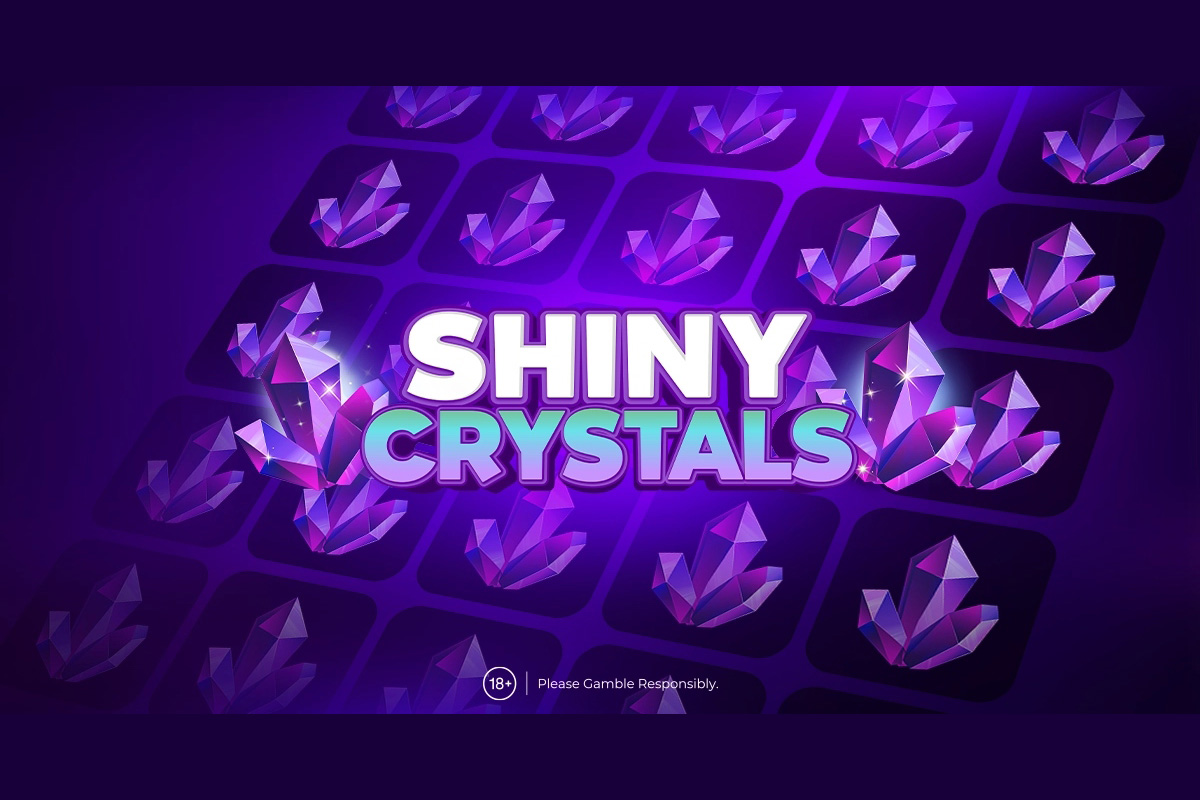
Amusnet enters the world of instant games with Shiny Crystals, a fast-paced experience that blends strategic decision-making, flexible gameplay and rising anticipation into an exciting new format. Designed with a mobile-first approach, this innovative release invites players to uncover sparkling Crystals, avoid hidden Mines and decide exactly how far they are willing to push their luck.
Set on a concealed grid filled with valuable Crystals and dangerous Mines, Shiny Crystals puts every decision in the player’s hands. Each Crystal uncovered increases the current multiplier, creating a constant balance between risk and reward. The longer the journey continues, the greater the potential grows – but one hidden Mine can bring the round to an instant end, making every choice count.
One of the game’s defining features is its flexible risk system. Before each round, players can select how many Mines will be hidden across the grid, tailoring the gameplay to their preferred level of challenge. Whether opting for a cautious approach or embracing higher-risk strategies, every session offers a different path and fresh possibilities.
Adding another layer of excitement is Crystal Rush, a dynamic time-based feature that activates after uncovering three Crystals in quick succession. Once triggered, consecutive Crystal discoveries award additional multiplier boosts, rewarding quick thinking and confident decisions with even greater momentum.
For players who enjoy a more tactical experience, the Defuse Engine introduces a unique strategic mechanic. Before revealing a tile, players can view its Clarity Score, providing valuable insight into the potential risk before making their next move. When circumstances demand it, the grid can also be reshuffled, creating new opportunities and encouraging thoughtful decision-making throughout every round.
Combining intuitive gameplay, customisable risk levels and innovative mechanics, Shiny Crystals marks an exciting milestone as Amusnet’s very first instant game. Fast, engaging and built around meaningful player choice, it delivers a fresh gaming experience where every revealed Crystal brings new possibilities – and every decision could uncover something extraordinary.
The post Shiny Crystals’ Launch Marks Amusnet’s First Step into Instant Games appeared first on EE Gaming | Global iGaming & Tech Intelligence Hub.

-

 ESPN Networks4 days ago
THE 57th ANNUAL WORLD SERIES OF POKER® CONCLUDES AN EXTRAORDINARY SUMMER OF GLOBAL ENGAGEMENT AND ELITE COMPETITION
-
Latest News7 days ago
EveryMatrix’s Fantasma Games launches three-reel slot Bonus Bullets
-
Latest News5 days ago
Booming Games launches Tasty Bonanza Max Scatter slot
-
Latest News6 days ago
SCCG Management Launches Dedicated SCCG Brazil Division with Local Partner Thomas Carvalhaes
-
Latest News7 days ago
Blokotech adds Wicked Games slots in new content deal
-
Latest News6 days ago
Esportes Gaming Brasil takes two ClienteSA Awards 2026 wins; exec named Personality of the Year
-
Canada5 days ago
Peter & Sons launches full game portfolio in Alberta
-
Latest News5 days ago
QTech signs EXCO Game Studio slots for emerging markets