Compliance Updates
PRIZE DEBT: CALLS TO REVIEW GAMBLING REGULATIONS AS CONSUMERS RACK UP MILLIONS ON CREDIT CARDS


· Consumers spent £117m on credit cards entering prize draws and competitions, which are not currently regulated by the Government, in a bid to win dream prizes(1)
· Promise of a charitable donation makes nearly half of participants more likely to enter
· Jumbo Interactive calls on the UK Government to regulate the growing prize draw and competition market and for a clampdown on credit cards use
The UK Government is being urged to review current gambling regulations, as new research reveals consumers are racking up millions on credit cards entering popular prize draws and competitions.
The research from Jumbo Interactive found consumers spent £117m on credit cards entering prize draws and competitions in the last year, which due to a loophole, are not currently regulated in the same way as lotteries and raffles.
The study found nearly one in 10 people who entered ‘big ticket’ prize draws, offering the chance to win multi-million pound houses or luxury cars, or prize competitions, have ended up in debt as a result.
Using credit cards to gamble was banned in April 2020, but a loophole in regulation means there are currently no restrictions on commercial prize draw or prize competition companies. For prize draws, this is because they offer “free” entry methods, where it’s possible to play by post for the cost of a postage stamp. Yet, despite this ‘free to enter’ route, an estimated £860m was spent on entries into prize draws in the last year[iii].
Prize draws and competitions that promise a donation to charity also makes 45% of participants more likely to enter, yet over half of players (57%) admit to not checking how much actually goes to good causes.
Jumbo Interactive is now calling for greater regulation of the growing prize draw and competition market, highlighting significant consumer protection concerns over credit card debt, as well as a lack of transparency around prizes and charity donations from entry fees.
It is also urging consumers to check the T&Cs as there is little enforcement of minimum donation percentage for prize draws and competitions. This compares to regulated society lotteries, which give a minimum of 20% of gross ticket sales and often over 50% to good causes.
Nigel Atkinson, UK General Manager, Jumbo Interactive comments: “A huge amount is being spent on credit cards on prize draws, pushing people into debt – despite the free entry option being the reason they are exempt from oversight. With so much money changing hands, the government needs to look at the proper regulation of prize draws and competitions to better protect consumers.
“For many, the fact that some of the cost of entering prize draws and competitions goes to charity is a big part of why they enter. But it remains easy for companies to bury information in the terms and conditions about how much actually goes to charity. Society lotteries on the other hand have minimum donation rates and help raise funds for a wide range of important causes, large and small. Public trust is crucial for society lotteries to operate successfully, and increased regulation of the prize draw and competition market will offer that consistency and transparency.”
Tony Vick, Chair of The Lotteries Council, adds: “The Lotteries Council is increasingly concerned about the use of prize draws operated by commercial gambling companies which are marketing themselves in a similar way to charity lotteries. Lotteries face a series of legislative hurdles that restrict our ability to grow and raise funds for good causes while prize draws face no limits on how many tickets they can sell, what prizes they can offer, and choose whether and how much to give to any charity. We hope the Government looks at this to ensure a fairer playing field.”
Falling foul of scams has also been an issue for 15% of entrants, including paying money for postage on a prize that never arrives, paying a significant amount of money on phone calls or texts to enter a competition without it being clear that it would cost that much, or winning a prize that turned out to be of less value than advertised.
Notably, 72% of those who enter lotteries, draws or competitions think prize competitions and prize draws should be regulated in the same way as gambling.
Powered by WPeMatico

Compliance Updates
MGA Publishes Results of Thematic Review on Self-exclusion Practices in Online Gaming Sector

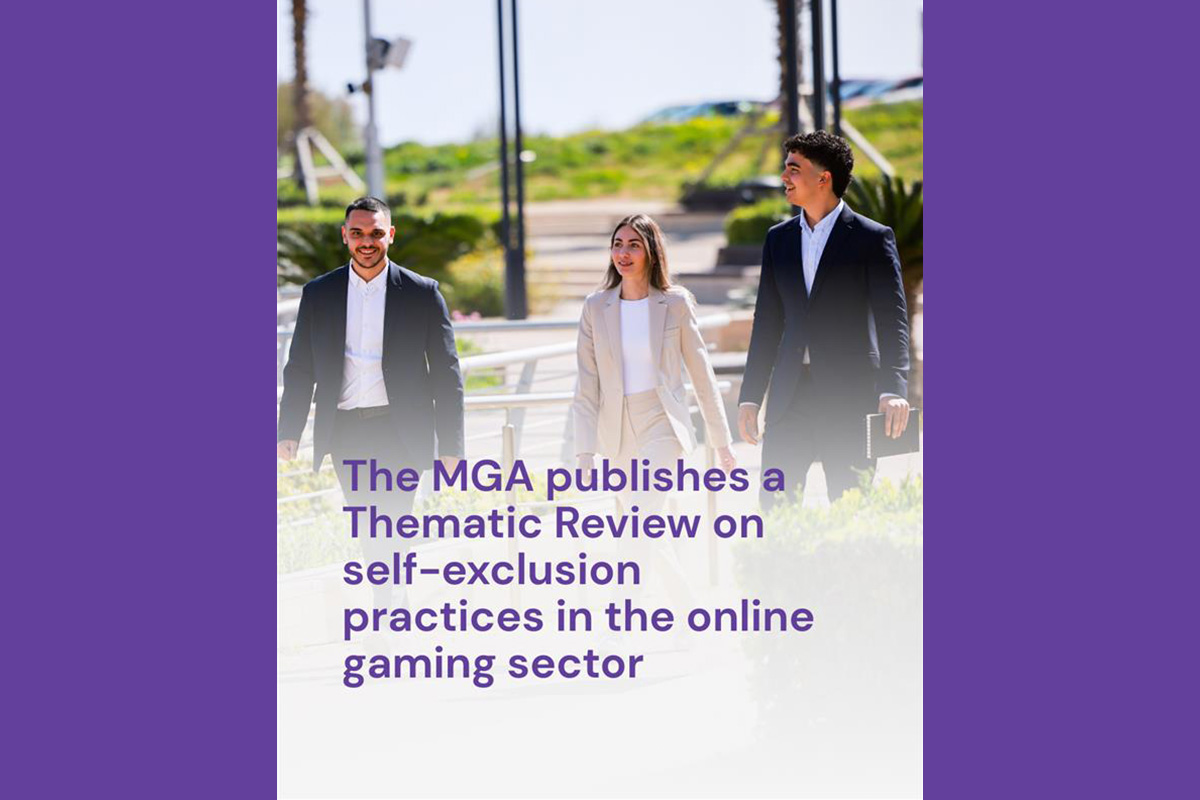
The Malta Gaming Authority (MGA) has published the results of a Thematic Review on how online B2C licensees implement self‑exclusion and other responsible gambling safeguards. The Review sought to identify any systemic weaknesses and clarify regulatory expectations relating to player protection, highlighting areas performing well as well as opportunities for licensees to strengthen their practices.
The Review was carried out in 2025 following reports that some players were able to access multiple brands despite being self‑excluded due to problem gambling. It examined the real‑world performance of player protection tools across 20 licensees and 58 active URLs. A mystery shopping exercise assessed the effectiveness of self‑exclusion processes, cross‑brand account controls, and the presentation of responsible gambling protections at key points of play.
The findings presented in this document reaffirm the Authority’s ongoing commitment to safeguarding players and upholding the integrity of the online gaming sector. Overall, the Thematic Review indicates a positive level of compliance, with the majority of licensees assessed demonstrating practices that are broadly in line with regulatory expectations. At the same time, the Review highlights opportunities for further strengthening player protection measures across the sector.
The assessment outlines the specific areas where enhancements would be beneficial. These include delays in activating self‑exclusion, instances where exclusions were lifted without applying a mandatory cooling‑off period, challenges in detecting duplicate or closely matching player identity details across brands, the absence of limit‑setting prompts during registration, and incomplete information displayed within Reality Check pop‑ups. Together, these findings provide guidance where systems and processes can be enhanced to ensure player protection measures operate as intended.
The Authority has communicated the findings to the relevant licensees, each of whom has been asked to address the points raised and submit rectification plans. Follow‑up supervisory engagement will continue where necessary, including monitoring the implementation of corrective actions. This work forms part of the Authority’s broader risk‑based oversight approach, aimed at promoting higher and more consistent standards of player protection across the sector.
Through this Guidance Document, the Authority encourages all licensees to use the insights from this Review to reinforce their internal frameworks, enhance their responsible gambling controls, and continue contributing to a safer and more sustainable gaming environment.
The post MGA Publishes Results of Thematic Review on Self-exclusion Practices in Online Gaming Sector appeared first on Eastern European Gaming | Global iGaming & Tech Intelligence Hub.
Adventure One QSS
Dutch Gambling Authority Imposes Penalty on Adventure One QSS for Illegal Gambling

The Netherlands Gambling Authority (KSA) has imposed a penalty on Adventure One QSS Inc. for illegal gambling. Adventure One offers games of chance on the Dutch market under the Polymarket brand name, without a license. The KSA has called on Polymarket to cease its activities immediately. If it fails to do so, the company will be fined €420,000 per week, with a maximum of €840,000.
Polymarket has been frequently in the news in recent months, particularly regarding betting on the Dutch elections. Although Polymarket itself states that prediction markets do not fall under the category of gambling, the Netherlands Gambling Authority (KSA) has taken a different stance. After contacting the company about its illegal activities on the Dutch market, there has been no visible change, and the offering remains available. The Netherlands Gambling Authority therefore imposed this order, subject to a penalty. A turnover-related fine may also be imposed at a later date.
Ella Seijsener, director of licensing and supervision at the Netherlands Gambling Authority (KSA), said: “Prediction markets are on the rise, including in the Netherlands. These types of companies offer bets that are not permitted in our market under any circumstances, not even by license holders. Besides the social risks of these kinds of predictions (for example, the potential influence on elections), we conclude that this constitutes illegal gambling. Anyone without a KSA license has no business in our market. This also applies to these new gambling platforms.”
The post Dutch Gambling Authority Imposes Penalty on Adventure One QSS for Illegal Gambling appeared first on Eastern European Gaming | Global iGaming & Tech Intelligence Hub.
Brais Pena Chief Strategy Officer at Easygo
Stake Goes Live in Denmark Following Five-Year Licence Approval
Stake, the largest online casino and sportsbook globally, today proclaims its official entry into Denmark after obtaining a five-year online casino and sports betting license. The shift reinforces Stake’s enduring dedication to enhancing its global growth strategy.
Denmark is often seen as a regulatory success within the European online gambling scene, and Stake has now introduced its flagship, internationally recognized product to the Danish market. Players will unlock access to Stake’s top-tier casino and sportsbook, showcasing exceptional games, cutting-edge technology, and an exceptional user experience, all provided with a strong local emphasis.
Starting 1 March 2026, Stake Denmark will set up its new headquarters at Parken Stadium, the national football stadium of Denmark and the home ground for FC Copenhagen.
Peter Eugen Clausen, Managing Director at Stake Denmark, said: “Denmark has one of the most well-regulated and competitive gaming markets in Europe, and that’s exactly what makes it so exciting. With Stake’s arrival, Danish players can expect a fresh, world-class experience backed by global scale and strong local focus. We’re raising the bar in terms of product, transparency, and entertainment, and I believe increased competition from brands like Stake will only drive the market forward in a positive way.”
Brais Pena, Chief Strategy Officer at Easygo, the technology company behind Stake, said: “Denmark marks our entry into the Nordics and represents a clear win in one of Europe’s most mature and high-value markets. With each new market, our momentum continues to build as we deliver on our global expansion strategy.”
Since its inception in 2017, Stake has positioned itself as the top betting and gaming brand globally by continually presenting advanced technology and novel gaming experiences for players around the globe. Upon entering Denmark, Stake maintains its dedication to player safety and responsible gaming, guaranteeing that gambling stays enjoyable, secure, and entertaining by providing extensive tools and resources that assist customers in comprehending and monitoring their gambling behavior.
The post Stake Goes Live in Denmark Following Five-Year Licence Approval appeared first on Eastern European Gaming | Global iGaming & Tech Intelligence Hub.

-

 ACMA6 days ago
ACMA Blocks More Illegal Online Gambling Websites
-
Aurimas Šilys6 days ago
REEVO Partners with Betsson Lithuania
-
CEO of GGBET UA Serhii Mishchenko5 days ago
GGBET UA kicks off the “Keep it GG” promotional campaign
-
Canada5 days ago
Rivalry Corp. Announces Significant Reduction in Operations and Evaluation of Strategic Alternatives
-
Latest News5 days ago
TRUEiGTECH Unveils Enterprise-Grade Prediction Market Platform for Operators
-
Central Europe6 days ago
NOVOMATIC Once Again Recognised as an “Austrian Leading Company”
-
Acquisitions/Merger5 days ago
Boonuspart Acquires Kasiino-boonus to Strengthen its Position in the Estonian iGaming Market
-
Firecracker Frenzy™ Money Toad™5 days ago
Ancient fortune explodes to life in Greentube’s Firecracker Frenzy™: Money Toad™