Cryptocurrency
iGamingGroup Explores Adding SameUSD to Its List of Cryptocurrency Payment Options

When cryptocurrencies proved to be a viable payment option, everyone was thrilled because of this blockchain technology. Talk about the speed of transactions, privacy, global reach, and the promise of hack-proof payment solutions.
However, as most of us have come to realize, it has been a bumpy ride for cryptocurrency payment providers with several reports of hacks, fluctuating prices, and regulatory restrictions. What could settle our fears and restore the confidence we once had in cryptocurrency payments? Online gaming platforms such as casinos are on the lookout for a solution that guarantees players gaming satisfaction for a secure and faster experience while also optimizing the casino’s operations.
Samecoin, a new entrant into the cryptocurrency space, seems to have all the solutions that online gaming platforms have been gunning for. The Samecoin ecosystem – which consists of a utility coin (Samecoin), stablecoins (SameUSD, SameEUR, etc) as well as the SameID and SamePay – has been endorsed by iGamingGroup as it explores integrating Samecoin ecosystem and its SameUSD as a cryptocurrency payment service provider of choice.
What is iGaming Group, and what does their endorsement say about Samecoin?
iGamingGroup Endorses Samecoin
Touted as the ultimate iGaming technology stack provider, iGamingGroup is the one-stop-shop for all online gaming systems. The group boasts of high-end clients such as Evolution Gaming, Netent, BetSoft, Rela Gaming, Play n Go, and ORYX Gaming.
To date, the iGaming giant has helped develop 7000 games through advanced ready-to-deploy industry solutions while focusing on modern human-centered interfaces that are innovated and scaled to client’s demands.
iGG has been offering cryptocurrencies such as Bitcoin, Ripple, Dogecoin, Ethereum, and Litecoin as part of its vast payment options plans. The need to provide a faster and less costly transaction is what drove it towards Samecoin.
According to the company’s website, iGamingGroup is always looking to make deposits and withdrawals safer, easier and faster to satisfy casino players and owners. This makes perfect sense as to why the company would opt to endorse the Samecoin ecosystem.
The iGaming technology provider supports over 30 payment systems accepted globally, representing more than 150 payment options. Samecoin promises to be a worthy addition to iGG’s goal and mission.
Payment Solutions Designed For Online Gambling
Samecoin’s payment solution, SamePay, provides cryptocurrency payment solutions with stablecoins and secure SameID logins. The easy-to-integrate innovative payment solution makes for a smooth operating experience for both the owner and players.
The Samecoin system will integrate well with iGaming’s SSL encryption used for online banking, thus providing online gambling with the highest security. The ecosystem, which includes SameID and SamePay, fits well with iGG’s Know-Your-Customer and Anti-Money-Laundering procedures.
Samecoin’s stablecoins, the SameUSD and SameEuro, aim to eliminate cryptos’ fluctuating prices, which has discouraged many online casino players. These coins’ ability to mimic fiat currencies’ stability and simplicity while retaining the advantages of cryptos makes them perfect for online casinos.
Features that Make Samecoin Perfect for Online Casinos
Besides the stability and security of value provided by Samecoin’s family of stablecoins, the ecosystem also features the SameID and SamePay tools that are invaluable to online casinos.
SameID in Online Casinos
SameID is an easily integrated user identification feature that eliminates the need for online casino players to use their personal information. Although users of SameID have to undergo the KYC procedure, the process is faster than before, thus saving time and costs spent on costlier KYC procedures.
While using the SameID, the users’ verification process can be done through:
· Facial recognition selfie identification.
· Passport or ID card.
· Utility bill.
SamePay for Online Casinos Cryptocurrency Payments
SamePay integration simplifies the way players receive and send cryptocurrencies in online casinos. Whether it is SameUSD, Bitcoin, Litecoin, or Ethereum, SamePay will serve you well.
SamePay works with wallets for each crypto that casino players will be using. Even better, SameID also applies here; this ensures one account gives a user complete control of their cryptos while sealing any security loopholes.
Casino operators integrating SamePay can also enable SameID logins to solve any KYC problems that players might encounter when onboarding. It will only take 5 seconds for casino players using the SamePay payment option to get verified. What’s more, SamePay secures the players’ data by only sending the necessary data to casinos when SamePay users register through SameID. No personal data is ever given out.
Since SamePay users will have complied with the KYC procedure when registering through SameID, operators will receive verified players. This will save time and provide much-needed operational efficiencies – something iGamingGroup wants to take full advantage of.
The SamePay’s simple operational framework to both casino owners and the adoption-friendly interface with low crypto transaction costs will help grow a casino’s customer base and improve brand growth.
Powered by WPeMatico

BurraPay
Byte Federal Announces Successful Launch of Custom-Built Integration Supporting BurraPay’s Historic Entry into America’s Regulated Gaming Market

Byte Federal Inc. announced the integration of its payment and exchange services with BurraPay, the first cryptocurrency payments processor to operate inside Nevada’s regulated gaming market. Byte Federal is enabling BurraPay’s secure, compliant cryptocurrency transactions within licensed casino and sportsbook environments – a barrier that, until now, has kept digital assets entirely out of the regulated U.S. gaming ecosystem.
BurraPay announced its U.S. debut last week with its first client, Circa Resort & Casino in downtown Las Vegas, home of The World’s Largest Sportsbook. On June 4, the platform processed the first legal cryptocurrency-funded sports wager in Nevada history.
“The Nevada Gaming Control Board’s willingness to engage with compliant crypto infrastructure reflects the forward-thinking regulatory leadership that has kept Nevada at the forefront of the global gaming industry for decades. Nevada has set a blueprint. Our focus now is to continue working directly with regulators in other jurisdictions to replicate that – giving them full visibility into our compliance framework and the proven infrastructure we’ve deployed with Byte Federal, so they can move forward with confidence,” said Luke Millanta, CTO and Co-Founder of BurraPay.
Players wishing to fund their wagering activity using cryptocurrency, including Bitcoin, Ethereum and Litecoin, can now do so by visiting the sportsbook at Circa Las Vegas.
28% of U.S. adults own cryptocurrency and nearly half of all global crypto holders use digital assets for gambling. Yet billions in wagering volume has been flowing offshore to unregulated operators – outside the consumer protections, outside the tax base, outside the rules. BurraPay built the compliance-first platform to bring that activity onshore. Byte Federal provides the purpose-built exchange layer to make it run.
“This is what we’ve been building toward since 2016: digital assets that aren’t just held, but used. A patron walking into a Las Vegas sportsbook and funding a wager with Bitcoin, fully compliant, fully legal – that’s the promise of this technology meeting physical reality. We’re proud our infrastructure is part of the stack,” said Paul Tarantino, CEO of Byte Federal.
Byte Federal will continue working alongside BurraPay as it signs new operators, expands into additional jurisdictions on a state-by-state basis, and scales to meet growing demand – with BurraPay now approved in five key gaming states across the US.
“Earlier this month, a patron walked into a Las Vegas casino and funded a sports wager with Bitcoin. That has never happened before. That’s what a compliance-first platform makes possible. Byte Federal’s exchange solution is key to making this work, and as BurraPay expands into every state in the country, they’ll be right there with us,” said Millanta.
And the opportunity doesn’t stop with gaming: Byte Federal is already in talks with other industries about facilitating custom builds tailored to their unique needs.
The post Byte Federal Announces Successful Launch of Custom-Built Integration Supporting BurraPay’s Historic Entry into America’s Regulated Gaming Market appeared first on Americas iGaming & Sports Betting News.
The World Series of Poker (WSOP), the longest-running and most prestigious poker tournament series in the world, announced a first-of-its-kind collaboration with the Solana Foundation to bring cryptocurrency directly into the global poker experience.
This will be the first time in WSOP history where players can purchase tickets to tournaments directly with cryptocurrency, and by leveraging Solana’s technology, this payment method will have zero processing fees.
The integration will expand further at the 2026 WSOP Paradise in The Bahamas this December, where tournament winners can receive settlements in stablecoins on Solana, enabling near-instant access to payments and reducing the friction traditionally associated with international tournament settlements.
As part of this collaboration, Solana Foundation will also serve as the official Presenting Sponsor of the 2026 World Series of Poker and 2026 World Series of Poker Paradise.
The World Series of Poker, Dealt by Solana
The poker community has long been at the forefront of cryptocurrency adoption, with players embracing decentralized technology, like Solana, for its efficiency and transparency. As a high-performance blockchain, Solana is celebrated for its industry-leading transaction speeds – capable of processing thousands of transactions per second – and ultra-low costs, with average fees remaining below $0.001. By enabling players to make purchases through Moonpay, and cashout in stablecoins on Solana, these initiatives allow:
• Faster settlement and streamlined payment processing for eligible events
• Greater accessibility for international players traveling to WSOP events
• Near-instant global settlement, with reduced friction for users
• Expanded payment flexibility for players participating in marquee tournaments worldwide
Introducing Solana-powered purchases and settlements modernizes how money moves through the poker ecosystem and reduces friction for players around the world.
Where Poker and Cryptocurrency Converge
This initiative bridges the digital space and the poker world, reinforcing the growing demand among players for faster financial tools that simplify participation in global events. Beyond payments, the collaboration brings together communities that are closely aligned.
“We are incredibly proud to bring such an innovative and passionate community into the fold. Solana’s ecosystem, like the WSOP, constantly challenges conventions and remains laser-focused on the consumer experience. Solana’s speed and efficiency mirror the fast-paced energy of our tournaments, and we are excited to showcase their technology to our global audience,” said Ty Stewart, Chief Executive Officer of WSOP.
“Solana is a digital economy where people can own and trade millions of assets, make payments, earn on their money, and more. Trading in particular has been a huge area of growth on Solana over the last few years, generating over $4 trillion in volume. At its core, trading shares many of the same characteristics as poker: hard decisions, incomplete information, minding your bankroll. We’re incredibly excited to grow the game of poker with the WSOP and bring these two worlds together,” said Vibhu Norby, Chief Product Officer, Solana Foundation.
“Poker players have always lived at the forefront of innovation. They think in probabilities, move fast, and adopt the tools that give them an edge. Cryptocurrency is a natural fit. By powering purchases and settlements through MoonPay on Solana, we’re meeting that demand directly: faster, borderless payments that make it simple for players anywhere to take their seat at the world’s biggest tables,” said Jim Walker, President of MoonPay Commerce.
Beyond the Felt: Ambassadors and Hospitality
The Solana Foundation is set to sponsor a select group of individual poker player ambassadors who will represent the ecosystem at this summer’s WSOP event. Additionally, the Solana ecosystem will host exclusive hospitality events at the Paris and Horseshoe venues in Las Vegas, as well as a premier experience during WSOP Paradise in The Bahamas this winter. Solana users can also look forward to collaborative onchain poker products, developed with WSOP, to follow.
The post WSOP to Bring Crypto to Events Through Solana Tournament Purchases appeared first on Americas iGaming & Sports Betting News.
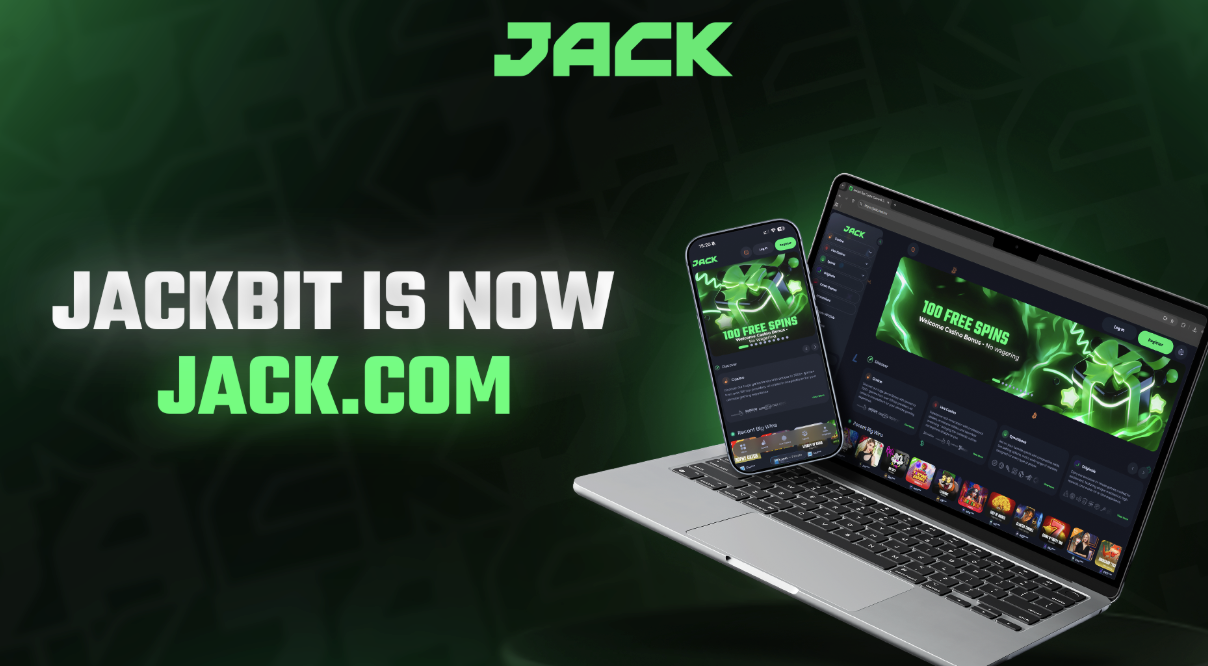
Jackbit, the fast-growing crypto gaming destination, has officially completed its transition to Jack.com, unveiling a new brand identity and simultaneously launching Volume 2.0 — a comprehensive platform overhaul designed to power its next stage of international growth.
The rebrand comes after years of building a loyal user base on the back of lightning-fast crypto withdrawals, transparent operations, and a player-first philosophy. Securing the Jack.com domain signals the company’s commitment to becoming a major global player in the crypto gaming space.
“Jack.com represents the beginning of a much larger global expansion strategy. We will continue introducing new features, community tools, and strategic partnerships as the ecosystem evolves,” the company said.
Volume 2.0 brings sweeping changes to the platform. Wallet 2.0, a rebuilt payment infrastructure, now features cleaner transaction tracking, improved deposit and withdrawal flows, and expanded visibility across all payment activity. Navigation has been redesigned for speed, and security enhancements have been applied across the board.
The social fabric of the platform has also been strengthened. New community features including a Live Bets Feed, Recent Big Wins display, and High Rollers leaderboard allow players to engage with live platform activity. A new Tips Function enables peer-to-peer tipping directly within the platform — a first-of-its-kind feature in the crypto gaming sector.
On the loyalty side, Jack.com has launched a fully redesigned VIP program offering Instant Rakeback, Weekly and Monthly Bonuses, Level-Up Rewards, and dedicated VIP managers for top-tier members.
Jack.com offers thousands of casino games, live dealer experiences, original titles, esports betting, sportsbook markets, and tournaments — all accessible with seamless crypto payment options.
Existing Jackbit users will experience no disruption to their accounts during the transition. Jack.com operates under a Curaçao gaming license and was founded in 2022.
The post Jackbit Rebrands as Jack.com, Launches Volume 2.0 Platform Upgrade appeared first on Americas iGaming & Sports Betting News.

-

 Bragg Gaming Group6 days ago
Massive Gaming launches Blitzcrown titles on Superbet Brazil via Bragg Hub
-
Compliance6 days ago
HIPTHER Launches HALLO: The Standard in Compliance Expertise
-
Alex Cuoci6 days ago
Wealthsimple and Kalshi Partner to Bring Prediction Markets to Canada
-
7Games6 days ago
7Games, Betão & R7 Launch FIRST.bet Sportsbook in Brazil
-
Compliance Updates6 days ago
HIPTHER Launches HALLO: The Standard in Compliance Expertise
-
Bonusetu.com5 days ago
Finland Sets Casino Gambling Risk Limits at 2% of Income, 4 Days, 2 Game Types
-
30-0 Kongeserien5 days ago
Kongebonus launches 30-0 Kongeserien Eliteserien fantasy draft game
-
Channelisation6 days ago
Swedish Gambling Authority consults tighter duty of care rules as channelisation slips