Latest News
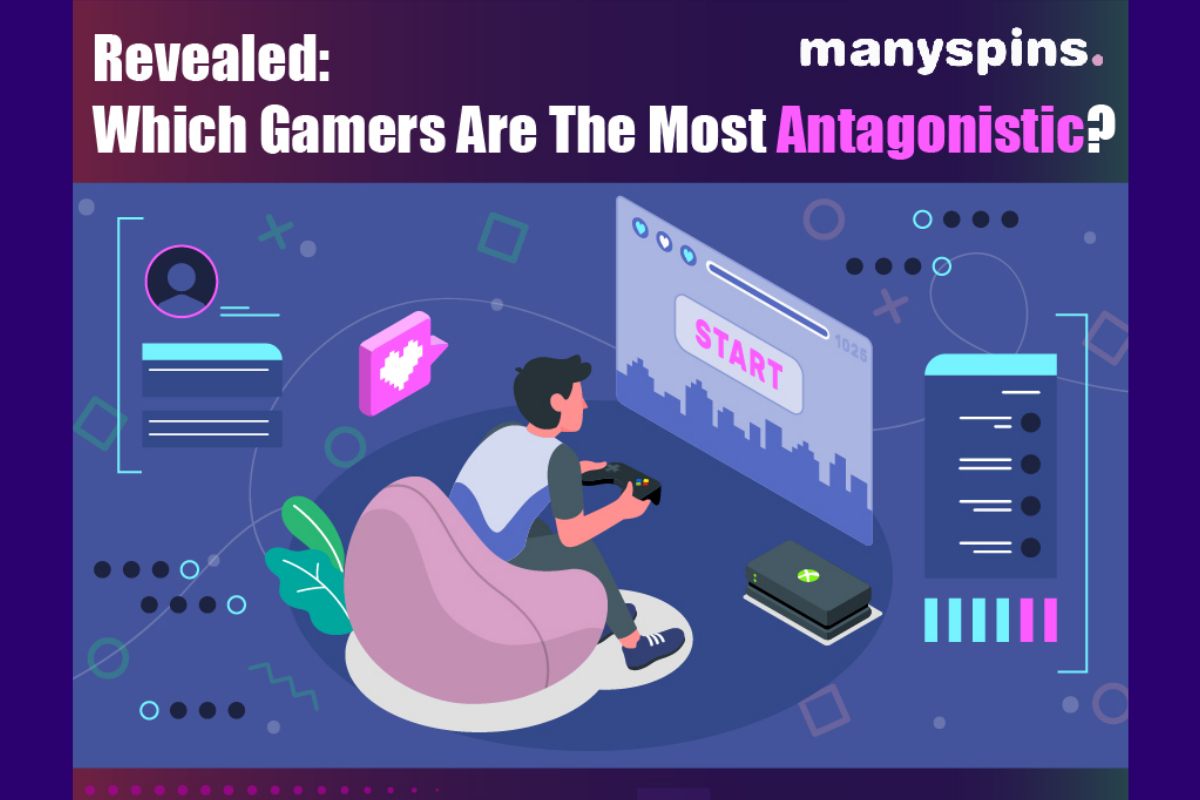
REVEALED: Which Gamers Are the Most Antagonistic?

- Xbox users are more hostile than PlayStation users; there are 13,910 monthly searches from Xbox players looking to report others for misbehaviour
- Fortnite players are the most antagonistic, every year 45,000 players are eager to report their opponents
- In second place are Roblox players, with almost 26,000 gamers looking to report others
- Apex Legends, Overwatch and Rainbow Six Siege players also place highly
- 3 in 5 believe that players adopt more aggressive behaviours once a game boosts in popularity
It’s well known that online games can be very intense, and this often leads to some very heated confrontations between players, especially online.
ManySpins.com analysed Google search volumes for ‘report [game/console] player’ and other similar phrases to uncover which game and console creates the most conflict between players. After scouring through searches surrounding the 42 most popular online games, they can reveal which gamers are the most unfriendly and antagonistic.
Which Console Has the Most Antagonistic Players?
|
Console |
Yearly Search Volumes |
|
Microsoft Xbox |
166,920 |
|
Sony PlayStation |
165,840 |
ManySpins.com found that Xbox users are the most antagonistic! There are hundreds of online complaints about users who seek to anger others through Xbox Live chats. On average, each year there are 166,920 searches from players looking to complain or report other Xbox Live accounts.
Following very closely behind are PlayStation users. ManySpins.com discovered that each year there are 165,840 Google queries from PSN accounts looking to accuse their opponents of misbehaviour. Sony attempted to curb potential abuse by combining party and messaging systems last month but many players have been left displeased with their attempt.
Which Game Has the Most Antagonistic Players?
|
Game |
Yearly Search Volumes |
|
Fortnite |
45,000 |
|
Roblox |
25,920 |
|
Dead by Daylight |
17,160 |
|
Apex Legends |
12,960 |
|
Overwatch |
12,120 |
|
Rainbow Six Siege |
9,840 |
|
Minecraft |
7,200 |
|
Rocket League |
5,280 |
|
Call of Duty |
4,680 |
|
FIFA |
4,440 |
The title of most antagonistic gamers goes to Fortnite! There are countless stories from innocent users who claim that fellow Fortnite players ruin the game by citing abusive and toxic language. Each month there are 3,750 searches from players looking to report one another for hostile behaviour – that’s equivalent to 45,000 each year!
In second place are Roblox fans. These gamers certainly know how to get on one another’s nerves as 25,920 of them try to report opponent’s accounts annually.
Dead by Daylight players rank as the third most hostile, with 17,160 searches each year from gamers looking to take action upon others’ unfriendly behaviour. A lot of players put the abuse down to being new in hopes that it’ll get better and they’ll be welcomed, with others stating that turning the chat option off is the most effective way of combating the toxicity.
The fourth most antagonistic gamers are Apex Legends players. ManySpins.com found that every year 12,960 fans turn to Google to find justice amid the hate received.
In fifth and sixth position are Overwatch and Tom Clancy’s Rainbow Six Siege, receiving 12,120 and 9,840 report searches each year respectively.
To complete the top ten list of most antagonistic players:
7. Minecraft: 7,200 yearly searches from gamers looking to report negative game behaviour
8. Rocket League: 5,280 yearly searches from gamers looking to report negative game behaviour
9. Call of Duty: 4,680 yearly searches from gamers looking to report negative game behaviour
10. FIFA: 4,440 yearly searches from gamers looking to report negative game behaviour
How are players negatively affected by online games?
ManySpins.com also surveyed 1,980 players worldwide to uncover how much other players affect their online gaming experience.
They found that almost 7 in 10 (68%) gamers have had their day ruined by a negative online player who has destroyed their mood. An additional 61% state that they have been made to feel uncomfortable by comments made by others during live chats whilst playing online.
Over half of players (54%) admit to being pushed out or having to force quit an online game due to bullies.
This year many games have sprung to the top of the popularity charts, bringing new and fun player experiences. However, almost 3 in 5 (57%) believe that once certain games spike in popularity it correlates with players becoming more aggressive and consequently attracting a more toxic player base.
Ultimately this has led to more than 2 in 5 (43%) ditching specific games due to the negativity that online play brings.
Methodology:
-
ManySpins.com utilised SEMrush and Ahrefs’ Google search volume tool to find the number of people looking to report users. The average monthly search volumes were multiplied by 12 to collate a yearly total. Terms such as ‘Report [game/console] user’, ‘Report [game/console] player’, ‘Report [game/console] account’, ‘Report someone on [game/console], ‘[game/console] abuse’ and similar variations were used to find the totals. ManySpins.com analysed the search volumes from the USA, UK, Canada and Australia to get a larger worldwide view. Common abbreviations for each game were also counted, for example ‘Report COD player’ and ‘Report Call of Duty player’ were both included in the study.
-
The 42 most popular online games were found using https://www.microsoft.com/en-gb/store/most-played/games/xbox?NumberOfPlayers=OnlineMultiplayerWithGold.
-
ManySpins.com then surveyed 1,980 gamers around the world to uncover their attitudes towards online gaming. They were asked: ‘Have you had your day ruined by other online gamers?’ , ‘Have you ever been made to feel uncomfortable by comments made by others during online gaming?’, ‘Have you ever been pushed out or made to quit an online game due to other players?’, ‘Do you think that players become more aggressive once a game increases in popularity?’ and ‘Have you ever stopped playing a game completely due to negativity from fellow players?’.
Powered by WPeMatico

Corporate Governance
SolutionsHub appoints former PokerStars and VGW executive David Lyons to lead Irish operations


SolutionsHub, a leading provider of iGaming licensing and regulatory services, has appointed David Lyons as a Non-Executive Director to support the development of its Irish business as the country’s gambling regulatory framework enters a new phase.
Lyons brings three decades of experience across online gaming, financial services and corporate governance to the consultancy at a time when operators, suppliers and investors are preparing for regulatory change in Ireland.
Ireland is entering a new regulatory phase following the introduction of the Gambling Regulation Act and the establishment of the Gambling Regulatory Authority of Ireland (GRAI). As licensing structures, compliance requirements and regulatory expectations take shape, businesses operating in the market face important decisions around governance, operational readiness and long-term planning.
SolutionsHub has been building its Irish capability with that environment in mind. SolutionsHub opened its Dublin office last year to support companies looking to obtain an Irish gambling licence. The appointment of Lyons strengthens the firm’s ability to support businesses preparing for the next stage of regulation.
Based in Dublin, Lyons has held senior leadership positions across several major gaming businesses during a career spanning Ireland, Malta, the Isle of Man and Australia.
He spent eight years with PokerStars on the Isle of Man, where he held a number of senior roles including Associate Director of Poker Engagement, with responsibility across payments, product and player engagement. He then joined Luckbox as Director of Player Engagement and later as Associate Director of Player Engagement at partypoker, before joining Virtual Gaming Worlds (VGW), where he became General Manager of Global Poker, later extending his brief to include the social casino brands Chumba Casino and LuckyLand Casino.
Alongside his career in the online gaming industry, Lyons spent more than 16 years in financial services with Bank of Ireland and Standard Life, working across technology, risk and operations. He is a graduate of Trinity College Dublin and is a Board Member of the Asthma Society of Ireland.
Lyons is also a board member of VGW Games Limited, bringing additional governance experience to the role.
The appointment comes as SolutionsHub expands its presence in Ireland to support operators and suppliers preparing for new regulatory requirements.
Lee Hills, CEO of SolutionsHub, said: “Ireland is entering a new phase, and businesses will have important decisions to make as the regulatory framework takes shape. David has worked at senior levels inside gaming businesses for many years and understands the practical challenges operators face.
“He’s seen the industry from different angles, from player engagement and operations through to governance and board-level responsibilities. That experience will be valuable as we continue to grow our Irish portfolio.”
David Lyons said: “I’ve spent a lot of my career working inside businesses that have had to balance commercial priorities with regulatory obligations. Ireland is moving into a period where businesses will need to get governance, licensing and operational readiness right from the start.
“SolutionsHub has built a strong reputation for helping businesses approach licensing, governance and compliance in a practical way. That focus on real-world outcomes was a big part of what attracted me to the role.”
The post SolutionsHub appoints former PokerStars and VGW executive David Lyons to lead Irish operations appeared first on EE Gaming | Global iGaming & Tech Intelligence Hub.
40 Under 40
FIRST.bet Founder and CEO Tom Light Named to Emerging Leaders of Gaming 40 Under 40 Class of 2026
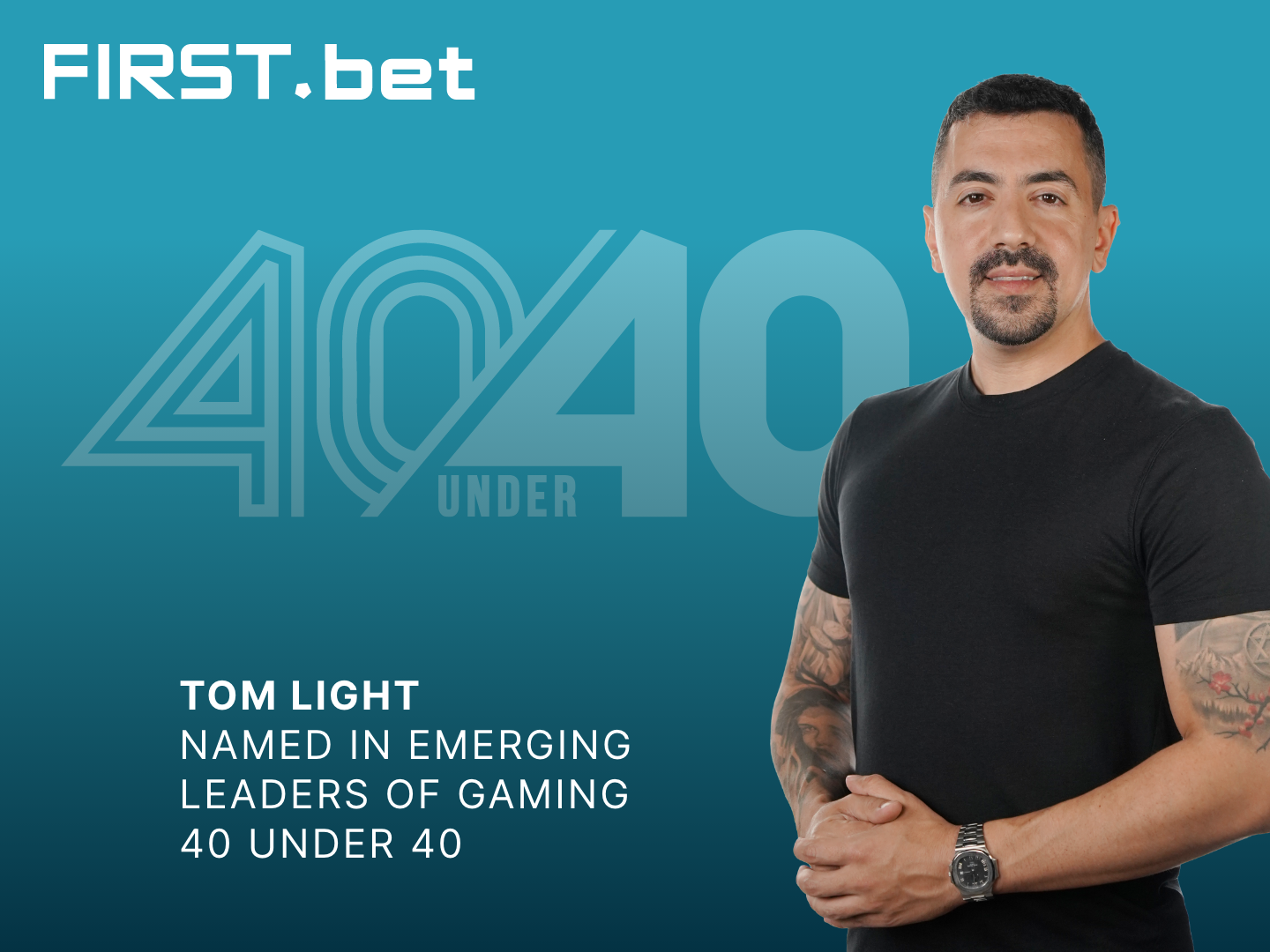
The FIRST.bet Founder and CEO joins the 2026 list of influential leaders shaping the global gaming industry
Tom Light, Founder and CEO of FIRST.bet, has been named a member of the Emerging Leaders of Gaming 40 Under 40 Class of 2026. Presented by The Innovation Group in partnership with Global Gaming Business and iGB, the program recognizes professionals under 40 who are making a significant impact on the global gaming industry.
The professionals recognized were selected from a record field of more than 250 nominations from around the world. Tom Light is also featured in a profile published by Global Gaming Business magazine as part of the Class of 2026. The recognition follows his Individual Achievement Award at the EGR Awards 2026, where FIRST.bet was also named Sports Betting Supplier of the Year.
“Building in this space requires long term thinking. Results take time, and consistency matters more than short term wins,” said Tom Light, Founder and CEO of FIRST.bet.
Building FIRST.bet with one clear focus
Born and raised in Israel, Tom Light moved to Bulgaria in 2013. Over more than a decade, he has built sportsbook and trading platforms used by some of the largest betting operators in the world. He was part of the early evolution of live betting and helped shape many of the core mechanics that are now standard across the industry.
Under Tom Light’s leadership, FIRST.bet has grown to more than 500 employees, with major operations in Sofia and Plovdiv, two of Bulgaria’s largest cities. The company delivers a full sportsbook engine built for speed, scalability, real-time performance, dynamic pricing and efficient risk management.
“Today we are talking about thousands of events per day and hundreds of markets,” said Tom Light. “We focus on speed, scalability and real time performance.”
Product leadership through focus
FIRST.bet covers a broad range of global and local sports while adapting its product to real player behavior in each market. In Brazil, for example, the company offers vaquejada, a traditional local sport that ranks among the most popular betting categories in certain regions.
The company continues to develop areas including bet builders, automation, data driven pricing and personalization, giving operators more flexibility and stronger tools to compete.
“This reflects our approach. We adapt to real market demand and local player behavior,” said Tom Light.
Looking ahead
Tom Light expects the industry to become increasingly sophisticated as regulation expands and operators demand stronger products, faster execution and better compliance.
“In this industry, product quality and speed of execution are what ultimately determine success,” said Tom Light. “Unlike many providers, we are fully dedicated to sportsbook. That focus allows us to move faster and deliver a stronger product to our partners.”
The post FIRST.bet Founder and CEO Tom Light Named to Emerging Leaders of Gaming 40 Under 40 Class of 2026 appeared first on EE Gaming | Global iGaming & Tech Intelligence Hub.
BetGuard
World’s Third-Largest Gambling Market Has No National Self-Exclusion Register, New CasinoCanada Research Warns
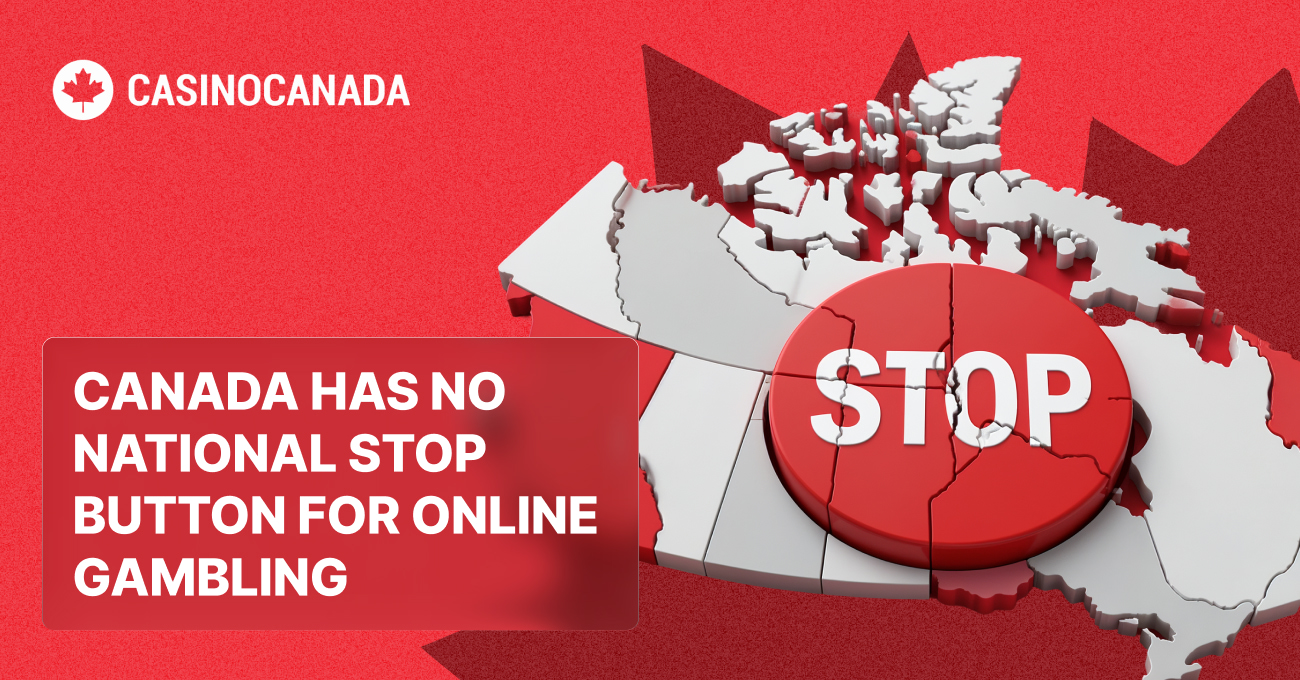
Canada is now the third-largest online gambling market in the world with an estimated CAD 13.15 billion generated in 2025, yet new research from CasinoCanada.com finds it still has no national self-exclusion register and no national licensing framework – meaning a player who self-excludes in one province can continue gambling offshore, or across provincial borders.
Drawing on iGaming Ontario figures, provincial regulatory data, Blask’s 2025 iGaming Landscape Report and peer-reviewed public health research, the analysis traces the gap to a constitutional structure that leaves gambling to the provinces and Ottawa without a national regulator. In effect, there are ten parallel regimes that do not connect to one another.
As a consequence, estimated offshore leakage outside Ontario ranges from 49% in British Columbia to 93% in Saskatchewan, with Alberta and Manitoba at 88%. Offshore platforms also grew 40% year-on-year in 2025 – nearly double the 23% growth of licensed operators.
Most starkly, a January 2026 study in the Canadian Medical Association Journal found gambling-related contacts to Ontario’s ConnexOntario helpline rose an estimated 198% after the market opened in 2022, concentrated almost entirely among boys and men aged between 15 and 44.
Ontario remains a success, with channelisation at 91.1% and its new BetGuard self-exclusion tool drawing more than 500 registrations in its first two weeks. But set against 1.235 million active player accounts, and stopping at the provincial border, it underlines how far the country still has to go.
Eugene Ravdin, Head of PR for CasinoCanada, said: “Record wagers and a near-200% rise in helpline contacts are happening at the same time, which tells you market growth and player protection are not the same thing. The tools that work internationally – GAMSTOP, Spelpaus, BetStop – all cover the whole market under a single registration.
“Canada has nothing like it. A national register wouldn’t just protect players, it would also help licensed operators compete against offshore sites. This is a commercial argument as much as a moral one.”
The full article can be read here: https://casinocanada.com/blog/canadas-safer-gambling-gap-why-market-success-doesnt-always-equal-player-safety/
The post World’s Third-Largest Gambling Market Has No National Self-Exclusion Register, New CasinoCanada Research Warns appeared first on EE Gaming | Global iGaming & Tech Intelligence Hub.

-

 Bucharest6 days ago
Eeze opens 1,200 sqm Bucharest hub for technical teams
-
AB Trav och Galopp5 days ago
BetMakers Technology Group Selected to Distribute ATG Horse Racing Content Across Australia and New Zealand
-
API integration6 days ago
Belatra signs cooperation deal to distribute slots via VeliGames
-
BETANO6 days ago
Play’n GO strengthens Latin American presence with Betano Colombia launch
-
affiliate marketing7 days ago
SEOBROTHERS’ Aleksandra Drigo flags higher barriers for affiliates in regulated Alberta
-
Aino Lahti6 days ago
Kasinohai Audit: Most Slots Could Be Affected by Finland’s Draft Gambling Rules
-
Aviator6 days ago
Pernambuco court revokes Spribe’s interim relief in Aviator trademark dispute
-
game content6 days ago
R. Franco Digital releases fighting game-themed slot Spin Fighters