Latest News
LeoVegas AB Q3: Quarterly report 1 July– 30 September 2020


THIRD QUARTER 2020: 1 julY–30 september
- Revenue increased by 1% to EUR 88.9 m (88.2). Organic growth in local currencies was 2%.
- EBITDA was EUR 11.9 m (12.7), corresponding to an EBITDA margin of 13.4% (14.4%).
- The number of depositing customers was 438,691 (347,464), an increase of 26%.
- Earnings per share were EUR 0.04 (0.05) before and after dilution, while adjusted earnings per share were EUR 0.08 (0.09).
Events during the quarter
- GoGoCasino and Livecasino.com launched in Finland. An international launch of both brands is in progress.
- Operations in Sweden have been affected by the temporary restrictions that were introduced on 2 July as a result of Covid-19
- LeoVegas increased its ownership in the e-sports betting operator Pixel.bet to 85% from 51% previously.
- Operating profit for the quarter includes costs of EUR 0.5 m in organisational streamlining and optimisation measures. Yearly net savings from these measures is expected to total EUR 1.5 m starting next year.
Events after the end of the quarter
- Preliminary revenue in October amounted to EUR 33.0 m (26.0), representing growth of 27%.
- Royal Panda has relaunched in Finland on the Group’s proprietary technical platform.
- LeoVegas has launched Bingo as new product category.
- Ahead of the forthcoming regulation of the German market, effective 15 October a number of changes have been made that affect the customer offering. This had a slight negative impact on revenue in October. LeoVegas expects to receive nationwide licences for the German market once they are available.
COMMENT FROM GUSTAF HAGMAN – GROUP CEO
THIRD QUARTER 2020
Once again, we have shown our ability to quickly adapt to new, external circumstances, such as those related to the continuing pandemic and the constant regulatory changes in our various markets. During the third quarter we maintained a high pace of innovation and investment, which is strengthening our long-term position and growth prospects.
During the quarter our customer base again reached a new record level. The number of depositing customers grew 26% compared with the same period a year ago, which confirms the strong development of our business. This is partly attributable to the ongoing structural shift from land-based gaming to online, but above all to our focus on creating the best product and experience for our customers. We continue to optimise scalability and reduce complexity in the organisation. During the quarter, among other measures we realised synergies from previous acquisitions and instituted a clearer organisational and Group structure. This has led to a slight level of staff redundancy, and operating profit was charged with EUR 0.5 m for measures coupled to this. At the same time, we estimate that yearly net savings from these measures will amount to roughly EUR 1.5 m starting with next year. Our efficiency improvement work equips us for continued profitable growth and makes us – combined with greater diversification of the revenue base – more resilient to rapid fluctuations in individual markets.
MARKETS
We had a favourable development in most of our markets during the quarter, with our growing customer base as the main driver. Many markets had double-digit growth compared with the same period a year ago.
In Sweden we are seeing a troubling development in which the unlicensed market continues to grow unhindered. A growing number of operators without licences are actively targeting Swedish players, including those who have been barred by the self-exclusion tool Spelpaus. This has been confirmed by, among others, several organisations that provide help to people with a gambling problem. These organisations have noted that the majority of those seeking help are playing with the unlicensed operators. The problem is big and is shaking the foundation of the entire Swedish licence system. Quick and strong measures are now needed by Swedish politicians and authorities to ensure a well-functioning Swedish gaming market.
In Germany the federal states have agreed to introduce a licence system for gaming, which is expected to be implemented during the second half of 2021. We are looking forward with confidence to Europe’s largest market finally being regulated. Ahead of implementation of the licence system, it is expected that operators will carry out certain limitations in their respective customer offerings in advance. LeoVegas has already begun implementing such limitations, which will initially have a negative impact on revenue. Details on regulation of the German market are provided in the Legal update section in this report. LeoVegas today has a licence in the German state of Schleswig-Holstein and expects to receive nationwide licences once they are available. Germany generated approximately 17% of the Group’s total revenue during the third quarter.
technology and products
The quarter was intense for our technology and product organisation, with the completion of a number of major projects. For example, we implemented the German regulatory requirements on short notice and launched the GoGoCasino and Royal Panda brands in Finland on our proprietary platform. We also are seeing higher demand for broader entertainment games among our players and therefore recently launched our Bingo product.
comments on fourth quarter
Preliminary revenue for the month of October amounted to EUR 33.0 m (26.0), corresponding to annual growth of 27%. The changes introduced in the German market on 15 October have had a slightly negative impact on revenue.
With a positive start to the fourth quarter, a record-large customer base and many exciting initiatives I am looking forward to a strong end to the full year.
Presentation of the report – today at 09:00 CET
- To participate in the conference call, and thereby be able to ask questions, please call one of the following numbers: SE: +46 (0) 8 50 69 21 80, UK: +44 (0) 20 71 92 80 00, US: +1 63 15 10 74 95, Confirmation code: 2874453 or join at the web https://edge.media-server.com/mmc/p/budae7ar
Powered by WPeMatico


Introduction
The global eGaming industry is highly competitive, technologically driven and heavily regulated. For software providers operating in this space, choosing the right jurisdiction is critical to long-term success. The Isle of Man is trusted by industry-leading suppliers such as Microgaming, Games Global, 3Oaks, Arrise (Pragmatic Play), and Altenar, to name a few, and has established itself as one of the world’s leading hubs for eGaming through a unique combination of tax efficiency, regulatory credibility, stability and technological infrastructure. This article explores the key advantages of being located on the Isle of Man.
Competitive Tax Environment
One of the most compelling reasons to base an eGaming software company in the Isle of Man is its favourable tax regime. Suppliers based on the Island receive the following advantages to maximise profitability and support international expansion:
- 0% Corporation Tax
- 0% Capital Gains Tax
- 0% Inheritance Tax
Reputation and Credibility
The Isle of Man is widely recognised as a tier one licensing jurisdiction. The Gambling Supervision Commission’s (GSC) enforcement of strict compliance standards means that attaining a licence is a testament to the integrity and good standing of the supplier. Licensed suppliers gain reputational benefits, which in turn create greater opportunities to engage with partners, including operators, aggregators, banks, and payment providers.
For more information regarding the Isle of Man’s software supplier licence, Global Gaming Solutions has released other articles explaining in detail what distinguishes the Island from other licensing options.
However, for Isle of Man software suppliers, a licence is not a mandatory requirement. This places the Isle of Man in an ideal position for startup suppliers, offering unique tax, infrastructure and Government driven financial incentives, with an attractive opportunity to expand into the regulated sector once their concept and strategy are proven.
Playzia, a client of Global Gaming Solutions, has leveraged this opportunity to establish operations in the Isle of Man and has built the brand into a recognised international name, partnering with leading operators and securing exclusive titles such as Love Island.
Access to Global Markets
eGaming software companies based in the Isle of Man enjoy significant operational flexibility. As an outward-facing jurisdiction, the Island maintains a strong international reputation (particularly across Europe and Asia), and obtaining a local licence does not restrict suppliers’ target markets outside sanctioned or blacklisted jurisdictions or those with local regulatory regimes. As such, the Isle of Man provides suppliers with the reach needed to establish their brands in a global market.
In an industry where market access can determine success, an Isle of Man company, and more so a licence holder, has greater access to key partners through its reputation and credibility than “competitor” jurisdictions such as Curacao, Belize, Anjouan and Tobique. As a result, companies can scale internationally with fewer operational barriers, making the Island an ideal base for growth-oriented businesses.
As global markets mature and establish local regulatory regimes, the Isle of Man remains relevant. The ability to hold regulated licenses such as UK, Ontario, Irish, and Finnish licenses through an Isle of Man company allows suppliers to maintain their advantageous position and global focus, whilst also utilising their structure to enter competitive regulated markets. As evidence of this, Global Gaming Solutions has supported leading aggregator St8, securing successful Ontario and UK licences to scale rapidly whilst maintaining operations on the Island.
Advanced Technological Infrastructure
The Isle of Man offers world-class digital infrastructure tailored to the eGaming sector’s needs. High-speed internet connectivity, secure data centres, and reliable telecommunications systems provide a strong foundation for suppliers operating internationally.
The jurisdiction also supports emerging technologies such as cryptocurrency payments, which are increasingly utilised operationally by suppliers. CoinCorner, a local Bitcoin service provider, boasts over 350,000 users and 10 years of service, providing on-the-ground support to local and international businesses.
Government Support and Business-Friendly Environment
The Isle of Man government actively supports the eGaming sector, the GSC has a legacy as an approachable and friendly regulator, whilst Digital Isle of Man frequently attends and hosts eGaming events and meets with prospective businesses to represent the Island as a global tech centre. As such, businesses are supported and encouraged at all levels.
Local Expertise
The Island’s local high-tech sectors, including eGaming, data hosting, blockchain, and AI initiatives, have created a highly skilled workforce that enables and incentivises well-established names such as Microgaming, Games Global, and Arrise (Pragmatic Play) to build local, boots-on-the-ground operations in the Isle of Man.
For start-up operations, the Isle of Man has a wide range of trusted service partners with decades of industry experience to support and advise future leaders. However, as operations grow, the Island makes a strong case for local offices and a headquarters. The Islands’ talent pool of industry-leading compliance and operations professionals enables suppliers to expand existing operations and build substance whilst maintaining the tax, infrastructure, and trusted relationships they have established.
Conclusion
For eGaming software companies, the Isle of Man presents a highly attractive and unique proposition. Companies can not only reduce costs but also enhance their reputation, expand into international markets, and operate within a stable and forward-thinking ecosystem.
By choosing the Isle of Man, suppliers gain immediate tax incentives and credibility, but also future-proof their investment. Clear and realistic opportunities to obtain local and international licences, access a wide network of partners, and establish local offices mean that the Isle of Man is not just a tax-efficient structure but also a commitment to building a reputable brand as a future industry leader.
The post The Isle of Man: Where eGaming Software Businesses Are Thriving appeared first on Eastern European Gaming | Global iGaming & Tech Intelligence Hub.
Conferences
Digicode to Showcase Technology Solutions at the Indian Gaming Tradeshow & Convention 2026

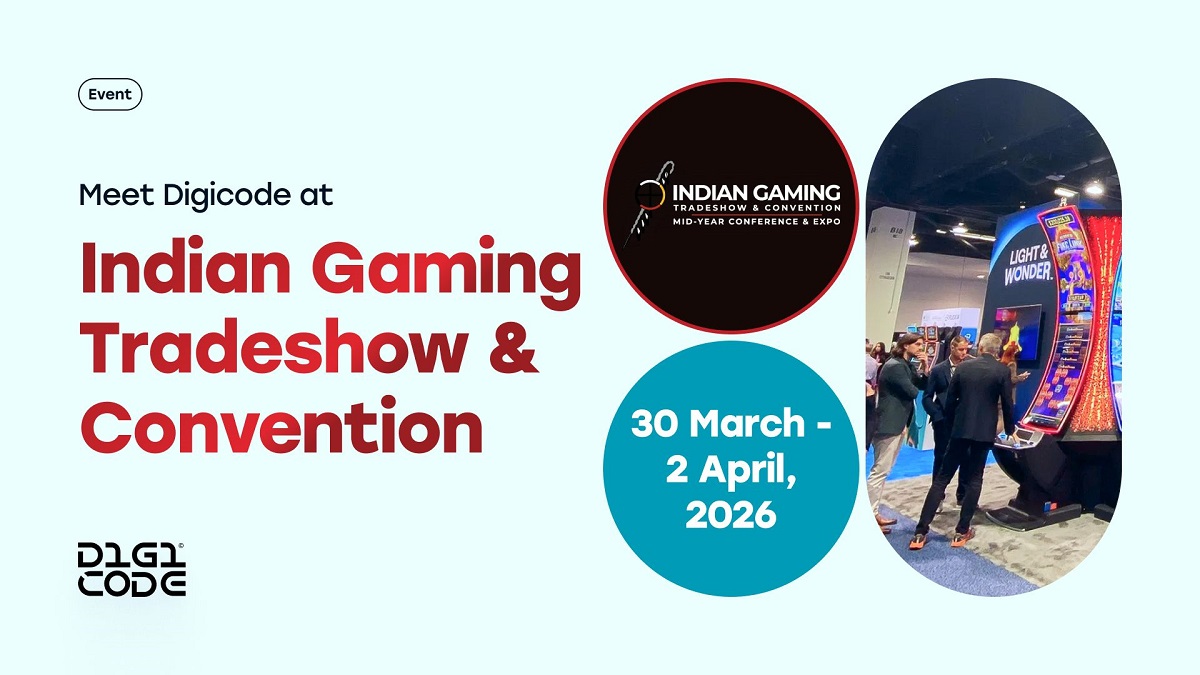
Digicode announced its participation in the Indian Gaming Tradeshow & Convention 2026, taking place March 30 – April 2, 2026, at the San Diego Convention Center. The event is recognized as the largest gathering dedicated to the tribal gaming industry, bringing together tribal leaders, casino executives, regulators, and technology providers to explore the latest developments shaping the sector.
Organized by the Indian Gaming Association, the annual convention serves as a key platform for discussing innovation, regulatory developments, and strategic opportunities across both land-based and digital gaming ecosystems.
“At a time when tribal gaming organizations are increasingly exploring digital transformation and operational modernization, the Indian Gaming Tradeshow & Convention provides an important forum for collaboration,” said Elkhan Shabanov. “We look forward to connecting with industry leaders and sharing how modular technology architectures can help operators scale efficiently, improve operational control, and build platforms designed for long-term growth.”
During the event, Digicode will highlight its Diger Suite, a modular ecosystem of gaming technology solutions designed to help operators modernize infrastructure and reduce reliance on legacy systems. The platform enables gaming organizations to implement flexible, scalable technology stacks that support both current operations and future expansion.
Key solutions within the Diger Suite include:
- DigerRGS – A next-generation gaming platform designed for high-throughput performance and full intellectual property ownership.
- DigerPAM – A cross-market-ready player account management system that supports scalable user management and regulatory compliance.
- DigerPay – A PSP-agnostic payment gateway supporting more than 200 payment methods with integrated real-time fraud protection.
- DigerClick – A fully owned affiliate management platform offering customizable tools, campaign management, and performance analytics.
- DigerCompanion – An AI-driven assistant designed to support multilingual player engagement, responsible gaming initiatives, and automated compliance workflows.
Digicode experts attending the convention will also share practical insights into how gaming operators can strengthen their technology infrastructure, streamline payment operations, automate player support processes, and maintain greater control over their digital platforms as the industry continues to evolve.
By participating in the Indian Gaming Tradeshow & Convention 2026, Digicode aims to expand its engagement with tribal gaming organizations and technology partners and contribute expertise in platform engineering, payments infrastructure, and AI-driven operational tools.
The post Digicode to Showcase Technology Solutions at the Indian Gaming Tradeshow & Convention 2026 appeared first on Americas iGaming & Sports Betting News.
Betnacional
Brazil: Betting pressures household budgets and reshapes the competition for consumer spending

As the industry prepares for BiS SiGMA South America 2026, the largest and most influential iGaming event in Latin America, real market data begins to reveal a profound transformation in the behavior of the Brazilian consumer.
It is no longer just about “betting volume”, but about a reconfiguration of the Share of Wallet (participation in household spending).
The unprecedented study “Bets na Mesa, Consumo em Jogo”, carried out by NielsenIQ Brazil, sheds light on a reality that will be the center of technical debates at the Transamerica Expo Center: in 2025, 26.3% of Brazilian households participated in some form of betting.
This figure is not just a number; it is the reflection of a “new parallel shopper journey” that is capturing the attention and income of the population.
Radiography of Consumption: Who and what is being bet?
The Brazilian market in 2026 shows a clear fragmentation.
Despite the explosion of digital platforms, traditional modalities maintain notable resilience, creating a hybrid ecosystem between analog and digital.
Dominant Modalities
According to the NielsenIQ study, preferences are distributed as follows:
• Mega-Sena: 15.8% of households.
• Video Slots (such as the “Jogo do Tigrinho”): 7.7%.
• Jogo do Bicho: 3.9%.
• Sports Betting (Bets): 3.6%.
Socioeconomic and generational profiles in Brazil
The study reveals that bettors are not a homogeneous group. There is a marked division by Socioeconomic Level (SEL) and age:
• The Slots phenomenon: The “Jogo do Tigrinho” concentrates bettors from middle SEL (63.3%) and a notably young audience, with 42.4% of bettors up to 35 years old.
• The maturity of Mega-Sena: It predominates in high SEL (45.5%) and in a more mature profile, where 49.1% are over 51 years old.
As Gabriel Fagundes, Insights Leader for the Industry at NielsenIQ, points out: “We had already identified that betting became a popular and common practice in the routine of the Brazilian consumer.”
“Now, the numbers also point to the dimension that this practice is taking within household expenses and in the income of bettors.”
The Economic Motivation: Extra Income or Entertainment?
One of the most critical points for operators that will meet at BiS SiGMA is to understand the “why” behind betting.
The data from 2026 shows a diffuse frontier between gambling as leisure and gambling as economic hope.
For 49% of bettors, the main motivation is to obtain extra income, while 43.5% expect a “radical change of life”.
This second profile is more common in casual Mega-Sena players.
Classification by Intensity
The market is divided into three levels of commitment:
- Casual (73%): They play at least once a month.
- “Pro” (28%): They bet once a week. From this group, 65.8% seek extra income.
- “Elite” (9.3%): They bet weekly and spend more than R$ 100 per month.
This “gaming intensity” is, according to the study, the real driver of the economic impact on households, especially in the Northeast regions (29% penetration) and South (28.3%).
The Impact on Retail and the Consumption Basket
For the iGaming industry, understanding which expenses are being substituted is vital for sustainability and social responsibility.
The study reveals that only 10% of households admit substituting expenses directly for betting, but the affected categories are alarming.
Affected Categories
Among those who substitute expenses:
• Food: 47% of the cases.
• Fixed bills (water, electricity, internet): 45.3%.
• Beer: It is the category with the greatest retraction, registering a drop of 1.7 percentage points in the participation of spending.
• Cookies, perfumes and soft drinks: They also present negative impacts.
The main strategy of the consumer to accommodate spending on betting has been to reduce the quantity of items purchased; in fact, 60% of the consumption categories registered a decrease in the volume acquired in 2025.
Strategic Challenges for the Legal Market in 2026
The NielsenIQ data presents a direct challenge for brands and operators that seek to consolidate themselves in “Legal Brazil”.
The pressure on the domestic budget forces manufacturers of fast-moving consumer goods (FMCG) and betting operators to compete for the same currency.
“Betting is a new competitor in the consumer’s Share of Wallet.
This pressures manufacturers to act with more precision in communication, price and activation to recover relevance in front of this new competitor: the habit of betting itself.”
Towards BiS SiGMA 2026
As we approach the largest event in the region, this study serves as a warning and an opportunity. The Brazilian market of 2026 is mature, but it is under intense social scrutiny due to the impact on low-income families.
Operators that wish to have long-term success must:
- Differentiate the profiles: It is not possible to treat the young middle SEL slot player the same as the high SEL Mega-Sena bettor.
- Promote Responsible Gaming: The substitution of food and fixed bills for betting is a regulatory “red flag” that could tighten laws in the near future.
- Regional Innovation: The Northeast and the South are the markets with the highest intensity, requiring more aggressive localization strategies.
BiS SiGMA South America will be the perfect stage to discuss how the industry can grow without compromising the economic stability of Brazilian households, ensuring that iGaming is seen as entertainment and not as an unsustainable financial burden.
Superscore consolidates in Brazil and launches weekly analysis for the press.
The platform offers statistical analysis of the Brazilian Championship and of the main national and international championships, such as the Copa Libertadores, the World Cup and the Champions League, among others, with metrics that go beyond goals and assists for fans and sports experts.
Superscore Insights is the new newsletter for the press, with a weekly publication and another analysis of the latest news.
Superscore, a sports intelligence application associated with Superbet, advances and consolidates itself in Brazil as a strategic platform to transform data into reliable information for football fans in real time and without advertising.
With its own methodology, the solution establishes itself as a reference among sports fans, bringing together advanced statistics, rankings and in-depth analysis of the main tournaments, players and coaches in the country.
Now, the platform takes a new step with the launch of Superscore Insights, expanding its collaboration with the press by offering even more solid analysis, contextualized data and specialized support for sports coverage.
On Mondays, journalists will receive an exclusive bulletin with deep and original analysis of the weekend matches, a specialized analysis of the most important events of the day, as well as predictions and statistics of upcoming events.
With global coverage, Superscore already gathers more than 1,900 competitions, 63,000 teams and more than 480,000 monitored players, offering a solid base for historical and real-time analysis.
The data from Superscore comes from leading partners worldwide in the collection and distribution of sports data, the same ones used by Superbet and the main companies in the sector.
These providers offer high precision, low latency and comprehensive coverage of competitions worldwide.
“Superscore was born as a free sports intelligence application, without advertising, that goes beyond the basics by offering a wide database and statistics for those who want to understand the game in depth.
In just one year, it has already achieved thousands of users and grows approximately 30% monthly, climbing positions in the Google Play ranking.”
“The platform offers a solid experience for both fans and professionals, in addition to facilitating more informed decisions in sports betting, thus reinforcing the commitment to responsible gaming,” states Patrícia Prates, Marketing Director of Superbet and of the alliance with Superscore.
Superscore: Exclusive data and decades of history
In a context where sports coverage increasingly requires qualified data and contextualization, Superscore distinguishes itself by going beyond traditional indicators, incorporating metrics such as accurate shots, passes in the offensive third, tackles, recoveries, participation in decisive plays and time on the field, among other indicators.
These data are translated into the Superscore Score, a proprietary index that allows building Top 5 or Top 10 rankings of the best players of each round, with graphical visualizations and quick analysis.
Another differentiating factor is the expanded historical database, which gathers information from the Brazilian Championship since 1937, the Copa Libertadores since 1960 and the Champions League since 1992, which allows comparative analysis and identifying patterns over decades.
“We are talking about a platform built on a solid technological base, which combines a large volume of unique data, history and a team prepared to transform this information into relevant content for football fans.
Superscore organizes and translates these data so that they can also be used in sports coverage,” states Guilherme Simantob, director of Superscore in Brazil.
Superscore offers free and integrable widgets for the press and content creators, facilitating the incorporation of statistics, graphics and comparisons directly into articles, enriching journalistic narrative with reliable and visually accessible data.
The app is available in the App Store and Google Play.

Reevo arrives in Brazil with Betsson
Reevo has expanded its presence in Latin America after launching its aggregation platform and its own games catalog in Brazil in collaboration with Betsson.
The integration, carried out through a single connection, allows the operator to expand its content offering with Reevo’s own titles and third-party titles.
The movement reinforces the alliance between both companies and is part of a growth strategy in regulated markets, especially Brazil, considered one of the most promising in the region after regulatory advances.
From Betsson, Andrea Rossi highlighted the impact of the agreement by stating that the incorporation of Reevo’s content “expands the entertainment offer available for our players in one of the fastest-growing markets in the region.”
Additionally, both companies anticipated new joint expansions in other markets, after a recent launch also in Mexico.
Reevo continues to bet on its aggregation model as a way to facilitate access to multiple studios through a single integration, while expanding its global distribution network.
BTG launches prediction platform and increases the dispute between banks, stock exchange and betting
The launch of BTG Trends by BTG Pactual marks a new chapter in the growth of prediction markets in Brazil, intensifying competition between banks, the stock exchange and the betting sector.
This new platform allows investors to operate binary contracts (“yes” or “no”) based on probabilities about financial events, such as the dollar, the Ibovespa or interest rate decisions, using already regulated derivative instruments.
The movement is not isolated. The Brazilian stock exchange (B3) also advances in this direction, with the development of financial event contracts and digital derivatives, although restricted to professional investors.
At the same time, the platform XP established a partnership with Kalshi, facilitating access for Brazilian investors to international predictive markets, while new startups such as VoxFi explore broader applications, including geopolitics and culture.
At a global level, these markets have gained relevance and volume, driven by platforms such as Polymarket and Kalshi.
However, their regulation continues to be a subject under debate. In the United States, the CFTC considers these contracts as financial derivatives, although discussions still exist about limits and risks, especially in sensitive events.
In Brazil, authorities, including the CVM and the Secretariat of Prizes and Betting, are already analyzing how to frame these activities from a regulatory point of view, especially when they overlap with sports events.
The advance of these products has also generated reaction from the betting sector.
The Brazilian Institute of Responsible Gaming (IBJR) maintains that, when there is money involved in uncertain events, it is essentially betting, regardless of the format, and warns about risks such as unfair competition and lower consumer protection if they operate outside the regulated framework.
The main difference between betting and prediction markets lies in their structure: in betting, the user plays against the house, while in prediction markets prices are formed among participants and reflect collective probabilities.
Even so, the boundary between both models remains diffuse.
With banks, stock exchange and new platforms advancing simultaneously, prediction markets stop being an emerging trend and become a new field of dispute within the financial system.
The regulatory framework is still under construction, and the evolution of the sector will depend on how the limits between investment and betting are defined as these products scale.
The post Brazil: Betting pressures household budgets and reshapes the competition for consumer spending appeared first on Americas iGaming & Sports Betting News.

-

 Asia6 days ago
GLI Becomes the First Company Accredited by PAGCOR to Test and Certify iGaming Platforms in the Philippines
-
40 Sparkling Crown7 days ago
TaDa Gaming Enters South Africa via Strategic Betway Partnership
-
Alberta7 days ago
Media Troopers Prepares for Alberta iGaming Launch with Canadian Gaming Law Firm
-
Bettingbladet.se7 days ago
Bettingbladet Aims to Become Sweden’s Central Hub for Gambling Industry News & Trends
-
Barbie Nerz Head of Online Games at Staatliche Toto-Lotto GmbH Baden-Württemberg7 days ago
Peter & Sons Partners with Staatliche Toto-Lotto GmbH Baden-Württemberg for German Market Entry
-
Games Global7 days ago
Games Global and Just For The Win® continue the ghostly adventure in Dark Waters III Power Combo: The Cursed Voyage™
-
ADM7 days ago
ENJOY gains Italian approval amid advancing regulated expansion strategy
-
Bragg Gaming Group7 days ago
Bragg Gaming Group Reports Record Fourth Quarter and Full Year 2025 Revenues