Canada
Betting Billions on Sports & E-Sports: CEO’s of DraftKings, FansUnite, Electronic Arts, Penn National Gaming Discuss New Opportunities & Digital Transformation of Gaming Entertainment


Wall Street Reporter, the trusted name in financial news since 1843, has published reports on the latest comments and insights from leaders at: DraftKings (NASDAQ: DKNG) FansUnite (OTC: FUNFF) (CSE: FANS) Electronic Arts (NASDAQ: EA) Penn National Gaming (NASDAQ: PENN).
Accelerating Digital Transformation is creating new opportunities in the sports and e-sports betting, and digital gaming business. E-sports is an exploding new gaming category, with global audiences which now exceed major live sporting events. Wagering on e-sports is now a fast-growing multi-billion dollar global market. Wall Street Reporter highlights tech and gaming leaders comments and insights from recent earnings calls, which give insights into these new trends.
DraftKings Inc. (NASDAQ: DKNG), CEO Jason Robins: “Huge Pent-up Demand for Sports Betting”
“..As sports have started to return, we saw revenue improve sequentially each month in the quarter, with June revenue increasing 20% year-over-year on a pro forma basis. This strong overall results and improvement are due to our product innovation, our entry into new jurisdiction, and pent-up demand for sports betting as Live Sports like Golf, European Soccer, NASCAR and UFC started to return. In the first two weeks of MLBs return, we saw three times the handle compared to the first two weeks of the 2019 MLB season. In the first week of the NHL’s return, our handle is more than twice the handle of first week of 2019 NHL playoff….”
“…We’re seeing great momentum across multiple states and continue to work to bring legal sports betting to more Americans….DraftKings is now live in nine states for mobile sports betting and in three states for iGaming… We’re lasered in on entering new states as soon as possible.”
“..We significantly expanded our eSports offering and have seen exponential growth in this category. We added popular Madden simulated games and began to include streaming sports within our app, which has become a very popular feature. In fact, since the return of the NHL, the NBA, and Major League Baseball, users have continued to engage with eSports, which gives us confidence in that product’s future….We believe eSports is going to be a huge category – it’s when not if…we believe ultimately eSports betting will be if not the biggest, certainly one of the biggest categories of sports betting over the long-term.”
FansUnite (OTC: FUNFF) (CSE: FANS) “Bringing E-Sports Betting to Multi-Billion Dollar US Markets”
FansUnite (OTC: FUNFF) (CSE: FANS) is a recent presenter at Wall Street Reporter’s “Next Super Stock” livestream investor events. FUNFF CEO Scott Burton and President Darius Eghdami, shared with investor audiences their goal for making FUNFF a major player in the multi-billion dollar global market for iGaming, Esports, and sports betting.
E-Sports betting is an exploding global market, with millions of players now actively betting on games like: Counter-Strike, Dota 2, and League of Legends, Overwatch, Call of Duty, iRacing and others. FUNFF offers a complete iGaming platform “Chameleon Gaming Platform” which combines, sports, e-sports, and iGaming, geared to the next generation of online bettors and casino players – which enables pre-match betting, in-play betting, daily fantasy, content and a certified RNG to produce casino style chance games. FUNFF operates multiple B2C online gaming brands and also licenses B2B software for the online gambling industry. FUNFF is now rapidly expanding in international markets with it’s own esports/igaming products – as well as white label solutions which offer innovative new games for established online gaming operators.
Now, FUNFF is entering the U.S. market by offering E-Sports betting solutions to casino sportsbooks, in partnership with GameCo, a Las Vegas based pioneer in skill based iGaming products. E-sports betting is highly attractive for casino operators, as it brings in younger players – a key demographic casinos are depending on. GameCo has gaming licenses in about 25 jurisdictions including, New Jersey and Nevada, and this partnership agreement will give FUNFF early mover advantage in the U.S. E-sports &iGaming market. “E-sports is a key component to any traditional sportsbooks future betting offering. This partnership with GameCo is a significant inflection point for FansUnite and accelerates our plans to enter the US market by at least 6-12 months.”, noted CEO Scott Burton.
September 9 – FUNFF reports 412% increase in year-over-year gross Gaming Revenue, at it’s “McBookie” B2C platform which operates in Scotland.
August 22 – FUNFF announces online gaming pioneer James Keane, is joining it’s Board of Directors. James Keane is a pioneer in the online gaming space and was a key member of the ParadisePoker.com founding team in 2001. James helped grow Paradise into one of the top 3 poker sites in the world and oversaw its acquisition by Sportingbet.
Electronic Arts Inc. (NASDAQ: EA) Andrew Wilson, CEO: “Appetite for E-Sports Insatiable”
“..Esports TV broadcast hours in U.S. in April were up 250% over last year. And April alone was 30% bigger than all of calendar year 2019. So, we’re seeing tremendous engagement in the unbelievable creativity and innovation that our teams are delivering…we’ve been able to deliver hundreds and hundreds of hours of esports content completely remotely with hosts, broadcasters, players and fans all safely at home. I believe this will accelerate our ability to develop and deliver amazing esports content to a global audience and continue to fulfill the insatiable appetite that is absolutely there that we’re seeing right now.”
“EA SPORTS is a pillar of our portfolio and continues to bring more players together. FIFA is one of the biggest and most engaging entertainment franchises in the world. With approximately 100 million players engaging globally in our FIFA franchise, more than 25 million unique players have joined FIFA 20 so far, with VOLTA opening up an entirely new dimension to the game, and FIFA Ultimate Team continuing to grow as the most popular mode. FIFA Online in Asia also continues its momentum, significantly outperforming our expectations. Madden NFL is a cultural icon in football, gaming and entertainment, and it just had its biggest year ever. We took a new approach to launching and rolling out new modes of play in Madden NFL 20, and the result was the highest engagement levels in franchise history….Apex Legends was the most downloaded free-to-play game on PS4 in 2019, and continues to grow as an innovative, long-term service for players. Our Apex esports tournaments have generated approximately two times the average viewing audience of other top esports leagues.“
“Looking to FY21, we are growing our portfolio of high-quality and innovative new games. We are planning to launch 14 new titles to players this fiscal year. That includes four new EA SPORTS titles, FIFA, Madden, NHL and one more unannounced sports title, all of which deliver on the mix of creativity, authenticity and quality that sets EA SPORTS apart. EA SPORTS will also lead for us on the next-generation consoles this year….”
“Our ability to fulfill important motivations for players, inspiration, escape, social connection, competition, creation, and learning has brought more people to connect and spend time in our games in the recent weeks and months of COVID-19 stay-at-home orders. We’ve seen games be a source of joy for hundreds of millions of players. We will now look to be delivering for these players for a long time to come…Our focus continues to be on delivering great games and content through the breadth and depth of our portfolio, in our ongoing live services, and by connecting more players through our games via more distribution channels and platforms.”
Penn National Gaming, Inc. (NASDAQ: PENN) CEO, Jay Snowden: “Positioned to Thrive with Barstool Sports & Digital Transformation of Gaming”
“…we’re most excited about the potential for significant long-term growth and value creation through our highly differentiated omnichannel strategy. To that end, we look forward to the launch of our Barstool Sportsbook mobile app in September here in Pennsylvania. We think Barstool’s loyal followers and our existing casino guests will greet unlike anything in the market today…our Hollywood branded real money iCasino product in Pennsylvania continues to grow nicely even after the reopening of our casinos the last couple of months, with a meaningful portion of our revenues coming from our inactive database. Our proven ability to convert our casino database together with our partnership with Barstool Sports will provide significant organic customer acquisition and cross-sell opportunities. In sum, we believe we are extremely well positioned to capture an outsized share of the growing US sports betting and iCasino market…Despite the ongoing uncertainties with this pandemic, we’re extremely excited for the future and believe all the seeds we planted throughout 2020 will provide a strong foundation for new growth and opportunity ahead.”
“…we’ve taken our time to launch Barstool because we’re launching a very competitive product with things like traveling wallet. I think our bet flip experience is second to none, the intuitiveness of how to use the app and importantly the exclusive betting options is really the differentiation that we’re going to I think be able to deliver, it’s going to get better over time, but even day one and I am not going to get too much detail here because we’re yet to see it when we launch it. You’re going to see a lot of opportunities to engage with Dave Portnoy and Big Cat and Brandon Walker and Marty Mush and many others at Barstool if you want bet with them or you want to bet against them, if you want to save their bets. These are things we’re going to be able to do day one and I think you should imagine that the content and the branding integration into our app with Barstool is just going to get better and better and better every time we do a version release and we think that we’ll be to do a new version release probably every six weeks after we launch, so I’m excited about everything…”
Powered by WPeMatico

CasinoCanada.com, an online casino information portal operated by SEOBROTHERS, has partnered with the IntellectBet online casino. The collaboration focuses on content development, traffic acquisition, and informational coverage of the IntellectBet platform for users in Canada.
Eugene Ravdin, Head of PR at SEOBROTHERS, said: “The partnership with IntellectBet implies the creation of content describing the platform’s offering, its game portfolio, provider network, and payment systems. The collaboration includes traffic acquisition focused on directing users from Canada to the platform.”
The platform provides access to a library of 16,000 games aggregated from more than 85 studios. The portfolio includes slots, live dealer games, and RNG table games, as well as additional categories such as crash and penny games from the likes of Booming Games, InOut, Playson, and BGaming.
The platform supports more than 15 payment methods, including Interac, Bitcoin, and MiFinity. IntellectBet Casino operates in Canada under the Curacao licence and reports around 94,000 active players monthly.
IntellectBet is operated by Casiworx, which also unites other casino brands such as RockstarWin, StakeBro, FreakyBillion, PokerbetCasino, VipCasino, SlotyStake, Slotobit, StakeMania, SlotoRush, Norsewin.
The post CasinoCanada Partners with IntellectBet appeared first on Americas iGaming & Sports Betting News.
Adam Pentecost Chief Revenue Officer at Gaming Corps
Gaming Corps Taps Betty to Boost Content Options for Ontario Players

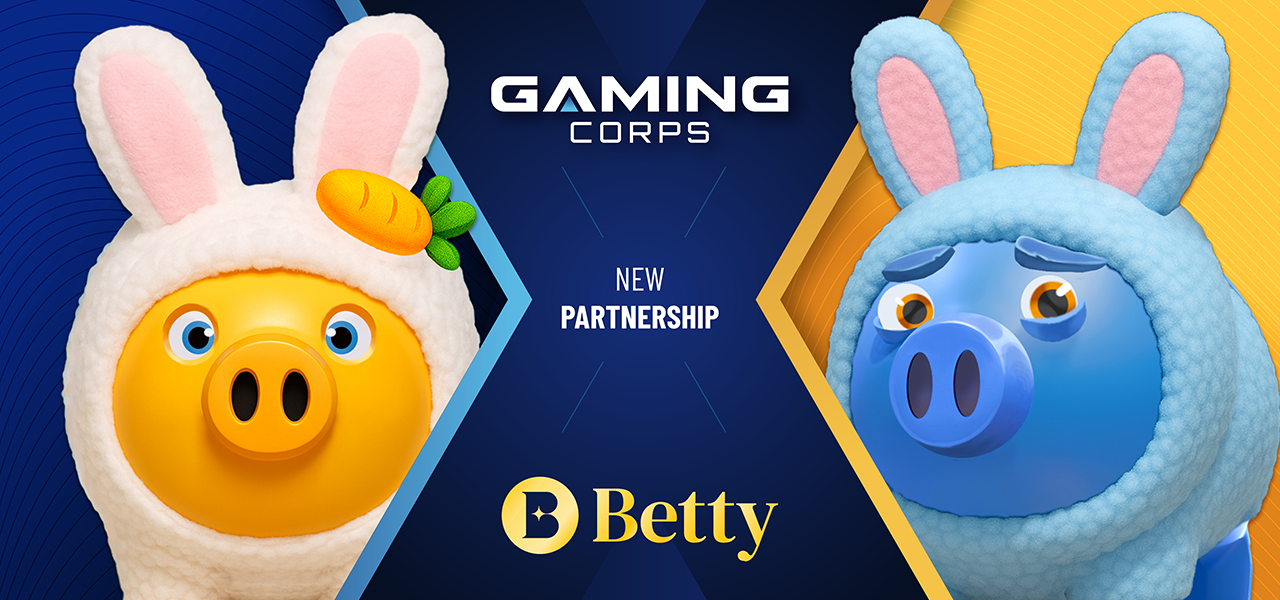
Gaming Corps, a publicly traded game development firm located in Sweden, has entered into a new distribution deal with Betty, one of the rapidly expanding iGaming operators in Ontario. The agreement enhances Betty’s platform with Gaming Corps’ growing collection of content, increasing options for players in a market where the brand currently provides over 2,800 slot titles.
Thanks to the collaboration, Betty customers will soon enjoy the latest slot releases from Gaming Corps, featuring 3 Easter Pigs, the latest chapter in the well-known 3 Pigs series, which adds a new seasonal element to one of the studio’s most iconic franchises. Players will also gain access to the latest release, Vendetta Fury, from DEGEN Studios, Gaming Corps’ newest RGS partner.
This launch leverages the solid success of the broader 3 Pigs franchise, featuring games like 3 Pigs of Olympus and 3 Pigs of the Caribbean that are already part of Gaming Corps’ collection. These are included with the studio’s wider range of Slots, Plinko, Mine, Crash, and Table games.
Adam Pentecost, Chief Revenue Officer at Gaming Corps, said: “Ontario has become one of the most exciting regulated markets in North America, and Betty has built an impressive reputation by offering players both quality and variety. We’re delighted to partner with such a progressive operator and look forward to showcasing how our latest content can bring something genuinely different to their already rich portfolio.”
Paraskeva Smirnova, Senior Casino Operations Manager at Betty, added: “Betty has built its identity on being a homegrown Ontario brand with a clear focus on what local players want. Working with Gaming Corps allows us to continue that mission, adding content that stands out and gives our players something new to discover alongside the thousands of titles we already host.”
The post Gaming Corps Taps Betty to Boost Content Options for Ontario Players appeared first on Eastern European Gaming | Global iGaming & Tech Intelligence Hub.
Adam Pentecost Chief Revenue Officer at Gaming Corps
Gaming Corps partners with Betty to expand content choice in Ontario
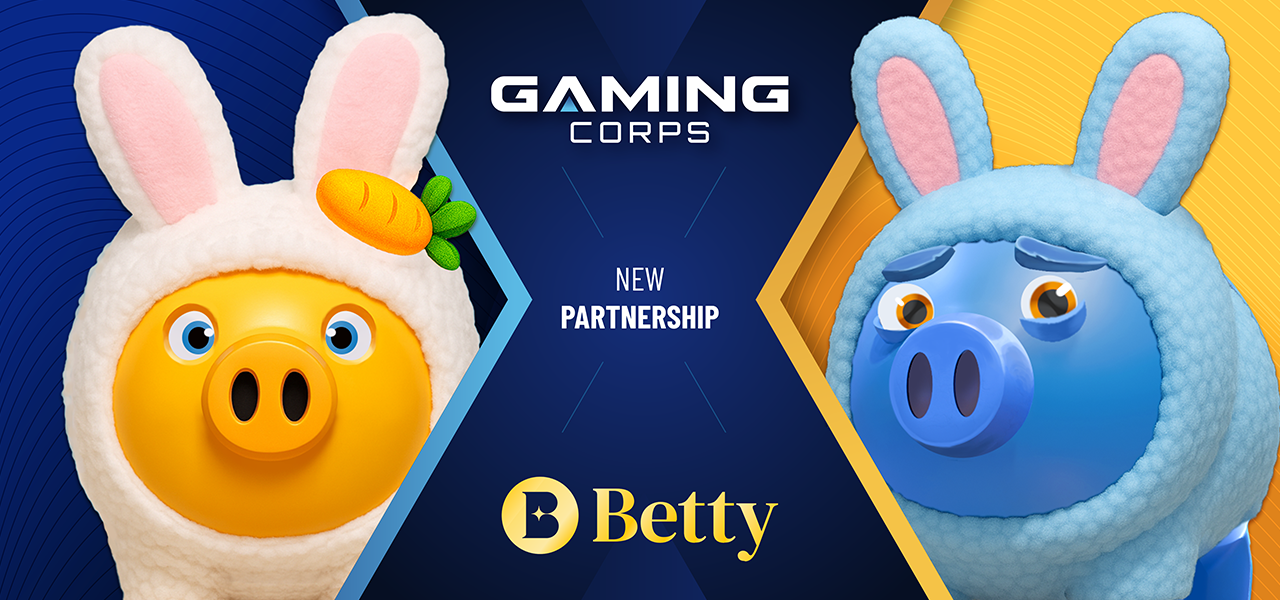
Gaming Corps has signed a new distribution agreement with Betty, one of Ontario’s fastest-growing iGaming operators. The deal adds Gaming Corps’ expanding suite of content to Betty’s platform, strengthening the choice for players in a market where the brand already offers more than 2,800 slot titles.
Through the partnership, Betty customers will soon have access to the latest Gaming Corps slot releases, including 3 Easter Pigs, the newest instalment in the popular 3 Pigs series, which introduces a fresh seasonal twist on one of the studio’s most recognisable franchises. Players will also have access to Gaming Corps’ newest RGS partner, DEGEN Studios’, latest release, Vendetta Fury.
This launch builds on the strong performance of the wider 3 Pigs franchise, with titles such as 3 Pigs of Olympus and 3 Pigs of the Caribbean already established within Gaming Corps’ portfolio. These sit alongside the studio’s broader offering of Slots, Plinko, Mine, Crash and Table games.
Adam Pentecost, Chief Revenue Officer at Gaming Corps, said: “Ontario has become one of the most exciting regulated markets in North America, and Betty has built an impressive reputation by offering players both quality and variety. We’re delighted to partner with such a progressive operator and look forward to showcasing how our latest content can bring something genuinely different to their already rich portfolio.”
Paraskeva Smirnova, Senior Casino Operations Manager at Betty, added: “Betty has built its identity on being a homegrown Ontario brand with a clear focus on what local players want. Working with Gaming Corps allows us to continue that mission, adding content that stands out and gives our players something new to discover alongside the thousands of titles we already host.”
The post Gaming Corps partners with Betty to expand content choice in Ontario appeared first on Americas iGaming & Sports Betting News.

-

 bingo4 days ago
 -
Africa5 days ago
Virgin Bet goes live in South Africa
-
Charity Space Scotland5 days ago
Scottish Government Announces £7.9M Investment to Tackle Gambling Harms
-
BetMGM5 days ago
PA Gaming Control Board Imposes $100,000 Fine on BetMGM
-
ELA Games5 days ago
2026 SiGMA Americas Awards Features ELA Games in Two Major Categories
-
Compliance Updates5 days ago
Peter Knutsson Becomes New Director General of Swedish Gambling Authority
-
apuestas5 days ago
Brasil 2026: Bets presionan el presupuesto de los hogares y redefinen la competencia por el consumo
-
Betnacional5 days ago
Brazil: Betting pressures household budgets and reshapes the competition for consumer spending