Compliance Updates
EGBA Demonstrates Commitment To GDPR With Sectoral Code Of Conduct For Data Protection

New Code establishes rules and best practices to strengthen data protection in the online gambling sector and is one of Europe’s first sector-specific initiatives to support compliance with the GDPR.
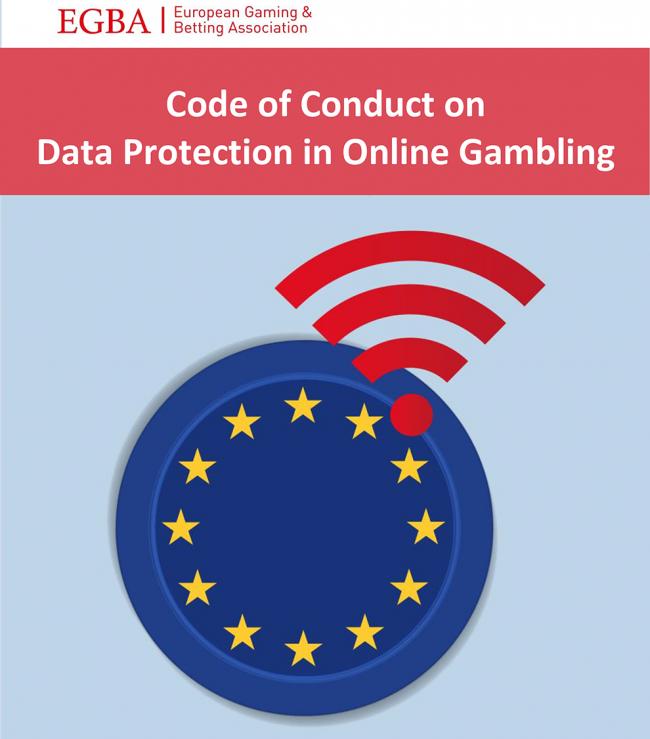
BRUSSELS, 10 June 2020 – The European Gaming and Betting Association (EGBA) has published a Code of Conduct on data protection which establishes dedicated sector-specific rules and best practices to ensure compliance with the EU General Data Protection Regulation 2016/679 and promotes the highest standards of data protection in the online gambling sector.
The Code of Conduct on Data Protection in Online Gambling sets long-term data protection standards for Europe’s online gambling sector and is intended to complement and reinforce the sector’s compliance with the GDPR. The Code is one of Europe’s first ever sector-specific self-regulatory initiatives to support compliance with the GDPR. The Code is part of EGBA’s wider efforts to drive standards in the online gambling sector and is in accordance with the GDPR, which encourages the use of sector-specific codes to support the proper application of its provisions[1].
The Code introduces specific measures and best practices on:
- Enhancing portability rights – including rules to enable customers to transfer their personal data from company to company in an easier and secure way (including rules for player account registration, transactions history, marketing preferences, etc).
- Supporting transparency – specifying what needs to be contained in a company’s privacy policy and which are the possible exceptions to the transparency principle, in view of the specificities of the sector.
- Protecting against breaches of personal data – online gambling companies are required to introduce a plan to prevent and/or mitigate against breaches of personal data.
- Establishing VIP accounts – how companies should establish player accounts for “VIP” customers in a way which respects privacy and the use of personal data.
- Safer gambling – how companies should balance a customer’s privacy rights against the need to protect them from problem gambling.
- Direct marketing – guidance on how to protect customer data during direct marketing and to prevent self-excluded customers from receiving direct marketing.
- Detecting fraud – measures to prevent fraud and ensure data is used to comply with applicable laws.
All EGBA members will adhere to the Code and it is also open for signature to other online gambling companies licensed in the EU/EEA. Compliance with the Code will be monitored by an independent third-party monitoring body.
In line with the requirements of the GDPR, the Code has now been submitted to the Maltese Data Protection Authority for formal approval of the Code’s compliance with GDPR. This is a process which involves data protection authorities in other EU countries, and the European Data Protection Board, and can last between 18-24 months.
“On the 2-year anniversary of the GDPR, issues around data protection, privacy and the use of personal data are still a concern for many European citizens. That’s why we’re pleased to introduce this new code which demonstrates the online gambling sector’s commitment to protecting the personal data of our 16.5 million customers and supporting the success of the GDPR. We’re pleased to be one of Europe’s first industry sectors to introduce a self-regulatory code which supports compliance with GDPR. Data, and how it is used, is playing an increasing important role in how citizens and business interact online – and the online gambling sector is no different. This code outlines how online gambling companies should ensure their customers understand how their personal data is being used and provides important guidance on how companies should use personal data in their interactions with customers, including how they identify and address problem gambling behavior in their customers.” – Maarten Haijer, Secretary General, EGBA.
[1] Article 40, General Data Protection Regulation 2016/679.
Powered by WPeMatico

Compliance Updates
Dutch Regulator Urges Online Gambling Providers to Stop Using “Share Your Bet” Feature

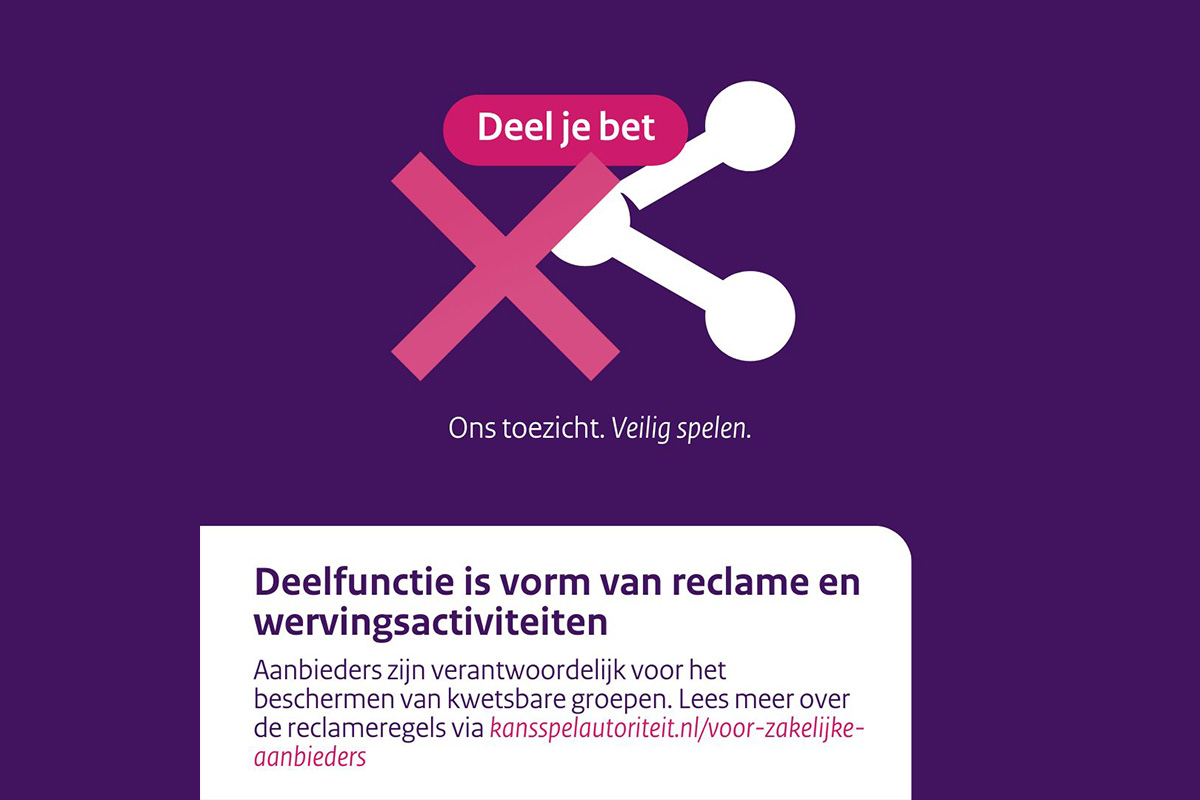
The Dutch Gambling Regulator (KSA) has urged the online gambling providers to discontinue the “Share your bet” feature. This feature allows players to share their placed bets via social media or messaging apps such as WhatsApp, Facebook and email. The KSA investigated the functionality of this feature after receiving several signals and questions from the market.
“Share your bet” function
The “Share your bet” feature allows players to easily share their bets with others. It works like this: a player places a bet and sends it via a link to, for example, friends or family. The recipient can then immediately see the bet and, if they have an account, participate as well. This makes gambling easily shared, often via social networks.
Protection of vulnerable groups
The KSA points out that the “Share your bet” feature is a form of advertising and recruitment. It’s a way for providers to promote gambling, but indirectly through players themselves. According to the Decree on Recruitment, Advertising and Addiction Prevention in Gambling, providers must ensure that advertising does not reach vulnerable groups, such as minors, young adults and people with gambling problems.
Because players with the “Share your bet” feature decide who to send their bet to, providers have no control over who receives the shared messages. This means that gambling providers cannot guarantee that vulnerable groups will not unintentionally encounter gambling advertising. Therefore, offering features like “Share your bet” is not permitted.
In addition, the ease of sharing bets helps normalize gambling. This lowers the barrier to entry, especially among younger demographics.
Discontinue “Share your bet” functionality
The KSA is therefore calling on all online gambling providers using the “Share your bet” feature to immediately stop doing so. The KSA will continue to monitor any new developments in this area and will take enforcement action where necessary to ensure the protection of vulnerable groups.
The post Dutch Regulator Urges Online Gambling Providers to Stop Using “Share Your Bet” Feature appeared first on Eastern European Gaming | Global iGaming & Tech Intelligence Hub.
Digitain has secured certification from the UK Gambling Commission (UKGC) for its Sportsbook and platform, alongside obtaining a UK betting licence for real and virtual events. This milestone confirms that Digitain’s technology meets the rigorous regulatory and technical standards required to operate in one of the world’s most demanding iGaming markets.
The UK is widely recognised as one of the most highly regulated and competitive jurisdictions globally. Securing UKGC approval is a clear marker of Digitain’s commitment to compliance, player protection and long-term operational reliability, while continuing to deliver performance-driven technology for ambitious operators.
Vardges Vardanyan, Founder of Digitain Group, said: “The UK is one of the most demanding regulatory environments in the global gaming industry. Meeting these standards is a strong endorsement of our technology, compliance capabilities, and operational maturity. This achievement enables us to support UK-licensed operators with confidence, delivering reliable, scalable, and future-ready solutions designed to perform in highly regulated markets.”
This certification further strengthens Digitain’s position as a trusted technology partner for regulated markets. The platform is designed to support sustainable growth, offering operators the flexibility to localise, optimise and scale within strict compliance frameworks. At the same time, Digitain’s UK-certified Sportsbook is built with control and transparency at its core, enabling operators to meet regulatory requirements without compromising on product depth, speed or engagement.
Arshak Muradyan, Group Chief Compliance Officer at Digitain, added: “Securing a UK betting licence alongside full Sportsbook and Platform certification is a clear validation of Digitain’s compliance-first approach. The UK market demands continuous oversight, robust controls, and absolute transparency, and this approval confirms that our systems, processes, and governance structures are built to meet those expectations.”
The post Digitain Secures UKGC Certification for Sportsbook and Platform appeared first on Eastern European Gaming | Global iGaming & Tech Intelligence Hub.
Brasil on Track
ODDSGATE LAUNCHES “BRASIL ON TRACK”, A STRATEGIC PLATFORM FOR NAVIGATING BRAZIL’S REGULATED IGAMING MARKET


As Brazil’s regulated iGaming market completes its first year under Law 14.790/2023, Oddsgate today announced the launch of Brasil on Track, a strategic platform designed to help operators monitor legislation, understand compliance requirements, and make informed decisions in Latin America’s largest economy.
Brasil on Track provides live tracking of regulatory milestones, market indicators, and operational requirements,
connecting legal updates to their business impact and linking directly to official sources.
Brazil’s regulatory landscape has evolved rapidly over the past year. Law 14.790/2023 introduced clearer frameworks for licensing, taxation, and consumer protection, which accelerated international interest and positioned Brazil among the world’s most closely watched regulated iGaming markets.
According to Brazil’s Ministry of Finance, the sector generated an estimated R$36 billion in gross gaming revenue (January-September 2025) and R$3.3 billion in federal tax revenue over the same period, highlighting the market’s scale and momentum.
Source: Brazil’s Ministry of Finance, 2025.
“The regulation brought by Law 14.790/2023 was a major milestone for Brazil’s iGaming sector,” said Valter Delfraro Junior, Oddsgate’s Director of Regulatory Affairs. “It ended years of uncertainty and provided legal security and operational clarity. This new scenario places Brazil’s gaming industry on par with mature markets, increasing our international competitiveness and attractiveness to global investors and partners.”
During the first year of regulation, operators faced extensive requirements, including federal authorization processes, responsible gambling mechanisms, advertising restrictions, and new tax structures. Oddsgate expects the market to continue expanding throughout 2026, with early adopters well-positioned to benefit from greater credibility and market growth.
“We transform regulation into a practical, continuous guide for operating in Brazil with less risk and more clarity,” said Wagner Fernandes, Chief Marketing Officer at Oddsgate. “Brasil on Track helps teams entering, expanding, or optimizing operations decide with context, not guesswork.”
What “Brasil on Track” includes
– Live tracking of active regulation and pending bills;
– An operational roadmap mapping legal changes to required compliance actions;
– Market intelligence, including player demographics and key market indicators;
– Visibility into tax structures, licensing steps, and market-entry requirements;
– Focus areas include KYC, AML, self-exclusion tools, responsible gambling, and consumer protection requirements.
The post ODDSGATE LAUNCHES “BRASIL ON TRACK”, A STRATEGIC PLATFORM FOR NAVIGATING BRAZIL’S REGULATED IGAMING MARKET appeared first on Americas iGaming & Sports Betting News.

-

 Africa7 days ago
Dive Into a Different Kind of Love This February with Springbok Casino’s ‘Whalentines Month’ and Claim 25 Free Spins
-
Book of Sobek7 days ago
Hölle Games Releases Book of Sobek
-
Danske Spil7 days ago
S Gaming lands in Denmark with Danske Spil
-
ACMA7 days ago
ACMA: Six Wagering Providers Breach Gambling Self-Exclusion Rules
-
Australia7 days ago
Finalists Announced for Inaugural Regulating the Game Global Awards Following Strong Global Engagement
-
Latest News7 days ago
Thunderkick Unveils Pan’s Arcadia, a Utopian Wilderness
-
Latest News5 days ago
BMM TESTLABS GRANTED NEW LICENSE IN BRAZILIAN STATE OF MINAS GERAIS, EXPANDING ITS PRODUCT TESTING AND CERTIFICATION FOOTPRINT IN BRAZIL
-
Colombia6 days ago
ZITRO INSTALLS OVER 70 MACHINES ACROSS GRUPO ALADDIN CASINOS IN COLOMBIA