Press Releases
Exclusive Q&A with Dejan Orlac, Head of Design at Royce&Bach

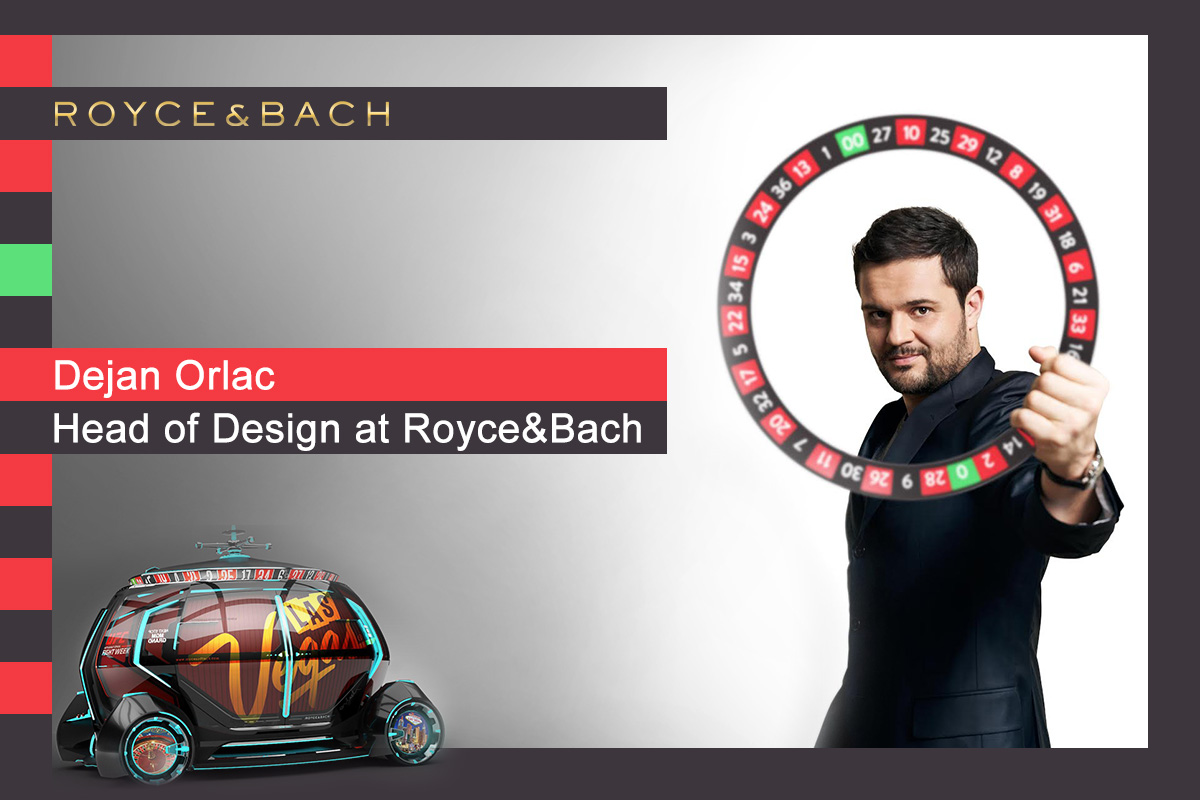
Let’s start from the beginning. Your beginnings, that is. Our readers love to learn more about top professionals and their life. Tell us more about yourself.
I was one of those kids that knew what he wanted to do from early on. That is to turn problems into elegant solutions through design. I loved drawing anything that moved, either on wheels, through the air or, underwater. My passion led me to the Academy of Arts and Design in Ljubljana, where I studied Industrial Design. After a successful study, I moved to London to pursue my appetite for design at the Royal College of Art, studying MA in product design. I never finished the course as I found myself in front of a new challenge in the gaming industry. It was an opportunity I couldn’t refuse. I became a partner and head of design at the original Royce&Bach company. One thing led to another, and soon I was playing a part in launching the online casino platform called Oryx Gaming. We planned, developed, and designed a complete library of over 40 slot games, online roulette games, and poker games. We also designed all interfaces and the whole front end that enabled the launch of the product.
It was enough. I needed a break from the gaming environment and embarked on a new adventure. I was designing different products in various industries, from toys to phones and anything in between. I worked on projects for many high-end brands like Burberry, Coway, Panasonic, LG, and many others. It was a valuable learning experience that allowed me to reflect on the gaming industry that gave me the start. It is funny how I came back full circle and decided to focus on the gaming industry again with more specific goals.
Perhaps the first time you made your mark in the industry was by launching Archipelago 8 electronic roulette. Tell us about that experience.
Before starting the journey with Royce&Bach, I was already designing online casino lobby’s and games for Playtech, and other casino providers. It gave me significant knowledge and confidence for my next adventure. Royce&Bach was an incredible opportunity for a 22-year-old boy. I worked and learned from some of the most intelligent people in the industry. The company had a clear goal and product vision; to disrupt the gaming industry with a better approach to a customer and user experience. The design was our first bet. Our first presentation of the Archipelago roulette was in 2007 at ICE in London, and the interest was overwhelming. However, it came with its fair share of challenges. After the show, we realized we need to go back to the drawing board and make changes to the design, construction, and implement additional feedback from potential buyers. And we did. The plan hit home with the Asian demographic, and shortly after, we started shipping our first products. Soon we proudly installed our roulette in the MGM Grand Macau.
You were involved with gaming product designs when you were working in Orlach Design? Could you tell us about some of the designs that you were associated with?
Orlach design is my own design company. Through Orlach design, I designed products, concepts, user interfaces, and other innovative solutions for many well-known international companies. I also worked directly with leading design studios helping them with their projects. Together we worked on products for beverage brand Budweiser, JSP and Keeler. I also designed the new UI for the ROXI home music entertainment system and worked on many projects at Burberry. It was interesting to be part of the TV brand campaign for Peugeot or cooperate on developing sets for Garnier TV commercials. Through Orlach design, I worked on many projects in healthcare tech, scientific, industrial, high spec and toy industry, interiors, and furniture design. It enabled me to receive international recognition and win the awards such as Red Dot Design award Concepts and Core77 Best Of Design.
You were also part of some innovations like a digital market place of 3Dprintable industrial designs. How did it go?
The 3Defied project is a digital platform with a professionally created consumer level 3d product content. Through 3Defied, designers, design companies, and prominent brands can connect and sell their work. The end customer is the owner of a 3d printer or a regular customer who prints the content through outside vendors. It is my “pet” project. I strongly believe in it, and it is something I am very passionate about. Unfortunately, due to ongoing gaming projects, 3Defied is currently on the backburner.
What about your present company Royce&Bach? Tell us about your areas of expertise, ongoing projects and clients.
Our passion is to create innovative gaming products that add value to players, operators, and casino vendors. Through strategic, industry-informed, and innovation-driven design, Royce&Bach strives to enhance players’ experience and maximize operators’ return on investment. We design all kinds of online and land-based casino-relevant experiences and equipment. Electronic roulettes, slot machine cabinets, player terminals, user interfaces, and casino games are just a few of many products we designed for our clients. Ultimately Royce&Bach uncovers hidden potential and delivers innovative products that exceed our client’s expectations.
We are currently working on several fascinating products. My team is designing a new slot machine and a new automated roulette for a renowned retail casino gaming company. A well-known international brand hired us to design real room interiors for their live virtual games. For them, we are also conceptualizing new games that are either more immersive or integrate the brand on a different level. Demand for digital products is rising, and we are looking forward to developing that side of the business as well.
Could you explain the design process and its various stages from concept to manufacturing?
We must maximize the ROI for investors as well as enhance the entertainment experience for our players.
I want to think that I am in the process of developing our “patented” approach to the challenges of designing for the gaming industry. We based our approach around understanding specific players’ psychologies. We want to know what triggers their senses, what gets them into “the zone,” how they associate themselves with the product and, how they perceive a machine design as their winning tool.
First, we dive deep into research to uncover and identify the specific opportunities associated with the client and focus on solving those through product design. Through fieldwork, we talk to all parties involved in the product lifecycle. We also learn from previous research in our industry. Works from Natasha Dow Schüll, Roger Thomas, and Bill Friedman are an essential base for further actions. After we gather all relevant information, we create a design brief which we use throughout the development process.
Next, we move to the “concept design phase,” where we propose a variety of ideas for product design. We review them with our clients and together select the winning horse. Sometimes we choose several concepts and develop them further. I like to say that those are our horses in the race, competing against each other. After the race is over, we end up with a winning horse, which becomes our winning concept.
Now it is time to optimize our design. Together with our clients, we review the ergonomics, add further technical input from the engineering team, and, overall, create a winning proposal. What follows is finalizing colors, materials, and finishes (CMF), preparing renderings, models, and mock-ups for presentations. The result is a product that makes our clients proud and excited about the future.
You have worked with a lot of start-ups and helped them get ahead. What are your views about start-ups in the gaming industry in general. Pros, cons and general advice, if any?
In my view, many companies developing gaming solutions, underestimate the financial investment, and the time needed to create a successful product. Due to gaming-related legislation and strict certification processes which differ from country to country, the process is more complicated in comparison to the mainstream entertainment business. Also, the industry is small, everybody knows each other, and the competition is ruthless. That creates a unique set of challenges for any start-up that wants to thrive in our industry.
Collaborate with someone who can think and work outside perceived limitations. It can uncover hidden potential you never knew was there. Do your research, look deep to avoid surprises later. Design to attract, impress, and satisfy. Be different. It will help you stay on track and continuously evolve in the ever-changing gaming environment. Design is the best tool to explore new opportunities, adapt, and plan for the future. Design is also your best bet in the product development journey to success. It’s an investment that pays back double, at least.
What are the challenges and opportunities that you find in the gaming industry in terms of design?
Planning design for any gambling solution creates challenges on many levels. First, the product design must be fit for the manufacturer and easy-to-operate for the vendor. The vendor is the actual buyer who has to service and maintain the product. Second, players require much understanding. They expect to receive a completely different user experience than the vendor. Both use the same product but on different levels and have different requirements. Satisfying both is very challenging. That generally makes products complicated to design and produce because they’re often required to do too much at once.
The gambling market is also continually changing. It needs to adapt to new generations of players through technology, better research, and innovation. That presents a multitude of design pathways that can open up opportunities to create innovative designs that amuse existing players or attract new ones.
Final question. With a number of gaming product manufacturers employing in-house designers, what value additions can an external designing firm provide?
If you want to stay ahead, you need to collaborate with someone who can work outside perceived limitations. The in-house design team usually has plenty of work supporting ongoing business demands. That is why it’s essential to include outside professionals who are well informed overall and have cross-industry experiences to come up with fresh ideas. Flexibility, free-thinking, insight, and the quality of specialized people enables our clients to offer products that exceed expectations. Most everyday consumer products that we use were conceived and designed by external design studios. Big corporations rely on smaller companies. A lot of talented and skilled people will instead work for a smaller studio than a corporation.



DuelBits has published results from its JUSTIN2026 marketing campaign, saying the UFC-focused activation generated more than 122 million verified video views and contributed to one of the company’s strongest MMA betting events “in recent years.”
The crypto sportsbook and casino operator said the campaign launched ahead of UFC event Freedom 250 at the White House and centred on former UFC lightweight champion Justin Gaethje. DuelBits framed the partnership as an early bet on Gaethje, before broader commercial interest.
According to the company, the campaign set a KPI to exceed 100 million impressions across owned, paid and partnered media, and ultimately delivered more than 122 million verified clip views via a network of more than 140 creators. The asset mix included a hero film, six short-form cutdowns, behind-the-scenes content and still imagery, distributed via DuelBits’ social channels, MMA publishers, creator partnerships and clipping pages.
DuelBits said the hero content was also integrated into Gaethje’s “Art of Violence” YouTube series. The operator added that the activation drove promotional code engagement and helped convert attention into sportsbook activity.
Jasper Hoekert, Chief Marketing Officer at Duelbits, said: “We wanted to support Justin before everyone else recognised the opportunity. Instead of following the hype once he has already achieved greatness, we wanted to back a champion before anybody else did.
“The campaign wasn’t measured purely on views. Of course, surpassing 122 million verified views and exceeding our 100 million KPI was a huge achievement, but the real success was seeing that attention convert into one of our strongest UFC betting nights in recent years.
“It also reinforced something that’s key to DuelBits as a brand, which is that we don’t do small campaigns. Whether it’s the production quality, creator network, or distribution strategy, we want every activation to show what’s possible when sportsbook marketing is treated like premium entertainment.”
The post DuelBits says UFC creator campaign delivers 122m verified video views appeared first on EE Gaming | Global iGaming & Tech Intelligence Hub.

New division delivers smart, AI-driven technology solutions to gaming operators, suppliers, and ventures worldwide, built on the same stack SCCG uses to run its own global advisory business.
SCCG Management announces the launch of SCCG Technology, a dedicated division built to deliver intelligent, AI-driven solutions to the iGaming industry. Where SCCG has spent three decades advising gaming companies on what to build, SCCG Technology now builds it.
The division launches with a working portfolio, not a promise. Over the past year, SCCG has re-engineered its own global operation around artificial intelligence: automated content and newsletter systems reaching tens of thousands of industry professionals weekly, real-time market and odds data pipelines feeding its prediction-market ventures,
and AI-assisted CRM and pipeline automation across more than 120 active client engagements.
The proving ground is SCCG’s own digital presence, now being rebuilt on the division’s platform: a site that reassembles itself around each visitor and publishes across every channel from one place. An operator in LATAM and an investor in Las Vegas see the same network through different eyes. Content is AI-accelerated but expert-governed: every AI-assisted claim is labeled and traceable to its source, a discipline that matters in a regulated industry. We built it for the most demanding client we have, ourselves, before offering it to anyone else.
The timing reflects a structural shift in the industry. Operators and suppliers no longer compete only on licenses and content; they compete on data, speed, and the intelligence of their customer experience. AI has moved from experiment to infrastructure, reshaping how players are acquired, how content is produced, how markets are priced, and how compliance is managed. Most gaming companies know this. Far fewer have a partner that understands both the technology and the industry it has to serve.
“Every gaming company I speak with is asking the same two questions: what should we be doing with AI, and who can actually build it for us without a two-year learning curve on how this industry works. SCCG Technology exists because we solved that problem for ourselves first. Now we are opening the toolkit to the industry.” – Stephen A. Crystal, Founder and CEO, SCCG Management
SCCG Technology will deliver across five service lines:
Product Strategy and Build: Carrying a gaming concept from advisory whiteboard to working software. Rapid prototyping and delivery of new gaming products and ventures, the capability a strategy deck cannot substitute for.
Data, Analytics, and Market Intelligence: Real-time odds and market data pipelines, prediction-market tooling, and business intelligence dashboards that put operational truth in front of decision-makers daily.
Compliance-Aware AI Content and Marketing Systems: Automated content production, newsletter and campaign engines, and CRM automation built for a regulated industry, AI-assisted output labeled and traceable, brand voice intact.
AI Operations and Automation: Workflow automation and applied AI across the back office, from player-facing support to reporting, compliance preparation, and the operational plumbing gaming companies run on.
Intelligent Web and Digital Platforms: Digital experiences that personalize by visitor role and region, engineered for conversion and structured for both traditional search and the AI answer engines that increasingly drive discovery.
What separates SCCG Technology from a generalist agency or dev shop is the firm behind it. Every engagement draws on SCCG Management’s 30-plus years inside the gaming industry, its regulatory and commercial expertise across dozens of jurisdictions, and a global client network spanning operators, platforms, suppliers, and investors. SCCG Technology does not need the industry explained to it.
The launch continues a deliberate expansion of the SCCG platform. In the past year the firm has established SCCG LATAM with its Miami office, launched SCCG Brazil with dedicated local leadership, and expanded its managed-services offering for casino operators. SCCG Technology is the connective layer across all of it: the division that turns the firm’s advisory insight into deployed, working technology. The model is expert-governed and AI-accelerated: SCCG’s people supply the industry judgment, and the platform supplies the speed.
“The gaming industry does not have a shortage of technology vendors. It has a shortage of technology partners who understand gaming. That is the gap SCCG Technology was built to close.” – Stephen A. Crystal, Founder and CEO, SCCG Management
SCCG Technology operates as a division of SCCG Management, the gaming industry’s global advisory firm. With more than 30 years of experience, more than 120 active client engagements worldwide, and offices spanning North America, Latin America, Europe, Africa, and Asia, SCCG provides end-to-end advisory services across iGaming, sports betting, sweepstakes, tribal gaming, and casino technology.
The post SCCG Management Launches SCCG Technology, Delivering AI-Driven Solutions to the iGaming Industry appeared first on Americas iGaming & Sports Betting News.
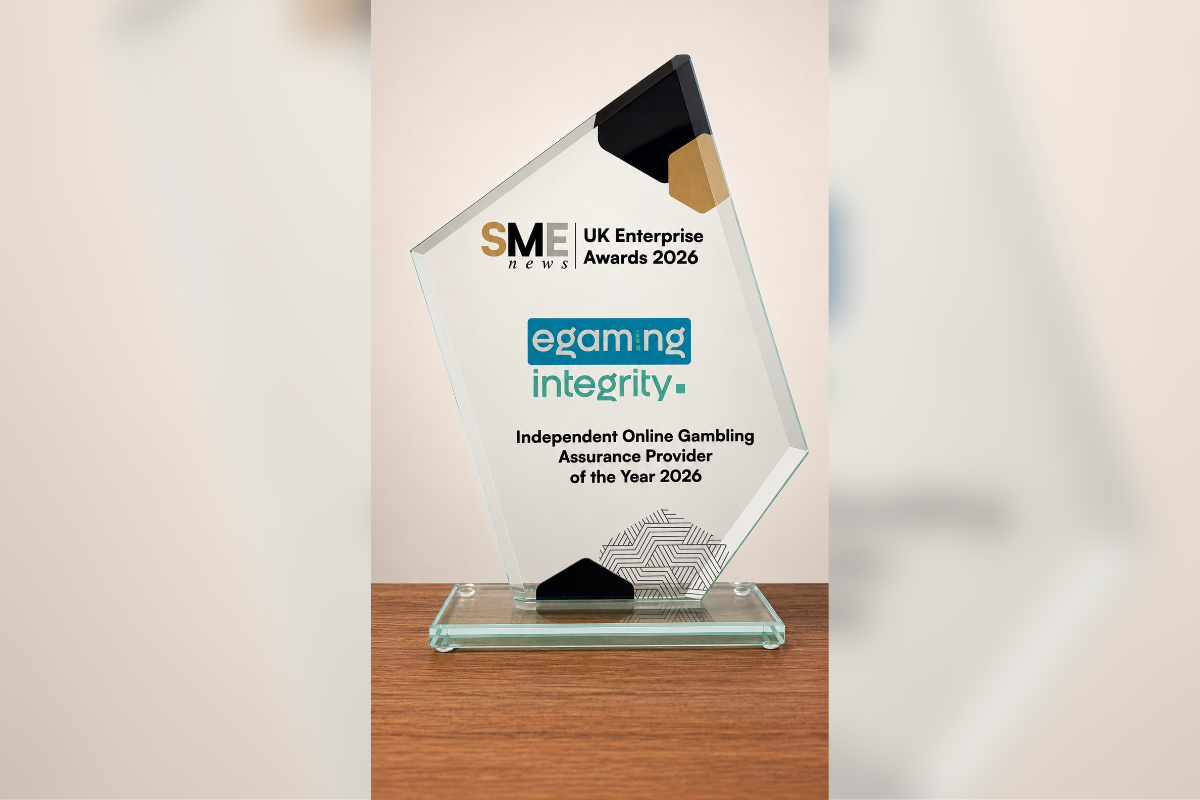
eGaming Integrity has been named Independent Online Gambling Assurance Provider of the Year 2026 at the UK Enterprise Awards, organised by SME News. The company is based in the Isle of Man and works with operators in regulated online gambling markets.
According to the company, the award recognises its assurance work aimed at helping gambling operators evaluate whether their compliance processes are prepared for regulated market requirements, as regulatory expectations increase around compliance standards and customer protection.
eGaming Integrity said its internal audit reviews assess how gambling businesses operate in practice, including whether procedures and controls meet standards expected by regulators. The company added that the process is designed to help operators identify where controls are effective and where improvements may be needed before issues emerge.
Emma Shilling, Director at eGaming Integrity, said,
“This award recognises the reason eGaming Integrity was created. Responsible operators want to know where they stand before problems appear, and independent assurance provides that outside perspective.
“Our team has seen regulation from both sides, which helps us understand where processes can break down and how operators can make practical improvements.”
Speaking on the accomplishments of the 2026 winners, Laura O’Carroll, Awards Manager, said,
“The announcement of our UK Enterprise Awards is perhaps one of our most anticipated milestones every year, and the 2026 launch is no different. We are truly pleased to deliver our digital magazine and winners list, showcasing such excellence, to our readers again this year. Atop this, to our winners, and from our team to yours, we wish you all a sincere congratulations on your success in this year’s programme.”
The post eGaming Integrity wins SME News UK Enterprise Award for gambling assurance appeared first on EE Gaming | Global iGaming & Tech Intelligence Hub.

-

 Compliance Updates6 days ago
Arizona Department of Gaming Issues Cease-and-Desist Orders to Multiple Operators Linked to Underage Gambling and Illegal Activity
-
 Compliance Updates6 days ago
KONAMI GROUP’s Konami Gaming Inc. First to Submit Manufacturer License Application in Japan’s Emerging IR Market
-
Latest News6 days ago
Enjoy Gaming Builds on Slot success with Diamond Slam: Xtra Power
-
Latest News6 days ago
Weekend Reels | Week 28: Slot Drops & Trends
-
Compliance Updates6 days ago
Spillemyndigheden Publishes Report on Illegal Gambling
-
Canada6 days ago
High 5 Games Expands Across Alberta’s Open iGaming Market Following AGLC Supplier Approval
-
Compliance Updates6 days ago
Arizona regulator orders five operators to stop alleged illegal gambling activity
-
Compliance Updates6 days ago
TaDa Gaming Accelerates LatAm Growth with Peru Licence Approval