Africa
Quanta Expands Its Footprint In Africa

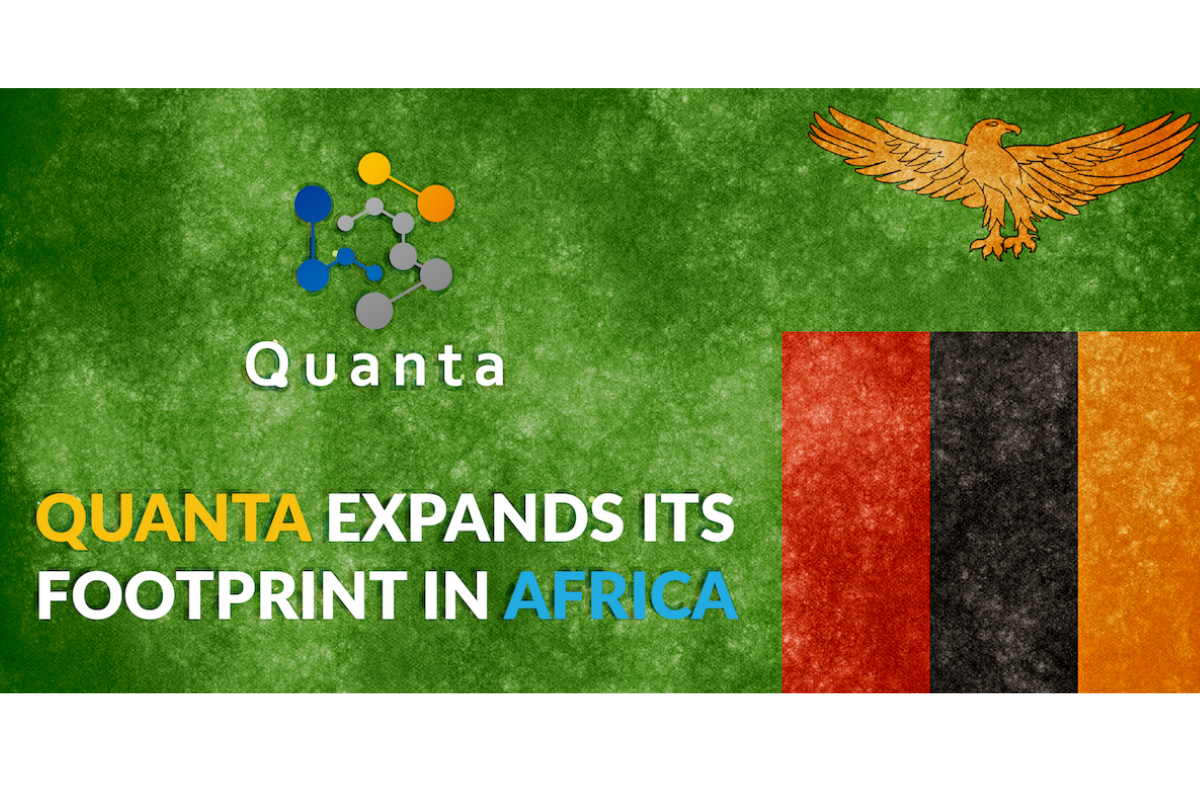
Quanta is delighted to announce that it has secured a local license to operate lotteries in Zambia through the acquisition of a majority stake of local company Pleasure Sports Innovations Ltd. This is Quanta’s second lottery license in Africa following its majority acquisition of International Lottery and Gaming Limited, the operator of Naija Lottery in Nigeria. The introduction of Quanta’s innovative blockchain lottery and accompanying digital services provided via Quanta Pay is expected soon after the commencement of business operations in Q3 2020.
Pleasure Sports Innovations Ltd is licensed by Zambia’s Gaming Commission and is a fast growing betting and smart solutions company leveraging the power of blockchain to serve its customers. The company is also positioning to launch the first end-to-end blockchain lottery in the region following its cooperation with Quanta. “We are excited about the opportunity to work with Quanta to develop and provide a social impact lottery that will contribute to selected good causes whilst creating value for Zambia and its citizens.” commented Darius Sinkamba, CEO of Pleasure Sports Innovations.
Quanta will use its core market in Nigeria as the basis to develop and launch innovative Africa-centric gaming and fintech products in new markets it secures across the continent. Quanta’s successful acquisition of Naija Lottery in 2018 established Quanta as the first blockchain lottery company to operate a traditional lottery, and is the basis for its ambitious growth plans for the region in 2020 and beyond.
Quanta’s acquisition of Pleasure Sports Innovations was led by Quanta Africa SVP John Kamara and Quanta CEO Harmen Brenninkmeijer from Quanta Africa’s base of operations in Nairobi Kenya. This acquisition sees Quanta expand its presence into the southern African state which has a population of almost 18 million and GDP of more than USD 25 billion. According to Zambian Watchdog, iGaming in South Africa is fast becoming a vast and lucrative market, with countries such as Zambia leading the charge. This has led to social impact from economic growth to job creation to increasingly mobile-friendly generation from the growing middle class Millenials (Gen Y). Unicef quoted that Zambia has an estimated median age of 16.7 years which is one of the lowest in the world with the vast majority of these Millenials potentially embarking on the latest technology. Improved mobile connectivity and lower data costs for Zambian have led to the number of mobile internet users reaching a new record high of 7.1 million users, with a vast proportion wagering regularly online thru a smartphone or tablet device. According to ZICTA statistics, the penetration of internet and mobile phone users was 62.7% and 97.2% respectively, one of the highest in sub-Saharan Africa as investment growth in Information and Communication Technology is testament to the future of the new technologies.
Zambia has made significant achievements in the education sector since 2000. According to Unicef, enrolment in primary education reached 3.3 million in 2017, up from 1.6 million in 2000. Girls are now enrolling in primary school in the same numbers as boys. But there are an estimated 800,000 school-aged children that are out of school. Access to early childhood education is low with only 26 per cent of children entering Grade 1 with any such experience. One can imagine the unlimited possibilities for many children who decide to study and embrace the new blockchain technologies which is an area that Quanta is happy to work in cooperation with the education sector and communities.
Quanta enters into South African region along with its business roadmap. Besides, Quanta builds its local representative office, Quanta Africa, in Nairobi, Kenya in this quarter with John Kamara as SVP/Managing Director. John is an experienced marketing, business growth and market acquisition executive with over 20 years in the international gaming industry.
On the expansion into Zambia, Quanta Africa MD John Kamara: “We see the acquisition of Pleasure Sports in Zambia as a key step forward in our ambition to maintain Quanta’s position as the leading operator of blockchain-based gaming, lottery and fintech solutions in Africa. Zambia represents an exciting opportunity to expand our footprint in a smart young country with a stable currency whilst providing much needed revenue to good causes as well as the opportunity for players to win attractive prizes.”
Harmen Brenninkmeijer, CEO of Quanta, commented on the new business expansion. “The new entrance in Zambia will play a pivotal role for Quanta to build a blockchain network in Africa, with lottery at the core of our strategy. We will give an additional use case of our blockchain technology which will further support regional acceptance of the technology, our products and company.”
Following the establishment of business operations, Quanta plans to launch a lottery and a sports betting product, with both ultimately being supported via Quanta Pay, Quanta’s digital services hub that provides payments as well as additional digital services in the future.
“2020 is set to be a very interesting year for Quanta,” continued Brenninkmeijer. “We have worked hard to establish a rapid turnaround and are now starting to see the impact our focus has had on the outlook of Quanta’s new business development. As a blockchain technology company, we now have interests in two major African markets that typically would go to traditional technology companies. It is an enormous endorsement for Quanta, the team, our technology and products that we are able to make this announcement and we are excited to develop a product offering that Zambian customers can positively engage with.”
More is to come in the new roadmap: https://www.quantalottery.com/roadmap/
About Quanta:
Quanta is a pioneer in the development of blockchain solutions for gaming. In 2017, the company launched the first licensed blockchain lottery, fully utilising blockchain together with its NMI-certified random number generator, Randao, which is entirely built and operated on blockchain. Quanta’s utility token, QNTU trades on six renowned cryptocurrency exchanges including HitBTC and Bit-Z.











Virgin Bet is excited to reveal the start of its operations in South Africa, signifying the brand’s inaugural expansion beyond the UK.
Launching in 2019, Virgin Bet has developed into a top betting brand in the UK. Its expansion into the South African market signifies a significant milestone in the brand’s development, marking its debut in an international market.
Virgin Bet operates under LiveScore Group, a worldwide frontrunner in sports media and betting, which includes renowned brands such as LiveScore, LiveScore Bet, and Virgin Bet. The introduction in South Africa enhances the company’s presence in Africa, expanding on LiveScore Bet’s current operations in Nigeria.
Responsible gambling is fundamental to the virginbet.co.za platform, prioritizing player wellbeing as a key element. The brand provides an extensive array of responsible gambling resources, such as deposit caps, time-outs, and self-exclusion choices for every customer, along with strict age verification measures. Dedicated local customer support teams back these measures, and additional initiatives are set for South Africa to promote safer gambling, aligning with Virgin Bet’s overall corporate social responsibility (CSR) commitments.
Ahead of its launch, Virgin Bet has been consistently forming a robust local leadership team to assist its long-term goals in South Africa, featuring Gail Odgers, recognized as one of iGaming South Africa’s most “influential women in gaming,” as the Head of Marketing.
Virgin Bet is driven by its brand mission, “A Good Bet,” signifying that every wager should be thrilling and beneficial regardless of the result, as players maintain control and gamble responsibly.
Virgin Bet is dedicated to providing its customers with outstanding rewards. Spanning from wagering promotions to unique deals within the broader Virgin ecosystem, the brand seeks to provide exceptional experiences while keeping betting enjoyable and secure.
Gail Odgers, Head of Marketing, Virgin Bet South Africa, said: “Launching in South Africa is a proud moment for us. At Virgin Bet, we believe that ‘A Good Bet’ means delivering standout experiences for our customers, while also taking our responsibility to players and communities seriously.
South Africans care deeply about sport. Whether it’s football, rugby or cricket, sport is part of everyday conversation. That passion is what makes this market so exciting for us.
Our role is to enhance that experience responsibly, offering standout moments and exceptional rewards, while setting a high standard for responsible gambling from day one. We’re focused on building trust and introducing Virgin Bet in a way that South Africans can feel confident in.”
The post Virgin Bet goes live in South Africa appeared first on Eastern European Gaming | Global iGaming & Tech Intelligence Hub.
TaDa Gaming marks its entry into the South African iGaming market through a landmark partnership with Betway, bringing premium casino content to local players.
With slots tailored for the SA market, Betway players will have immediate access to releases including Crazy 777, Coin Tree, 40 Sparkling Crown, Devil Fire 2 and Rapid Gems 777 as well as the Fortune Gems series. Distribution is through Light & Wonder Inc.
TaDa is renowned for attracting new and younger demographics with its immersive content. As winner of the SiGMA Africa Slot Newcomer of the Year, 2025, all games are expertly localised and mobile first for lightweight deployment and swift loading times, a critical factor for success.
Taking a glocalised approach has enabled TaDa to build a transnational brand across the continent for delivering scalable, regulated business success in emerging and high growth countries.
This experience gained from operating in over 15 countries including Nigeria, Kenya, Ghana, Uganda and Tanzania makes TaDa a valuable partner in South Africa, a key destination for the ambitious content provider.
Ray Lee, Director of Business Development at TaDa Gaming, said: “Building our brand for immersive and tailored gaming in South Africa has been enhanced through securing collaborations with key operators like Betway. We are delighted to be working together to deliver new and exciting experiences for players across the SA market.”
The post TaDa Gaming Enters South Africa via Strategic Betway Partnership appeared first on Eastern European Gaming | Global iGaming & Tech Intelligence Hub.
TaDa Gaming has reinforced its presence and brand in African iGaming through its latest entry to the regulated South African market.
SA is currently considered the most mature market in Africa with strong internet penetration, high smartphone usage and higher disposable income per capita.
With potential regulation change under debate, new laws would enable a regulated market model to be in place within the next few years. Reputable industry sources have projected approximately €3.9 billion ($4.2 billion or around R80 billion) in annual gambling revenue by 2030, making it a significant growth market.
TaDa began its African journey in 2024 with betPawa, the largest gaming platform on the continent. This gave TaDa access to over 15 countries including Nigeria, Kenya, Ghana, Uganda and Tanzania.
Furthermore, TaDa honed its knowledge of individual African countries’ regulations, cultural mores and player behaviours alongside a dedicated programme to reduce size and loading times for mobile first games in line with local infrastructure limitations and player device types but with no adverse effect on quality or entertainment value.
Enhanced by its roster of international gaming licences, TaDa is known for its expert “glocalisation” or global core mechanics/local content strategic approach to new markets. With a significant Crash portfolio and award-winning gamification tools, TaDa has quickly built a name for innovative and immersive gaming experiences among African players.
In 2025, SiGMA Africa voted TaDa as Best Slot Newcomer through games such as the renowned Fortune Gems series; Crazy 777, Coin Tree and global hit Devil Fire 2. Subsequent hit releases certified for SA also include 40 Sparkling Crown and Rapid Gems 777.
Armed with this know-how and brand awareness, TaDa is a valuable partner and the regulated South African market has responded positively. With leading operator and platform collaborations and partnerships in place, TaDa has begun to build its brand for immersive gaming across SA.
As the largest and most established iGaming ecosystem on the continent, SA continues to be a key destination for TaDa across 2026 and beyond. In anticipation that South Africa will follow the UK and Ontario’s lead in regulations in the long-term, providers like TaDa who hold both UKGC and AGCO licences are expected to be in demand with operators and players alike.
Ray Lee, Director of Business Development at TaDa Gaming, said: “Having polished our skills and know-how across multiple emerging African markets over the last year, we are confident that our localised and certified content will quickly resonate with players in South Africa. Launching with market leaders enhances our credibility for delivering visibly fair and high quality gaming experiences while our regulated approach will stand us in good stead for the future.”
The post TaDa Gaming Officially Enters the Regulated South African Market appeared first on Eastern European Gaming | Global iGaming & Tech Intelligence Hub.

-

 Betnacional6 days ago
Operational Leadership and the Driving Force Behind LatAm’s Largest Event
-
Australia6 days ago
NSW: More Than 650 Gaming Machine Exemptions Revoked to Address Gambling Harm
-
Compliance Updates6 days ago
UK Government proposals to undermine the ‘aim to permit’ of the Gambling Act 2005?
-
2026 SPiCE South Asia Awards6 days ago
QTech Games wins Innovation of the Year at the 2026 SPiCE South Asia Awards
-
BIS SIGMA SOUTH AMERICA 20265 days ago
VeliTech makes its Brazil debut at BiS SiGMA South America 2026
-
AMUSEBOX5 days ago
Casino Iveria Tbilisi Installs Amusnet’s Type S 50 F Slot Cabinets at its Gaming Floor
-
Austria5 days ago
Wazdan strengthens European foothold with Austrian market entry via win2day
-
Canada5 days ago
Peter & Sons Goes Live in Ontario with Ellipse Entertainment