News
International Game Technology PLC Appoints Fabio Celadon as Executive Vice President, Strategy and Corporate Development


International Game Technology PLC today announced that Fabio Celadon will take a new role as Executive Vice President, Strategy and Corporate Development for IGT, effective February 1, 2020. Fabio will continue to report directly to IGT CEO Marco Sala as a member of the Company’s senior leadership team.
As EVP, Strategy and Corporate Development, Fabio will be responsible for IGT’s Strategy, Mergers and Acquisitions and Competitive Intelligence functions. Under Fabio’s leadership, his group will monitor industry and competitive trends in IGT’s core and adjacent markets; develop IGT’s portfolio strategy; identify key portfolio initiatives and support the business unit CEOs in the identification and execution of their business unit strategic initiatives; execute the Group’s M&A strategy (mergers, acquisitions, JVs and divestitures), managing deal evaluation, structuring and negotiation, and coordinating internal cross-functional teams as well as external advisors. Reporting to Fabio will be the leaders of three functional areas: Strategy, Mergers and Acquisitions and Competitive Intelligence.
“Fabio Celadon is an important member of the senior leadership team at IGT,” said Marco Sala, IGT CEO. “I look forward to his continued contributions in this new role.”
Fabio brings more than 17 years of global gaming experience working in various senior management capacities at IGT and its legacy companies. Since taking the role of CFO of Lottomatica S.p.A. in 2002, he has gained global strategic and operational experience from roles spanning Strategy and Corporate Development, Operations and Business Development for IGT in Europe, North America and Asia prior to his most recent role as SVP, Gaming Portfolio.
For more information about IGT, visit IGT.com, go to Facebook at facebook.com/IGT, follow us on Twitter at twitter.com/IGTnews, or watch IGT videos on YouTube at youtube.com/igt.
About IGT:
IGT (NYSE:IGT) is the global leader in gaming. We deliver entertaining and responsible gaming experiences for players across all channels and regulated segments, from Gaming Machines and Lotteries to Sports Betting and Digital. Leveraging a wealth of compelling content, substantial investment in innovation, player insights, operational expertise, and leading-edge technology, our solutions deliver unrivaled gaming experiences that engage players and drive growth. We have a well-established local presence and relationships with governments and regulators in more than 100 countries around the world, and create value by adhering to the highest standards of service, integrity, and responsibility. IGT has more than 12,000 employees. For more information, please visit www.igt.com.












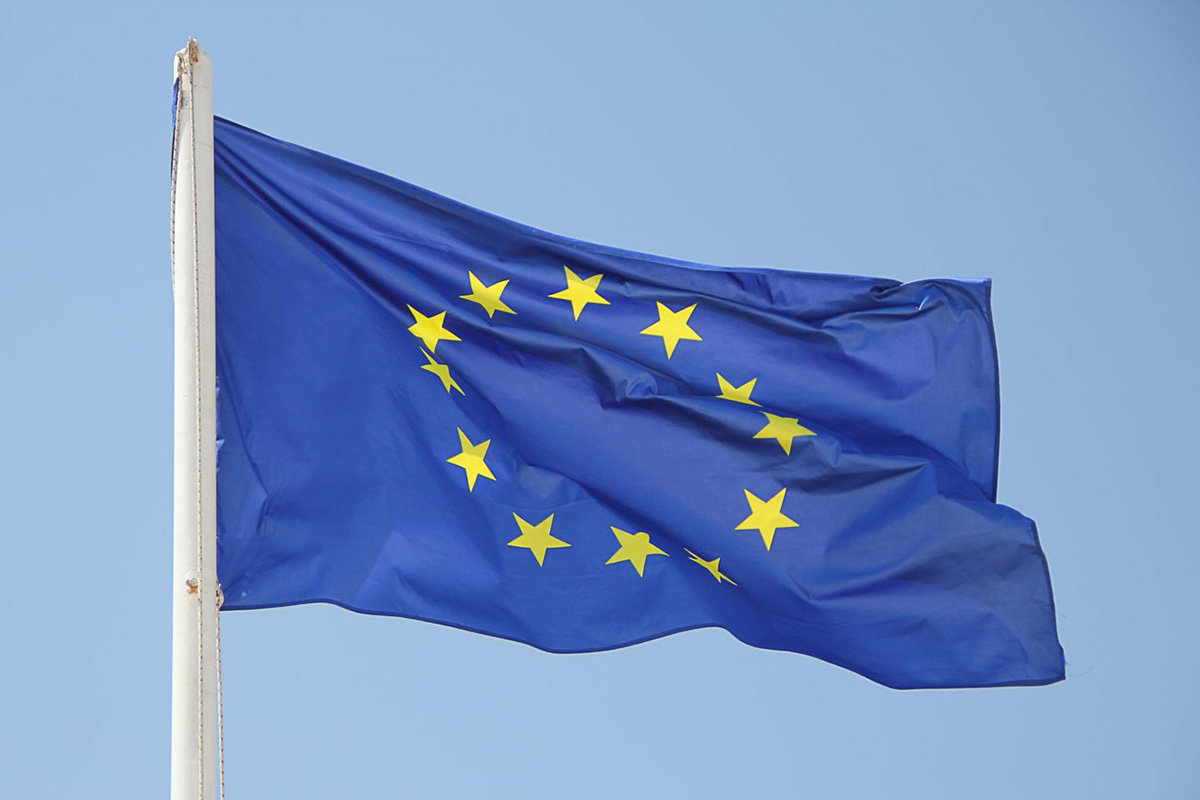
Malta’s Prime Minister has said his nation will veto any attempts by the EU to introduce a bloc-wide online gambling levy, threatening to place the industry at the centre of febrile European politics.
Robert Abela has told Malta’s parliament that he would use his nation’s member state veto to block the passage of the next EU budget, if a proposed gambling levy is included.
The budget, formally known as the Multiannual Financial Framework (MFF), lays out how the EU will spend its €2trn budget from 2028 to 2034.
The prospect of adding a continent-wide tax to the budget remains only a proposal, but the idea has heavyweight backing.
Vice-president of the European Parliament Victor Negrescu is spearheading these efforts, arguing that a fast-growing digital industry that generates billions in revenue should be subject to EU-level taxation.
Negrescu says that the levy could generate between €2-4bn every year.
“This industry fully benefits from the EU’s single market, digital infrastructure and crossborder access, but operates under fragmented rules, unequal taxation and insufficient enforcement,” he said.
The online gambling sector might well quibble with the specifics of these claims.
The idea that it “fully benefits” from the EU single market may have been unassailably true in the point-of-supply era, but the subsequent fragmentation of national rules that Negrescu refers to has significantly complicated that picture.
Nevertheless, backing for the levy from a senior European politician has naturally spooked the industry and its primary champion within the EU, Malta.
The levy would be so damaging to Malta’s economic interests that it is willing to use its most powerful EU instrument by executing a veto in the European Council in order to block the budget from being approved.
That would likely plunge the island nation into the centre of a political firestorm, but recent history suggests that smaller EU nations and their allies can successfully disrupt budget negotiations.
During discussions over the 2020 EU budget, Poland and Hungary successfully secured concessions after they both threatened to veto the MFF over rule-of-law requirements.
Malta will also hope to rely on support from the Friends of Cohesion, an informal alliance of 16 nations concerned with regional development, of which it is a part.
Negrescu’s pledge to pair his levy with a “clear EU directive against illegal and unlicensed platforms” is unlikely to satisfy the online gambling industry, despite growing complaints of a rampant black market from a number of quarters.
Malta strikes again
In simple terms, Malta is seeking to protect an industry which accounts for 10 percent of its gross domestic product.
The nation has shown a clear willingness to ignore the EU’s wishes in order to shield the many gaming firms that host their headquarters within its borders.
Most notably, the creation of Bill 55 has successfully protected local companies from having to repay hundreds of millions of euros in player refund settlements.
Ongoing cases before the Court of Justice of the European Union suggest that Europe’s top judges will soon rule against Bill 55, which is now Article 56A of Malta’s gambling act.
The European Commission also launched infringement proceedings against Malta over the provision
Tax troubles.
There are so far no specifics on how the levy would be calculated or what value it would be set at, but beyond Malta an additional levy would also be extremely challenging for operators in European markets already struggling with high tax burdens.
This includes the Netherlands, where a government report released this week has shown that staggered increases to taxes of 37.8 percent of gross gambling revenue (GGR) have failed to deliver any benefit to the country’s budget.
Even a relatively slight increase to this tax rate could send more operators scurrying out the market and see channelisation dive further than its current rate of 55 percent.
Nations like France, where online betting is taxed at 59.3 percent of GGR, or Portugal, with its 8 percent turnover tax on online sports betting, would also feel an impact.
Negotiations over the contents of the EU budget are set to continue for several months, with the approval process expected to be completed in late 2026 or early 2027.
Leaders in the Council of Europe have agreed to come to a preliminary deal on the MFF by October, according to a coordinated statement issued earlier this month.
Malta’s devout opposition to a possible gambling levy is just one of a range of issues under discussion, including a stark divide between nations such as Germany, which favour spending cuts, and the Friends of Cohesion, who want additional cash for agriculture and regional funding.
The post Malta Prepares For EU Budget Battle To Stave Off Gambling Levy appeared first on EE Gaming | Global iGaming & Tech Intelligence Hub.
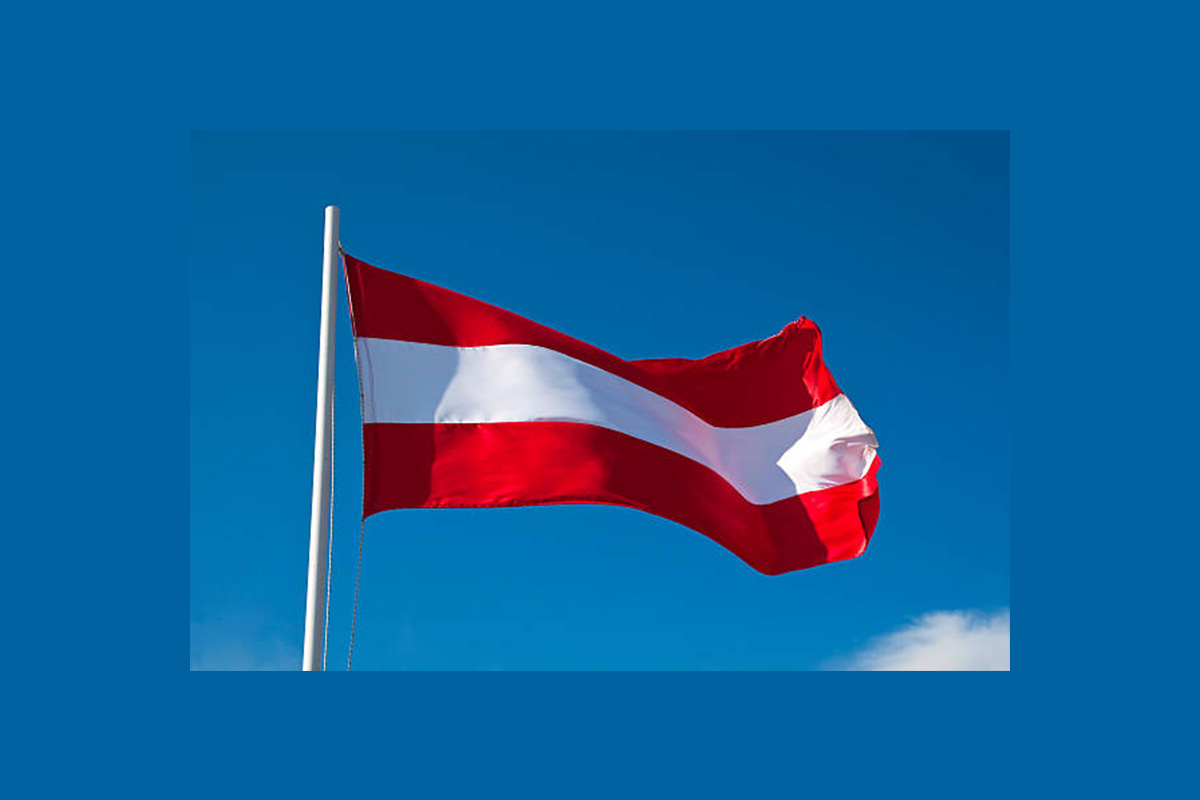
Debate is raging within the Austrian government about whether to impose a cooling off period and freeze ex-grey market operators out of its upcoming open online casino market, with local operators looking to inflict maximum punishment and legal experts arguing that the proposal would be self-defeating.
Austria is on course for an historic opening of its long monopolized online casino market. Currently, only Casinos Austria, via its brand Win2Day, has the approval of the Austrian government to offer online casino games to the general public.
But for many years, that legal status was ignored by operators based largely out of Malta, who populated a vibrant grey market by leaning on the controversial argument that Austria’s monopoly model is in violation of EU law.
These offshore operators were eventually forced to retreat by a series of high profile court rulings that found Austrian consumers have the right to reclaim any and all losses to an operator without an Austrian licence.
Facing potentially hundreds of millions of euros in compensation claims, grey market providers have largely retreated to Malta, where Bill 55 continues to protect them.
With liberalisation now on the horizon, some forces within the Austrian government and the local gambling industry are insistent that companies which took part in the grey market should not be allowed to simply apply for a licence and wipe the slate clean.
Who’s in favour?
Those lobbying the hardest for a cooling off period are Austrian incumbents.
“One day you’re offering illegal services and the next day you get a license – that’s absurd,” a spokesperson for Casinos Austria told the Kronen Zeitung newspaper.
They are joined by German-headquartered gambling giant Novomatic, which operates a number of land-based venues in Austria under the brand Admiral.
Having sat on the sidelines of the online market for many years, Admiral is incensed by the idea that it could be competing on day one of a new market with operators who did not take the same approach.
The three parties that form Austria’s coalition government are still debating the issues, according to reports.
The only major practical example of a true “cooling off” period occured in the Netherlands, where an 18-month prohibition was in place that prevented many companies from entering the market when it opened in 2021.
At the time, Kindred reported that being forced to sit out market launch had cost it $16.2m a month, wiping out effectively 50 percent of the group’s EBITDA.
Kindred, which has since transformed into FDJ United following an acquisition by the French lottery giant, subsequently regained its strong Dutch position following the end of the cooling off window.
Likely to cool
At least one Austrian legal expert believes that there is a good chance that some form of cooling off, or an equivalent punishment, will be enacted as part of the new law.
“At the moment, it is likely that some form of cooling-off period will be introduced, perhaps by introducing sanctions that apply prior to licensing, but the details are yet to be determined,” said Nicholas Aquilina, a partner at Brandl Talos law firm.
“Whether a cooling-off period will be introduced and how restrictive measures will be will have a substantial impact on the success of the long-overdue opening of Austria’s online gambling market,” he added.
The time pressures referenced by Aquilina relate to the expiry of Win2Day’s exclusive licence, which is set to run out in October 2027. The government intends to establish its new online gambling regime well ahead of that date, so that new licences can be issued in time.
Any attempt to extend Win2Day’s monopoly could run into challenges with EU tender laws and the other highly unpalatable option is to leave the nation in limbo with no legal providers at all.
Complications
Despite how the debate has been framed by some parties, the reality will not be as simple as either allowing ex-grey market offenders into the new Austrian online casino marketplace free of consequence or forcing them to spend time in the sin bin.
There is broad political agreement that any international operator looking to obtain a licence in Austria must pay back taxes owed on its former activity in order to be granted approval.
Operators will also need to settle any outstanding player refund claims, something which could cost companies huge sums and may ultimately keep some of them out of the market for good.
There are thought to be thousands of pending refunds, which operators have largely been refusing to pay while they take refuge behind Malta’s Bill 55.
Against that backdrop, lawyers Christian Rapani and Felix Hohenthanner argue that the penalties for returning to Austria will likely be harsh enough.
“A further exclusion of two to three years on top of that would, in our view, work against the reform’s own central objective. The operators currently holding the largest share of Austrian play are exactly the ones a cooling-off period would shut out. If they cannot offer a licensed product for two to three years, their customers, it is highly likely, will not migrate to the licensed providers,” they told EEGaming.
Ultimately, the two lawyers said, the push for a cooling off period is more about protecting the vested interests in Austria’s casino market than an attempt to keep gamblers safe.
“Our impression is that the proposal is supported essentially only by the land-based operators and by the single provider that already holds a licence in Austria, in other words by those who benefit from keeping new entrants out. We therefore see it less as a genuine player-protection measure than as a last attempt to preserve existing market positions,” they said.
The post Austria Could Force Offshore Operators To Sit Out Market Launch appeared first on EE Gaming | Global iGaming & Tech Intelligence Hub.

The Netherlands Gambling Authority (KSA) has fined an operator over €880,000 for not treating its customers with adequate care, creating highly unwelcome negative PR for the industry at exactly the moment when it is desperate for positivity.
The KSA announced today (June 11) that it was fining licensed operator 711 a total of €886,000 for a series of duty of care failings, having found violations in all ten player files that it requested to view.
As part of its routine compliance sweeps, the regulator requested detailed gambling and customer care data on ten randomly selected high spenders at the operator.
The authority said that 711 had not properly analysed the gambling behaviour of its customers or taken the right measures to intervene when they showed signs of risky play.
In one case a player was allowed to lose €40,000 in four days before they were contacted for a wellness check and a source of funds request, the KSA said.
The contact that did take place was also not sufficiently in-depth to identify if the individual had a gambling problem, the regulator added.
In another case, a player was allowed to lose almost €200,000 over several weeks before they were contacted for a source of funds check, the KSA said.
The fine is the latest in a series of penalties related to the duty of care that operators own to their customers, which unlike many other European nations is an established part of the country’s gambling act.
The largest penalty so far is a €4m fine for Unibet operator Optdeck, but regulatory officials have said they continue to find failings on their random sweeps.
711 declined to give a comment to EEGaming, saying that it has a policy of not speaking with the press.
The decision by the KSA can be appealed.
The bigger context
The penalty for 711 is not the first punishment for duty of care failings in the Netherlands and it is unlikely to be the last, but this particular fine comes at a pivotal moment for the future of Dutch gambling.
The industry is awaiting a statement from minister Claudia van Bruggen on how she will change gambling policy over the next year.
She is under extreme pressure from several organised groups within parliament to enact tough new rules on a market that is already struggling to keep players out of the black market.
Most notably there have been repeated calls for a complete advertising ban, in addition to the existing ban on all non-targeted gambling advertising in the Netherlands.
A complete ban is opposed by the KSA, which revealed recently that it had held meetings with van Bruggen to make their case and said she “took our concerns very seriously”.
There have also been calls for a hard cap on the number of online gambling licences in the Netherlands, something that the KSA also argues is not in the best interests of consumers.
However the issuing of yet another reputation-damaging fine for the sector further adds to the risk that van Bruggen will feel a need to give in to public and political pressure and really turn the screw on the beleaguered sector.
Experts estimate that channelisation for online gambling in the Netherlands may be as low as 45 percent.
Rates of gambling with licensed operators have collapsed following the introduction of deposit limits, which can only be removed via affordability checks, and tax increases which have seen rates rise to 37.8 percent of gross gambling revenue.
One small crumb of relief for the industry will be upcoming proof of what something they warned would happen: Increasing the tax rate has resulted in lower income for the government, as players likely stop gambling or seek better odds offshore.
“A new impact assessment of the gambling tax will probably be published at the end of June, showing that the increase in the gambling tax did not achieve its intended goal,” revealed KSA head of licences and supervision, Ella Seijsener, speaking at the recent Gaming in Holland conference.
Analysts suggest that growth in the online market has slowed rapidly in recent months and that although channelisation may not decline further from here under current market conditions, there is equally little hope of lifting it back above 50 percent as things stand.
But far from an easing of rules, the local industry expects things to get tougher from here and are simply hoping that van Bruggen’s manifesto for the next phase of Dutch gambling regulation avoids some of the more extreme measures called for by her fellow politicians.
The post Dutch Duty of Care Fine Ramps Pressure On Industry Under Siege appeared first on EE Gaming | Global iGaming & Tech Intelligence Hub.

-

 Bragg Gaming Group4 days ago
Massive Gaming launches Blitzcrown titles on Superbet Brazil via Bragg Hub
-
Compliance4 days ago
HIPTHER Launches HALLO: The Standard in Compliance Expertise
-
Compliance Updates4 days ago
HIPTHER Launches HALLO: The Standard in Compliance Expertise
-
7Games4 days ago
7Games, Betão & R7 Launch FIRST.bet Sportsbook in Brazil
-
Alex Cuoci4 days ago
Wealthsimple and Kalshi Partner to Bring Prediction Markets to Canada
-
30-0 Kongeserien3 days ago
Kongebonus launches 30-0 Kongeserien Eliteserien fantasy draft game
-
Channelisation4 days ago
Swedish Gambling Authority consults tighter duty of care rules as channelisation slips
-
Chris Suggett Senior Commercial Manager at Rank4 days ago
Pragmatic Play builds Mecca Big Bass Double Dab slot exclusive for Rank