poker
CAT³ Poker Launches Revolutionary Meme token first to make Poker platform


London, UK, July 03, 2024 (GLOBE NEWSWIRE) — CAT³ Poker Introduces Innovative Blockchain Poker Platform: Join, Play, Profit!
CAT³ Poker is a decentralized online poker platform merging poker gaming with community-driven finance, with decentralization and revenue sharing among token holders. CAT³ Poker is a blockchain-based project that aims to facilitate transparent, secure and rewarding services to all its users.

The announcement of this revolutionary online poker platform launch merges the thrill of poker gaming with community-driven finance. Set to revolutionize the industry, CAT³ Poker offers a great opportunity for both investors and players alike.
CAT³ offers community-driven profit-sharing through 100% profit distribution, unique mascot, and branding through CubedCat their lovable mascot, decentralized governance using community voting, and a robust and secure platform backed by blockchain technology.
Investors in CAT³ Poker will become part-owners of the platform, receiving 100% of the profits generated. All holders benefit directly from the successful implementation of this new revolutionary model. As opposed to pump-and-dump schemes or meme coins without utility, CAT³ Poker’s utility is both innovative and beneficial for everyone involved.
Built on blockchain technology, CAT³ Poker delivers transparency as well as security throughout its transactions. This system operates through decentralized governance, enabling token holders to have a say in key decisions and therefore empowering communities more.
The project incorporates a playful and engaging meme element with their mascot, CubeCat. In line with this integration, CAT³ is organizing a meme contest combined with an airdrop event that involves everyone’s participation in earning something for themselves. CubeCat symbolizes the fun and interactive nature of the platform, making it more than just a place to play poker but a community to engage with.
Comprehensive roadmap includes the formation of teams, writing of white papers, and development of platforms followed by strict alpha and beta testing phases. Continuous updates and a strategic global expansion plan ensure that CAT³ Poker remains at the forefront of innovation in the online poker industry.
With tokenomics of 21 million tokens in total supply, the CAT³ token is the lifeblood of the Cat³ Poker ecosystem, designed to provide value, transparency, and engagement to its community. CAT³ Poker presale starts on July 11, 2024. This is a prime opportunity to join the community and invest in a project that promises transparency, security, and continuous growth. Early investors will have the chance to be part of a platform that shares 100% of its profits with its holders.
According to a post on the X handle 5% of the total supply is being used for airdrop and there is an ongoing 1% total supply for airdrop at the moment worth $50k dollars at launch. In addition to the meme contest and airdrop event, CAT³ Poker is committed to fostering a vibrant community. Their plan to host regular events and competitions, encouraging participation and rewarding users for their engagement and creativity was also revealed. Their goal is to build a loyal and enthusiastic user base that grows with them.
Website: https://cat3.poker
X: https://x.com/cat3poker
Telegram: https://t.me/cat3poker
Youtube : https://youtube.com/@cat3poker
Instagram: https://www.instagram.com/cat3poker
Disclaimer: The information provided in this press release is not a solicitation for investment, nor is it intended as investment advice, financial advice, or trading advice. It is strongly recommended you practice due diligence, including consultation with a professional financial advisor, before investing in or trading cryptocurrency and securities.
CONTACT: Henry Lewis
contact-at-cat3.poker


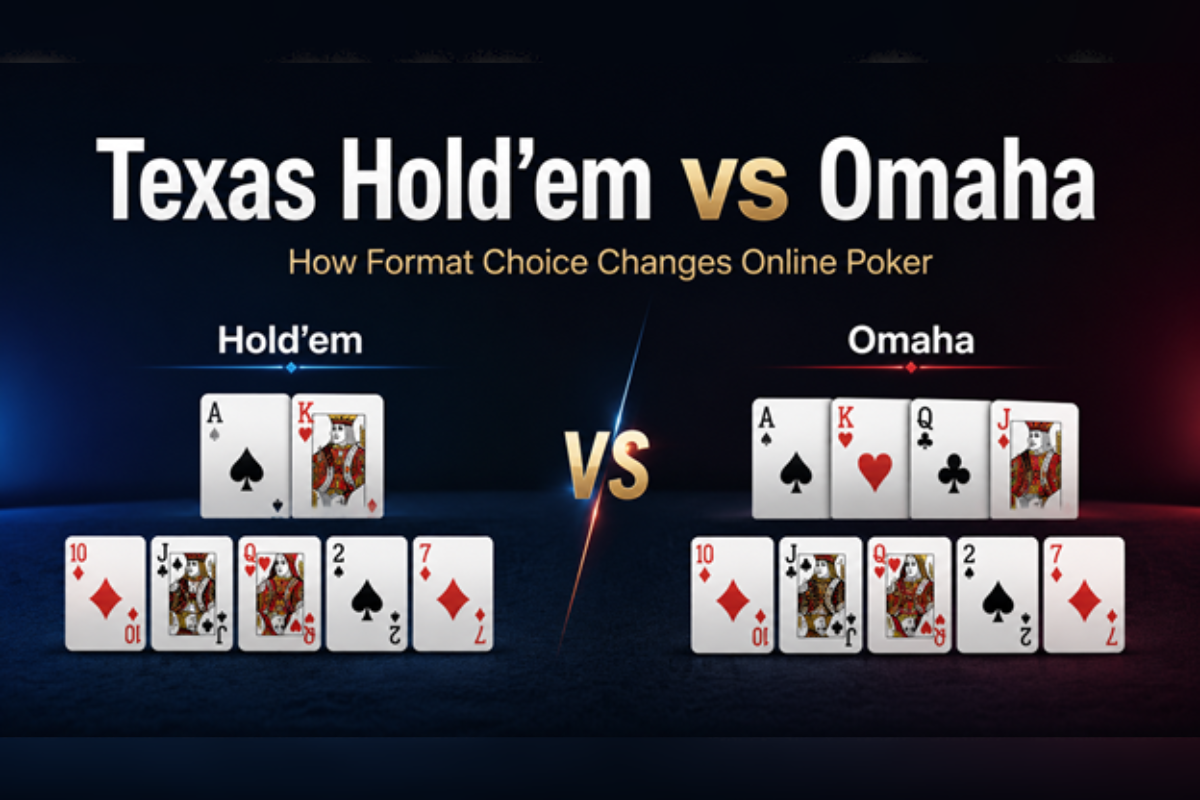
Poker formats share a surface: private cards, community cards, betting rounds, and a final five-card hand. The difference between variants, however, is not cosmetic. Texas Hold’em gives players 2 private cards, so the first decision is narrow and readable. Omaha gives 4, then forces exactly 2 of them into the final hand. That single rule changes the way every board is read.
Adding variety to your poker playing routine can be great fun, but it’s crucial to understand the formats before you do – or you may find yourself struggling at the table!
The Format Is the First Practical Filter
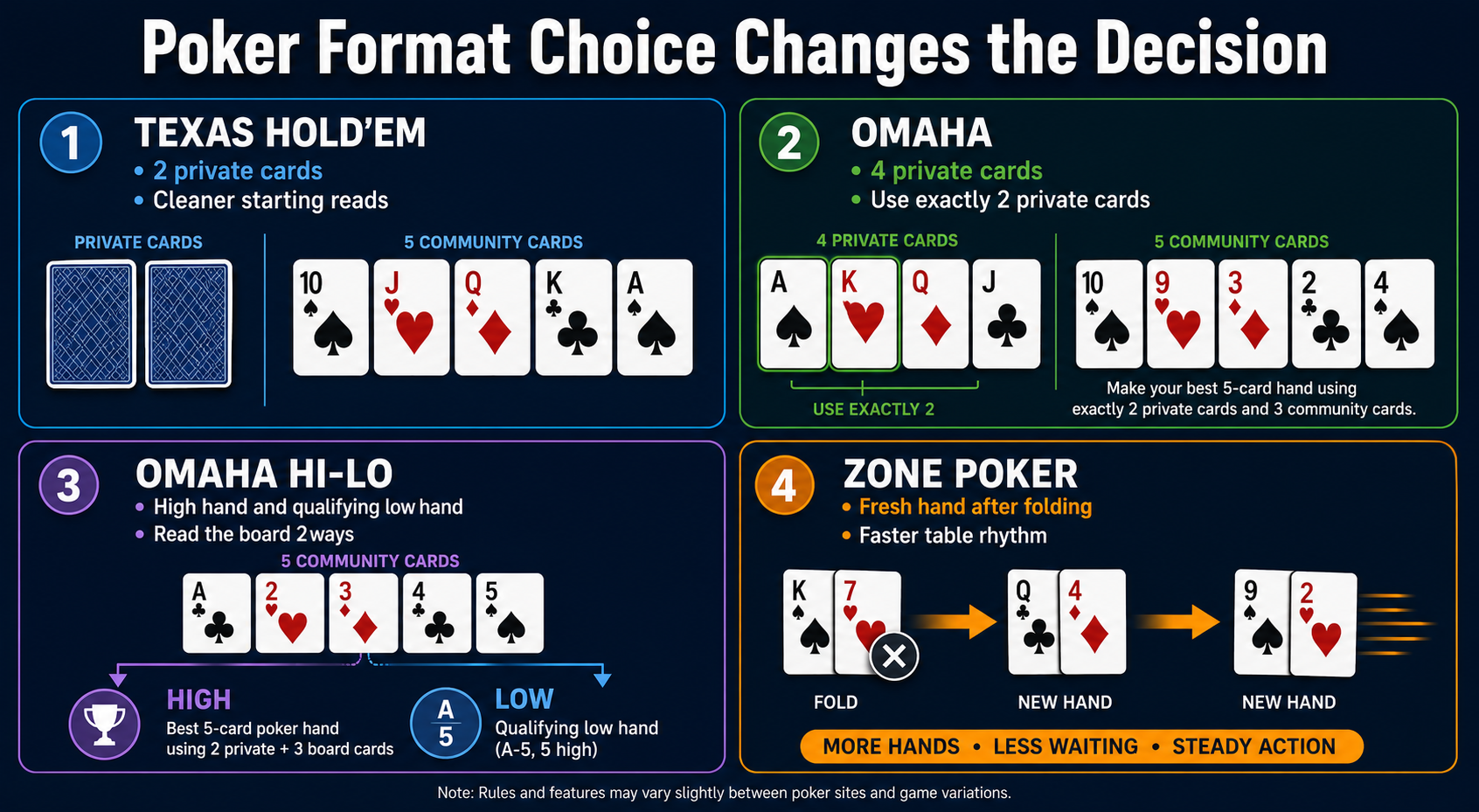
Once the basic rules are familiar, format choice becomes easier to understand when the games are seen side by side. A player comparing Hold’em with Omaha is not only comparing two sets of rules. They are comparing the amount of private information available before the flop, how many possible hand combinations need to be tracked, and how quickly each decision starts to feel comfortable.
That is where an Australian online poker setting gives the comparison more practical shape. A page focused on online poker Australia places Texas Hold’em, Omaha, Omaha Hi-Lo, and Zone Poker in the same playing context, which makes the differences clearer without treating poker as one generic format.
Hold’em starts with 2 hole cards and 5 community cards, giving players a cleaner starting point. Omaha starts with 4 hole cards but still requires exactly 2 private cards and 3 community cards for the final hand. Omaha Hi-Lo keeps that same construction while asking players to think about high and qualifying low hands. Zone Poker changes the rhythm by moving a folded player to a new table and a fresh deal. Seen together, these formats show that poker choice is not only about hand rankings. It is about the kind of attention each version asks from the player.
A recent Ignition Australia post makes the same point in cultural terms, noting that poker in Australia has changed over the years while the heart of the game has stayed intact. The format conversation is not only technical. The same game can move from a physical room to a phone screen, from Hold’em to Omaha, or from a standard table to a faster online format, while still centering on timing, reading, and the next card.
https://www.instagram.com/p/DVM_bPlErLf/
Hold’em Gives Cleaner Reading
Texas Hold’em is often easier to explain because the relationship between private cards and the board is direct. A pair in the hand, a suited ace, or two connected cards creates a clear starting point. After the flop, the player can ask a simple question: did the community cards improve the hand, threaten it, or create a draw worth following?
That clarity does not make Hold’em shallow. It makes the decision tree easier to see. Position, bet size, board texture, and opponent behavior still matter, but the player is not juggling as many private-card combinations. This is why Hold’em has become the main reference point for casual poker viewers and newer online players. The game gives them enough structure to follow the action, while leaving room for deeper judgment as experience grows.
Omaha Creates More Temptation
Omaha can look generous at first because 4 private cards seem to create more routes to a strong hand. That impression is where many Hold’em habits become unreliable. More starting combinations also mean opponents can connect with the board in stronger ways. A hand that feels powerful in Hold’em may be ordinary in Omaha if the board is coordinated.
The exact 2-card rule is the point beginners must absorb early. If the board shows 4 hearts and a player holds only 1 heart, that player does not have a flush. If the board shows pairs, a full house still depends on the required combination of private and community cards. Omaha asks players to slow down the first instinct and rebuild the hand under the format’s rule.
Omaha Hi-Lo adds another reading layer. A player may be looking for a strong high hand while also watching whether a qualifying low hand is available. The board can divide attention, and the clearest decision may depend on whether the hand has a path to one side of the pot or both.
Pace Changes the Same Cards
Zone Poker shows that format choice can also be about rhythm. In a standard table format, folded hands create waiting time. That delay lets players watch other hands finish, notice tendencies, and settle into the table’s pace, but it can feel slow and under-engaging. In a fast-fold format, folding moves the player quickly into a new hand, which makes the session feel sharper and less observational. The cards stay familiar, but the table observation window changes.
Poker formats are easiest to understand when the reader stops treating them as labels and starts treating them as different ways of processing incomplete information. Two private cards, four private cards, a split-pot rule, or a faster table rhythm can all change how a hand feels before the river arrives. The social layer also remains part of online play, as described in 2025 open-access work on multiplayer online games and social connection.
The post Texas Hold’em vs Omaha for Players Comparing Poker Formats appeared first on Americas iGaming & Sports Betting News.


Approved creators can now stream directly to Kick via the desktop client, alongside Twitch and YouTube.
GGPoker has expanded its Streamer Mode feature to support Kick.com, enabling approved creators to broadcast directly to Kick through the GGPoker desktop client.
Streamer Mode is GGPoker’s in-client streaming feature for approved broadcasters, offering tools and rewards while they stream. The company said benefits include up to 100% cashback on poker games played while actively streaming, automatic hole-card hiding to reduce stream sniping, and a dedicated Streamer Panel for managing open tables.
GGPoker also said Streamer Mode includes streamer-exclusive in-game cosmetics and the option for a live stream to be showcased within the main lobby of the GGPoker software.
“Our streamers are the heartbeat of the modern online poker community, sharing the thrill of the game with audiences worldwide,” said Sarne Lightman, Managing Director of GGPoker. “We are constantly looking for ways to empower these creators. Integrating a dynamic, creator-friendly platform like Kick into our Streamer Mode gives our players even more ways to build their brands, engage with fans, and maximize their rewards. We can’t wait to see the incredible content our community brings to Kick.”
To use Streamer Mode on Kick, YouTube, or Twitch, players must apply to become an approved GGPoker streamer. GGPoker said applicants who have streamed poker consistently for the past three months with an average of 40+ concurrent viewers are encouraged to contact its talent team at [email protected].
The post GGPoker adds Kick support to Streamer Mode appeared first on EE Gaming | Global iGaming & Tech Intelligence Hub.
High Stakes Poker
Santhosh Suvarna Wins Record-Breaking $2.42 Million Pot on PokerGO’s “High Stakes Poker”

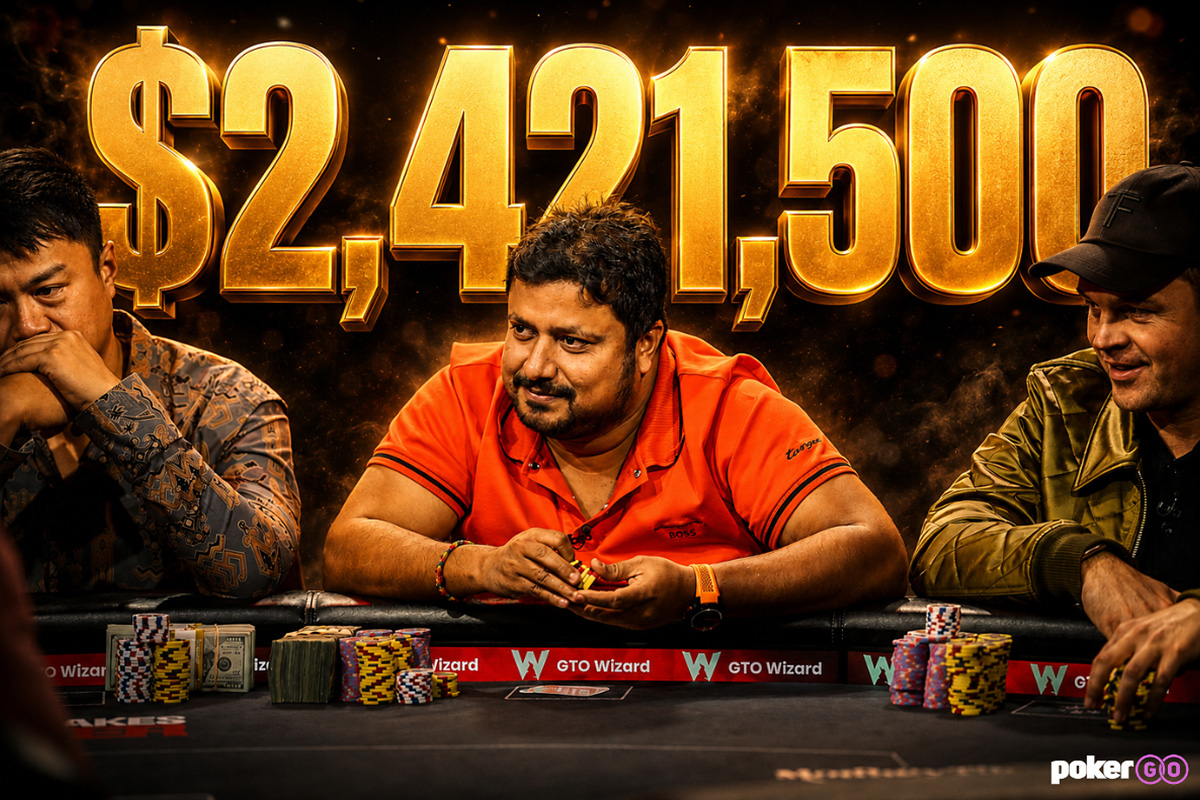
Santhosh Suvarna has once again etched his name into High Stakes Poker history. The high-stakes superstar is now the record holder for the largest pot ever won on PokerGO’s High Stakes Poker after capturing a staggering $2,421,500 pot during Season 16.
The historic hand aired during Season 16 of High Stakes Poker and featured Suvarna battling DraftKings Co-Founder Matt Kalish in a giant confrontation that eclipsed the previous record pot by more than $1,000,000.
The achievement marks the second time Suvarna has held the record. In Season 12, he won a then-record $992,000 pot against Andrew Robl. Alan Keating later eclipsed that mark in Season 14 with a $1,412,500 pot against Peter Wang. Now, Suvarna has reclaimed the record.
“High Stakes Poker has always showcased the biggest personalities, highest stakes, and most unforgettable moments in poker. This record hand is another example of why the show remains the gold standard for televised cash-game poker,” said Brent Hanks, CEO of PokerGO.
More than $400,000 was in the pot heading to the flop between Kalish, Sameh Elamawy, Suvarna, and Sam Kiki. Suvarna bet $125,000. Kiki called, and then Kalish moved all in for $948,000. Suvarna called all in for $823,000, prompting a tank-fold from Kiki. Suvarna and Kalish opted to run it twice, and Suvarna scooped both boards to haul in the $2,421,500 pot.
First launched in 2006, High Stakes Poker is one of the most influential poker television series ever produced. Since reviving the franchise in 2022, PokerGO has continued to elevate the show’s reputation as the premier destination for high-stakes cash-game action.
Season 16 of High Stakes Poker is now streaming exclusively on PokerGO. Fans can watch every episode and relive the largest pot in the show’s history by subscribing at PokerGO.com.
The post Santhosh Suvarna Wins Record-Breaking $2.42 Million Pot on PokerGO’s “High Stakes Poker” appeared first on Americas iGaming & Sports Betting News.

-

 Australia7 days ago
Former Star Entertainment Executives Mathias Bekier and Paula Martin Disqualified and Ordered to Pay Penalties
-
Alejandra Burato7 days ago
Record Attendance, Exciting New Releases, and a Resounding Success: This was Zitro Experience Peru
-
Amusnet7 days ago
Weekend Reels | Week 25: Slot Drops & Trends
-
ArenaPlus7 days ago
DigiPlus Wins “Digital Operator of the Year” Award at 2026 Global Gaming Awards Asia-Pacific
-
Anthony Dalla-Giacoma7 days ago
Elysium Studios Releases its Latest Slot Game “Hood and Loot”
-
Greece7 days ago
SYNOT Games Announces New Partnership with Superbet
-
Bragg Gaming Group4 days ago
Massive Gaming launches Blitzcrown titles on Superbet Brazil via Bragg Hub
-
BurraPay7 days ago
Byte Federal Announces Successful Launch of Custom-Built Integration Supporting BurraPay’s Historic Entry into America’s Regulated Gaming Market