European Parliament
MEP Negrescu: A European Tax on Online Gambling Could Bring Billions for Education

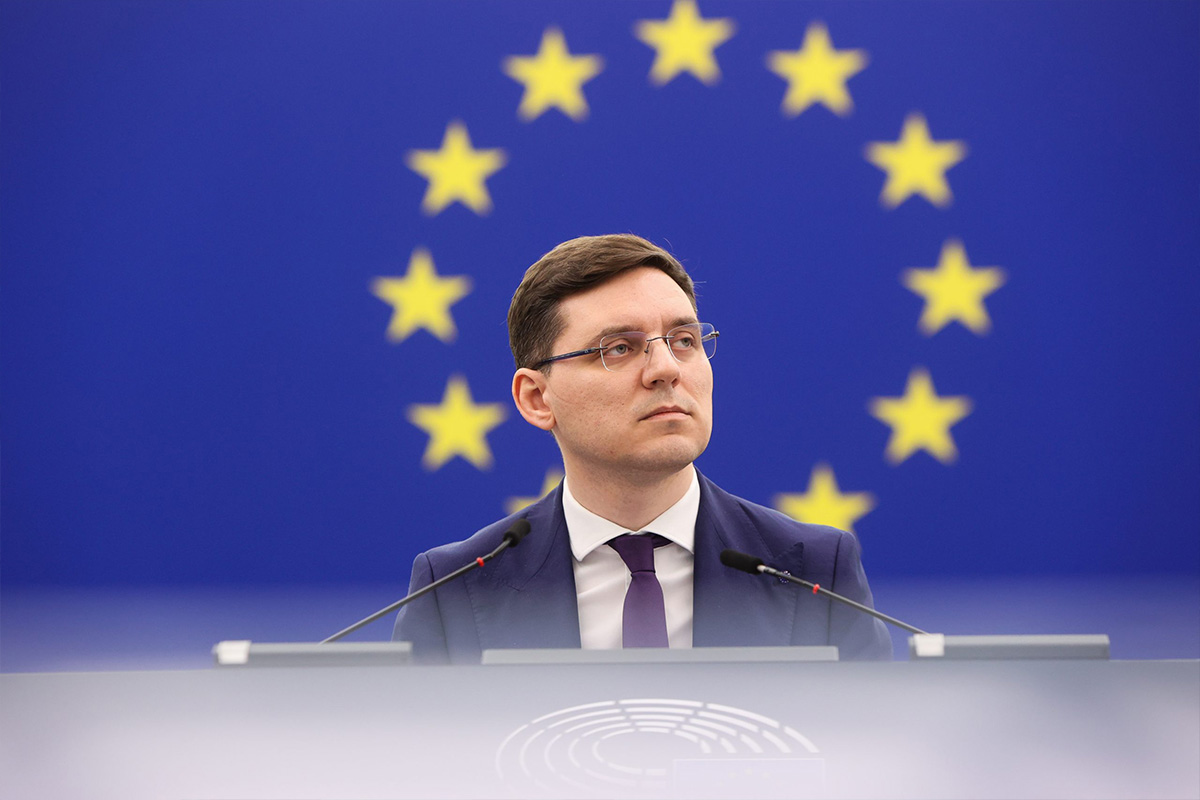
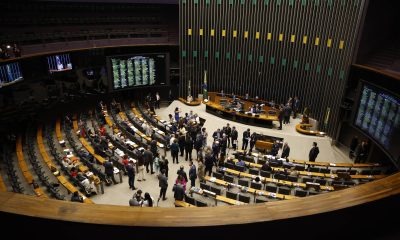
Romanian MEP Victor Negrescu resumed in the European Parliament plenary session the proposal for a European tax applied to the online gambling and betting industry, with funds directed towards education and addiction prevention policies.
The MEP said that the idea is gaining more and more support at the European Union level and targets one of the most dynamic digital industries in Europe.
“The online gambling market is one of the fastest growing digital industries, generating tens of billions of euros annually. However, a significant part of these profits escapes fair taxation, and the rules remain fragmented at European level,” he said.
His proposal provides for a European contribution applied on top of existing national taxes on turnover, a directive against illegal platforms and a uniform application of the rules to avoid distortions and unfair tax competition.
According to the estimates cited, the measure could generate between 2 and 4 billion euros annually, “which would mean up to approximately 28 billion euros over the duration of the future long-term European budget”.
“It is a question of fairness. This industry benefits fully from the single market, the European digital infrastructure and cross-border access, but it still operates under uneven rules and with an insufficient level of control. Europe needs its own credible resources. These funds could go directly to education, skills training, prevention, addiction treatment and mental health. If we want a Union that invests in people and in the future, we must have the courage to rethink the sources of financing,” Negrescu said.
The post MEP Negrescu: A European Tax on Online Gambling Could Bring Billions for Education appeared first on Eastern European Gaming | Global iGaming & Tech Intelligence Hub.

Conferences in Europe
Europe is your home, says Roberta Metsola as she opens SiGMA Central Europe in Rome


Reading Time: 3 minutes
President of the European Parliament, the Hon. Roberta Metsola was in Rome to officially open SiGMA’s inaugural Central Europe event. Ahead of her keynote, Metsola met with representatives from Malta, including the Maltese ambassador to Rome, H.E Daniel Azzopardi, CEO of GamingMalta, Ivan Filetti, and Keith Zammit, CEO of Elevate AI.
Taking to the stage, her message was one of welcome. “Europe is your home” she reminded the audience – a ‘place of the future’ determined to make it easier, safer, and faster to operate, to startup, and to scale up.
To the packed floor before her she was warm in her delivery. “It is great to open SiGMA, right here in Rome, the heart of Europe,” she said. An industry backed by thousands of exhibitors and delegates that she went on to describe as the ‘building blocks of next generation Europe’ and ‘one of the biggest gatherings of its kind in the world.’
“I’m more than a little proud that it [SiGMA] started in my island home of Malta.”
Smiling, she recalled her university days with SiGMA’s Founder Eman Pulis – “It’s fantastic to see how your idea has grown from a pitch to a global platform.” We are so proud of you, and our country has much to be proud of. But, ultimately, above all – of its people, many of whom are here today.”
Zoning in on Europe’s tech and gaming industry, she highlighted the bigger picture. Beyond numbers or growth charts, what we see is ‘proof that our European way works, that we can be pro business, that we can be forward looking, open to innovation and new tech whilst still doing things responsibly and protecting the most vunerable.’
“Balance between growth and responsibility is what makes Europe unique, gives investors predictibility, builds trust with users and allows creativity to flourish without leaving anyone behind.”
If, however we want Europe to remain compeitive, she cautioned, we have to be honest about what is still holding us back. “Regulation in Europe is essential, but remains too fragmented.”
Disrupting that balance: different licencing systems, operating regimes, and advertising rules make it harder for companies to plan, scale and operate across borders. That has to change, she emphasised.
Ideas like the 28th regime – a single optional European framework for businesses are worth exploring, she suggested. An idea that would make it easier for operators to expand while still respecting national choices – ‘the leap we need to collectively look to as a continent but also as a global international giant.’
The message from entrepreneurs in tech, gaming and finance is always the same, she says: Europe has to move faster, to make it easier for us to invest. It must grow and take risks. They want a Europe that supports, not one that gets in their way.
“Europe cannot run on nostalgia, we can’t cling to old ways and expect new results”, she warns.
To lead and innovate businesses need to have the tools and freedom to compete globally, to understand new dynamics at play and showcase how Europe can lead, she went on to say.
“I want the European way to mean something clear: innovation and not over-regulation, implementation and not unnecessary bureaucracy and delivery, not red tape. Targeted regulation that gives predictability.”
Ultimately, she concludes – compliance should not take up the majority of businesses’ time. Regulation is important, but it should be smart – focused on rule-breakers and not those who play by them. On this, she says, there is broad agreement.
“This is a moment Europe cannot afford to miss, we can either shape this new era of tech or watch others do it for us. We were not designed to follow.”
‘The opportunities in the wider digital economy are enormous’, she enthuses. They can make platforms safer, more transparent and fairer. Europe should be at the forefront of this transformation. Holding us back, she explains, is a lack of support and funding. Indeed, as she mentions, Europe currently has more AI and tech professionals per capita than the US and almost 3 times as many as China.
This is why the EU plans to mobilise 200 BIL Euro for AI and digital industries, she says. She also alludes to the Savings and Investment Union – there to reflow investment to startups and small businesses looking to invest across borders or work for European companies.
“To all of you building the future of tech and digital creativity – keep going, you are showing that Europe’s strength lies not in looking back but in shaping what comes next. And I assure you – we have your back.”
The post Europe is your home, says Roberta Metsola as she opens SiGMA Central Europe in Rome appeared first on European Gaming Industry News.

-

 Betnacional6 days ago
Operational Leadership and the Driving Force Behind LatAm’s Largest Event
-
Australia7 days ago
NSW: More Than 650 Gaming Machine Exemptions Revoked to Address Gambling Harm
-
2026 SPiCE South Asia Awards7 days ago
QTech Games wins Innovation of the Year at the 2026 SPiCE South Asia Awards
-
Compliance Updates7 days ago
UK Government proposals to undermine the ‘aim to permit’ of the Gambling Act 2005?
-
Canada6 days ago
Peter & Sons Goes Live in Ontario with Ellipse Entertainment
-
BIS SIGMA SOUTH AMERICA 20266 days ago
VeliTech makes its Brazil debut at BiS SiGMA South America 2026
-
AMUSEBOX6 days ago
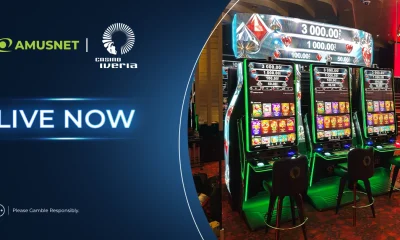
Casino Iveria Tbilisi Installs Amusnet’s Type S 50 F Slot Cabinets at its Gaming Floor
-
Austria6 days ago
Wazdan strengthens European foothold with Austrian market entry via win2day