Latest News
Moon partners share insights on marketing trends in 2026

The Pantone Color Institute has announced the color of the year: Pantone 11-4201 Cloud Dancer, a natural white. It feels like a very delicate way of saying that humanity is tired. Tired of intrusive content, “hustle culture,” and endless information noise. Cloud Dancer is calm and clean, like a “turn off the excess” button. We feel it too, so it’s only natural to ask ourselves: what will marketing look like in 2026 under these conditions? Let’s try to figure it out together.
If you happened to miss a real gem that’s been circulating online — don’t worry, we’ve got you. The ACIG team collected trends, predictions, and analytics from leading companies that have already done the heavy lifting and published their reports. There’s everything in there: AI, YouTube, and insights across almost every direction. You could easily get lost for a few hours. Huge thanks to those legends for their work — and if diving into all of it feels like too much, Moon partners will give you a short and clear summary right now.
AI becomes infrastructure, not a feature
If you look at the key messages from players like EDUMEDYA, Fratzke, and Onclusive, they’re all saying roughly the same thing: marketing and communications in 2026 are no longer about “launching a campaign,” but about proven business impact in a world of artificial distrust.
The biggest shift is that AI has become infrastructure, not a standalone tool. It automates targeting, creative, optimization, analytics, and reporting. But almost every prediction highlights the same paradox: AI speeds everything up, yet real value is still created by human decisions, strategy, and accountability. Most teams use AI only for “quick wins” — texts, images, reports — and barely apply it at a strategic level.
And this is the key point: AI does not replace affiliate managers or media buyers. Those who simply generate content with AI quickly dissolve into a sea of generic “AI noise.” The winners are the ones with a clear strategy — what traffic, which user, what value we deliver — who use AI to scale decisions, not replace them, and who keep humans responsible for risks like bans, brand safety, and legal issues.
Another major insight is that search and visibility are changing radically. Classic SEO isn’t “dying” because Google disappears, but because people no longer search — they ask AI questions or discover content on TikTok, Reels, and Shorts. This is a shift from SEO to AEO / GEO: content needs to be good enough for AI systems to cite it, not just for search engines to index it. As a result, clicks are dropping, zero-click is growing, and the real fight is no longer for traffic, but for authority.
A new era of influence, trust, authenticity, and privacy
For affiliate marketing in 2026, content is no longer just “warming up” the audience — it’s a direct sales tool. Vertical video, live demos, streams, and short-form reviews with a clear CTA outperform classic approaches. Influencer-affiliate is becoming the norm: a real person, a face, personal experience, and a link. It’s no longer about who has more websites, but who has more trust in their personal brand, or access to creators people genuinely believe in. Influencers are no longer just “media faces” — they’re affiliate partners. That’s the new reality.
Data and privacy deserve special attention. Cookies are disappearing, tracking is shrinking, regulations are tightening. The only stable currency left is first-party data and voluntary user consent. For affiliate marketing, this means one simple thing: anonymous one-off traffic is dead.
Analysts at Reuters Institute note that most active users are moving from public content into private spaces: closed channels, micro-communities, and personal chats. That’s why email lists, Telegram, WhatsApp, and Discord communities, as well as brand-owned communities, will truly work. Top affiliates in 2026 are those who build their own audience, can re-monetize users, and are not 100% dependent on algorithms.
Trust and authenticity are moving to the forefront. In a world of AI slop, deepfakes, and content overload, it’s not the fastest who win, but the most real. That’s where ideas like Authentic AI and Valuable Friction come in: sometimes it’s useful not to be perfectly automated. A live email, an expert face, a human voice build loyalty where AI makes everything feel the same.
UNESCO points out that the world has entered a crisis of attention and trust as a result of global exhaustion and information overload. Over the last 10 years, the average attention span has nearly halved. People remember less, burn out emotionally faster, and lose inner stability more often. That’s why demand is growing for slower content, private communities, and conscious digital hygiene.
If we reduce everything to one formula for affiliate marketing in 2026, it looks like this:
AI + owned audience + human focus = stable income and scale.
Affiliate marketing in 2026 is no longer “launch traffic and wait for results.” It’s an ecosystem where you understand your audience’s needs, know why they trust you, and why they come back. AI helps scale processes, but it doesn’t create meaning. Content attracts attention, but it doesn’t guarantee loyalty. Algorithms give reach, but they don’t build relationships. All of this works only when there’s a human core — strategy, responsibility, and honest contact with the audience.
In a world where everyone uses the same tools, competitive advantage is no longer speed, but authenticity. Not the number of sites, but the quality of the community. Not aggressive scaling, but repeat value for the user. And honestly, there’s something very Cloud Dancer about all of this — less noise, more meaning. Maybe marketing is tired too. And that’s not a weakness, but a chance to finally do better, not louder.
The post Moon partners share insights on marketing trends in 2026 appeared first on Eastern European Gaming | Global iGaming & Tech Intelligence Hub.









Abigail Welch Editor of iGaming News
Press Box PR Becomes Official Sponsor of Women in iGaming, Backed by iGaming News

iGaming News is excited to reveal Press Box PR, a top digital and conventional PR firm for the iGaming and sports betting sector, as the official Women in iGaming sponsor of the publication. This collaboration backs iGaming News’ Women in iGaming initiative, a program focused on honoring, showcasing, and elevating the accomplishments of women leaders advancing the industry.
To launch the partnership, iGaming News has unveiled a new category, sponsored by Press Box PR, at its first iGaming News Awards: “Woman of Influence,” highlighting outstanding women who are transforming the industry and fostering innovation.
Abigail Welch, Editor of iGaming News, said: “We are thrilled to welcome Press Box PR as the official sponsor of our Women in iGaming initiative. Their expertise in digital PR will help us bring the incredible stories of women across the industry to a wider audience. This partnership is about celebrating women every day, supporting their achievements and inspiring the next generation of leaders.”
Sarah Williams, B2B account manager for Press Box PR, said: “We’re thrilled to be a part of iGaming News’ Women in iGaming initiative! With International Women’s Day coming up this Sunday as well as March being Women’s History Month, there’s no better time to announce this fantastic partnership. By putting our time, money and effort behind initiatives like Women in iGaming, Press Box PR is showing support all year long, not just on certain days or months.
“While we are certainly seeing more women excelling and leading in the industry, only about 16% of executive-level roles in the sector are held by women, according to the latest 2025 data from the Gambling Survey for Great Britain. I hope that by shining a light on the skilled women in this industry, we can see that representation increase.”
The partnership will feature editorial pieces, interviews, podcasts, and campaign material highlighting women who are shaping history in iGaming, their professional paths, and how they are progressing the industry. Uniting iGaming News’ industry influence with Press Box PR’s digital communication skills and client network, the collaboration aims to amplify women’s voices and enhance recognition for female leaders.
The post Press Box PR Becomes Official Sponsor of Women in iGaming, Backed by iGaming News appeared first on Eastern European Gaming | Global iGaming & Tech Intelligence Hub.
HAPPY MONEY HENS
INSPIRED UNVEILS HAPPY MONEY HENS™, GOLDEN WINNER GRAND CHANCE SUPER WHEEL™ & GOLD CASH FREE SPINS RISING WINS™ ACROSS ONLINE & MOBILE

Inspired Entertainment, Inc. (NASDAQ: INSE), a leading B2B provider of gaming content, systems, and solutions, has unveiled three new online and mobile slot releases—Happy Money Hens , Golden Winner Grand Chance Super Wheel, and Gold Cash Free Spins Rising Wins—now live across the UK and Maltese iGaming markets.
Happy Money Hens launches the new Happy Money series with a vibrant, hen-themed slot packed with Easter charm and big-win potential. Players interact with three animated hens, represented as pseudo-persistent feature bags above the reels, triggering multiple bonuses including Double Coins, Pot Fill, and the unique Happy Boost. Fast-paced action continues through a three-life Win & Spin Bonus, delivering expanding-win excitement and setting a playful tone for the broader Happy Money family.
Golden Winner Grand Chance Super Wheel builds on the award-winning Golden Winner Grand Chance series with a shared Super Wheel feature powered by patented Player Link technology. High-energy reels, golden bells, and the iconic Grand Chance Cherry come alive with reel “dings” that activate wheel spins, instant cash prizes, and Super Bonuses. Shared prize pots, multiplier-boosting trails, and surprise modifiers create a community-driven, pulse-pounding slot experience designed to keep players returning.
Gold Cash Free Spins Rising Wins is the latest chapter in the renowned Gold Cash franchise, introducing fresh mechanics while retaining the series’ signature style. The base game features random reel expansions, while the bonus round lets players choose: more spins at lower reel heights for steady wins, fewer spins with taller reels for high volatility, or a mystery option. Additional features include Fortune Bet, Fortune Spins, a Gamble option, and Bonus Buy where permitted, giving players control over risk and reward while enhancing overall excitement.
Claire Osborne, Managing Director of Interactive at Inspired Entertainment, commented:
“These new releases reflect our commitment to delivering diverse, engaging entertainment while supporting responsible play. By blending innovative mechanics with familiar formats, each game offers exciting and balanced gameplay. Inspired remains focused on creating high-quality, innovative, and enjoyable entertainment experiences as we continue to expand our portfolio.”
The post INSPIRED UNVEILS HAPPY MONEY HENS™, GOLDEN WINNER GRAND CHANCE SUPER WHEEL™ & GOLD CASH FREE SPINS RISING WINS™ ACROSS ONLINE & MOBILE appeared first on Eastern European Gaming | Global iGaming & Tech Intelligence Hub.
Compliance Updates
Isle of Man Govt Publishes its National Risk Assessment (NRA) Covering Money Laundering Risk in Gambling Sector
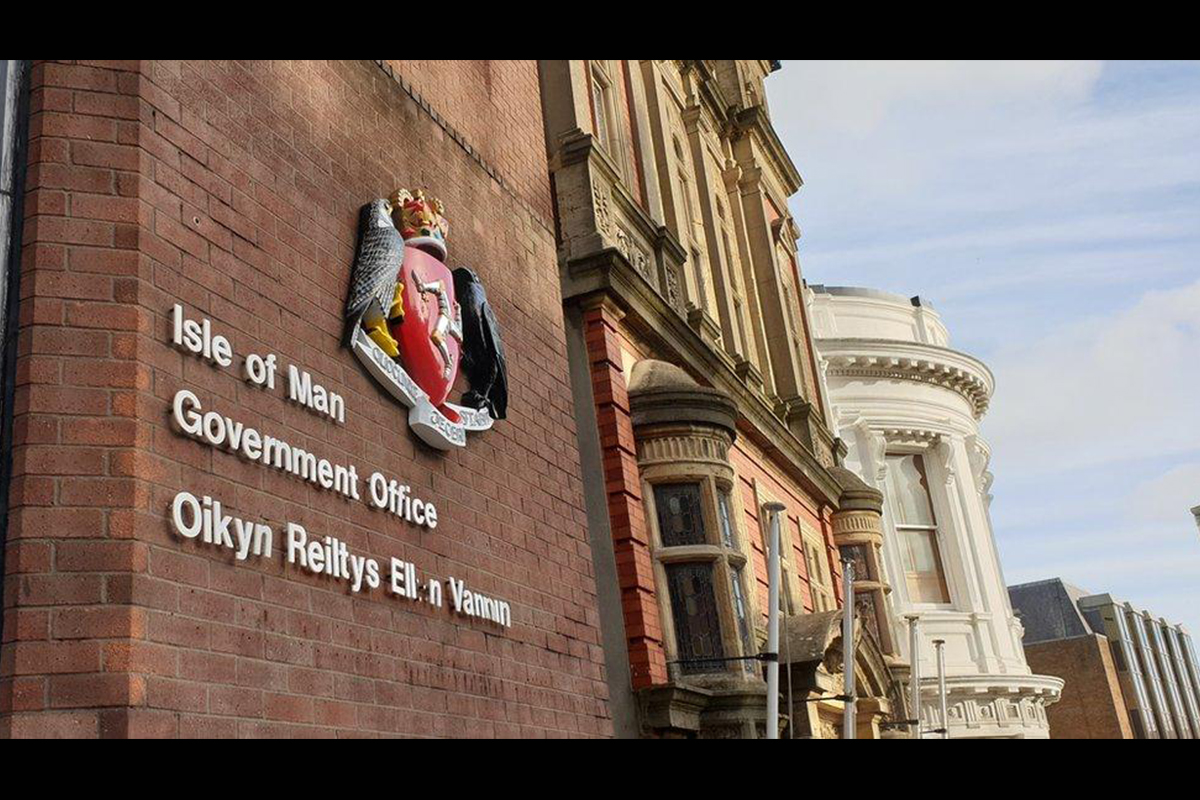
The Isle of Man government has published its updated National Risk Assessment (NRA) for the gambling sector.
The assessment identifies key threats of Money Laundering (ML) to the island’s Gambling sector (both Terrestrial and Online) and the materiality and impact of those threats. Both terrestrial and online gambling have been given a risk rating, with an overall rating for gambling as a whole. These risk ratings and key findings of the NRA feed into the wider NRA work, ensuring the Island has a comprehensive view of the entire threat landscape.
The NRA aggregates, compares and weighs the findings across all sectors to determine which risks drive national exposure. This ensures the NRA is not hypothetical: it reflects actual sector-level dynamics so that the Island can understand the “bigger picture” with each sectoral assessment piecing together a border threat picture.
It is important that the island has a comprehensive understanding of risk at all levels, which does not reflect poor standards but instead outlines structural features of a sector. A robust NRA demonstrates that the jurisdiction understands its ML risks and applies targeted controls that are appropriate.
Risk Ratings are as follows:
• The gambling sector overall is assessed as medium-high risk for money laundering.
• The online gambling sector has a medium-high risk, reflecting a large number of international customers and transaction volumes.
• The terrestrial gambling has a medium-low risk, reflecting its smaller size, domestic profile and lower transaction volumes.
Key Takeaways
The Sectoral NRA highlights core threats in both the online and terrestrial sectors, including:
• Criminal ownership and control of gambling businesses or B2B services, via front companies and complex corporate structures.
• Exploitation by organised crime groups, including those from East and Southeast Asia, for money laundering, cyber-enabled crime and other illicit activities globally.
• Criminals use false or stolen IDs, synthetic identities, and mule identities to access gambling services and obscure their true identity to bypass due diligence controls.
• For terrestrial gambling, cash-intensive operations and casino-specific instruments remain primary channels for laundering domestic predicate offences.
It also highlights potential emerging threats such as:
• Use of advanced technologies (AI, deepfakes, virtual assets) to obscure identities, automate fraud, and facilitate cross-border transfers.
• Use of “turnkey solutions” (pre-packaged business setups) allowing rapid establishment of operations and access to banking services with minimal experience.
Importantly, the NRA makes it clear that these risks arise in specific circumstances with the sector operating legitimate international structures, strong governance and applying high standards of AML/CFT compliance. Those features that make activity higher risk for misuse should be considered within that context.
The post Isle of Man Govt Publishes its National Risk Assessment (NRA) Covering Money Laundering Risk in Gambling Sector appeared first on Eastern European Gaming | Global iGaming & Tech Intelligence Hub.

-

 Comatel6 days ago
COMATEL CELEBRARÁ UNA FIESTA PARA CIENTOS DE OPERADORES TRAS FINALIZAR EL PRIMER DÍA DE LA FERIA ESPAÑOLA, INTERAZAR
-
Brasil7 days ago
Brasil evita choque fiscal y apuestas entran en fase reputacional en LATAM
-
Fotini Matthaiou6 days ago
Octavian Gaming Titles Go Live with Novibet in Mexico
-
Compliance Updates6 days ago
Spillemyndigheden: New Guidance on Responsible Gambling
-
Amusnet6 days ago
Amusnet Introduces its “Jackpot Cards Plus” Island at Casino Adjara
-
Fast Track6 days ago
Fast Track Spark Lands in São Paulo for Advanced Retention Workshop
-
Betting and Gaming Council6 days ago
BGC: Government Tax Hike Boost for Black Market
-
Conferences7 days ago
BetConstruct AI to Redefine the Brazilian iGaming Landscape at SBC Summit Rio 2026