iGaming
Vegangster Integrates OnAim Gamification Platform to Drive Player Engagement

iGaming operators on the Vegangster platform can now launch configurable gamification campaigns designed to increase player engagement and retention across casino and sportsbook products.
Vegangster has completed a direct integration with OnAim Architecture, embedding its gamification toolkit into the Vegangster ecosystem. The partnership gives operators access to a full suite of engagement features, including leaderboards, reward bars, raffles, Journey Path, a unified Coin and Prize system, ready-to-use templates, and a rich library of mini-games, all managed directly within the platform.
All OnAim features available on Vegangster are fully customisable, from timeframes and prize logic to visual branding. Promotions can be created in minutes and triggered by real player actions such as bets, wins, and logins, enabling operators to run campaigns that feel timely and relevant without added operational complexity.
Through the OnAim Architecture, operators can quickly launch campaigns designed to boost retention, support upsell strategies, or achieve specific KPIs. Engagement can be scaled using a broad range of gamification tools or accelerated with pre-built promotion templates based on proven feature combinations. The toolkit is completed by a drag-and-drop Landing Page Builder, allowing teams to create unlimited, fully branded promotion pages in minutes.
“Operators told us they needed gamification that could scale without technical bottlenecks slowing down every campaign,” said Michael Oziransky, Chief Product Officer at Vegangster. “The OnAim integration delivers exactly that: configurable features that marketing teams can deploy independently and tie directly to player behaviour triggers.”
“By integrating at the core level with Vegangster, we’ve made gamification even more accessible and easy to use. Partners can create fully gamified promotions directly from their platform, starting from scratch or using our proven template system. Campaigns can be launched in minutes, and we’re setting out to build playable, engaging, and fully customisable experiences that turn engagement into real impact,” said Lasha Kalandadze, CTO at OnAim.
The OnAim gamification toolkit is now available for all Vegangster operators. Existing clients can activate gamification features through their account management teams, with campaign configuration managed directly within the Vegangster back office. New operators can access OnAim tools during onboarding as part of their standard platform setup.
Live demonstrations of the partnership will be available at ICE Barcelona, Fira Barcelona Gran Via, 19–21 January 2026. Visit Vegangster at stand 1E20.
About Vegangster
Vegangster provides a full-stack iGaming platform engineered for speed, scalability, and operator control. Its turnkey, white-label, and sweepstakes solutions integrate casino and sportsbook content, payments, CRM, compliance, and social features into a single mobile-first system. With Vegangster, operators can launch quickly and scale with confidence.
About OnAim
OnAim is a no-code gamification-as-a-service platform for iGaming operators, empowering teams to create and optimise gamified experiences in minutes while converting engagement into retention and lasting player loyalty.
Press Contact:
Romans Kozlovskis
Senior Content & PR Manager
The post Vegangster Integrates OnAim Gamification Platform to Drive Player Engagement appeared first on Americas iGaming & Sports Betting News.










Brazil’s regulated betting market continues to gain structure and momentum, as the country balances regulatory consolidation, integrity safeguards, and commercial growth.
Over the past week, key developments, from federal policy implementation to strategic partnerships and product innovation, highlight how the ecosystem is maturing ahead of major global sporting events.
Government launches national policy to combat match-fixing
A major regulatory milestone was reached with the creation of the National Policy for the Prevention and Combating of Sports Manipulation (PNPEMR). Established through a joint ordinance by the Ministries of Sports, Finance, and Justice, the policy introduces a comprehensive national framework designed to address integrity risks in sports.
The initiative is structured around four central pillars: regulation, prevention, monitoring and enforcement, aiming to protect the credibility and unpredictability of sporting competitions in Brazil.
The policy emphasizes interinstitutional cooperation, bringing together public authorities, sports organizations, betting operators and international bodies.
Among its key measures are:
- Standardization of reporting flows for suspicious betting activity
- Continuous education programs for athletes, referees and sports officials
- Protection mechanisms for whistleblowers
- Strengthening of criminal investigations targeting organized match-fixing networks
Under the framework, the Ministry of Sports will coordinate implementation, while the Ministry of Finance will oversee betting regulation and operator compliance. The Ministry of Justice and Public Security, alongside the Federal Police, will lead intelligence-sharing and enforcement efforts, particularly in cases with interstate or international scope. See DOU
A multi-stakeholder governance committee will be responsible for monitoring progress and proposing adjustments, ensuring that the policy evolves alongside the market.
This move reinforces Brazil’s intention to align regulatory oversight with global integrity standards, particularly relevant as the country prepares for high-volume betting scenarios during major international competitions.

Sportradar expands iGaming strategy with Playradar launch
On the corporate front, Sportradar announced the launch of Playradar, a new brand dedicated to its iGaming vertical, signaling a strategic shift toward more integrated and immersive betting experiences.
The new offering is built around hybrid gaming concepts, combining real-time and historical sports data with live streaming and casino content.
Among the key features is a 24/7 live experience hub, where users can engage simultaneously with sports events and interactive gaming formats.
The initiative will be led by Edo Haitin, a seasoned executive with over two decades of experience in live gaming and product development.
The company plans to roll out Playradar starting in 2026, initially targeting regulated markets in the UK, North America and Latin America.
According to CEO Carsten Koerl, the move represents a natural evolution of the company’s capabilities, leveraging its existing infrastructure in data, streaming and user behavior analytics to enhance engagement and monetization across the player lifecycle.
Haitin also emphasized the strategic vision behind the launch, highlighting the ability to combine technology and content in line with evolving market demands, particularly as operators look for differentiated and immersive user experiences.
Importantly, Playradar will operate exclusively in regulated environments, maintaining a strong focus on responsible gaming and integrity, aligning with broader industry and regulatory trends.
Playson strengthens Brazilian footprint through Betnacional partnership
Further reinforcing Brazil’s position as a high-growth market, Playson expanded its regional presence through a new partnership with Betnacional, a leading local operator owned by Flutter Entertainment.
The agreement will see a portfolio of Playson’s top-performing titles integrated into Betnacional’s platform, including 4 Pots Riches, Diamonds Power, and Sugar Teddy x1000, all recognized for their strong performance in regulated markets and engaging gameplay mechanics such as Hold and Win.
The partnership reflects a broader industry trend toward localization and mobile-first strategies, as operators seek to better align content with regional player preferences.
Cristhian Zito, Head of LatAm at Playson, highlighted the strategic importance of the deal:
“Partnering with Betnacional is an important milestone for us in Brazil. It is a highly respected local brand with a deep understanding of its audience, and we are confident our content will resonate strongly with its players.
This launch further strengthens our position in the market and reflects our commitment to delivering engaging, high-performing games to operators across Latin America.”
From the operator’s perspective, Frederico Cunha, Head of Commercial at Betnacional, also emphasized the value of the collaboration:
“We are delighted to welcome Playson’s portfolio to Betnacional. Their games are recognised for their quality, strong mechanics, and consistent performance, making them a valuable addition to our offering.
We look forward to working closely together and bringing an enhanced entertainment experience to our players.”
A market balancing integrity and growth
Taken together, this week’s developments illustrate a clear dual trajectory in Brazil’s betting sector: strengthening institutional and integrity frameworks while simultaneously attracting investment, innovation and international partnerships.
As regulatory structures become more sophisticated and collaboration between stakeholders deepens, Brazil is positioning itself not only as a compliant and secure market, but also as a central hub for growth in Latin America’s gaming industry.
SportyBet appoints DJ Khaled as global ambassador to expand connection between sports, culture and entertainment
SportyBet has announced DJ Khaled as its new global ambassador, strengthening its positioning at the intersection of sports, music, and contemporary culture.
He joins a global roster that includes José Mourinho and Éder Militão, reinforcing the company’s strategy of connecting with audiences through entertainment. The partnership will roll out across key markets such as Brazil, the United States, Mexico, and parts of Africa, supporting SportyBet’s expansion as an experience-driven platform.

According to Elias Gallego, Vice President of Sporty Group, the collaboration reflects the company’s focus on partnering with culturally relevant figures to engage diverse audiences, particularly in markets like Brazil where sports and lifestyle are closely linked.
Deeper push into music and entertainment
The move also signals a broader effort by Sporty Group to integrate music into its entertainment ecosystem. Earlier this year, the company partnered with Burna Boy on the “For Everybody” project, blending music, football, and global culture.
In this context, DJ Khaled’s appointment further strengthens a strategy centered on storytelling and fan engagement, especially in regions where sports and music are deeply connected.
Global mindset and brand evolution
DJ Khaled highlighted the shared vision behind the partnership, emphasizing mindset, authenticity, and global connection with fans.
The agreement reinforces SportyBet’s evolution beyond sports betting, positioning the brand within a broader entertainment ecosystem. In Brazil, it aligns with the company’s ongoing growth and its focus on delivering integrated experiences that combine content, culture, and user engagement.
The post Brazil advances integrity agenda amid strong market growth appeared first on Americas iGaming & Sports Betting News.
América Latina
BiS SiGMA South America by Softswiss reúne autoridades do esporte, mídia e apostas esportivas
Evento de iGaming traz nomes importantes para discussões do mercado
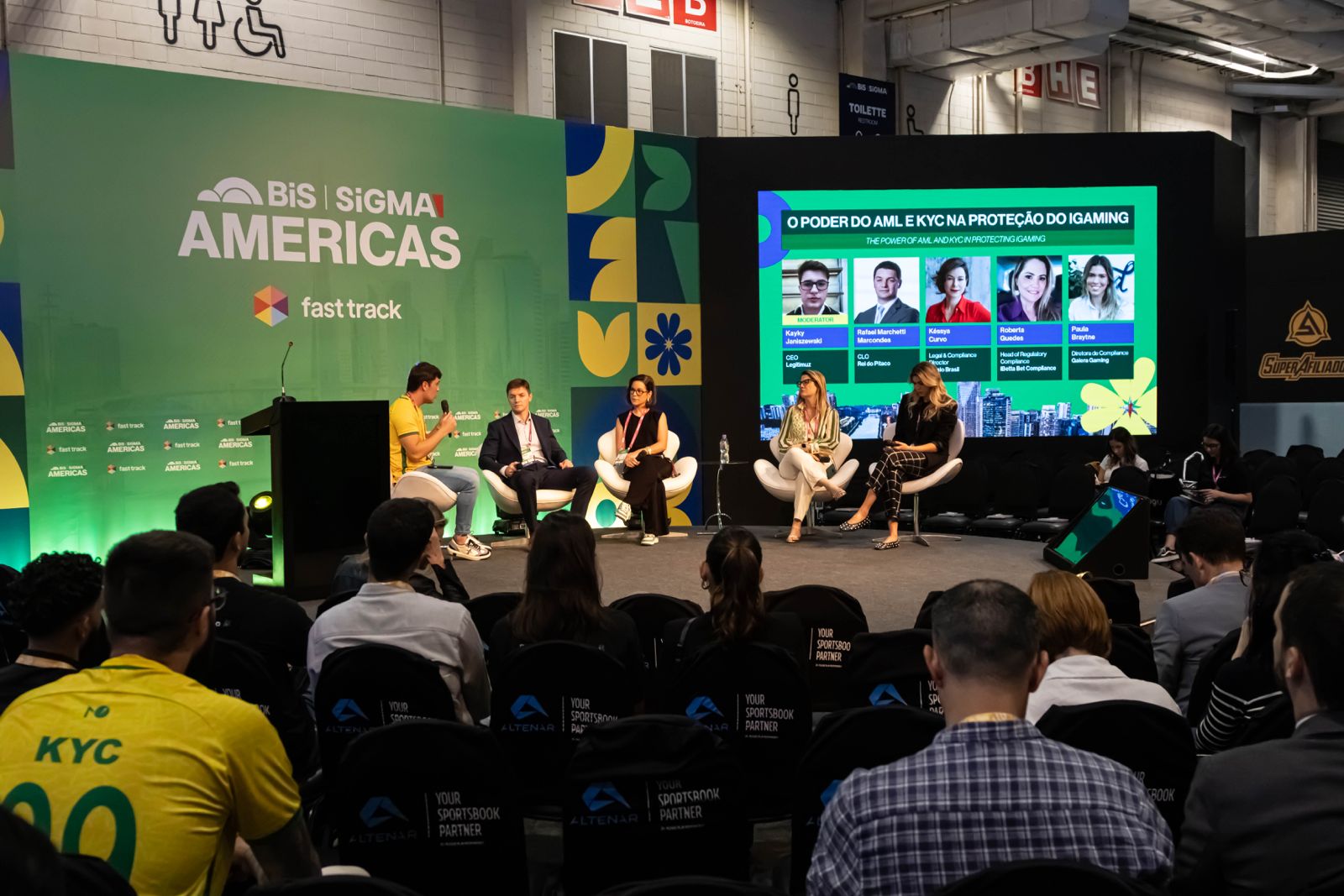
Entre os dias 07 e 09 de abril, no Expo Transamérica, em cidade de São Paulo será palco do maior evento de iGaming da América Latina, com debates e discussões sobre o setor e sobre como o mercado pode impactar a economia mundial. A Bis SiGMA South America by Softswiss trará autoridades de peso e dará ao publico a oportunidade de conhecer inovações e governança das apostas esportivas.
O setor financeiro já confirmou presença de nomes como Isaac Sidney Menezes Ferreira, presidente da FEBRABAN, Ricardo Silva Siqueira, diretor-presidente da Caixa Loterias e Ricardo Saad, presidente do COAF.
Já no setor de apostas Fabio Macorin, Subcretário da Secretaria de Prêmios e Apostas (SPA) estará presente.
O meio esportivo não ficará de fora, nomes como Michelle Ramalho, vice-presidente da CBF (Confederação Brasileira de Futebol) e Caio Porto Ferreira, delegado e procurador do STJD já estão na lista de autoridades que estarão no evento.
Já relacionados à mídia, Paulo Saad, vice-presidente do Grupo Bandeirantes e Vinicius Lummertz, da Revista Exame e ex-secretário de Turismo.
Os debates acontecerão em três palcos diferentes dentro do evento, com moderadores e especialistas para trazer cada vez mais conhecimento e reconhecimento do mercado para o publico.
Toda agenda pode ser encontrada no site: https://brazilianigamingsummit.com/agenda/
Sobre o BiS SiGMA South America by Softswiss
O BiS SiGMA South America by Softswiss integra o portfólio global de eventos do SiGMA Group, uma das principais plataformas internacionais dedicadas à indústria de jogos, apostas e tecnologia, com edições realizadas em diferentes regiões do mundo.
Realizado anualmente em São Paulo, o BiS SiGMA South America by Softswiss consolidou-se como o maior e mais tradicional evento de negócios do setor de iGaming e apostas da América Latina, reunindo operadores, fornecedores de tecnologia, plataformas, investidores, representantes do poder público e mídia especializada em um ambiente voltado à geração de negócios, troca de conhecimento e desenvolvimento do mercado.
Para a edição de 2026, a expectativa é receber 18.500 participantes, contar com mais de 400 expositores e patrocinadores e uma programação de conteúdo com 250+ palestrantes, reforçando a escala do evento, sua relevância internacional e o papel de São Paulo como principal hub de negócios do setor na região.
Além da feira de negócios, o BiS SiGMA South America by Softswiss oferece uma programação robusta de conteúdo, painéis, workshops e premiações, abordando temas como inovação, operações, tendências de mercado e boas práticas da indústria, contribuindo ativamente para a evolução e profissionalização do ecossistema.
The post BiS SiGMA South America by Softswiss reúne autoridades do esporte, mídia e apostas esportivas appeared first on Americas iGaming & Sports Betting News.
Brazil’s regulated betting market continues to gain structure and momentum, as the country balances regulatory consolidation, integrity safeguards, and commercial growth.
Over the past week, key developments, from federal policy implementation to strategic partnerships and product innovation, highlight how the ecosystem is maturing ahead of major global sporting events.
Government launches national policy to combat match-fixing
A major regulatory milestone was reached with the creation of the National Policy for the Prevention and Combating of Sports Manipulation (PNPEMR). Established through a joint ordinance by the Ministries of Sports, Finance, and Justice, the policy introduces a comprehensive national framework designed to address integrity risks in sports.
The initiative is structured around four central pillars: regulation, prevention, monitoring and enforcement, aiming to protect the credibility and unpredictability of sporting competitions in Brazil.
The policy emphasizes interinstitutional cooperation, bringing together public authorities, sports organizations, betting operators and international bodies.
Among its key measures are:
- Standardization of reporting flows for suspicious betting activity
- Continuous education programs for athletes, referees and sports officials
- Protection mechanisms for whistleblowers
- Strengthening of criminal investigations targeting organized match-fixing networks
Under the framework, the Ministry of Sports will coordinate implementation, while the Ministry of Finance will oversee betting regulation and operator compliance. The Ministry of Justice and Public Security, alongside the Federal Police, will lead intelligence-sharing and enforcement efforts, particularly in cases with interstate or international scope. See DOU
A multi-stakeholder governance committee will be responsible for monitoring progress and proposing adjustments, ensuring that the policy evolves alongside the market.
This move reinforces Brazil’s intention to align regulatory oversight with global integrity standards, particularly relevant as the country prepares for high-volume betting scenarios during major international competitions.
Sportradar expands iGaming strategy with Playradar launch
On the corporate front, Sportradar announced the launch of Playradar, a new brand dedicated to its iGaming vertical, signaling a strategic shift toward more integrated and immersive betting experiences.
The new offering is built around hybrid gaming concepts, combining real-time and historical sports data with live streaming and casino content.
Among the key features is a 24/7 live experience hub, where users can engage simultaneously with sports events and interactive gaming formats.
The initiative will be led by Edo Haitin, a seasoned executive with over two decades of experience in live gaming and product development.
The company plans to roll out Playradar starting in 2026, initially targeting regulated markets in the UK, North America and Latin America.
According to CEO Carsten Koerl, the move represents a natural evolution of the company’s capabilities, leveraging its existing infrastructure in data, streaming and user behavior analytics to enhance engagement and monetization across the player lifecycle.
Haitin also emphasized the strategic vision behind the launch, highlighting the ability to combine technology and content in line with evolving market demands, particularly as operators look for differentiated and immersive user experiences.
Importantly, Playradar will operate exclusively in regulated environments, maintaining a strong focus on responsible gaming and integrity, aligning with broader industry and regulatory trends.
Playson strengthens Brazilian footprint through Betnacional partnership
Further reinforcing Brazil’s position as a high-growth market, Playson expanded its regional presence through a new partnership with Betnacional, a leading local operator owned by Flutter Entertainment.
The agreement will see a portfolio of Playson’s top-performing titles integrated into Betnacional’s platform, including 4 Pots Riches, Diamonds Power, and Sugar Teddy x1000, all recognized for their strong performance in regulated markets and engaging gameplay mechanics such as Hold and Win.
The partnership reflects a broader industry trend toward localization and mobile-first strategies, as operators seek to better align content with regional player preferences.
Cristhian Zito, Head of LatAm at Playson, highlighted the strategic importance of the deal:
“Partnering with Betnacional is an important milestone for us in Brazil. It is a highly respected local brand with a deep understanding of its audience, and we are confident our content will resonate strongly with its players.
This launch further strengthens our position in the market and reflects our commitment to delivering engaging, high-performing games to operators across Latin America.”
From the operator’s perspective, Frederico Cunha, Head of Commercial at Betnacional, also emphasized the value of the collaboration:
“We are delighted to welcome Playson’s portfolio to Betnacional. Their games are recognised for their quality, strong mechanics, and consistent performance, making them a valuable addition to our offering.
We look forward to working closely together and bringing an enhanced entertainment experience to our players.”
A market balancing integrity and growth
Taken together, this week’s developments illustrate a clear dual trajectory in Brazil’s betting sector: strengthening institutional and integrity frameworks while simultaneously attracting investment, innovation and international partnerships.
As regulatory structures become more sophisticated and collaboration between stakeholders deepens, Brazil is positioning itself not only as a compliant and secure market, but also as a central hub for growth in Latin America’s gaming industry.
SportyBet appoints DJ Khaled as global ambassador to expand connection between sports, culture and entertainment
SportyBet has announced DJ Khaled as its new global ambassador, strengthening its positioning at the intersection of sports, music, and contemporary culture.
He joins a global roster that includes José Mourinho and Éder Militão, reinforcing the company’s strategy of connecting with audiences through entertainment. The partnership will roll out across key markets such as Brazil, the United States, Mexico, and parts of Africa, supporting SportyBet’s expansion as an experience-driven platform.
According to Elias Gallego, Vice President of Sporty Group, the collaboration reflects the company’s focus on partnering with culturally relevant figures to engage diverse audiences, particularly in markets like Brazil where sports and lifestyle are closely linked.
Deeper push into music and entertainment
The move also signals a broader effort by Sporty Group to integrate music into its entertainment ecosystem. Earlier this year, the company partnered with Burna Boy on the “For Everybody” project, blending music, football, and global culture.
In this context, DJ Khaled’s appointment further strengthens a strategy centered on storytelling and fan engagement, especially in regions where sports and music are deeply connected.
Global mindset and brand evolution
DJ Khaled highlighted the shared vision behind the partnership, emphasizing mindset, authenticity, and global connection with fans.
The agreement reinforces SportyBet’s evolution beyond sports betting, positioning the brand within a broader entertainment ecosystem. In Brazil, it aligns with the company’s ongoing growth and its focus on delivering integrated experiences that combine content, culture, and user engagement.
The post Brazil advances integrity agenda amid strong market growth appeared first on Americas iGaming & Sports Betting News.

-

 bingo6 days ago
 -
Africa7 days ago
Virgin Bet goes live in South Africa
-
Charity Space Scotland7 days ago
Scottish Government Announces £7.9M Investment to Tackle Gambling Harms
-
BetMGM7 days ago
PA Gaming Control Board Imposes $100,000 Fine on BetMGM
-
ELA Games7 days ago
2026 SiGMA Americas Awards Features ELA Games in Two Major Categories
-
apuestas7 days ago
Brasil 2026: Bets presionan el presupuesto de los hogares y redefinen la competencia por el consumo
-
Compliance Updates6 days ago
EGBA Urges EC to Tackle Rising Online Fraud in Gambling Sector
-
Compliance Updates7 days ago
Peter Knutsson Becomes New Director General of Swedish Gambling Authority