Latest News
The Hidden Costs of Bad Migration: Why So Many Migrations Go Wrong


Platform migration is often seen as a natural upgrade—faster systems, modern tools, smoother operations. But if handled carelessly, it can do more harm than good. Revenue losses, downtime, and broken player trust usually trace back to avoidable mistakes.
Atlaslive outlines where most migration projects go off track and how operators can prepare to avoid unnecessary damage.
Top Mistakes During Migration
- Moving Too Much Historical Data
Bringing over every transaction, spin, and log might sound thorough, but it often clutters the new platform and slows down the process.
Note: Data strategy is never one-size-fits-all. Every operator’s structure is different, so Atlaslive defines the data scope together with the partner after a detailed review. - Overlapping with Peak Traffic
A poorly timed cutover can cause downtime right when players are most active, especially during local peaks or major sporting events. - Ignoring DNS and Domain Details
DNS tasks may look simple, but small missteps like missed redirects or misaligned timing can lead to temporary visibility loss. - Leaving Teams Out of the Loop
Even the best-prepared system can stumble if internal teams don’t know how to use it. - Settling for Weak Retention Tools
A platform migration shouldn’t cost you conversions. Missing segmentation or limited bonus rules can slow down re-engagement right after go-live.
Atlaslive Recommendations
First of all, the Atlaslive team often advises migrating only what’s critical for daily operations—balances, active sessions, bonuses, and compliance details. However, it depends on each operator and their needs.
Another critical point is to choose truly off-peak windows and communicate every step of the process with clear, timely updates. Besides, it’s important to prepare DNS changes early, coordinate certificates and redirects, and track every signal after cutover to catch issues instantly.
Also, before migration, consider training operational departments—support, risk, CRM, and payments—in sandbox environments before launch, ensuring everyone is ready for Day 1.
Finally, Atlaslive urges you to check that you choose a high-retention platform for the transition.
Read the full article on the Atlaslive blog to explore these migration challenges in more detail and learn how to prevent them.
This document is provided to you for your information and discussion only. This document was based on public sources of information and was created by the Atlaslive team for marketing usage. It is not a solicitation or an offer to buy or sell any gambling-related product. Nothing in this document constitutes legal or business development advice. This document has been prepared from sources Atlaslive believes to be reliable, but we do not guarantee its accuracy or completeness and do not accept liability for any loss arising from its use. Atlaslive reserves the right to remedy any errors that may be present in this document.
About Atlaslive
Atlaslive, formerly known as Atlas-IAC, underwent a rebranding campaign in May 2024. It is a B2B software development company that specializes in creating a multifunctional and automated platform to optimize the workflow of sports betting and casino operators. Key components of the Atlaslive Platform include Sportsbook, Casino, Risk Management and Anti-Fraud Tools, CRM, Bonus Engine, Business Analytics, Payment Systems, and Retail Module. Follow the company on LinkedIn to stay updated with the latest news in iGaming technology.








New software option replaces standard table announcements across cash games, tournaments and formats including All-In or Fold and Spin & Gold.
GGPoker on July 9, 2026 announced Action Voice, a new software feature that lets players replace standard table announcements with voice packs recorded by poker personalities, including Doyle Brunson.
The initial lineup named by the operator includes ten-time WSOP bracelet winner Doyle Brunson, Daniel Negreanu, Michael “The Grinder” Mizrachi and Kevin Martin, with additional voices “to be confirmed in the near future.”
Action Voice is available now across GGPoker’s product offering, including cash games, tournaments and formats such as All-In or Fold and Spin & Gold. Players can select voice packs in the desktop client via ‘My Page’ and then ‘My Action Voice’.
“Doyle Brunson may not be at the tables in the way that he used to, but his voice still can be,” said Sarne Lightman, Managing Director of GGPoker. “Action Voice is our way of keeping the legends who built this game part of the everyday experience – right alongside the players carrying it forward today, like Daniel and Michael. It’s a unique and fun new element to our software, and we can’t wait to reveal the rest of the lineup soon.”
GGPoker said more Action Voice packs will be announced in the coming weeks as it rolls out the full roster.
The post GGPoker adds Action Voice packs featuring Doyle Brunson and other pros appeared first on EE Gaming | Global iGaming & Tech Intelligence Hub.


GGPoker introduces Action Voice, letting players hear poker icons – including Doyle Brunson, Daniel Negreanu, Michael “The Grinder” Mizrachi and more – call their action at the tables
GGPoker, the World’s Biggest Poker Room, today unveiled Action Voice, a unique feature that gives players the option to replace GGPoker’s standard table announcements with those voiced by some of poker’s most iconic figures. For the first time, players can bet, raise, call, and fold to the voice of ten-time WSOP bracelet winner and back-to-back Main Event champion Doyle Brunson – alongside a growing roster of legends including Daniel Negreanu, Michael “The Grinder” Mizrachi, Kevin Martin, and additional names to be confirmed in the near future.
Action Voice is now available to all GGPoker players, who can select their preferred voice pack in the GGPoker software and hear it call their action while playing their favorite GGPoker games, including cash games, tournaments, and exclusive formats such as All-In or Fold and Spin & Gold.
“Doyle Brunson may not be at the tables in the way that he used to, but his voice still can be,” said Sarne Lightman, Managing Director of GGPoker. “Action Voice is our way of keeping the legends who built this game part of the everyday experience – right alongside the players carrying it forward today, like Daniel and Michael. It’s a unique and fun new element to our software, and we can’t wait to reveal the rest of the lineup soon.”
To select a new voice from within the desktop software, click on ‘My Page’, then ‘My Action Voice’. Choose your preferred voice by selecting the avatar, click ‘Apply’ and you are ready to hit the tables!
Additional voices will be revealed in the coming weeks as GGPoker rolls out the full Action Voice roster.
The post The Godfather Of Poker Returns To The Table: Doyle Brunson’s Voice Comes To GGPoker appeared first on Americas iGaming & Sports Betting News.
Haaland
International bettors back Haaland’s Norway to beat England in World Cup Quarter Final Clash


Kaizen Gaming shares Betano users’ predictions on teams heading to the World Cup semi-finals
As the World Cup moves into the last eight stage, Kaizen Gaming unveils exclusive proprietary data from its Betano platform, which reveals Argentina, Norway, Spain and France as the most backed teams by users globally to progress into the semi-finals.
Predicting the teams to qualify to the semi-finals (selections from the “To Qualify” market):
- Norway backed by 75% of users to qualify over England
- Argentina favoured by 80% of users to win over Switzerland
- Spain narrowly predicted to come out on top over Belgium with 55% of users’ bets
- France has been selected by 67% of users to pass through Morocco
With regards to two of the biggest surprises of the tournament this far, Brazil’s defeat to Norway and Germany’s elimination by Paraguay, it seems that for Betano users the shock wasn’t that big. In fact, 42% of users had seen Paraguay’s qualification coming, and 45% had predicted Norway getting through Brazil to reach the quarterfinals.
*The data shared has been extracted on the morning of July 8, 2026 from across 18 markets, excluding the UK. The international data sources may vary according to betting option availability per market.
The post International bettors back Haaland’s Norway to beat England in World Cup Quarter Final Clash appeared first on EE Gaming | Global iGaming & Tech Intelligence Hub.

-

 Affiliate Industry6 days ago
Hub Affiliations Triumphs at the iGB Affiliate Awards 2026: Winner of Programme/Network Campaign of the Year
-
Austria6 days ago
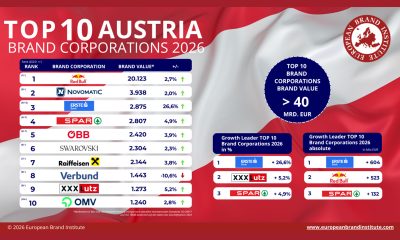
Austrian Brand Value Study: NOVOMATIC Defends Top Ranking
-
Latest News6 days ago
N1 Partners at iGB L!VE 2026: Bringing Together Affiliates, Art and Innovation
-
Africa7 days ago
PopOK Gaming sponsors Botswana’s TT Cup Challenge horse racing event
-
Amusnet6 days ago
Amusnet Releases its Latest Video Slot “Golden Snake”
-
Betsson CEO Pontus Lindwall7 days ago
Gaming in the Nordics launch event sets annual Copenhagen conference from 2027
-
Azerbaijani Parliament6 days ago
Azerbaijan to Impose Tougher Penalties for Illegal Online Gambling
-
Amusnet6 days ago
Weekend Reels | Week 27: Slot Drops & Trends