Latest News
HIPTHER Community Voices: AI in iGaming: A Guide to Adoption, Benefits, and Challenges


iGaming is undeniably growing, yet even here, AI adoption for streamlining operations and accelerating processes remains surprisingly low. The scale and speed of production of platforms, apps, games, content, bonuses, sports events, and even marketing campaigns are truly impressive in our industry. That’s why it’s natural that AI should become a real business enabler in iGaming – boosting efficiency and quality without the need for a complete process overhaul, and above all, helping us keep up with growing customer expectations.
Our speaker at European Gaming Congress (HIPTHER Warsaw Summit), Bartek Borkowski, Managing Partner of createIT and host of CEOpen mic, shares his perspective on AI in iGaming. With 15+ years in the industry, he now leads AI adoption in business processes and B2B/B2C products. Read more in the article below.
First steps in implementing AI in iGaming companies
As always, the hardest part is finding the right starting point – identifying the areas where technology can truly make a positive impact. And that’s the most common reason why our industry still only scratches the surface when it comes to AI. There’s also a widespread lack of understanding of what AI can really help with, how it works, and what impact it can have.
Many companies still approach the topic very cautiously. Alongside standard blockers such as concerns about implementation costs and numerous day-to-day priorities, in practice companies face completely different challenges – mainly organizational and communication-related. And here comes a very important piece of the puzzle – the human factor and resistance to change. Especially in larger companies, introducing new solutions requires not only a budget but also trust, education, and proper process management. Interestingly, a new type of resistance is also emerging – one driven by anxiety. Some employees approach AI with skepticism, fearing that the technology might threaten their jobs. This is understandable, but it’s precisely why transparent communication and demonstrating that AI is here to support people, not replace them, is so important.
That’s why the best place to start is by allowing teams to talk about their daily, small, repetitive tasks – the simple ones that take up a lot of time. This way, from the very beginning, we involve the teams in the whole process and focus on elements that will genuinely improve their work. If people see that methodical changes streamline their work and allow them to focus on strategic tasks, they will be more willing to adopt new products and solutions in the future.
Of course, if there are no AI operations or implementation specialists in the teams, it’s best to use companies that already have experience in the industry. First, you may discover that there are already ready-made solutions on the market that just need to be implemented. Second, an external company enters the organization with a clean slate, without attachment to existing processes – this makes it easier to spot real problems that AI can solve.
Most implementations follow a few repeatable steps, which are adapted depending on the type of organization and its stage of development:
- Needs analysis and goal setting
At this stage, it’s crucial, as mentioned before, to open up to employees, let them speak, and actively listen. It may turn out that difficulties are related to too many games to test, lack of budget for copywriters, insufficient content team resources, lack of quick response to production errors, poor player support quality, compliance with responsible gaming principles, offer personalization, or proper aggregation and analysis of huge amounts of data.
- ROI analysis
A stage that companies often forget. Remember, every automation should bring a return on investment. So before starting implementation, you need to check whether the costs (both direct and indirect) will result in profits, improve player retention, and increase GGR.
- Choosing a solution
There are two paths here. If during the needs analysis you discover that there is already an existing solution in the market, then selecting an AI model is not necessary – you only need a qualified person to handle integration into your company ecosystem. If you decide on a custom solution, you need to collect data, choose a model, define the tech stack, and consider cloud-based solutions. Additionally, you must build a team or work with an external company that can implement the solution in compliance with iGaming regulations.
- Data collection
If you proceed with implementation, you need to gather the right data. For example: game history, deposit amounts, player behavior, transaction data, and elements necessary for publishing indexable content. This is a very challenging stage because of the nature of the data, cleaning it, and anonymizing it. If the implementation concerns the player directly, this is where you need to create a central repository of player attributes to train the models.
After choosing the custom solution route and building a dedicated team, the next steps are model development and training, integration with production systems, ensuring data security, and continuous performance monitoring.
How AI is typically used and the benefits it brings
In the iGaming world, where speed, personalization, and responsiveness matter most, manual processes are no longer enough. AI doesn’t just accelerate operations – it enables scaling without sacrificing quality. It is moving from the innovation-for-pioneers phase to becoming a technological foundation for modern products and services. Those who learn to use it today are building a real advantage, while those who delay will have to catch up – in a race where time plays a critical role.
From a high-level perspective, AI in the iGaming industry enhances user experience, maximizes revenue, ensures compliance, and reduces operational risks. On the operational side, it streamlines and accelerates testing large volumes of slot games, creating and publishing content, personalizing offers, bonuses, and games, speeding up bug response on production sites, reducing fraud rates, and supporting responsible gaming practices.
The adoption of AI is visible across multiple layers of the industry. One of the most significant transformations is the automation of internal processes within companies. Traditionally manual workflows, such as quality assurance, game certification preparation, and data reporting, are now handled by AI-powered systems, reducing time-to-market and human error. Additionally, Customer Relationship Management platforms are increasingly enhanced with AI-driven capabilities. By analyzing behavioral data, transactional history, and player interactions, AI models within CRMs provide predictive analytics, automate personalized communication, and optimize retention strategies with a level of precision unattainable through manual segmentation.
Among the various segments in the iGaming ecosystem, affiliates have emerged as some of the fastest adopters of AI technologies. Their ability to process massive amounts of player acquisition data, run automated content generation, and leverage predictive algorithms for SEO and ad targeting gives them a significant competitive edge. This segment’s early integration of AI demonstrates its value not only for operational efficiency but also for scaling performance-driven marketing strategies.
AI also plays a critical role in slot development. Game studios increasingly use machine learning models to generate mathematical models, optimize asset production, and conduct automated stress and fairness testing at scale. Instead of relying solely on manual iterations, AI-based tools can simulate thousands of game sessions in minutes, ensuring compliance with regulatory requirements and delivering balanced gameplay experiences. These advancements allow developers to accelerate the creative process while maintaining the integrity and appeal of their games.
When AI goes wrong – risks for the iGaming industry
One of the most common mistakes when implementing AI in iGaming is the belief that AI is a magic solution for all problems. A technology that “implements itself,” solves everything, and grows the business on its own. The reality is less glamorous but far more practical: AI is just – or rather only – a tool. A very advanced one with huge potential, but it requires a clear strategy, high-quality data, well-defined goals, and a team that knows how to use it effectively. It’s also still a young tool, developing rapidly but with limitations – and every implementation needs a careful approach to its autonomy.
Remember, especially in iGaming, AI deals with sensitive data and influences business decisions – so human oversight must remain a permanent part of the process.
Too often, companies adopt AI just to follow a trend that is permanently changing the rules of the iGaming world. They move too quickly, without deep analysis of how the technology fits their business model. From a tech company perspective, the biggest risk is costly solutions that bring no value to the business or the end user – generating only disappointment, loss of enthusiasm, and resistance to future AI initiatives.
Another common problem is data quality – or lack of data. iGaming relies heavily on massive volumes of data – from game testing to player behavior analysis to content personalization. Algorithm engines learn from available information. If the data is wrong, incomplete, or poorly labeled, you can’t expect accurate predictions. Wrong segmentation, poor personalization, failed recommendations – all of these lead to real financial losses.
Breaking the myths around AI
Two persistent myths often come up in conversations with clients:
- AI can completely replace humans.
- Implementing AI justifies staff reductions.
Both are as dangerous as they are false.
The reality is quite different. AI was never designed to replace humans in processes. Its role is to assist, by taking over repetitive tasks, accelerating data analysis, and offering guidance when information overload makes quick decisions challenging. It’s a tool to amplify human knowledge and capabilities, not to eliminate them. At the end of the day, it’s people who grasp context, understand company goals and values, and see the bigger picture – something even the most advanced algorithm cannot achieve.
Moreover, organizations that implement AI wisely don’t experience job cuts. Instead, there’s a shift in skills. Teams work faster, smarter, and more creatively. Employees gain time for strategic tasks as intelligent tools handle routine operations. This transforms workflows but doesn’t strip them of purpose.
Experience proves that companies treating AI as a partner rather than a cheap replacement achieve far better outcomes. They grow faster and build stronger, more stable teams. Contrary to common belief, it’s not algorithms but well-prepared employees that drive successful AI adoption. Without them, the technology simply cannot deliver its full potential
The impact of AI on iGaming so far
In one of the latest special edition episodes of the CEOpen Mic – Faceoff podcast, I spoke with Joshua Gibbs (CEO of PlayAIO) and Toms Andersons (CEO of Live Gaming Solutions) about the limitations and potential of AI in fraud detection. This is an area where we can expect significant development in the near future, but the impact of AI goes far beyond a single application.
The most profound shift we are witnessing is in mindset. AI has not only improved individual processes but has fundamentally transformed the way we think about work, innovation, and adaptability. This change is irreversible. Once organizations experience how AI can accelerate, simplify, or even fully automate complex tasks, going back to traditional methods becomes almost unthinkable. But it’s not just about efficiency, it’s about redefining what’s possible.
Increasingly, new solutions are being designed with AI at their core. Take slot game testing as an example. A few years ago, a lot of it was done manually: testers spent countless hours identifying animation errors, incorrect payouts, misaligned graphics, and UX issues. Then came the first wave of automation, where scripts could test predefined scenarios.
Today, we are entering an entirely new era. Tools like PlayPatrol can now recognize images, generate and execute test scenarios autonomously, and continuously improve with each update. The result? Higher-quality testing at a fraction of the cost – and with minimal human intervention.
This evolution in AI-driven processes is not just an incremental upgrade; it is reshaping entire workflows and setting new industry standards. Fraud detection, game testing, and countless other areas are only the beginning.
What AI will never replace in iGaming
Artificial intelligence is clearly one of the most powerful tools available today. Yet even the most advanced algorithms do not remove our responsibility to focus on the fundamentals: purpose, quality, and the human element at the heart of every process. No matter how many tasks we delegate to AI or how extensively we use it, one thing remains constant: humans are the ultimate recipients of our efforts – the players, users, and business partners. Systems, automation, and solutions are all designed with them in mind, which is why staying grounded amid technological excitement is crucial.
Players don’t care whether a game was tested by AI or created by a development team. What matters is whether the gameplay is engaging, immersive, and enjoyable. While AI can enhance this process in many ways – through testing, personalization, or content optimization – it is difficult to imagine it creating an entirely new type of game or significantly elevating game quality in a way that truly resonates with the player anytime soon.
Bartek Borkowski – Founder and managing partner at createIT, a company with over 15 years of experience in the iGaming industry, specializing in creating custom software solutions for casino operators and game providers. Having scaled or built from ground up dozens of entertainment businesses through innovative software solutions, Bartek excels at identifying and removing system bottlenecks, bridging the gap between technical challenges and operational needs. He is also the host of CEOpen mic, a podcast where he speaks with C-level executives from the iGaming about their journey, motivation and honestly talk about their successes and failures.
The post HIPTHER Community Voices: AI in iGaming: A Guide to Adoption, Benefits, and Challenges appeared first on European Gaming Industry News.













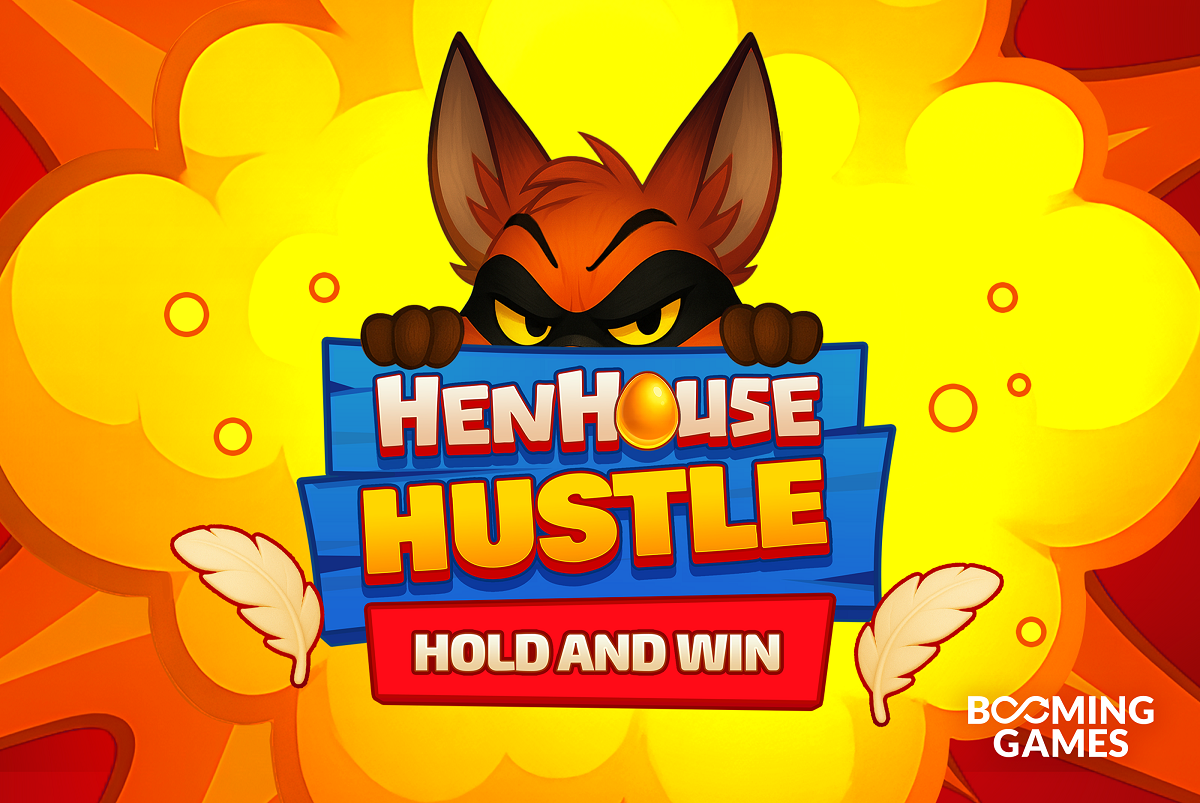
New farm-themed slot adds Free Spins, Hold and Win, and optional bonus buys priced at 75x and 150x the bet.
Booming Games has launched Henhouse Hustle: Hold and Win, a new farmyard-themed slot featuring a Free Spins mechanic and a Hold and Win bonus. The supplier said the game runs on a 5×3 grid with 20 paylines and offers a maximum win potential of 6,000x.
In the base game, Golden Eggs are stored in a Collection Pot. Free Spins trigger when three Golden Eggs land on the middle reels, with their cash value moved above the reels at the start of the round. Booming Games said that cash value is awarded each time a Golden Egg lands during the feature.
During Free Spins, Boost symbols can increase Egg prizes to the next prize level from one to five times, while an Extra Spins symbol can award between one and five additional spins. The company said Boost symbols can increase to Prize Pot values of 10x-1000x, awarding Mini, Minor, Major and Grand prizes.
The Hold and Win round triggers with five or more Eggs and starts with three respins, with Egg symbols held in place and the respin counter resetting when additional Eggs land. The Grand Prize is awarded when all positions on the grid are filled with Eggs. The release also states that triggering with five or more eggs including three golden eggs activates a Combo Bonus, awarding both Hold and Win and Free Spins in a Super Bonus Round.
Booming Games said players can purchase either the Bonus or the Combo Bonus for 75x and 150x the bet amount respectively, which is guaranteed to trigger the Hold and Win feature. A Boost+ option can also be activated in the base game, increasing the bet amount by 1.25x and increasing the chance of triggering bonus features.
Craig Asling, Director of Games at Booming Games, said: “Packed with a host of innovative new features which offer fast-paced, high stakes gameplay, Henhouse Hustle: Hold and Win is the latest example of Booming Games’ market-leading capabilities. The Fox acts as the antagonist, stealing Golden Eggs and adding a real sense of theatre to the game, which we’re confident will be a hit among players.”
The post Booming Games launches Henhouse Hustle: Hold and Win appeared first on EE Gaming | Global iGaming & Tech Intelligence Hub.
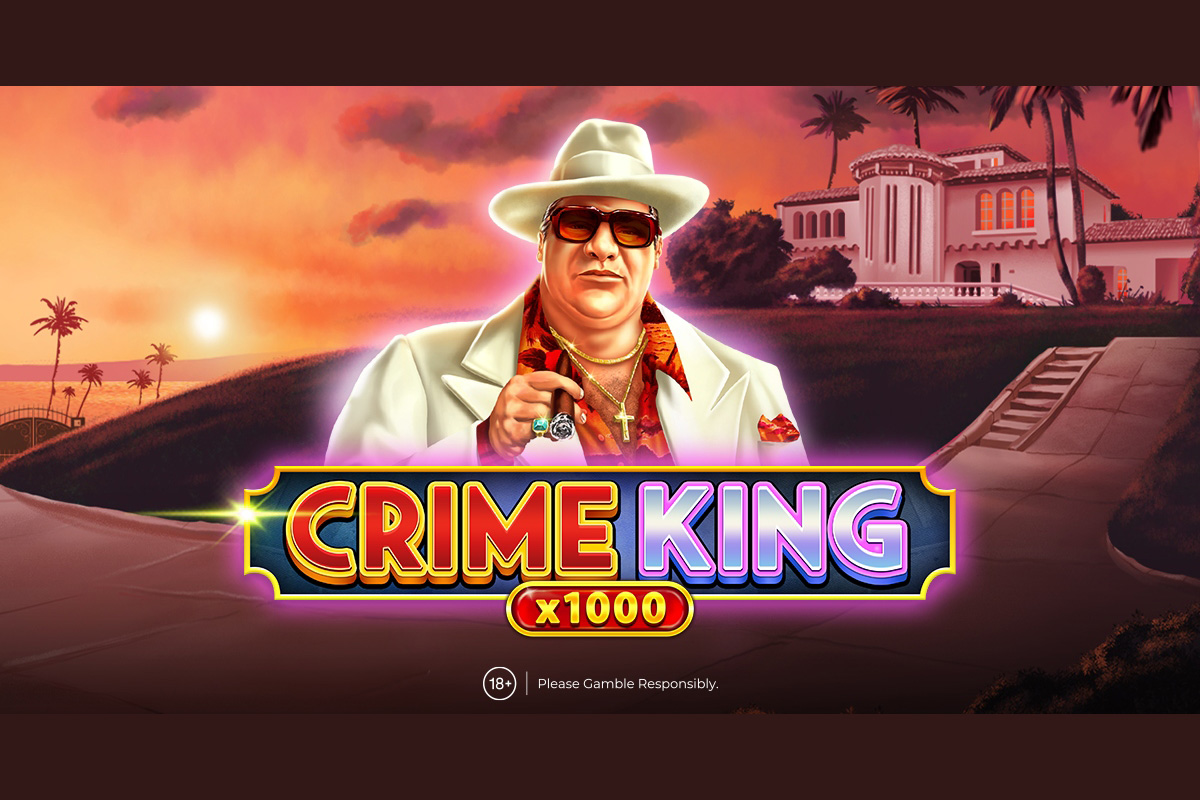
Amusnet has released its latest cascading slot Crime King 1000, which transports players into the heart of a gripping underworld inspired by classic mafia stories, hidden fortunes and high-stakes ambition. In this city of secrets, only the boldest are destined to build an empire.
Played across 6 cascading reels, the game features an engaging Match 8+ mechanic, where the matching symbols disappear after every successful combination, making room for new symbols to fall into place. This dynamic gameplay creates opportunities for consecutive cascades, keeping the action flowing and the anticipation high throughout every round.
At the centre of the experience is the Progressive Multiplier feature. As valuable multiplier symbols are collected, four distinct multiplier tiers – green, blue, purple and red – come into play, each offering increasingly powerful values. The highest tier can reach an impressive 1000x, adding a dramatic boost to both the base game and the Free Spins feature as multiple multipliers combine during cascading sequences.
The pressure intensifies when four Scatter symbols appear anywhere on the reels, unlocking 15 Free Spins and opening the door to even greater multiplier opportunities. The feature can also be retriggered, extending the action and allowing players to stay in the heart of the underworld even longer.
For those unwilling to wait, the Buy Bonus feature offers immediate access to the Free Spins experience, providing a fast track to the game’s most exciting moments.
With its cinematic crime-inspired atmosphere, cascading gameplay and powerful multiplier mechanics, Crime King 1000 delivers a bold adventure where every cascade strengthens the player’s influence and every decision brings the player one step closer to ruling the city. In this world, reputation is everything – and only the true king of crime will claim the throne.
Cascades & Match 8
The winning symbols disappear, allowing new symbols to drop into their place, potentially triggering additional wins from a single spin. A winning configuration consists of 8 or more identical symbols anywhere on the reels.
Free Spins
15 Free Spins are triggered by landing at least 4 Scatter Symbols at any position across the reels. The feature can be retriggered by landing another 3 Scatter symbols during Free Spins.
Progressive Multiplier
Available both in the Base game and Free Spins mode. There are four colours of multiplier gems, as follows:
Green Multiplier symbol – 2x, 3x, 4x, 5x, 6x, 8x
Blue Multiplier symbol – 10x, 12x, 15x, 20x
Purple Multiplier symbol – 25x, 50x
Red Multiplier symbol – 100x, 250x, 500x, 1000x
If several multipliers appear after the cascading sequence ends, their values are added together.
Buy Free Spins
Enables the player to purchase 15 Free Spins at the price of 100x the total bet.
The post Amusnet Releases its Latest Cascading Slot, Crime King 1000 appeared first on EE Gaming | Global iGaming & Tech Intelligence Hub.
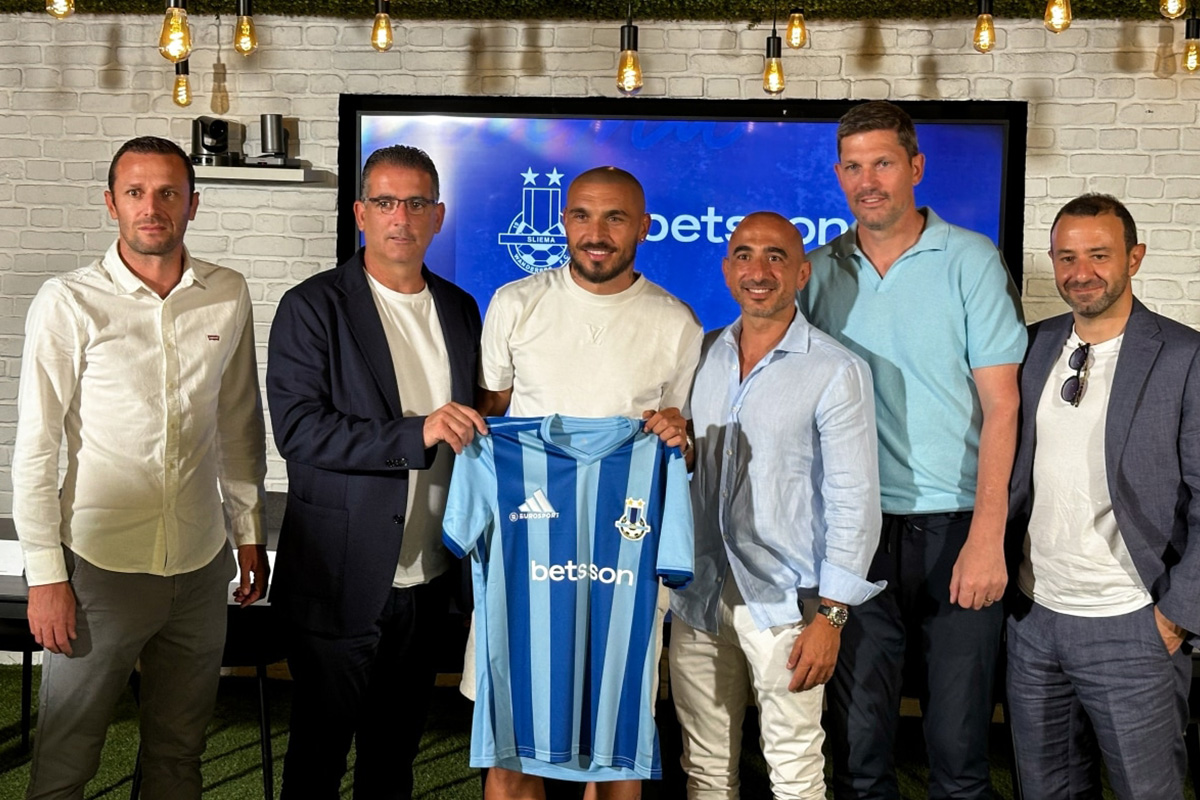
Betsson and Sliema Wanderers FC have signed a memorandum of understanding outlining their intention to establish a landmark long-term partnership, reinforcing Betsson’s long-standing contribution to Maltese sport and the local community.
Under the proposed partnership, Betsson is expected to become Sliema Wanderers’ front-of-shirt sponsor and will support the club’s continued investment in its sporting operations and facilities. The parties will now work towards finalising the full partnership agreement.
The partnership would see Sliema Wanderers join Betsson’s international football portfolio, alongside leading clubs including Inter, Club Brugge, Boca Juniors and Atlético Nacional.
The MOU reflects a shared commitment to the long-term development of Sliema Wanderers and the club’s ambition to strengthen its sporting infrastructure, enhance its competitive position and establish a more sustainable operating model for the future.
Sliema Wanderers is one of a limited number of Maltese football clubs that owns premises which can be developed and commercialised to generate recurring revenue. The club intends to continue investing in its facilities and creating additional revenue streams to support its long-term sporting ambitions.
Jesper Svensson, CEO at Betsson Group, said: “Betsson has been part of Malta for over 20 years, and we are proud to deepen our long-standing commitment to the local sporting community.
“This proposed partnership goes well beyond the traditional sponsorship model. We are supporting a club with a clear vision for its future, including stronger sporting facilities and a sustainable model that can support its continued development.
“Sliema Wanderers has demonstrated ambition and a genuine commitment to long-term progress. These are values that strongly resonate with Betsson, and we look forward to working with the club and bring its vision to life.”
The proposed partnership builds on the work undertaken by the club’s new committee, which has focused on strengthening the club’s financial foundations and investing in its sporting infrastructure.
Walter Arciola, President of Sliema Wanderers FC, said: “The signing of this MOU represents an important vote of confidence in the long-term vision we have established for Sliema Wanderers.
“Our objective is not simply to achieve success on the pitch. We want to build an institution that is financially sustainable, supported by high-quality facilities and positioned to compete successfully over the long term.
“Betsson has understood and embraced that vision from the outset. We are delighted to take this important first step towards a long-term partnership and look forward to working together to support the future development of Sliema Wanderers.”
The announcement comes as Sliema Wanderers continues to strengthen its sporting project ahead of the upcoming season. During the event, the club also presented Malta international Teddy Teuma as its latest signing, following the recent arrivals of fellow Malta internationals Alexander Satariano and Henry Bonello. The three signings further reflect the club’s ambition to combine immediate sporting progress with a sustainable long-term development strategy.
The post Betsson and Sliema Wanderers FC Sign Landmark MOU for Long-term Partnership appeared first on EE Gaming | Global iGaming & Tech Intelligence Hub.

-

 Compliance Updates7 days ago
The MGA Publishes Notice on Websites Impersonating Licensed Operators
-
Brazil6 days ago
Hunch cites 78% matchday retention for Super World Cup free-to-play suite
-
Anne Marie Caulfield5 days ago
Irish Gambling Regulator Threatens Prediction Market with High Court Action
-
Brazil6 days ago
Hunch reports 78% matchday retention for Brazil World Cup free-to-play push
-
Canada6 days ago
Tonybet player in Canada claims $20,000 CAD golden World Cup card prize
-
Alberta5 days ago
St8 extends TonyBet partnership to Alberta after securing supplier registration
-
Brazil5 days ago
DEGEN Studios goes live with Superbet in Brazil
-
Joker Coins Unlimited Fortune6 days ago
TaDa Gaming Expands its Unlimited Fortune Series with the Launch of Joker Coins Unlimited Fortune