illegal gambling
Coljuegos Transfers More Than $127M to the Subsidized Health System in Colombia During H1 2025

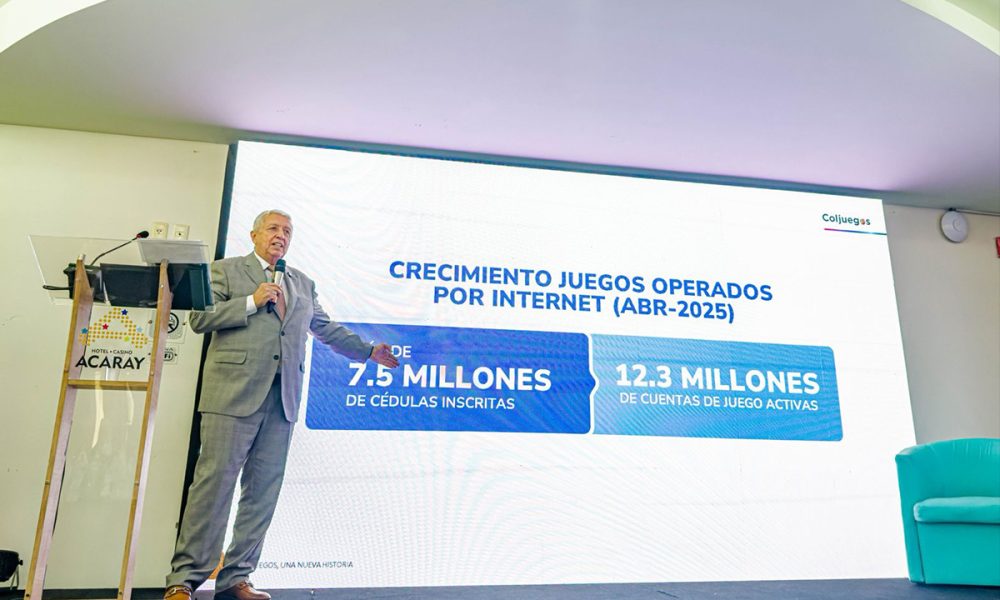
During his participation in SAGSE Paraguay 2025, the president of Coljuegos, Marco Emilio Hincapié, highlighted to business leaders and regulators from the continent that, in the first half of the year, the entity has transferred approximately $127.9 million dollars ($535.819 billion) to the subsidized health system.
“We are proud that, internationally, we are recognized as one of the most advanced regulators on the continent. This is reflected both in regulatory innovation and in the increase in resources allocated to the healthcare of Colombians,” said Hincapié.
The president also emphasized that online games remain one of the main players in the industry, followed by localized games and other newer types such as Baloto and Super Astro.
“This year, we have seen a 33% increase in sales for Baloto, which represents approximately $32.203 billion compared to the January-June 2024 period. This allows us to project that this game will increase its contributions to health by more than $20 billion by the end of the year,” the official said.
Likewise, the president highlighted that in the first half of 2025, there was a 9.32% increase compared to 2024, going from $490.257 billion to $535.819 billion in 2025.
During the SAGSE event held in Ciudad del Este, Paraguay, the president of Coljuegos also highlighted the progress made in combating illegal gambling. To date, the organization has seized 5663 unauthorized gambling devices in more than 25 departments across the country.
SAGSE is the most important gaming industry trade show in Latin America, bringing together the most prominent exhibitors in the games of chance industry, from slot machine manufacturers to casino and gaming room technology providers.
The post Coljuegos Transfers More Than $127M to the Subsidized Health System in Colombia During H1 2025 appeared first on Gaming and Gambling Industry in the Americas.











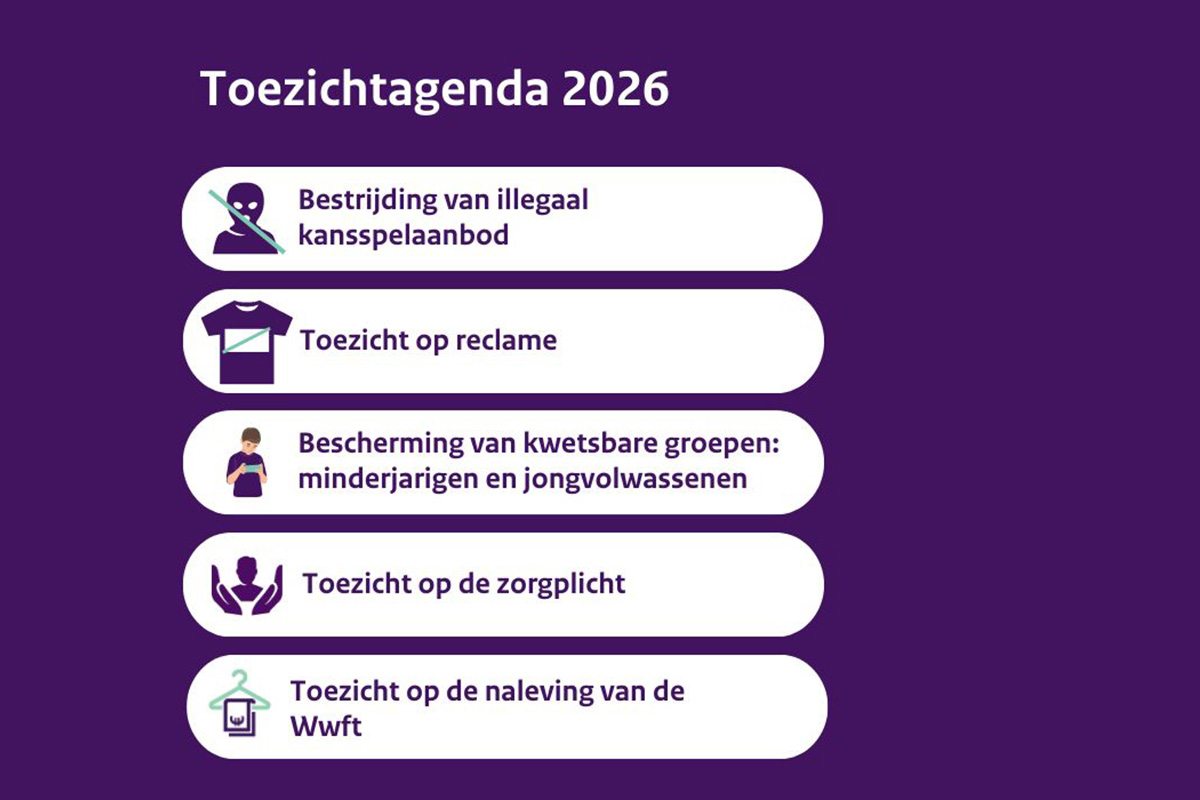
The Dutch Gambling Regulator (KSA) has announced that it will place a greater focus on combating illegality and player protection in its oversight in 2026. The regulator outlined its priorities for 2026 in five key themes.
In 2026, the KSA will pay extra attention to the following topics:
• Combating illegal gambling offers
• Protection of vulnerable groups: minors and young adults
• Supervision of the duty of care
• Supervision of advertising
• Supervision of compliance with the Wwft
Additional capacity is being freed up to combat illegal gambling, primarily to frustrate and disable the infrastructure of illegal parties. This could include closer collaboration with payment service providers, hosting providers and social media companies.
The increased priority on protecting vulnerable groups and enhanced oversight of advertising and duty of care aligns with the Ministry’s renewed vision, which places a greater emphasis on player protection. A separate player protection department has been established for this purpose within the KSA’s new organisational structure, effective from January 2026.
The post Dutch Regulator Outlines 5 Key Supervisory Priorities for 2026 Agenda appeared first on Eastern European Gaming | Global iGaming & Tech Intelligence Hub.
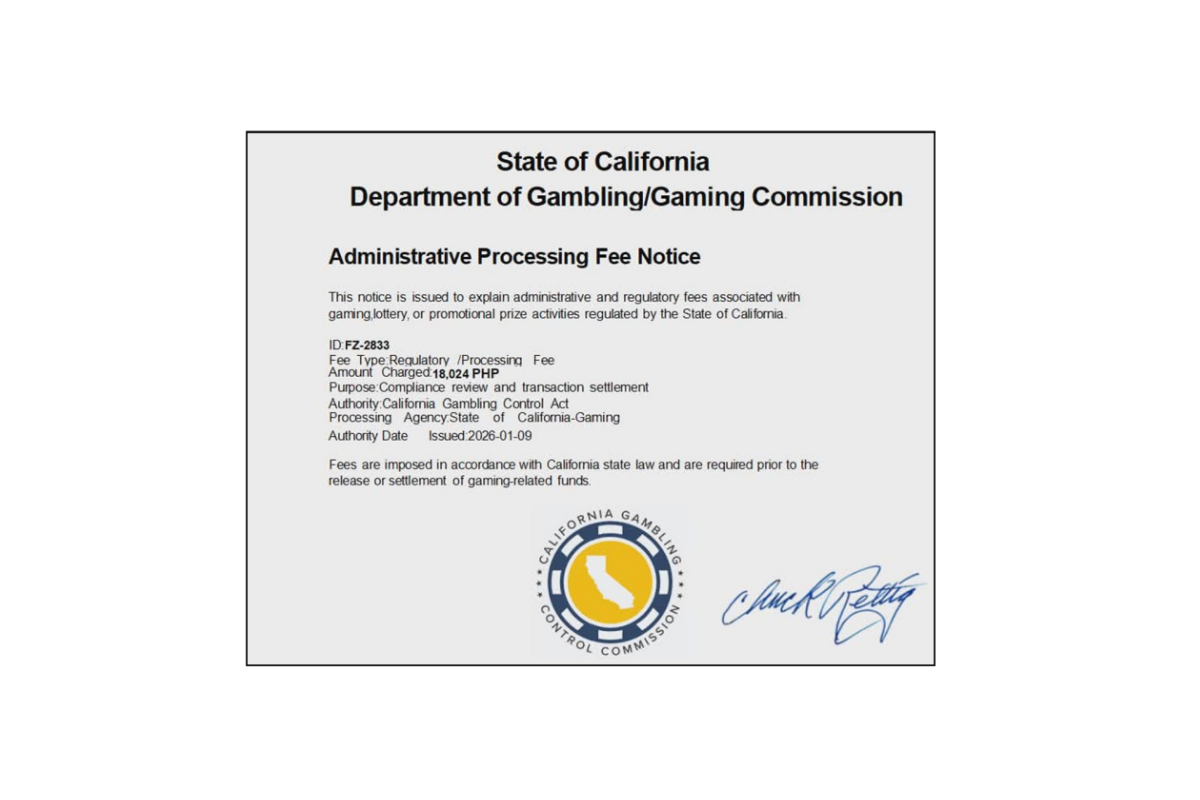
The California Gambling Control Commission (Commission) has received information that an illegal gambling operation called California Scratch Card is using the Commission’s name and logo to claim that winners must pay them an “Administrative Processing Fee” imposed by the Commission before they can collect their winnings. Examples are attached to this notice. It appears this illegal gambling operation is primarily operating on Facebook, and may be operating on other social media platforms.
Based on the information the Commission has received, this illegal gambling operation appears to be based in the Philippines and is targeting citizens of the Philippines.
The Commission does not issue, nor has it ever issued, licenses to California Scratch Card or any other similar illegal gambling operations. The Commission does not require “Administrative Processing Fees” or other such fees that these illegal gambling operations claim. The Commission is currently pursuing all available options to address this matter.
Illegal gambling operations such as these are often fronts for scams and thefts, as they can keep a player’s deposited funds, refuse to pay out winnings, or demand payment from the winner before releasing the winnings, and then not release the winnings at all.
The post ADVISORY: ILLEGAL GAMBLING OPERATION USING FORGED COMMISSION CREDENTIALS appeared first on Americas iGaming & Sports Betting News.


Reading Time: 4 minutes
Online gambling continues to thrive in Poland, despite the country’s strict regulatory framework. Virtual casinos and betting platforms still attract players with the promise of easy access and quick winnings. Yet, their operations would not be possible without the involvement of payment institutions that process transactions for entities operating outside the boundaries of the law. Behind the scenes lie not only questions about compliance with Poland’s Gambling Act, but also serious concerns about money laundering and the potential financing of criminal activity.
PSPs Legal Responsibility
The key question remains the legality of actions taken by payment institutions that handle transactions linked to illegal online gambling. Do they, even unintentionally, help such operations thrive? Under Polish law, payment service providers are required to monitor and limit high-risk transactions. In practice, this means that every deposit or withdrawal connected to unlicensed gambling activity should be treated as a red flag. Special attention is also given to transactions made through popular mobile payment systems such as BLIK. While BLIK itself is not a payment institution under Polish law, the banks and financial operators using it are and it is they who bear responsibility for preventing the flow of funds that may support illegal gambling activities.
Clear Legal Framework, Limited Excuses
Polish law leaves little room for speculation here. The register of domains used to offer illegal gambling, the ban on processing payments for unlicensed operators, and the penalties outlined in the Fiscal Penal Code and Criminal Code set clear boundaries of responsibility.
The Anti-Money Laundering Act (AML) and the EU Regulation 2023/1113 require payment institutions to actively monitor transactions, block suspicious transfers, and cut off risky relationships. Guidance issued by the Polish Financial Supervision Authority (KNF/UKNF) and the National Risk Assessment, along with its sectoral annex, describes typical abuse schemes and makes it clear that payments directed toward online gambling should be treated as a major warning signal. In practice, this means that financial channels supporting illegal gambling must be identified and shut down before the funds return to players as so-called “winnings.”
And this principle is now being actively enforced. Recently, the Financial Supervision Authority (UKNF) went a step further, issuing a sector-wide warning urging payment service providers to block financial flows to unlicensed operators. In response, Polish payment providers have begun withdrawing support for illegal gambling sites and removing payment options such as BLIK from unlicensed platforms.
The Hardest to Detect: The Intermediary Role
The flow of funds into illegal online gambling can take many forms, depending on the relationships between the parties involved in the transaction. The most difficult to detect, however, is the scenario in which a payment institution acts only as an intermediary within a larger payment chain transferring money between other financial service providers without directly serving the payer or the recipient. Even in such cases, the institution is not exempt from its obligation to continuously monitor and analyse all transactions.
Depending on the type of payment, it should apply different verification methods, all aimed at determining whether executing a transfer on behalf of another provider could, in practice, end up funding entities that organize illegal online gambling. The institution must obtain information from the ordering provider about the recipient, determine whether it is engaged in gambling related activity, and verify its legal status. If red flags arise during the analysis such as missing data in the payment chain, a domain listed in the official register, or the absence of the website from the list of legal operators the transaction should be paused or rejected and properly escalated. This includes raising the risk level, notifying the relevant authorities, or even terminating cooperation. When dealing with correspondent relationships involving other institutions, including those based within the European Union, heightened caution is essential.
Grey Market Fuelled by Inaction
Illegal online gambling would not exist without the support of the payment system. Although the law clearly defines the obligations of financial institutions, in practice it is often these very institutions that knowingly or not enable the flow of money into illegal online gambling. This is why effective identification and blocking of such transactions is crucial, especially within complex payment chains where tracing the connections can be most difficult. Every transfer made in support of illegal online gambling represents not only a legal risk but also real support for the shadow economy that thrives on the lack of vigilance within the financial sector.
This article was supplied by:
 Marek Plota
 Marek Plota
Marek is a founder and a head of the legal team at RM Legal Law Firm and Gaming In Poland, jointly providing multidisciplinary and multijurisdictional support for leading international gambling operators in the Polish, European Union, and African markets. His gambling practice includes regulatory support at the pre and post-licensing stage, IT, and taxation services, as well as the unique service of performing a function of a gambling representative. RM Legal is the only law firm in Poland representing offshore companies operating legally in the Polish gambling market. Apart from gambling Marek specializes in corporate commercial law and international investment projects.
The post Payments Under Scrutiny: Polish Example appeared first on European Gaming Industry News.

-

 bingo3 days ago
 -
Africa4 days ago
Virgin Bet goes live in South Africa
-
Charity Space Scotland4 days ago
Scottish Government Announces £7.9M Investment to Tackle Gambling Harms
-
ELA Games4 days ago
2026 SiGMA Americas Awards Features ELA Games in Two Major Categories
-
BetMGM4 days ago
PA Gaming Control Board Imposes $100,000 Fine on BetMGM
-
apuestas4 days ago
Brasil 2026: Bets presionan el presupuesto de los hogares y redefinen la competencia por el consumo
-
Betnacional4 days ago
Brazil: Betting pressures household budgets and reshapes the competition for consumer spending
-
Compliance Updates4 days ago
Peter Knutsson Becomes New Director General of Swedish Gambling Authority