Gaming
Unlocking games revenue: player behavior and payment trends in the west | Newzoo x Tebex Whitepaper

Tebex, the leading payments solution for gaming, reaching $1Bn in processed payments and powering over 30,000 web stores, is launching the first industry-wide look at payment trends in EU and NA with Newzoo on Tuesday, August 12 at 09:00 AM CEST.
Why This Data Matters
In a maturing Western games market with slowing payer growth (North America: +1.1% CAGR, Europe: +3.1% CAGR, 2023-2027), studios must shift from acquiring new players to maximizing value from existing ones. The data reveals critical insights into player motivations, spending patterns, and payment preferences, enabling developers to craft targeted monetization strategies that boost revenue, enhance retention, and align with player expectations.
Global Market Snapshot (2025)
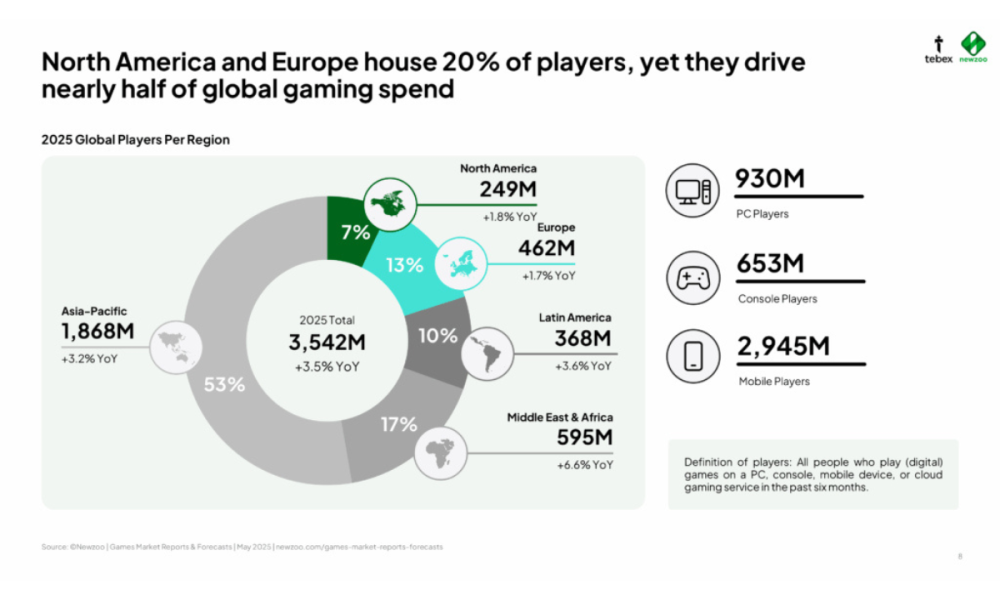
- Market Size: $188.9B (+3.4% YoY), with North America ($52.7B, 28%) and Europe ($33.1B, 18%) driving 46% of global spend despite housing only 20% of players (3.54B total).
- Payer Spending Power: North America leads with $324.9 avg. annual spend per payer; Europe averages $125.4 ($170.0 Western, $51.6 Eastern).
- Value: High per-payer spend in Western markets highlights the opportunity to deepen monetization through tailored strategies.
Spending Motivations Drive Strategy
- North America: 34% of payers spend to unlock exclusive content, 29% for personalization (character customization), reflecting a desire for self-expression. Studios can capitalize by offering unique cosmetics and content packs to drive engagement.
- Europe: 28% prioritize deals/offers, 21% value ad-free experiences, showing value-driven behavior. Discounted bundles and subscription models can increase conversion in this region.
- Value: Understanding regional motivations allows studios to align offerings with player priorities, enhancing loyalty and spend.
Diversified Spending Patterns
- North America: 27% of payers invest in content packs, power-ups, and in-game currencies, with subscriptions (24%) and battle passes (23%) also strong.
- Europe: In-game currencies and content packs lead (21% each), followed by subscriptions (20%) and gear/time-savers (18% each).
- Value: Diverse spending across virtual goods underscores the need for varied monetization options to capture a broad range of player preferences, boosting average transaction value (ATV).
Payment Methods Unlock Higher Spend
- ATV Trends (2025): Overall, ATV rose from $30 (2024) to $40. BNPL (North America: $85.0, Europe: $72.0) and crypto (North America: $94.8, Europe: $111.6) outperform cards (North America: $52.2, Europe: $42.7).
- Dual-Method Impact: Players using cards + BNPL/crypto maintain transaction frequency while spending more.
- Value: Offering alternative payment methods like BNPL and crypto can significantly increase ATV, especially in Western markets, without sacrificing transaction volume.
Revenue by Platform and Genre
- Microtransactions (MTX): Drive 49% of PC and 52% of console revenue in North America; 42% (PC) and 51% (console) in Europe. Mobile is near 100% in-game revenue.
- Top Genres: North America favors shooters, Europe prioritizes sports, with RPGs and puzzles strong in both.
- Value: High MTX revenue and genre preferences guide studios to focus on live services and region-specific content to maximize engagement.
Strategic Takeaways
- Deepen Monetization: With modest payer growth, studios must focus on existing players by offering personalized content and value-driven deals.
- Diversify Payment Options: Cards and wallet still dominate in volume, but integrating BNPL and crypto can unlock higher ATV, especially in Western markets.
- Align with Player Values: Transparency, fairness, and seamless payment experiences reduce churn and build loyalty in a competitive market.
- Understand the why and how players spend: NA players are more likely to spend for personalization and self-expression, while EU players are more value-conscious, prioritizing deals and an ad-free experience.
Quotes
Liam Wiltshire Head of Payments & Compliance at Tebex
“The future of gaming is about flexibility – meeting players where they are, with the methods they trust.”
This quote summarizes the importance of adapting to player-preferred payment methods like wallets, BNPL, and crypto to enhance accessibility and trust.
“Virtual currencies and microtransactions are no longer just revenue streams – they’re becoming strategic levers for retention and differentiation.”
This emphasizes the evolving role of microtransactions beyond revenue, focusing on engagement and player retention.
“Today’s players want to know what they’re paying for – and why. How you monetize matters more than ever.”
This highlights the need for transparency and fairness in monetization to build player trust and loyalty.
The post Unlocking games revenue: player behavior and payment trends in the west | Newzoo x Tebex Whitepaper appeared first on Gaming and Gambling Industry in the Americas.













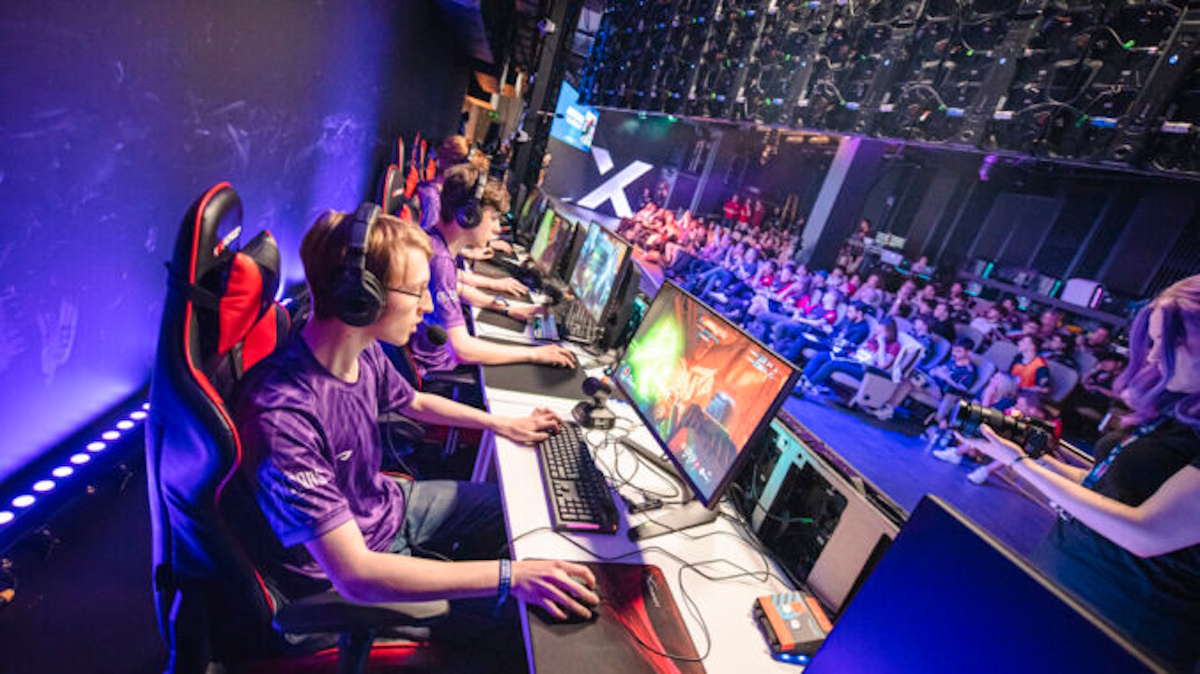
EFG, Hero Esports and Niko Partners survey 8,000 fans across eight markets; 74% report ads and brand presence influence buying.
ESL FACEIT Group (EFG), Hero Esports and Niko Partners have released a multi-country Gen Z esports study claiming around 400 million Gen Z consumers (20%) regularly engage with esports. The findings were published on 25th June 2026 in Cannes, France, in a white paper titled The Esports Generation: Who They Are & Why They Spend.
The report is based on survey data from 8,000 Gen Z esports fans aged 13-30 across eight markets. It positions esports as a high-attention channel for brands: 85% of respondents said they notice branding in esports, while 74% self-reported that advertising and brand participation in gaming spaces influences their purchasing behaviour. The study also reports that 66% have bought a product following a collaboration or co-branding partnership with an esports team, game or player.
On consumption and fandom touchpoints, the study found 71% regularly watch gaming content, including 66% who watch gaming livestreams and 33% who watch or listen to gaming podcasts. It also points to offline reach: 21% said they regularly attend gaming conventions and esports events, with the average respondent attending at least one in-person event in the past nine months.
The white paper also breaks out claimed purchase categories linked to esports collaborations over the past year, led by food and beverage (33%), electronics (33%) and fashion (32%). Beyond core categories, it reports 28% bought esports-related collectibles, 17% purchased makeup, beauty, or skincare products, and 10% bought from partnered brands in other categories.
Niccolo Maisto, CEO at ESL FACEIT Group said: “Esports has evolved into one of the most effective channels for companies looking to connect with Gen Z audiences at scale. What makes it unique is not just its reach, but the depth of engagement and trust that exists between fans, players, teams, and events. This research shows that esports fans are highly invested participants, not passive viewers, creating an opportunity for brands that show up authentically and build meaningful and lasting connections with this key audience.”
Danny Tang, Co-Founder and CEO of Hero Esports said: “This whitepaper confirms what we at Hero Esports have long believed: esports has evolved into a global cultural and economic force. The data shows an audience that is young, diverse, and deeply engaged. For brands, the message is clear—esports is no longer a niche market; it is the premier platform to connect with the next generation of consumers. We are proud to partner with Niko Partners and EFG to provide this blueprint for understanding and succeeding in this dynamic industry.”
Lisa Hanson, CEO at Niko Partners said: “Our data shows that, much like fans of other sports, Gen Z esports fans are incredibly passionate and have formed strong bonds within their communities. However, their media and consumer affinities extend well beyond gaming and esports, with our research revealing naturally connected interest areas that create valuable overlapping opportunities for brands and partners that show up authentically in this ecosystem.”
The post Study: 400m Gen Z esports fans say brand activations drive purchases appeared first on EE Gaming | Global iGaming & Tech Intelligence Hub.

HIPTHER has launched HALLO (Highly Aligned Leaders in Legal Operations), a new platform designed to help organizations find and engage compliance professionals, legal operations experts and industry vendors. The company announced the launch in Europe.
HIPTHER said HALLO brings together a professional directory, industry intelligence hub, community platform and visibility tools aimed at sectors including gaming, fintech, payments, AI, cybersecurity, digital identity, AML and blockchain. The platform includes an Individual Professional Membership and an Enterprise Membership, with HIPTHER stating that all memberships include a 14-day free trial.
Alongside membership options, HIPTHER said compliance professionals can create free, publicly visible “Expert” profiles outlining experience and areas of specialization, with additional premium visibility opportunities available. The company positioned the platform as a way for organizations to discover and evaluate qualified compliance and legal operations expertise.
A core feature at launch is “HALLO Resources,” which HIPTHER described as an open-access compliance intelligence section that aggregates more than 17,000 regulatory and compliance-focused articles from the HIPTHER media network. HIPTHER said the section is updated daily, includes search by topic, jurisdiction and keyword, and covers areas such as gaming, fintech, AI, payments, AML, digital policy, cybersecurity and regulatory affairs.
Zoltan Tuendik, Co-Founder & Head of Business at HIPTHER, said: “Navigating the modern regulatory landscape requires more than just standard legal advice; it demands highly specialized, agile compliance expertise. With the launch of HALLO, we are bridging the critical gap between organizations facing complex global standards and the elite professionals who can guide them through. By combining an active directory with a massive intelligence hub, we are setting a new standard for compliance collaboration and empowering businesses to move forward with absolute confidence.”
HIPTHER also linked HALLO to its conference and media activities, including advertising and thought leadership opportunities through the Wayseers Booklet, an annual handbook it said is distributed at HIPTHER conferences in Europe and reaches more than 1,500 professionals across gaming, fintech, AI, compliance and regulatory sectors.
The post HIPTHER Launches HALLO: The Standard in Compliance Expertise appeared first on Americas iGaming & Sports Betting News.

HLTV will stage the HLTV Awards presented by 1xBet in Belgrade, Serbia on January 9, 2027, returning to the Sava Center. The company said more than 1,000 players, industry professionals, creators, and fans are expected to attend.
HLTV also confirmed Dust2 creator David Johnston will feature as an award announcer. HLTV linked the booking to the 25th anniversary of Dust2.
For 2026, HLTV is updating its Hall of Fame process and eligibility rules. Four players will be inducted again, with “at least two and up to three” slots reserved for players from the Counter-Strike 1.6 and early eras. HLTV also removed the former “neo rule,” allowing players to be inducted for their playing careers even if they remain active in other roles such as coaching.
HLTV is adding a Lifetime Achievement Award, which will be decided by the Hall of Fame Board. The ceremony will also move Community Awards onto the main stage show for the first time, rather than the pre-show segment.
Separately, HLTV will kick off the 2027 Awards season with an invite-only “HLTV Awards by 1xBet Launch Party x GRID” in Cologne during the Major. HLTV said industry members can apply for an invite to the ceremony via its awards page.
The post HLTV Awards returns to Belgrade on January 9, 2027, adding Lifetime Achievement honor appeared first on EE Gaming | Global iGaming & Tech Intelligence Hub.

-

 Bragg Gaming Group4 days ago
Massive Gaming launches Blitzcrown titles on Superbet Brazil via Bragg Hub
-
Compliance4 days ago
HIPTHER Launches HALLO: The Standard in Compliance Expertise
-
7Games4 days ago
7Games, Betão & R7 Launch FIRST.bet Sportsbook in Brazil
-
Compliance Updates4 days ago
HIPTHER Launches HALLO: The Standard in Compliance Expertise
-
Alex Cuoci4 days ago
Wealthsimple and Kalshi Partner to Bring Prediction Markets to Canada
-
30-0 Kongeserien3 days ago
Kongebonus launches 30-0 Kongeserien Eliteserien fantasy draft game
-
Channelisation4 days ago
Swedish Gambling Authority consults tighter duty of care rules as channelisation slips
-
Chris Suggett Senior Commercial Manager at Rank4 days ago
Pragmatic Play builds Mecca Big Bass Double Dab slot exclusive for Rank