Latest News
Online Gambling Regulations in Europe


The European online gambling market is one of the most lucrative and dynamic in the world, attracting millions of players and hundreds of licensed operators. However, unlike other industries that follow uniform regulations across the European Union (EU), gambling laws differ significantly from one country to another. Each nation has the autonomy to establish its own rules, licensing procedures, and player protection measures, making the regulatory landscape both diverse and complex.
Alt text: Man playing with poker chips and cards.
For players and operators alike, understanding these legal frameworks is essential to ensuring compliance and a safe gaming experience. Whether you’re a casual player looking for licensed platforms or an investor exploring the market, knowing the ins and outs of European gambling laws is key. That’s why many prefer to play at EU casinos that adhere to strict national and international regulations, ensuring fair play and security.
The European Union’s Stance on Online Gambling
The European Union (EU) does not impose a standardized regulatory system for online gambling across its member states. Instead, each country retains the autonomy to craft and enforce its own laws governing gambling activities. This approach acknowledges the principle of subsidiarity, allowing nations to regulate gambling in a manner that aligns with their societal values and public policy objectives. Consequently, the legal status and regulatory requirements for online gambling vary significantly across the EU.
Country-Specific Regulatory Frameworks
United Kingdom
The United Kingdom maintains a comprehensive regulatory framework for online gambling, primarily governed by the Gambling Act 2005 and overseen by the UK Gambling Commission (UKGC). In April 2023, the government published a white paper titled “High Stakes: Gambling Reform for the Digital Age,” outlining significant reforms to modernize gambling regulations. One key proposal is the introduction of a statutory levy on all licensed gambling operators, set to commence in April 2025. This levy aims to fund research, prevention, and treatment of gambling-related harms, with rates varying depending on the sector and nature of the gambling activity.
Germany
Germany’s online gambling landscape has undergone significant changes with the enactment of the Interstate Treaty on Gambling (ISTG) 2021. This treaty permits the federal licensing of sports betting, virtual slot machines, and online poker. Notably, online slot stakes are capped at €1 per spin to promote responsible gambling. The regulation of traditional online casino games, such as roulette and blackjack, is delegated to individual states, resulting in varied rules and licensing requirements across the country. The Joint Gambling Authority (GGL) serves as the central regulatory body, ensuring compliance and overseeing licensed operators.
France
In France, the online gambling market is regulated by the National Gaming Authority (Autorité Nationale des Jeux – ANJ), established under the French Gambling Act 2010. The legislation permits online betting on sports, horse racing, and poker, while online casino games like slots and roulette remain prohibited. Operators must secure a license from the ANJ and comply with strict regulations to protect consumers and uphold gaming integrity.
Spain
Spain’s online gambling activities are governed by the Spanish Gambling Act, with oversight provided by the Directorate General for the Regulation of Gambling (Dirección General de Ordenación del Juego – DGOJ). The act legalizes various forms of online gambling, including sports betting, poker, and casino games. Licensed operators are required to implement measures promoting responsible gambling and ensuring the protection of vulnerable individuals.
Italy
Italy has embraced a regulated online gambling market, with the Autonomous Administration of the State Monopolies (AAMS) responsible for licensing and supervision. The regulatory framework permits a broad spectrum of online gambling activities, including poker, casino games, and sports betting. Operators must adhere to the provisions of the Finance Act, which has been amended over time to accommodate the evolving gambling landscape.
Netherlands
The Netherlands introduced the Remote Gambling Act to regulate online gambling, with the Dutch Gambling Authority (Kansspelautoriteit – KSA) serving as the regulatory body. The act allows operators to obtain licenses to offer online sports betting, casino games, and poker to Dutch residents. The KSA enforces strict guidelines to ensure player protection, game fairness, and the prevention of gambling addiction.
Malta
Malta stands out as a hub for online gambling operators, largely due to its comprehensive regulatory framework and favorable business environment. The Malta Gaming Authority (MGA), established under the Gaming Act 2018, licenses and regulates a wide array of online gambling activities. The MGA has taken decisive actions, including revoking licenses of non-compliant operators to uphold the integrity of the gaming industry.
Ireland
Ireland’s approach to online gambling regulation has been evolving, with the passage of the Gambling Regulation Act in October 2024 marking a significant milestone. This legislation led to the creation of the Gambling Regulatory Authority of Ireland (GRAI), tasked with overseeing both online and land-based gambling activities. The GRAI aims to establish a robust regulatory environment that safeguards players and ensures fair play across all gambling platforms.
Common Regulatory Themes Across Europe
Despite the diversity in regulatory approaches, several common themes emerge across European countries:
- Licensing Requirements: Operators are generally required to obtain a license from the relevant national authority to offer gambling services legally. This process involves rigorous vetting to ensure the operator’s suitability and commitment to maintaining industry standards.
- Player Protection Measures: Regulations often mandate the implementation of measures to protect players from gambling-related harm. This includes self-exclusion options, deposit limits, and access to support services for problem gambling.
- Anti-Money Laundering (AML) Compliance: Operators must adhere to strict AML protocols to prevent the misuse of gambling platforms for illicit financial activities. This involves customer verification processes and the monitoring of transactions for suspicious activity.
- Advertising and Promotion Controls: Many jurisdictions impose restrictions on the advertising of gambling services to prevent targeting vulnerable populations and to promote responsible marketing practices.
The Role of the European Gaming and Betting Association (EGBA)
The European Gaming and Betting Association (EGBA) advocates for a well-regulated and competitive online gambling market in the EU. Representing top operators, it works with national and EU authorities to align regulations and encourage industry best practices. The EGBA prioritizes consumer protection, responsible gambling, and maintaining integrity in gaming operations.
The Future of Online Gambling Regulation in Europe
The European online gambling industry is constantly evolving, with regulatory changes being introduced regularly. Some trends shaping the future include:
Tighter Responsible Gambling Controls: More countries are adopting affordability checks and restrictions on VIP programs.
Cross-Border Licensing Discussions: The EU may push for more harmonization of gambling laws, though this remains a challenge.
New Technologies: AI, blockchain, and cryptocurrency gambling may introduce new regulatory challenges in the coming years.
As European gambling laws continue to shift, both players and operators need to stay informed. Playing at licensed platforms and understanding national regulations is the best way to ensure a safe and fair gaming experience.
The post Online Gambling Regulations in Europe appeared first on Gaming and Gambling Industry in the Americas.















The Investments team at RedCore held dozens of meetings at ICE Barcelona with projects from MarTech/Traffic, iGaming, AI/ML, and RegTech. We share our observations on the direction of the market and changes in the approach of startups.
Technology is the main trend
The products at the conference focused on offering fundamentally new solutions rather than competing head-on. There were a huge number of game providers, but the ones that attracted attention were those betting on technological innovation.
“The trend is clear: products are trying to offer something completely new, rather than just competing in their niche,” notes Andrei Alexandrov, Investment Portfolio Manager at RedCore.
The influx of incoming applications confirmed this: even without a targeted search, most projects fell within the fund`s priority areas — MarTech/Traffic, iGaming solutions, AI/ML, and RegTech.
AI and data are changing the traffic game
At iGB Affiliate, which ran parallel to ICE, AI solutions for traffic were everywhere: trackers, predictive models, player behavior analysis panels. This reflects the maturity of the market — traffic optimization is no longer possible without ML/AI approaches.
The main competitive asset today is data and segmentation. Those who segment more deeply, personalize, and truly understand the behavior of their audience will win. Granular data, behavior by micro-segments, is no longer a “nice-to-have” but a necessity.
“Affiliates are increasingly acting not just as CPA traffic partners, but as full-fledged marketing experts who use data and content to improve engagement,” notes Iryna Yeromenko, Investment Portfolio Manager at RedCore.
Startups have become more mature
Just a few years ago, conferences were often attended by teams with raw ideas. Now the situation has changed: founders come with well-developed pitches, clear business models, and a clear understanding of the market.
“Startups are particularly impressive this year: everyone comes prepared and tries to present themselves in the best way. There was almost no one who came with just an idea,” says Andrei Alexandrov. “Some said that we are their priority fund. This level of trust confirms that we are moving in the right direction.”
Record dealflow, but quality is more important
The volume of incoming applications for ICE Barcelona exceeded the total for all other events last year. But a large flow also means risk: without clear selection criteria, it is easy to waste time on irrelevant projects.
“There are a lot of introductions, pitches, and “let`s talk”. At the same time, it is important to remember that quantity does not equal quality. ICE reinforces the need for strict investment filtering, as without clear criteria, it is easy to get lost in the noise,” explains Oleksandr Briukhovetskyi, Investment Portfolio Manager at RedCore.
This principle also works in traffic: the best affiliates focus on data strategies, mobile-first and video-first content, as well as player behavior patterns. Affiliates get access to more metrics, which lets them buy better traffic.
Long-term value instead of quick deals
ICE Barcelona isn`t about closing deals on the spot. The main value of the conference lies in the opportunity to create the foundation for partnerships for the next 6–12 months.
“Conferences bring strategic value. In terms of the density of quality contacts, long-term deals, and relevant contextual conversations, they are confidently ahead of most other channels,” — notes Oleksandr Briukhovetskyi.
Industry boundaries are blurring
ICE attracts a large number of cross-industry projects that are not formally related to iGaming but seek to integrate into this market. This creates new opportunities for investors who can see synergies between different verticals.
“ICE is a rare case where all elements of the iGaming chain are gathered in one space: operators, providers, payments, RegTech, AI, traffic, media buying, crypto, Web3. The boundaries of the industry are blurring right in front of our eyes,” Oleksandr sums up.
Where is the market headed
The market is moving towards consolidation. The trend towards aggregators and super apps is growing stronger, and now AI has joined the mix. The greatest potential lies in automated management systems, data aggregators, big data products, and predictive analytics.
In iGaming, there is growing demand for infrastructure solutions: tools for Retention, Customer Support, Antifraud, Responsible Gaming, and regulation. There is particular interest in products that allow operators to independently create loyalty systems, custom games, and analytics.
The focus of investors has shifted. Previously, they pursued ideas, but now expertise and team stability matter more. The number of startups has grown, as it is easier than ever to create an MVP in the AI era. Therefore, Due Diligence is critical: how well does the product solve a real market problem, and whether the team is ready to develop and monetize it.
Are you building a product in MarTech, iGaming, AI/ML, or RegTech? Tell the Investments team at RedCore about your project: https://redcore.group/lets-cooperate/
The post Investor`s perspective: highlights from ICE Barcelona 2026 appeared first on Eastern European Gaming | Global iGaming & Tech Intelligence Hub.
Brasil on Track
ODDSGATE LAUNCHES “BRASIL ON TRACK”, A STRATEGIC PLATFORM FOR NAVIGATING BRAZIL’S REGULATED IGAMING MARKET
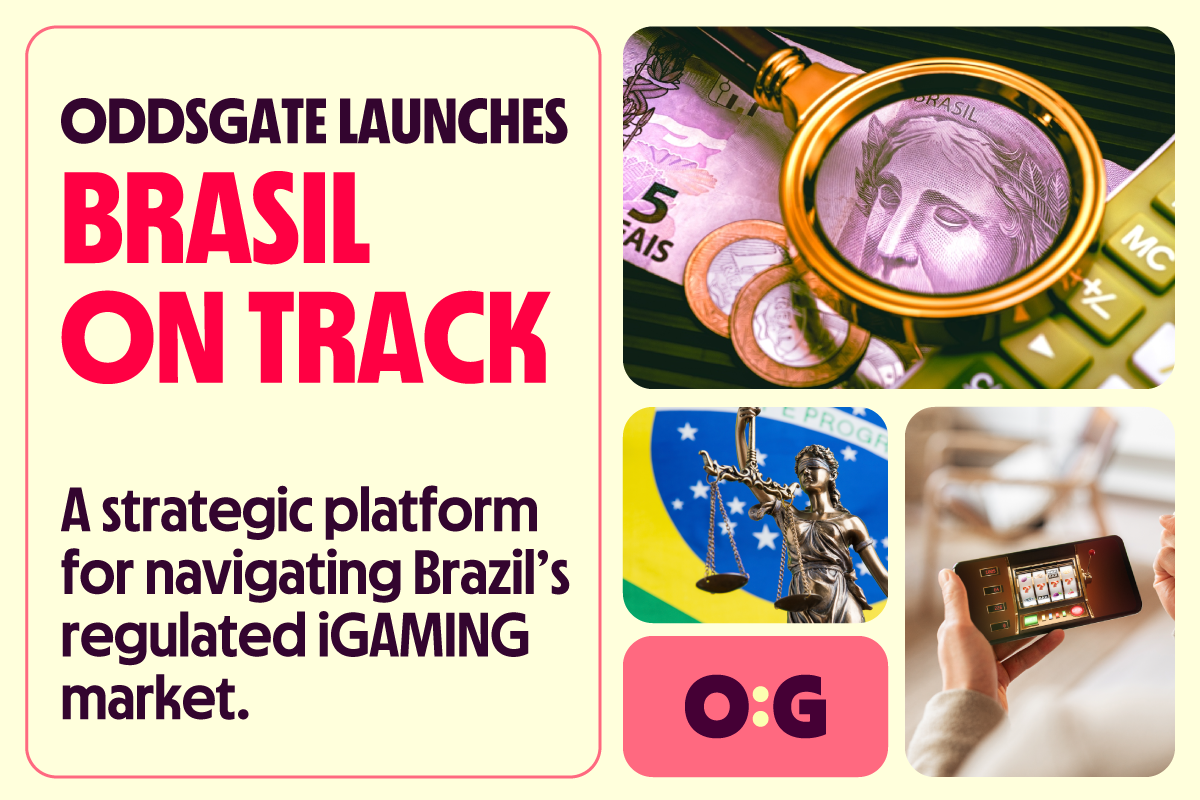
As Brazil’s regulated iGaming market completes its first year under Law 14.790/2023, Oddsgate today announced the launch of Brasil on Track, a strategic platform designed to help operators monitor legislation, understand compliance requirements, and make informed decisions in Latin America’s largest economy.
Brasil on Track provides live tracking of regulatory milestones, market indicators, and operational requirements,
connecting legal updates to their business impact and linking directly to official sources.
Brazil’s regulatory landscape has evolved rapidly over the past year. Law 14.790/2023 introduced clearer frameworks for licensing, taxation, and consumer protection, which accelerated international interest and positioned Brazil among the world’s most closely watched regulated iGaming markets.
According to Brazil’s Ministry of Finance, the sector generated an estimated R$36 billion in gross gaming revenue (January-September 2025) and R$3.3 billion in federal tax revenue over the same period, highlighting the market’s scale and momentum.
Source: Brazil’s Ministry of Finance, 2025.
“The regulation brought by Law 14.790/2023 was a major milestone for Brazil’s iGaming sector,” said Valter Delfraro Junior, Oddsgate’s Director of Regulatory Affairs. “It ended years of uncertainty and provided legal security and operational clarity. This new scenario places Brazil’s gaming industry on par with mature markets, increasing our international competitiveness and attractiveness to global investors and partners.”
During the first year of regulation, operators faced extensive requirements, including federal authorization processes, responsible gambling mechanisms, advertising restrictions, and new tax structures. Oddsgate expects the market to continue expanding throughout 2026, with early adopters well-positioned to benefit from greater credibility and market growth.
“We transform regulation into a practical, continuous guide for operating in Brazil with less risk and more clarity,” said Wagner Fernandes, Chief Marketing Officer at Oddsgate. “Brasil on Track helps teams entering, expanding, or optimizing operations decide with context, not guesswork.”
What “Brasil on Track” includes
– Live tracking of active regulation and pending bills;
– An operational roadmap mapping legal changes to required compliance actions;
– Market intelligence, including player demographics and key market indicators;
– Visibility into tax structures, licensing steps, and market-entry requirements;
– Focus areas include KYC, AML, self-exclusion tools, responsible gambling, and consumer protection requirements.
The post ODDSGATE LAUNCHES “BRASIL ON TRACK”, A STRATEGIC PLATFORM FOR NAVIGATING BRAZIL’S REGULATED IGAMING MARKET appeared first on Americas iGaming & Sports Betting News.

SAW is proud to announce the renewal of its international partnership with LEON.bet for the 2026 season, marking another milestone in a collaboration that continues to expand in ambition, reach, and global impact across the esports ecosystem.
More than a sponsorship, this renewed agreement reinforces a partnership built on shared values that extend beyond competition. As a core strategic partner, LEON.bet plays a key role in supporting SAW’s worldwide growth through large-scale content initiatives, interactive fan engagement, and multi-regional campaigns. These efforts include exclusive giveaways, fan rewards, and community-driven activations designed to bring supporters closer to the action than ever before.
LEON.bet’s commitment to esports reaches well beyond its CS2 partnership with SAW. By also collaborating with organizations such as FlyQuest and GamerLegion, LEON.bet demonstrates a long-term vision that spans multiple regions, titles, and competitive disciplines — underscoring its dedication to the sustainable growth of esports on a global scale.
At the heart of this alliance is mutual trust, aligned objectives, and a shared ambition to push boundaries. Together, SAW and LEON.bet will continue to innovate through fresh content, immersive fan experiences, and impactful initiatives that strengthen their global footprint.
As the partnership moves into 2026, both sides are energized to build on past successes and accelerate momentum, delivering even more value to fans and the wider esports community worldwide.
The post LEON.BET RENEWS AS OFFICIAL INTERNATIONAL PARTNER FOR 2026 appeared first on Eastern European Gaming | Global iGaming & Tech Intelligence Hub.

-

 Amusnet7 days ago
Week 5/2026 slot games releases
-
Compliance Updates7 days ago
National Council on Problem Gambling Adopts 1-800-MY-RESET as New National Problem Gambling Helpline Number
-
Ani Isakhanyan7 days ago
FeedConstruct Expands its Presence in Latin America
-
FDJ UNITED7 days ago
FDJ UNITED Aims to be Among the Top Three Licensed Gambling Operators in Finland
-
Compliance Updates7 days ago
Digitain Secures Isle of Man iGaming Software Supplier Licence
-
betting terminals6 days ago
Meridianbet Completes Fairbet Acquisition, Expanding Malta Retail Gaming Network Under Golden Matrix Group
-
Carl Gatt Baldacchino Head of Account Management SlotMatrix7 days ago
SlotMatrix Unleashes Fiesta-Fueled Thrills with Muertos Fortune
-
Book of Sobek4 days ago
Hölle Games Releases Book of Sobek