Compliance Updates
Dutch Gaming Authority Maps Risky Gambling Behaviour with Markers of Risk Research

The Dutch Gaming Authority (KSA) has used collected (pseudo-anonymised) player data to map indicators of risky gambling behaviour. With the results of the research, the supervisor can compare the various license holders with each other in other areas than just extreme losses.
Gambling problems and excessive gambling are often associated with the loss of large sums of money. Gambling large amounts of money can indeed be an indicator of risky gambling behaviour, but other indicators also play an important role in detecting problem gamblers, such as playing time or changes in gambling behaviour (for example, gambling more often or at unusual times).
Licensed gambling providers have a mandatory data vault (CDB) in which pseudonymised player and transaction data is stored. The KSA has analysed this data to map risky gaming behaviour, to look at (the usefulness of) applied interventions by providers and to compare the different providers with each other.
The study looked at various indicators of problem gambling: intensity (gambling many days, or losing a lot of money), loss of control (number of deposits per day), increase in gambling behaviour (gambling more often or for longer, spending more money), chosen game (for example sports betting versus slot machines) and interventions by the provider. The analyses were conducted based on one year of data from the CDB.
By comparing or linking different indicators, the KSA gained many new and interesting insights. For example, playing at night is generally seen as an important indicator of risky gambling behaviour. The data shows that players play casino games more often than sports bets at night. This could mean that casino games are riskier than sports bets. At the same time, it could mean that placing sports bets at night is a stronger indicator of risky behaviour: it occurs less often and deviates more from the norm.
The KSA is now looking at how this research and the findings from it can be used by the supervisor to gain more insight into possible problem players and how to tackle them. In addition, it is looking at how the insights obtained can be used in other ways to improve supervision.
The post Dutch Gaming Authority Maps Risky Gambling Behaviour with Markers of Risk Research appeared first on European Gaming Industry News.









Compliance Updates
Spelinspektionen Continues its Work Against Illegal Gambling in the Second Quarter of 2026

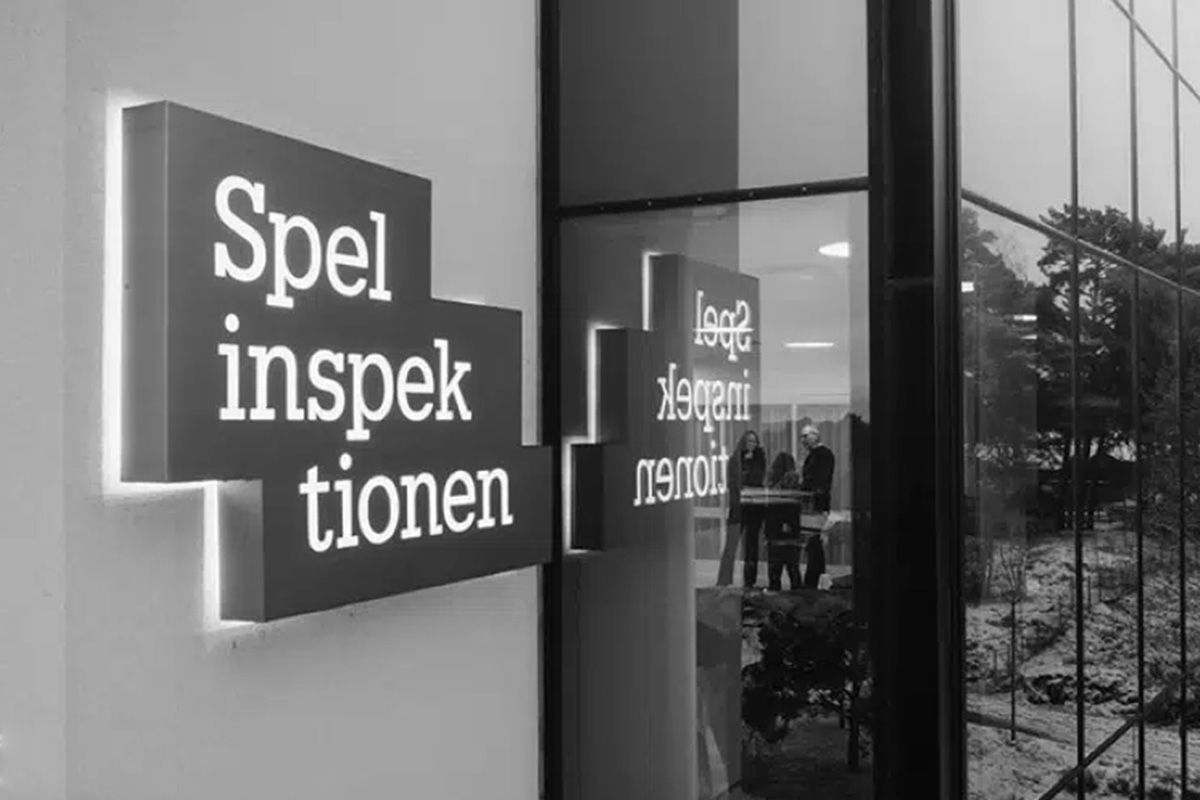
During the second quarter of 2026, the Swedish Gambling Authority continued its work against operators suspected of offering games without a Swedish license.
New regulatory cases were initiated and several operators corrected themselves during the processing, which means that the regulatory cases were closed without further action. This shows how important it is for the Swedish Gambling Authority to identify operators suspected of offering games without a Swedish license at an early stage and initiate supervision against them.
During the quarter, the Authority also worked on an in-depth analysis of marketing for unlicensed gambling. The analysis shows that marketing continues to be a central part of how unlicensed operators reach Swedish players. Therefore, it is important that the Swedish Gambling Authority also takes action against those who promote participation in illegal gambling.
Marketing for unlicensed gambling
Marketing today takes place through several different channels, including social media, influencers, banners, SMS, sponsored search results and other ways to drive traffic to gaming sites. In certain environments, such as gaming and social media platforms, there are particular risks as young players may be exposed to games outside the Swedish licensing system.
However, the majority of marketing for games is still for companies with a Swedish license, especially in established, traditional marketing channels. The Swedish Consumer Agency has the main responsibility for supervising the marketing of licensees, while the Swedish Gambling Authority is responsible for supervising the marketing of unlicensed operators.
“Marketing is one of several ways for consumers to access unlicensed gaming. Therefore, the work against promotion is an important part of our supervision. We see that clear information and early contact can lead to actors correcting themselves,” said Ewa Gabrielsson, investigator at the Swedish Gambling Authority.
The post Spelinspektionen Continues its Work Against Illegal Gambling in the Second Quarter of 2026 appeared first on EE Gaming | Global iGaming & Tech Intelligence Hub.
One of the largest prediction market websites has been threatened with court action if it does not geoblock Ireland, the head of the Irish gambling regulator has said.
Prediction markets are platforms where users can trade bets and gamble cryptocurrency on sports, the financial sector, politics and more, including events relating to the war in the Middle East, the existence of aliens, and tweets posted by Elon Musk.
Anne Marie Caulfield, who has been chief executive of the Gambling Regulatory Authority of Ireland (GRAI) since it began operations last year, said prediction markets amount to betting and therefore fall under her remit.
She said the GRAI enforcement team has already been active in the space, with one of the largest such markets already geoblocking on foot of “intervention” from the authority.
Speaking on RTÉ’s This Week radio programme, Ms Caulfield said a second “is in the process of doing so”.
She added: “And if they don’t, it’s open to us to go to the High Court.”
She said sites were withdrawn in Ireland in the “vast majority” of the almost 30 interventions the GRAI had made.
She added that this had happened as quickly as 35 minutes after the intervention.
Asked what the High Court action may look like, Ms Caulfield said: “In the instance where they don’t do so, we can go to the High Court and get a blocking order for access to the site, and also in relation to the funding involved.”
Pressed on whether that action had been threatened, she said: “We have issued warning letters, yes, to that effect.”
Ms Caulfield did not name the prediction markets involved.
However, users from Ireland are already prohibited from trading “event contracts” on the prediction market Kalshi, as per its membership agreement which also lists 55 other restricted countries.
One of the other main prediction markets, Polymarket, has seen restrictions in more than 30 countries including Belgium, Germany, Italy, France, the UK, and Poland – while it operates in the US with additional compliance measures.
In May, Tánaiste and Finance Minister Simon Harris said he would ask gardaí, regulators and government departments to examine “suspicious bets” made on Polymarket.
He raised “grave concerns” around a “Wild West” of unregulated betting on the platform, as he said it would be prudent to examine if there was money laundering occurring.
His comments came after reports highlighted a million dollars worth of betting on the outcome of the Dublin Central by-election, with hundreds of thousands of that volume placed on Gerry “The Monk” Hutch not to win a seat – which is what transpired.
There is no suggestion of wrongdoing on behalf of any candidate.
Mr Harris said: “What seems to be developing at a global scale and indeed a rapid pace now is a kind of Wild West where people are placing bets in the form of cryptocurrency in a secretive, murky and unregulated manner.”
The post Irish Gambling Regulator Threatens Prediction Market with High Court Action appeared first on EE Gaming | Global iGaming & Tech Intelligence Hub.
The Malta Gaming Authority (MGA) has observed a pattern of websites impersonating MGA-licensed operators and misleading consumers into believing that they are licensed, regulated or otherwise authorised by the Authority in accordance with the Gaming Act (Chapter 583 of the Laws of Malta) and the regulatory instruments issued thereunder.
In light of this, the MGA published a list of three websites impersonating licensed operators. The websites are:
• www.manekicasino.bet
• www.dragonaracasino.uk.com
• www.slot-hunter.at
“The MGA is hereby declaring that it has no connection with the above listed URLs and any other website, platform and/or entity impersonating the Authority and/or MGA-licensed operators. Any reference to the MGA and/or gaming licence/s said to be issued by it, as stated on these domains, are false and misleading,” the MGA noted.
“The MGA would like to remind consumers not to utilise services provided by an entity unless they have ascertained that the entity in question is duly authorised to provide such services by the Authority. Whereas MGA-licensed operators comply with strict legal requirements in the interest of consumers, the activities of unlicensed entities are unregulated, and do not provide the necessary safeguards delineated by virtue of the gaming regulatory framework, making transactions with such entities risky for consumers.”
The post The MGA Publishes Notice on Websites Impersonating Licensed Operators appeared first on EE Gaming | Global iGaming & Tech Intelligence Hub.

-

 Compliance Updates5 days ago
The MGA Publishes Notice on Websites Impersonating Licensed Operators
-
Alberta6 days ago
Greentube strengthens Canadian presence with Alberta debut as market opens
-
Alberta6 days ago
Greentube goes live in Alberta as province opens regulated iGaming
-
hold and respin6 days ago
Spinomenal releases new slot 3 Fuego Chillies
-
Brazil5 days ago
Hunch cites 78% matchday retention for Super World Cup free-to-play suite
-
Anne Marie Caulfield3 days ago
Irish Gambling Regulator Threatens Prediction Market with High Court Action
-
Brazil5 days ago
Hunch reports 78% matchday retention for Brazil World Cup free-to-play push
-
Canada4 days ago
Tonybet player in Canada claims $20,000 CAD golden World Cup card prize