Compliance Updates
GCB Requirements for Compliance Officer Based on NOIS/NORUT

Introduction
The GCB provides these guidelines for the role of a Compliance Officer which is a statutory requirement for Curacao companies under the National Ordinance on the Identification of Clients when Rendering Services (NOIS) and the National Ordinance on the Reporting of Unusual Transactions (NORUT) as part of the fight against money laundering and terrorism financing.
Fit and Proper Requirements
The GCB aims to license operators that maintain integrity in their operations, which includes an effective compliance function. The individual acting as a Compliance Officer must demonstrate professional experience, competence and integrity. This entails specific requirements for those authorized by the GCB to serve as a Compliance Officer for a gaming operator.
Suitability
As part of the fit and proper process of the Compliance Officer, the operator must submit a comprehensive Personal History Disclosure Form to the GCB, along with all necessary supporting documents, including a CV, to enable the GCB to conduct thorough due diligence. The due diligence process may include, but not limited to, an assessment of the Compliance Officer’s:
- Personal and Professional History: Assessment of the individual’s background and experience, including any past legal or regulatory issues, to ensure no history of criminal activity, regulatory violations, or other conduct that would raise concerns about their suitability for the role.
- Reputation: Verification of the individual’s reputation through reference checks and, where applicable, consultation with relevant regulatory or industry bodies.
Competence
The operator must provide a detailed CV of the Compliance Officer, detailing their experience and education levels.
To qualify for the role, the Compliance Officer should meet one of the following criteria:
- Education and Experience: At least two years of experience in Anti-Money Laundering/Combating the Financing of Terrorism (AML/CFT) compliance in a reporting role, along with a bachelor’s degree or a relevant AML certification. Recognized certifications in Curaçao include the CAMS certification from the Association of Certified Anti-Money Laundering Specialists (ACAMS) and the AMLFC certification from the AML Foundation & Compliance Institute. Other comparable certifications may be accepted, subject to approval by the GCB.
OR
- Experience Only: At least four years of experience in AML/CFT compliance in a reporting role.
Additionally, individuals with at least two years of experience in a Money Laundering Reporting Officer (MLRO) role, or equivalent, in other jurisdictions are qualified to serve as a Compliance Officer according to NOIS/NORUT.
The Compliance Officer must demonstrate a commitment to continuing professional development by investing at least 10 hours annually in AML-related training. This may include industry-specific training and workshops offered by the GCB.
The Compliance Officer should have knowledge of Curaçao laws, including NOIS and NORUT, as well as AML regulations issued by the GCB. Familiarity with screening against EU and OFAC sanctions lists is also required.
- Scope of Responsibilities
The operator must formally designate a senior officer at the management level as responsible for detecting and deterring money laundering and terrorist financing. This AML/CFT Compliance Officer should have timely access to customer identification data, Customer Due Diligence (CDD) information, transaction records, and other relevant data, and must be able to act independently.
The Compliance Officer is responsible for:
- Designing and implementing the AML program.
- Ensuring compliance with Curaçao laws and regulations regarding money laundering and terrorist financing.
- Reviewing adherence to the casino’s policies and procedures.
- Organizing staff training sessions on compliance-related issues.
- Analyzing transactions and identifying those subject to reporting under the Ministerial Decree on Indicators for Unusual Transactions.
- Reviewing internally reported unusual transactions for completeness and accuracy.
- Maintaining records of both internally and externally reported unusual transactions.
- Design an internal procedure about when reporting of unusual transactions will lead to blocking/ freezing of user accounts
- Conducting further investigations into unusual transactions if necessary.
- Preparing external reports on unusual transactions.
- Making necessary changes to the AML program.
- Staying informed about local and international developments related to money laundering and terrorist financing and suggesting improvements to management.
- Preparing periodic reports on the casino’s efforts against money laundering, terrorism financing, and proliferation financing.
Conflict of Interest
The role of Compliance Officer must not be combined with any other function that could lead to a conflict of interest or compromise the independence of the compliance function. The Compliance Officer role cannot be combined with the functions of UBO, CEO, CFO, COO, Casino Manager, Slot Manager and other operational functions. Additionally, it should be separate from the internal audit function.
Exercising of Functions in Other Jurisdictions
An individual appointed as a Compliance Officer for a Curaçao entity may also serve as an MLRO in a foreign jurisdiction, provided they have sufficient time and resources to fulfill all roles effectively.
Outsourcing
The GCB permits the outsourcing of the compliance function to a reputable third party. The CV of the responsible manager must be submitted, detailing their experience and education levels. The operator should be able to provide the outsourcing contract upon request for evaluation by the GCB.
Any one person cannot represent more than 10 operators in the role of compliance function. This limit also includes similar roles in foreign jurisdictions. In specific cases, the GCB may contest this maximum given the size of the serviced operators.
Please note that the licensed operator remains responsible for ensuring the proper execution of the compliance function.
Transitional Arrangements
The GCB expects that both current and newly appointed Compliance Officers in the gaming sector will adhere to these guidelines.
If existing Compliance Officers of licensed operators do not meet one or more requirements at the time of introduction, some adjustment time will be allowed. The GCB expects the operator to comply with item 3 for its compliance officer right away. For items 5 and 6 the operator will have up to six months to comply with these requirements. Regarding item 4, competence, if the compliance officer is not compliant regarding experience and education levels, the licensed operator is awarded a maximum of 1 year to bring the knowledge of the compliance officer up to par. In this case, the licensed operator should disclose a training plan for the Compliance Officer, which will be monitored by the GCB.
Operators that have applied for a GCB license but have not been granted a license as yet at introduction date, should make sure that the proposed compliance officer complies with these guidelines since the mentioned transitional arrangements will not apply.
Exemptions
B2B licensees are not required to appoint a compliance officer as per the requirements issued in this guidance document.
Implementation Date
The implementation date is set for January 1, 2025
The post GCB Requirements for Compliance Officer Based on NOIS/NORUT appeared first on European Gaming Industry News.












Finland has submitted technical gambling regulations covering a regulatory data vault and the Official Control Signing Service (OCSS) to the EU’s Technical Regulation Information System (TRIS) on 10 July.
According to the notified documents, operators must submit signed gaming and player-account data to the authority through a secure SFTP data vault in a prescribed format. The rules also require operators to retain the data for five years and ensure “its integrity, availability and retrievability.”
The documentation also sets out requirements for using the authority’s OCSS to sign gaming data. It specifies signing generally every five minutes for gaming transactions and at least once daily for player-account data, alongside obligations to manage API keys and handle technical disruptions.
The technical documents are currently available only in Finnish. The press release says unofficial English translations have been prepared, titled “eCertification of Gaming Transactions and Gaming Account Transactions EN” and “Submission of Gaming Transactions and Gaming Account Transactions EN.”
The press release also lists the broader status of technical documentation supporting Finland’s new gambling regulation. It says randomness checks and reliability and information security requirements have been adopted into national legislation; the OCSS signing and data-vault transfer specifications have been notified via TRIS; player-account and game-event data specifications are being prepared following an earlier public consultation; a Ministry of the Interior decree is under public consultation; and drafts are still awaited covering player identification APIs, jurisdiction-wide self-exclusion checks, and certification requirements for games and platforms.
The post Finland notifies EU of gambling tech rules for data vault and OCSS signing appeared first on EE Gaming | Global iGaming & Tech Intelligence Hub.

Under the theme “Perspectives,” a total of 43 compliance staff members from the Merkur Group across various countries gathered from 30 June to 1 July to further develop compliance processes in a sustainable manner. Colleagues from Germany, Spain, England, Malta, Australia and the US traveled to the two-day meeting at Benkhausen Castle, the in-house training centre of the Merkur Group. The workshop set the stage with expert presentations on global and digital topics such as cybersecurity, risk management and artificial intelligence. A panel discussion featuring representatives from various international companies within the Merkur Group, as well as a digital quiz, rounded out the programme.
In keeping with its guiding principle, the workshop focused on sharing experiences, fostering global networking and providing impetus for the further development of compliance processes. Because informal exchanges are also key to close cooperation, the evening programme created a relaxed atmosphere and gave participants the opportunity to continue their conversations, make new connections, and further strengthen team spirit across company and national boundaries.
“The ideas and diverse perspectives gained during the workshop will now be incorporated into our day-to-day work and help us to continuously improve collaboration and existing processes,” said Ludwig Beckmann, Chief Compliance Officer of the Merkur Group.
The concluding feedback session also highlighted just how valuable the international exchange is. The term “collaboration” came up particularly often, a clear indication of how highly the participants value working closely together within the international compliance network.
The post Merkur Group Strengthens Global Compliance Strategy appeared first on EE Gaming | Global iGaming & Tech Intelligence Hub.
Anne Marie Caulfield
GRAI Launches New Campaign Helping Parents to Spot the Signs of Underage Gambling

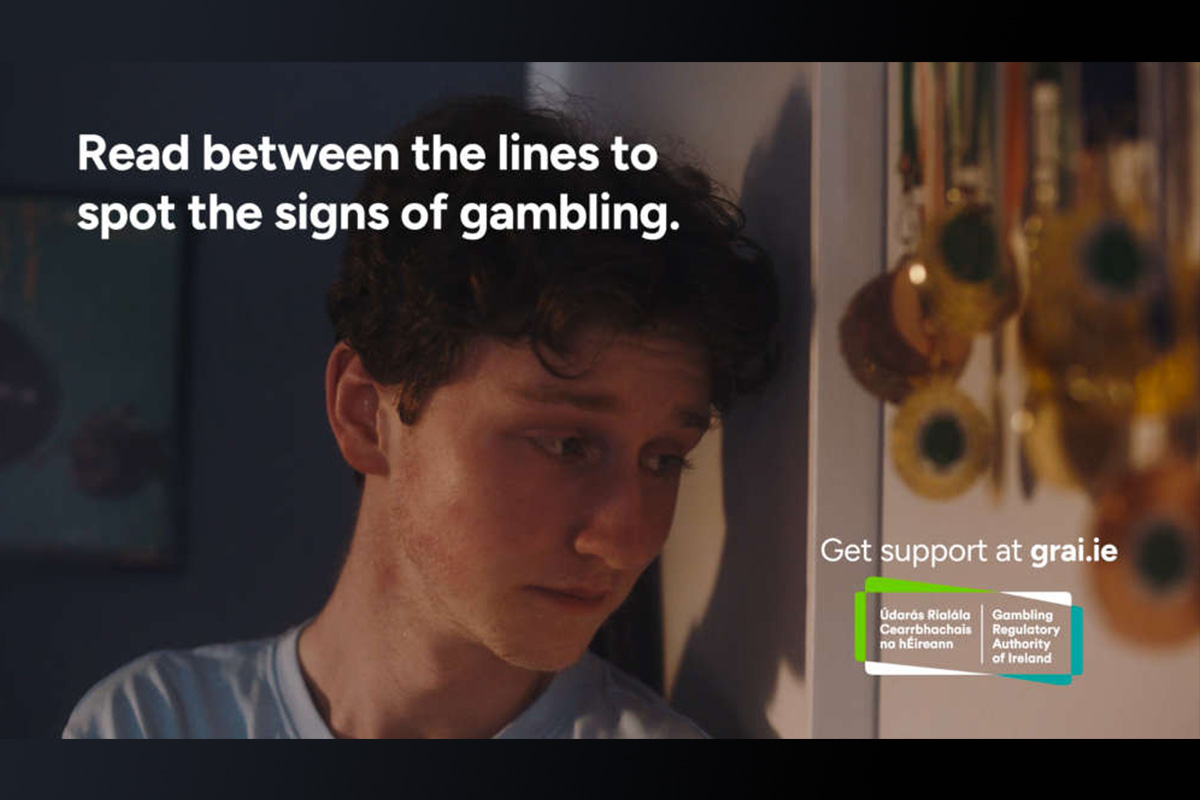
The Gambling Regulatory Authority of Ireland (GRAI) is encouraging parents and guardians to be alert to the signs of gambling among young people and to intervene early to prevent gambling harm.
The signs of gambling aren’t always visible, the GRAI in partnership with the Health Service Executive Addiction Services have developed dedicated advice on www.grai.ie to equip families with the knowledge to recognise the signs, advice on how to start the conversation with their children about gambling, and where to seek help if required.
To support the guidance, the GRAI has launched a national public awareness campaign across video on demand, radio, digital audio, and social media platforms, bringing this message directly to families across Ireland.
With the lines between entertainment and gambling increasingly blurred, especially online, what may look like harmless fun can still involve risk, money and chance in ways that affect young developing brains. Research commissioned by the GRAI and conducted by the Economic and Social Research Institute (ESRI) found that children who gamble are twice as likely to develop a gambling problem as adults.
Anne Marie Caulfield, CEO of the GRAI said: “We have launched this campaign to help parents start an important conversation about the risks of underage gambling. Children and young people are among the most at-risk members of Irish society when it comes to gambling exposure and harm. Children’s brains are still developing the judgement and impulse-control systems used to weigh up risk, which makes gambling appealing to them.
“With online gambling available at any time of the day, it is easy for the warning signs to be hidden. The guidance the GRAI developed with the HSE Addiction Services sets out some of the key behavioural signs to look out for in your child.”
The post GRAI Launches New Campaign Helping Parents to Spot the Signs of Underage Gambling appeared first on EE Gaming | Global iGaming & Tech Intelligence Hub.

-

 Compliance Updates7 days ago
Arizona Department of Gaming Issues Cease-and-Desist Orders to Multiple Operators Linked to Underage Gambling and Illegal Activity
-
Compliance Updates7 days ago
Arizona regulator orders five operators to stop alleged illegal gambling activity
-
 Latest News7 days ago
Silver Strike slot machines at the Plaza Hotel & Casino to offer new coins
-
Canada4 days ago
DraftKings Set to Launch its Online Sportsbook and Casino in Alberta
-
Latest News7 days ago
Former WBC World Champion Tony Bellew Joins PartyPoker as Brand Ambassador
-
Latest News7 days ago
Tony Bellew signs as PartyPoker brand ambassador through 2026
-
Canada4 days ago
Altenar Joins Alberta’s New Regulated iGaming Market
-
Bonus Bullets3 days ago
EveryMatrix’s Fantasma Games launches three-reel slot Bonus Bullets