Compliance Updates
Public Health Advocacy Institute (PHAI) and Congressional Leaders Unveil the SAFE Bet Act to Address Sports Betting Risks


Public Health Advocacy Institute (PHAI) at the Northeastern University School of Law has supported Congressman Paul D. Tonko (NY-20) and Senator Richard Blumenthal (D-CT) last week in introducing the SAFE Bet Act, which addresses the risks associated with legalized gambling.
The SAFE Bet Act is the first federal legislative initiative to address the vast public health implications of mobile sports betting since sports betting was legalized in 2018. When the SAFE Bet Act is enacted, federal standards will be set to create a safer and less addictive betting environment. While still allowing the freedom for those who wish to participate, these standards will include addressing advertising, affordability, and artificial intelligence issues.
PHAI’s President and Northeastern University Distinguished Professor of Law, Richard Daynard, said: “PHAI’s mission is to serve the greater good by seeking big ideas to advance public health and justice. That is why we’re fully dedicated to playing a leading role in work to bring about a comprehensive public health response to the looming crisis presented by the out-of-control gambling industry.”
“The gambling industry is following a playbook developed by the tobacco industry and this is a direct threat to public health. At PHAI, we will work tirelessly to address this threat and protect public health. Supporting the SAFE Bet Act is part of this effort,” Daynard added.
PHAI Executive Director Mark Gottlieb said: “It is my desire to play an important role in national and international efforts to develop and implement a public health approach to regulating the gambling industry and online gambling. At PHAI, we utilize a wide range of resources—including litigation and advocacy—to protect public health. It has become apparent that the gambling industry and its partners act with conscious and reckless disregard for public safety. Collaborating with Congressman Tonko and Senator Blumenthal to create the SAFE Bet Act is one part of how PHAI will bring a public health response to the gambling industry.”
“As the Director of Gambling Policy with the Public Health Advocacy Institute it is my role to develop comprehensive public health strategies and advocacy efforts to address the looming crisis being caused by the unprecedented expansion of the gambling industry and online gambling. The ‘responsible gaming’ model of industry self-regulation is unethical and an abject failure. At PHAI, we will help lead a growing movement to expose the failures of the gambling industry’s responsible gaming model. In doing so, we will develop and help implement a series of comprehensive public health reforms designed to regulate the gambling industry, prevent harm, and protect individuals and families. It is a privilege to support Congressman Tonko and Senator Blumenthal as we work to advance the SAFE Bet Act,” said Dr. Harry Levant, PHAI Director of Gambling Policy.
“Since their inception, sports and sporting events have been a chance for family, friends, and strangers to gather together in celebration of beloved teams and athletes in a great American pastime. But now, every single moment of every sporting event across the globe has become a betting opportunity. That resulted in a frightening rise in gambling disorder, which has in turn enacted a horrific toll on individuals, many of whom have lost their home, job, marriage, and their lives. We have a duty to protect people and their families from suffering the tremendous harm related to gambling addiction. Our SAFE Bet Act gets the job done and gives sports back to the American people,” Congressman Tonko said.
At the press conference, Senator Blumenthal said: “Right now, states have legalized gambling, but they failed to protect citizens against those excesses, abuses, and exploitations. State regulation is faint-hearted and half-baked. That’s why we need a national standard–not to ban gambling–but simply to take back control over an industry that is out of bounds.”












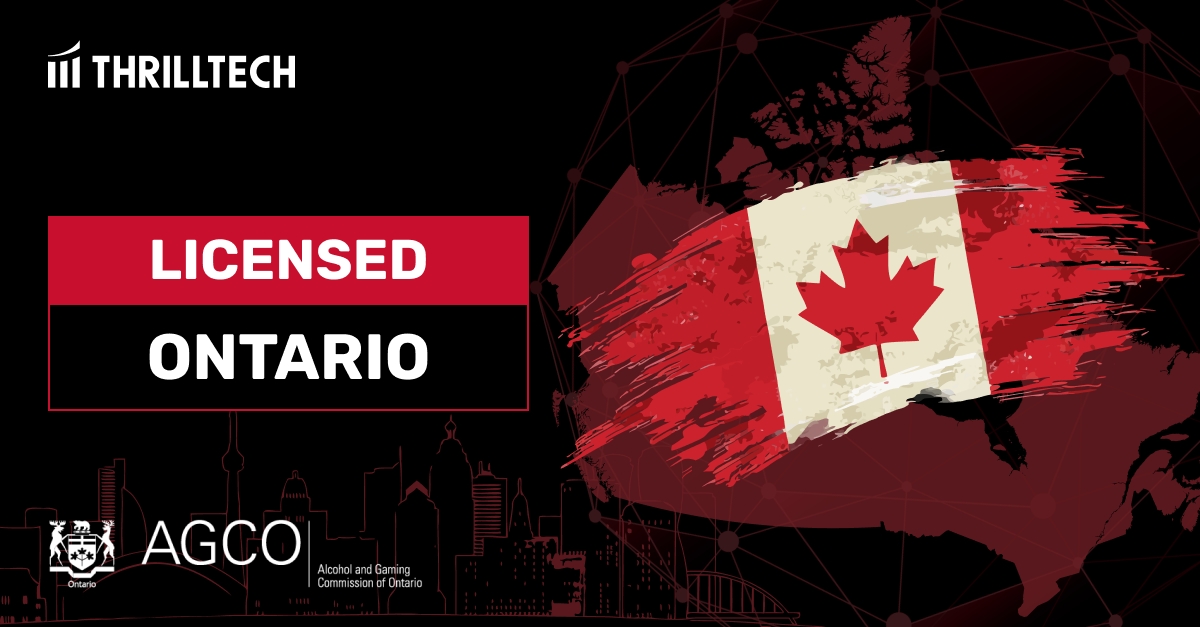
ThrillTech has been awarded a Gaming-Related Supplier licence by the Alcohol and Gaming Commission of Ontario (AGCO), clearing the company to launch in Ontario’s regulated market.
The licence allows ThrillTech to deploy its opt-in side bet jackpots technology with regulated online casino, sports betting and lottery operators across the province.
Benjamin Bradtke, Co-Founder of ThrillTech, said: “Securing our AGCO licence is a major step in our mission to transform how jackpots are delivered at scale across regulated markets. This latest certification is testament to our robust technology and trusted compliance frameworks, allowing us to continue our global growth trajectory. We are thrilled to bring our proven, compliant jackpot technology to Ontario, empowering locally licensed operators to uplift revenue without cannibalising existing spend.”
The company said its “ThrillPots” mechanics sit as an independent, player-funded side bet and do not alter the underlying game’s return-to-player mathematics.
ThrillTech said the Ontario approval enables its existing multinational partners that also operate in the province to launch its side bet jackpots locally, while it also holds talks with potential new operator partners. The company lists its regulated footprint as including the United Kingdom, Sweden, the Netherlands, Romania, Malta, Gibraltar, Brazil and Peru.
The post ThrillTech secures AGCO supplier licence for Ontario launch appeared first on EE Gaming | Global iGaming & Tech Intelligence Hub.
ThrillTech said it has been awarded a Gaming-Related Supplier licence by the Alcohol and Gaming Commission of Ontario (AGCO), clearing the company to offer its side-bet jackpot technology to regulated online casino, sports betting, and lottery operators in Ontario.
Benjamin Bradtke, Co-Founder of ThrillTech, said: “Securing our AGCO licence is a major step in our mission to transform how jackpots are delivered at scale across regulated markets. This latest certification is testament to our robust technology and trusted compliance frameworks, allowing us to continue our global growth trajectory. We are thrilled to bring our proven, compliant jackpot technology to Ontario, empowering locally licensed operators to uplift revenue without cannibalising existing spend.”
The company said its ThrillPots product lets operators add player-funded, opt-in side-bet jackpots on top of existing games, without changing gameplay or the underlying return-to-player (RTP) calculations. ThrillTech positions the mechanic as a way to drive incremental engagement and revenue.
ThrillTech said the Ontario licence enables existing multinational partners that also operate in the province to roll out ThrillTech-powered jackpots locally, and added it is in discussions with potential new operator partners. The company listed other regulated jurisdictions it serves as the United Kingdom, Sweden, the Netherlands, Romania, Malta, Gibraltar, Brazil, and Peru.
The post ThrillTech wins AGCO supplier licence to enter Ontario market appeared first on Americas iGaming & Sports Betting News.
The European Gaming and Betting Association (EGBA) has filed a formal complaint with the Bank of Lithuania against Walletto, a Lithuania-based payment service provider, over the alleged processing of payments linked to illegal online gambling operators. The complaint follows an EGBA investigation into illegal gambling websites and apps targeting European consumers. The complaint cites test transactions during the investigation that found evidence suggesting Walletto’s services were used in connection with deposits on a number of these platforms.
While the complaint concerns one provider, it points to a wider problem across the payments chain. Illegal gambling operators cannot operate at scale without access to payments – they depend on the same mainstream payment methods and card networks consumers use every day. As long as illegal operators can accept deposits and process transactions, they will continue to function outside legally compliant licensing regimes in the EU, evade regulatory controls, and expose consumers to harm.
Illegal platforms offer none of the safeguards required of regulated operators. Consumers using them do not benefit from basic protections – there is no robust identity verification, no safer gambling tools, no anti-money laundering controls and no guarantee their winnings will be paid. With no effective identity checks, minors and self-excluded players can access these sites unimpeded.
A problem across the payments chain
Illegal operators exploit weaknesses across the payments chain – among payment service providers, acquirers, and card networks – to keep reaching European consumers. Tackling this problem requires a more coordinated approach across policymakers, gambling and financial regulators, payment service providers, acquirers and card schemes. Card schemes in particular are uniquely placed to act: they are the rule-setters for the networks through which payments to illegal platforms flow and have access to transaction-level data that other stakeholders cannot see.
The principle is simple: payment providers should not process transactions for illegal gambling operators. EGBA is calling for stronger action to make that a reality. Financial regulators should fully and consistently enforce existing rules – such as the EU’s Payment Services Directive and anti-money laundering laws – against payment providers. Card schemes should also take the necessary steps to prevent payment providers from using their networks to process illegal gambling transactions.
Maarten Haijer, Secretary General of EGBA, said: “Payment providers should not be allowed to process transactions for illegal gambling operators. Illegal operators flourish by exploiting legitimate financial channels and the mainstream payment networks that consumers rely on every day. Our aim is simple: to leave them no room to manoeuvre, and to cut off the payment channels they use to reach European consumers. Card schemes also have a crucial role to play in combatting illegal transactions: they are better placed than anyone, as they set the rules for these payment networks and see transaction flows no one else can.”
The post EGBA Files Complaint Against Fintech Walletto Over Illegal Gambling Payments appeared first on EE Gaming | Global iGaming & Tech Intelligence Hub.

-

 Compliance Updates5 days ago
Arizona Department of Gaming Issues Cease-and-Desist Orders to Multiple Operators Linked to Underage Gambling and Illegal Activity
-
 Latest News7 days ago
ELA Games releases Flames Fruits Frenzy Hold and Win slot
-
Compliance Updates6 days ago
KONAMI GROUP’s Konami Gaming Inc. First to Submit Manufacturer License Application in Japan’s Emerging IR Market
-
Latest News7 days ago
PG Soft appoints Hugo Baungartner as General Manager LatAm
-
Canada7 days ago
Canada’s Safer Gambling Gap: Why Market Success Doesn’t Always Equal Player Safety
-
Latest News7 days ago
Tom Horn Gaming ships Royal Ruby FeatureStorm slot worldwide on 14 July 2026
-
Latest News7 days ago
Booming Games launches Fish Tales: Double Catch Max Scatter
-
Latest News7 days ago
BC.GAME names Guillermo Ochoa brand ambassador for Mexico push