Compliance Updates
US Supreme Court Refuses to Take Up Challenge to Florida Online Sports Betting Compact

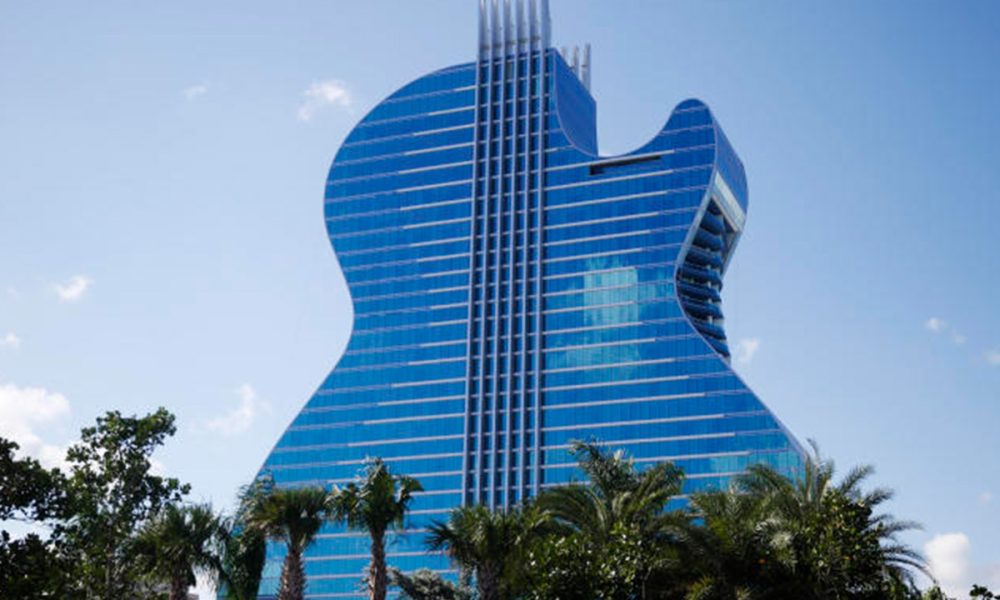
The U.S. Supreme Court on Monday refused to take up a challenge to an agreement that gave the Seminole Tribe exclusive rights to handle online sports betting in Florida, dealing a blow to the deal’s opponents.
The nation’s highest court denied a petition from opponents of the compact, which promises to rake in hundreds of millions of dollars for the tribe and the state.
The decision was the latest setback for West Flagler Associates and the Bonita-Fort Myers Corp., which operate racetracks and poker rooms in Florida. In March, the Florida Supreme Court ruled that the companies had filed the wrong type of petition to challenge the 2021 compact between the Seminole Tribe of Florida and Gov. Ron DeSantis’ administration.
“What’s important with today’s announcement is that the most significant barrier to online sports betting in Florida has been removed,” said Daniel Wallach, a South Florida attorney and sports betting law expert who had filed a brief asking the Supreme Court to either take up the case or reverse it outright.
The companies say the compact gives the tribe a sports betting monopoly in the nation’s third-most populous state and that the U.S. Department of Interior wrongly approved the compact even though it violates the Indian Gaming Regulatory Act, which requires that gambling occur on tribal lands.
The plaintiffs questioned whether online sports bets that can be placed from anywhere in Florida could be considered to be on tribal land when only the computer servers that host the betting services are located there.
They said DeSantis and the Legislature, which approved the compact, improperly exceeded their powers by authorizing sports betting off tribal lands.
In their state court challenge, they argued that the deal creates a backdoor way out of a requirement, passed by voters in 2018 as an amendment to the Florida Constitution, that a citizens initiative is needed to expand casino gambling outside of tribal land. The tribe has argued that the Legislature has the authority to decide where online gambling is initiated and that the amendment doesn’t change that.
Attorneys for DeSantis and the legislative leaders have said that sports betting is different from casino gambling and therefore isn’t prohibited by the amendment.
The tribe launched its online sports betting operation late last year, and Florida’s share of revenues is already $357 million from last December through May. State economic forecasters predict that the revenue sharing from tribal gambling could total $4.4 billion through the end of this decade.
The decision by the Supreme Court “means members of the Seminole Tribe and all Floridians can count on a bright future made possible by the Compact,” the tribe said in a statement.
Monday’s decision could encourage other tribes to follow the same path to operate online gambling, Wallach said.
“Tribes in other states stand to benefit from this decision because now they have a clear roadmap that has cleared judicial review. I would expect to see efforts ramped up in other states,” Wallach said.








Central Register for Exclusion from Gambling
KSA Publishes Studies and Provides Guidance on the Duty of Care

The Dutch Gambling Regulator (KSA) has published two studies and provided additional guidance on the fulfillment of the duty of care by online gambling licensees. The documents provide insight into practice and offer clarification on personal interviews and the submission of notifications for registration in the Central Register for Exclusion from Gambling (Cruks).
The KSA conducted research into these topics in 2025. The results were discussed in December 2025 during a roundtable discussion with license holders. During this discussion, practical experiences and bottlenecks were gathered. Based on this, the KSA has drawn up guidelines to provide more clarity regarding implementation.
Personal maintenance
The personal interview is a far-reaching intervention that license holders are required to implement when there is a suspicion of excessive gambling behaviour or gambling addiction. Research shows that license holders implement this differently and encounter bottlenecks, such as a low response rate from players. The guidance explains, among other things, the timing of the intervention, the form of contact and the content of the conversation. In doing so, room remains for customisation and professional judgment.
Notices
If a license holder observes serious signs of problematic gambling behaviour or suspects a gambling addiction, the player must be advised to register with Cruks. If the player does not follow this advice, the license holder must report this to the KSA (a notification). The KSA may subsequently decide to involuntarily register the player in Cruks.
The research shows that license holders apply this measure differently and that there are questions in practice regarding its implementation. For example, it is difficult for the license holder to verify whether a player has actually registered, and it is not always clear when a notification must be submitted.
The guidance provides practical explanation regarding this, including the timing of reporting and the information required.
Guidelines
The guidelines do not contain new rules, but provide further explanation regarding the application of existing obligations. This gives permit holders more clarity regarding the fulfillment of their duty of care.
The post KSA Publishes Studies and Provides Guidance on the Duty of Care appeared first on Eastern European Gaming | Global iGaming & Tech Intelligence Hub.
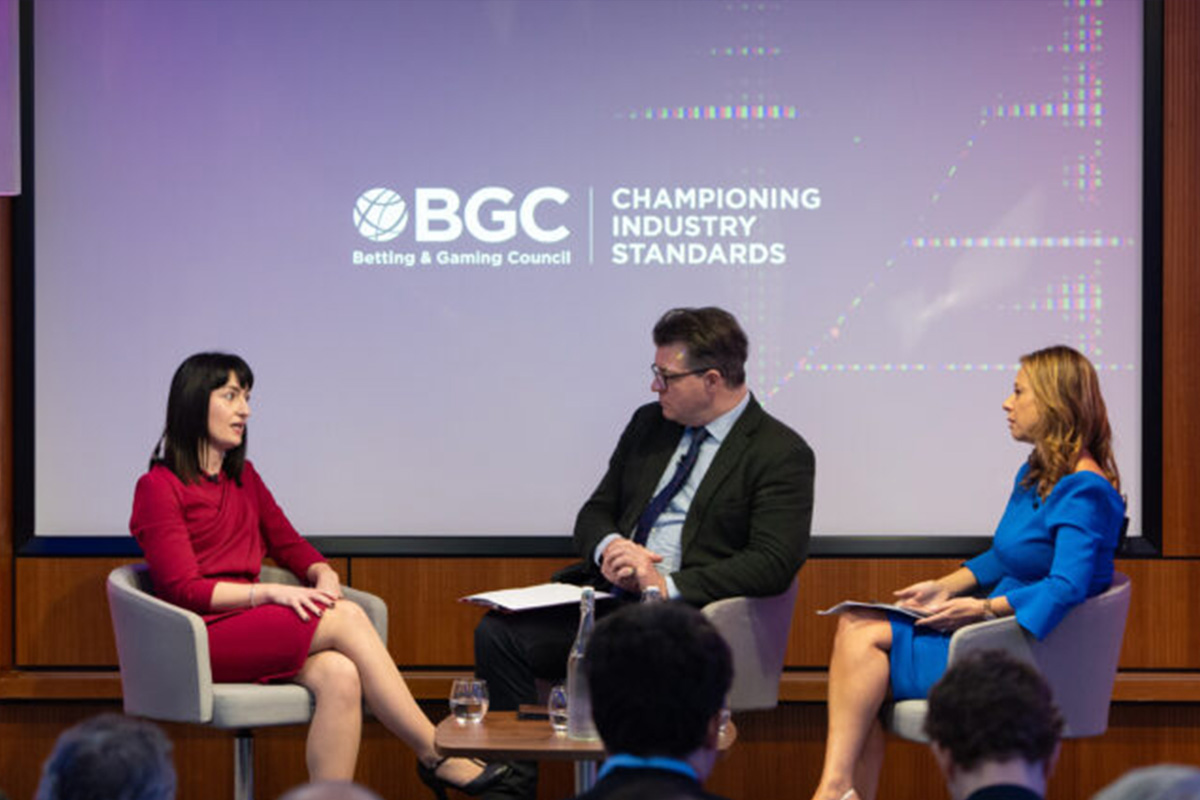
The Betting and Gaming Council AGM 2026 has discussed about the surging illegal gambling black market. As speakers repeatedly highlighted, 1.5 million people in Britain are already gambling on unlicensed sites and staking around £10bn a year outside UK regulation.
That concern is only set to intensify in the coming weeks as the Government considers further regulatory changes. In particular, Financial Risk Assessments (FRAs), which would require customers to provide detailed financial information such as bank statements and will only drive more customers towards unlicensed operators.
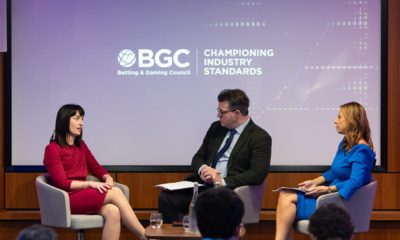
Chaired by broadcasters Gloria de Piero and Liam Halligan, the event began with a keynote from the Gambling Minister, followed by a discussion with BGC Chief Executive Grainne Hurst. A panel on the illegal market and the Gambling Commission’s assessment of the challenge followed, alongside research, polling and personal testimony from across the industry highlighting the scale of the problem.
Baroness Fiona Twycross, Parliamentary Under Secretary of State and Minister for Gambling, opened proceedings by addressing the tensions in current policy. She acknowledged that the gambling duty changes announced in November’s Budget were “extremely challenging for the sector, particularly for online operators,” and that they would “significantly affect business decisions and staff.” She defended the government’s position, arguing the changes were necessary to support public finances and would raise over a billion pounds a year for the Treasury.
The minister was clear: “Illegal gambling causes harm to vulnerable consumers,” she said, adding that it also damages the regulated sector. She announced an additional £26m for the Gambling Commission over the next three years and publicly confirmed the establishment of an Illegal Gambling Taskforce. This will bring together major companies including Google, Mastercard, TikTok and Visa alongside law enforcement and advertising bodies with a focus on illegal payments, advertising and cross-agency collaboration. She also announced a forthcoming consultation on the banning of unlicensed sport sponsorships, including in the Premier League. For many in the industry, this welcome action on enforcement will sit uneasily alongside tax policy that they believe is actively driving consumers towards the harmful black market.
The post BGC AGM 2026 Discussed About Surging Illegal Gambling Black Market appeared first on Eastern European Gaming | Global iGaming & Tech Intelligence Hub.
New approvals in U.S. states and applications in Canadian provinces drive Catalist Sports’ latest expansion across regulated North American markets
Catalist Sports, a leading licensed supplier of sports betting content to the regulated U.S. marketplace, has continued to expand its regulated market footprint with new supplier licenses secured in Arkansas and Nebraska, alongside recently submitted Canadian applications in Ontario and Alberta.
Arkansas’ regulated sports betting market is set for significant growth, with major operators including DraftKings and FanDuel entering the state in March 2026. In addition to Arkansas, Catalist Sports has successfully obtained a supplier license in Nebraska.
Following the approval of its supplier license in Missouri, the latest state to regulate online gambling, in December, Catalist Sports is now licensed in 30 U.S. jurisdictions, with two Canadian provinces expected to follow.
These license updates reinforce Catalist Sports’ commitment to serving both U.S. and Canadian regulated betting markets with compliant, high-quality content and services.
“Securing licenses in new jurisdictions and strengthening our regulatory standing is fundamental to serving as a trusted, key supplier to our operator partners,” said James Monk, Vice President & General Manager of Catalist Sports.
“Arkansas represents an exciting next step for us, particularly as major brands prepare to enter the market. At the same time, our licenses in Nebraska, along with applications in Ontario and Alberta, and ongoing license upgrades, position Catalist to continue delivering scalable, compliant, and differentiated services to our partners.”
Catalist Sports’ expanding North American footprint supports the company’s broader strategy to provide licensed operators with premium data, live streaming, and advanced trading capabilities, helping partners maximize in-play engagement, product innovation, and long-term growth in regulated markets.
Catalist Sports distributes official data and live streaming rights from a vast portfolio of events to licensed U.S. sportsbooks. This includes top-tier tennis properties such as the Australian Open, ITF World Tour, Davis Cup, and Billie Jean King Cup, as well as events across soccer, basketball, and ice hockey, which power year-round engagement for sportsbooks seeking continuous, high-frequency, high-quality live betting content.
The post CATALIST SPORTS SECURES NEW SUPPLIER LICENSES IN ARKANSAS AND NEBRASKA appeared first on Americas iGaming & Sports Betting News.

-

 bingo3 days ago
 -
Africa4 days ago
Virgin Bet goes live in South Africa
-
Charity Space Scotland4 days ago
Scottish Government Announces £7.9M Investment to Tackle Gambling Harms
-
ELA Games4 days ago
2026 SiGMA Americas Awards Features ELA Games in Two Major Categories
-
BetMGM4 days ago
PA Gaming Control Board Imposes $100,000 Fine on BetMGM
-
apuestas4 days ago
Brasil 2026: Bets presionan el presupuesto de los hogares y redefinen la competencia por el consumo
-
Betnacional4 days ago
Brazil: Betting pressures household budgets and reshapes the competition for consumer spending
-
Eilers & Krejcik – Fantini Game Performance Report4 days ago
Zitro Remains Latin America’s Top-Performing Supplier in the Eilers & Krejcik – Fantini Report