Compliance Updates
MGA Publishes Voluntary ESG Code of Good Practice

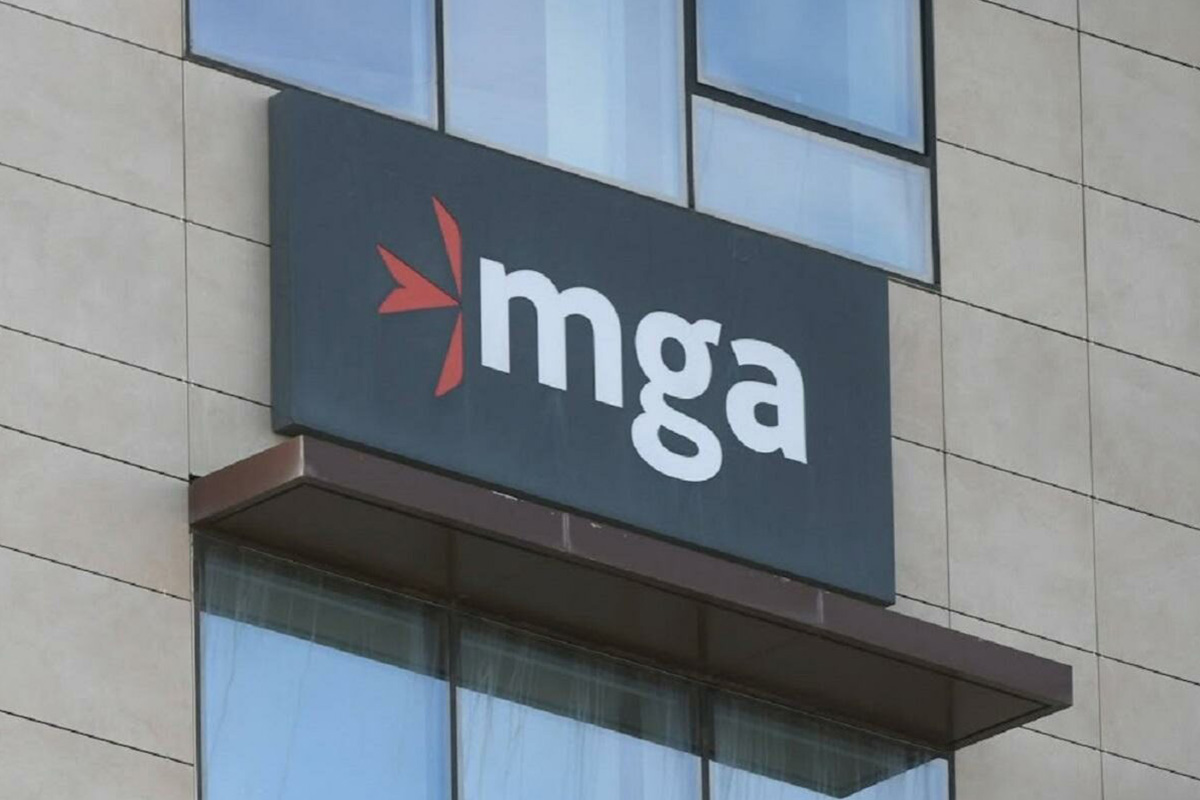
The Malta Gaming Authority (MGA) has introduced the Environmental, Social and Governance (ESG) Code of Good Practice for the remote gaming sector.
This ESG Code seeks to serve as an instrument for self-regulation, helping remote gaming companies align with best practices and maintain a position that allows them to effectively meet the evolving expectations of key stakeholders in the sector.
While this ESG Code is voluntary, all MGA licensees are strongly encouraged to adopt it to better demonstrate their commitment to sustainability and to continue improving the ESG standing of the industry.
Addressing a press conference, MGA CEO Carl Brincat said that across industries, a trend has emerged towards greater transparency, disclosure, accountability and active engagement in addressing the pressing social and environmental issues of our time.
“The MGA has always strived to be at the forefront of regulatory innovation and progress. We have been working not only to supervise the gaming industry, but also to nurture it, to foster a space where operators can thrive, while ensuring that the welfare of society remains paramount. Our ESG Code represents our commitment to this,” Dr Brincat said.
Minister for the Economy, EU Funds and Lands Silvio Schembri said that the aim of the press conference was to highlight the importance for the remote gaming sector to voluntarily use the ESG tool that is increasingly shaping the business and investment landscape, as well as our approach to social and environmental challenges.
“All businesses should embrace tools to reduce risk and transform successfully, and when it comes to remote gaming, one of the tools is using ESG metrics.
“The ESG code will serve as an instrument for self-regulation, helping remote gaming companies align with best practices and maintain a position that allows them to effectively meet the evolving expectations of key stakeholders in the sector,” Minister Schembri said.
The ESG Code is the culmination of a journey that involved four extensive stages: the peer review and research phase, materiality assessment, stakeholder interviews and licensees’ consultations. This extensive process has resulted in a final Code that is well-informed and reflective of the industry’s ESG priorities and stakeholder expectations.
Key Features of the ESG Code – a Balanced Approach
The Code identifies 19 ESG topics, derived from the materially assessment, organised into three categories: Environmental, Social and Governance, providing a strategic framework for remote gaming companies to focus their reporting efforts effectively.
Two Tiers of Reporting: The MGA will recognise companies’ efforts with two levels of reporting, Tier 1, a basic ESG standard, and Tier 2, a more aspirational level, to ensure sustainability efforts are focused and impactful.
Flexible approach for certain disclosures: Core disclosures have been defined, while reporting entities will have the flexibility to choose optional disclosures;
Streamlined Reporting: The Code includes several ESG disclosures already required under existing reporting frameworks to streamline reporting and reduce administrative burden; and
Focus on ESG reporting: The emphasis is on ESG reporting, rather than setting specific ESG targets.
An MGA ESG Code Approval Seal
Industry consultation revealed a strong desire for formal recognition by the MGA. To meet this demand, the MGA ESG Code Approval Seal will be awarded to entities that report under this Code, showcasing their commitment to ESG. Different seals will be awarded to entities that meet Tier 1 or Tier 2 reporting requirements.
How the ESG Code will Work in Practice
The Code will be a standalone voluntary submission, separate from other ESG disclosures made by the reporting entity to the MGA or other bodies. Reporting will be confidential, and the MGA will launch an online tool to facilitate the process. Additionally, the ESG Code will align reporting periods with the financial year of reporting entities. The inaugural reporting year will commence in 2023, with the submission deadline set for the third quarter of 2024.











Media Troopers is positioning itself for entry into Alberta’s soon-to-launch regulated online gambling market through a strategic partnership with Canadian law firm Segev LLP.
The collaboration will see the affiliate marketing and customer acquisition specialist work closely with legal experts Ron Segev and Alon Segev to navigate the province’s evolving regulatory framework. The firm will advise on compliance, licensing readiness, and market entry strategy as Alberta finalises its iGaming model.
Alberta is set to become only the second Canadian province to regulate commercial online gambling, following the launch of Ontario’s market in 2022. The province took a major step forward with the passage of the iGaming Alberta Bill, which establishes a legal framework for private operators and introduces the Alberta iGaming Corporation to oversee the sector.
This regulatory shift is expected to open significant opportunities for operators and service providers alike, particularly as Canada’s iGaming landscape continues to expand. Industry observers often point to Ontario’s rollout as a benchmark, with oversight from bodies such as the Alcohol and Gaming Commission of Ontario, which has helped shape standards around licensing, compliance, and player protection.
As part of its expansion strategy, Media Troopers aims to support licensed operators entering Alberta with localized marketing solutions, including affiliate partnerships and compliance-led acquisition strategies tailored to the province’s regulatory requirements.
Commenting on the development, Shmulik Segal, CEO of Media Troopers, said:
“Alberta represents one of the most exciting emerging regulated markets in North America.
“Working with Ron Segev and the team at Segev LLP ensures that our expansion into the province will be aligned with the evolving regulatory framework and positioned for long-term success.”
Segal added:
“Canada’s iGaming market continues to evolve rapidly. Our goal is to be fully prepared to support operators entering Alberta from day one.”
The move highlights a broader trend in North America, where affiliate and marketing firms are increasingly aligning with legal and regulatory specialists ahead of market openings. This approach not only reduces compliance risk but also allows companies to establish early positioning in newly regulated jurisdictions.
For more on Canada’s evolving iGaming landscape, see Europa Gaming’s coverage of Ontario iGaming Market Launch and North America Gambling Regulation.
With Alberta’s framework nearing completion, early movers like Media Troopers are aiming to replicate the success seen in Ontario—where strong compliance foundations and localised strategies have proven critical to long-term growth.
The post Media Troopers Prepares for Alberta iGaming Launch with Canadian Gaming Law Firm appeared first on Eastern European Gaming | Global iGaming & Tech Intelligence Hub.

The leading digital marketing and customer acquisition group Media Troopers has announced it’s gearing up to join Alberta’s upcoming iGaming-regulated market by partnering with Alon Segev, Managing Partner and Ron Segev, founder of Canadian gaming and betting law firm Segev LLP.
Alberta will become Canada’s second province to regulate commercial online gambling, following Ontario in 2022. The province passed the iGaming Alberta Bill last May, which brought with it a framework to allow operators to enter the province and the creation of a new iGaming regulator, the Alberta iGaming Corporation.
As part of Media Troopers’ strategic entry into the new sector, it has partnered with Segev, who will advise the company on regulatory strategy, compliance requirements, and market readiness as Alberta finalizes its operational and licensing framework.
“Alberta represents one of the most exciting emerging regulated markets in North America,” said Shmulik Segal, CEO of Media Troopers.
“Working with Ron Segev and the team at Segev LLP ensures that our expansion into the province will be aligned with the evolving regulatory framework and positioned for long-term success.”
As with Ontario’s competitive market, Media Troopers is dedicated to supporting licensed operators in Alberta with localized marketing channels, affiliate partnerships, and compliance-structured acquisition strategies.
“Canada’s iGaming market continues to evolve rapidly,” Segal added. “Our goal is to be fully prepared to support operators entering Alberta from day one.”
The post Media Troopers Prepares for Alberta iGaming Launch with Canadian Gaming Law Firm appeared first on Americas iGaming & Sports Betting News.

Approval clears the path for future operator collaborations in one of Europe’s fiercest markets.
ENJOY, the vibrant iGaming content creator, has received official certification to provide its content in the Italian market, signaling an important achievement in the company’s European growth strategy.
After receiving approval from Italy’s regulatory body, Agenzia delle Dogane e dei Monopoli (ADM), ENJOY is now permitted to provide its range of slot games, live casino, and hybrid live experiences to licensed operators in one of Europe’s most prominent and competitive iGaming markets.
The certification marks an important milestone in ENJOY’s long-term expansion strategy, allowing the company to penetrate the Italian market via several forthcoming collaborations with prominent local operators. These collaborations will present Italian gamers to ENJOY’s unique combination of captivating game mechanics and superior production quality.
The provider’s catalog features an array of successful slot games centered on established mechanics like Bison Strike and newer entries such as Hotfire Diamonds XXL. It also features an expanding range of live game show experiences like Enchanted Forest and the soon-to-debut Energy Roulette Hold & Win, created at its cutting-edge studio.
Italy’s well-established regulatory system and competitive environment position it as a crucial market for suppliers aiming to secure a solid foothold in Europe, closely aligning with ENJOY’s emphasis on regulated expansion and sustainable market entry.
Christos Zoulianitis, Chief Commercial Officer at ENJOY, said: “Securing certification for the Italian market represents a key milestone in ENJOY’s European expansion. Italy is one of the most established and competitive regulated markets, and gaining approval to supply our content here reflects both the quality of our portfolio and our commitment to meeting the highest regulatory standards.
“This certification allows us to move forward with a number of exciting operator partnerships, ensuring our games are introduced to Italian players in a way that supports long-term growth and strong engagement.”
The post ENJOY gains Italian approval amid advancing regulated expansion strategy appeared first on Eastern European Gaming | Global iGaming & Tech Intelligence Hub.

-

 Africa7 days ago
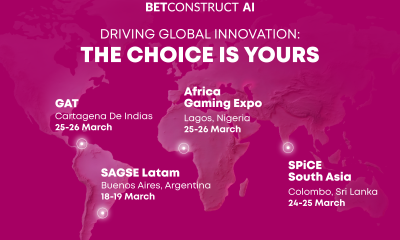
BetConstruct AI to Drive Global Innovation and Strategic Growth AcrossKey Markets in LatAm, Asia, and Africa
-
Centurion Winner Grand Chance™5 days ago
New from Inspired: Luck It Up™ and Centurion Winner Grand Chance™ available online & on mobile
-
Blazin' Bonus6 days ago
Booming Games releases Blazin’ Bonus
-
Cristiano Blanco CEO of SpinCore Group6 days ago
SpinCore Group Enters Finnish Market via Finnplay Partnership
-
Asia7 days ago
Mumbai to Host the Prestigious Global Esports Games (GEG) World Finals from March 19–22
-
Australasian Hospitality and Gaming Expo6 days ago
IGT Showcases Integrated Gaming, Systems, and FinTech Innovations Designed to Drive Growth at Australasian Hospitality and Gaming Expo 2026
-
Africa7 days ago
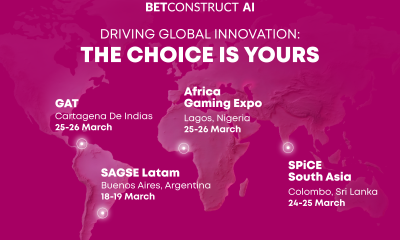
BetConstruct AI Fuels Global Innovation Strategy Across Latin America, Asia and Africa
-
Conferences5 days ago
NOVOMATIC Gaming Colombia to Showcase its Latest Innovations at GAT Cartagena 2026