Latest News
Playing the technology card: How Europe is winning the game

By Eriks Petersons, Digital Transformation Director, Ciklum
The last few years have seen a real period of growth in the gaming industry fuelled by technology. The push for responsible gambling and tighter regulations has helped reposition an industry which has carried a negative stigma for so long. Instead it is now accepted as a form of entertainment which is governed responsibly.
Europe has been at the core of this image transformation and now accounts for more than half of iGaming revenue worldwide. Investing in gaming technology over the last few years has seen Europe take advantage of the stagnant gaming scene in the US, which came as a result of the Black Friday events of 2011, and saw the closure of the three largest online poker websites.
Whilst the online gaming scene came to a halt in the US, advancements in European gaming technology meant that in the case of sports events, for example, bets could be placed live during a game – even via a mobile phone. In contrast, the US was reliant on land-based establishments where bets had to be placed before a game started. This resulted in many US companies snapping up European companies in order to benefit from these innovations. And who can blame them, with the sports scene so big in the US compared to across the pond.
But what the Black Friday events in the US taught the whole industry was the need for stricter regulations. Also crucial for upholding the gaming industry’s new positive reputation. Again, this is where Europe has been at the forefront – with the UK, Sweden and Germany leading the way – and certainly looking to stay in pole position.
How Covid-19 helped propel the gaming industry online
The Covid-19 pandemic hit the gaming industry on a global level, and as with many industries, companies were forced to move their operations online. With the temporary closure of land-based establishments, it taught the gaming industry an important lesson on product diversification and why it shouldn’t be over-reliant on physical world interactions.
With live sports temporarily suspended, meaning loss of revenue from sports betting, many players switched to casino gaming. Live shows with a real dealer helped to bridge the gap between online and land-based casinos, with players feeling more confident watching a real person dealing rather than trusting an algorithm.
It came down to which iGaming operators were willing to adapt to meet their players’ changing needs – and who had the technology to be able to do so. Those who did were the ones who came out as winners.
Why gaming platforms need to be customisable
The last ten years have seen the industry change from one that was initially market-driven to one that is now technology-driven. Traditionally gaming platforms were monolithic in nature meaning updates were often slow to implement and with many limitations.
Fast forward to the present, and as a result there are a lot of big companies who now own multiple platforms and products under one umbrella, but who have also inherited legacy technology obstacles.
Modernising platform infrastructure is key for allowing both scalability and flexibility. Microservices allow specific functions to be developed, deployed and managed independently from one another. This allows teams to focus on different areas, for example, whilst one team works on ‘responsible gaming’, another can work on ‘player acquisition’ testing or improving new features on the homepage.
Using microservices with APIs – which allows numerous front end experiences to be connected to a single back end program – enables flexibility beyond the limits of any one platform or technology. This allows gaming companies to work on regulatory changes and product features in parallel meaning one does not hold the other back.
Cloud is also key to scalability meaning you can manage large spikes of traffic or prepare for a new market launch. It also means that huge amounts of data can be stored securely.
Why tech has been key in adapting to new regulations
Technology has played a key role in ensuring the gaming industry is compliant as rules continue to evolve. As the call for improved consumer protection and responsible gaming rises, we have seen stricter regulations being introduced across Europe. For iGaming operators, this has demonstrated the need to have highly customisable gaming platforms which can be swiftly adapted to meet new regulations introduced country by country.
Take Germany as an example. In July this year, Germany launched its legal casino market, allowing private operators to apply for licenses offering sports betting, online poker and virtual slot machines. Industry players seeking the new license had a full year to make adequate changes, known as toleration regime. With the long list of German regulatory rules touching upon different parts of the system, many of these were kept to the last moment before they were introduced.
Player deposits, for example, were reduced to a maximum of 1000 euros. This was a big hit on the industry which is very VIP driven – with the majority of revenue coming from such players.
Spins in slot machines also came under fire with new regulations dictating a time limit of five seconds per spin. With an average spin lasting 0.5 seconds meaning a 5 second period normally allows for multiple spins, this runs the risk that players can’t play quickly enough and in turn will get bored.
Through the use of microservices, iGaming operators were able to create and release new features gradually. Instead of facing a huge hit on resources at one time, they were able to apply feature toggling and test and push different changes live over time. And ultimately ensure that by releasing these at the last moment they would not affect the customer experience earlier than they needed to.
How tech is improving player acquisition and retention
One area where companies can use technology to stand out is by offering a differentiated player experience. Player trends are constantly changing, and the successful iGaming operators are the ones that keep experimenting, keep validating and keep improving their product.
With some exceptions, most casinos are all the same, they just have a different look and feel. Through agile software development, gaming platforms can use canary releases to trial and test changes and features initially within a small group of users before rolling out to a wider audience. For example, how you show games to players or how games are grouped together to understand game player behaviour. This can also be applied to promotions to decide which ones work most effectively.
The registration process is another area which is a key part of the player acquisition journey. Consider experimenting with a three-stage process rather than one lengthy form. Also what works better in the UK, may not work so well in Germany.
Even the smallest things like the colour, shape or positioning of a button can have an enormous impact on the player behaviour and thus the conversion rate.
Technology has played a key role in transforming the European gaming industry. For iGaming operators, there’s both a need to innovate as well as to regulate. It’s about ensuring gaming platforms are adaptable, scalable and that changes can be implemented at speed. In other words, if you want to ride this positive wave that’s happening in the industry right now, then you need to implement the technology that will allow you to stay ahead of the game!
Powered by WPeMatico


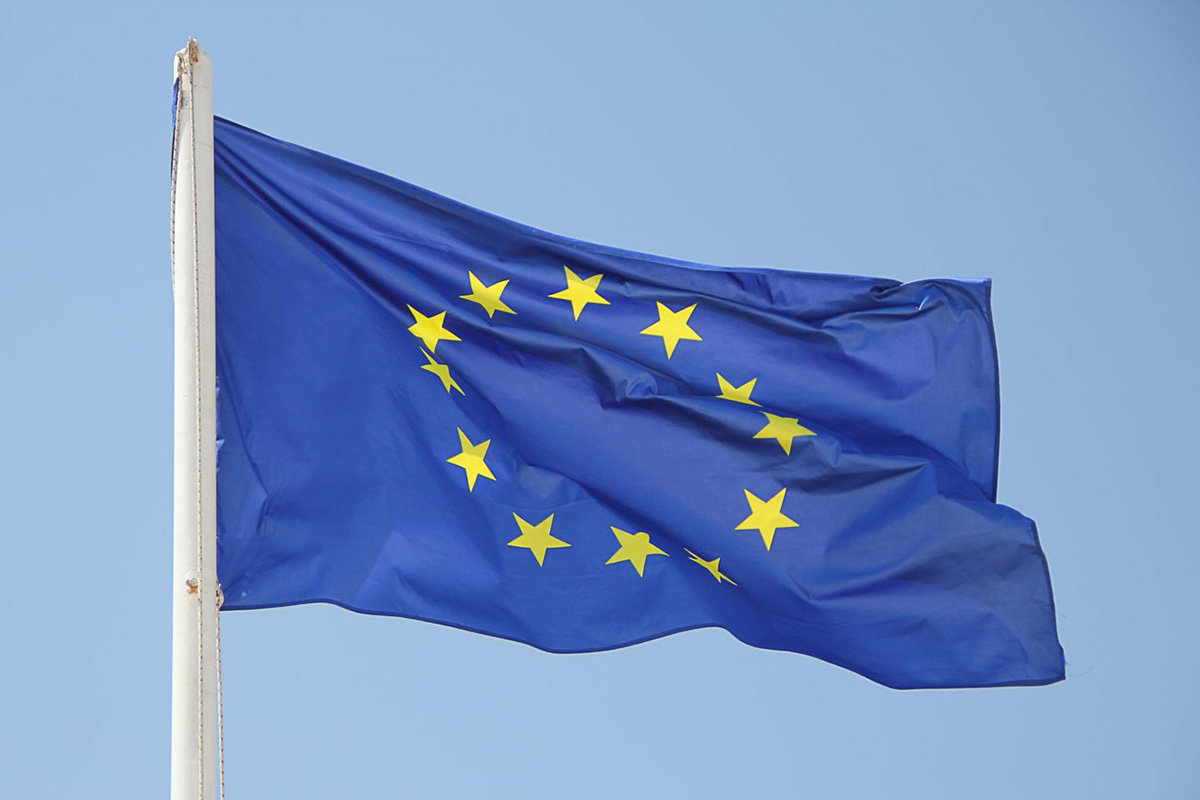
Malta’s Prime Minister has said his nation will veto any attempts by the EU to introduce a bloc-wide online gambling levy, threatening to place the industry at the centre of febrile European politics.
Robert Abela has told Malta’s parliament that he would use his nation’s member state veto to block the passage of the next EU budget, if a proposed gambling levy is included.
The budget, formally known as the Multiannual Financial Framework (MFF), lays out how the EU will spend its €2trn budget from 2028 to 2034.
The prospect of adding a continent-wide tax to the budget remains only a proposal, but the idea has heavyweight backing.
Vice-president of the European Parliament Victor Negrescu is spearheading these efforts, arguing that a fast-growing digital industry that generates billions in revenue should be subject to EU-level taxation.
Negrescu says that the levy could generate between €2-4bn every year.
“This industry fully benefits from the EU’s single market, digital infrastructure and crossborder access, but operates under fragmented rules, unequal taxation and insufficient enforcement,” he said.
The online gambling sector might well quibble with the specifics of these claims.
The idea that it “fully benefits” from the EU single market may have been unassailably true in the point-of-supply era, but the subsequent fragmentation of national rules that Negrescu refers to has significantly complicated that picture.
Nevertheless, backing for the levy from a senior European politician has naturally spooked the industry and its primary champion within the EU, Malta.
The levy would be so damaging to Malta’s economic interests that it is willing to use its most powerful EU instrument by executing a veto in the European Council in order to block the budget from being approved.
That would likely plunge the island nation into the centre of a political firestorm, but recent history suggests that smaller EU nations and their allies can successfully disrupt budget negotiations.
During discussions over the 2020 EU budget, Poland and Hungary successfully secured concessions after they both threatened to veto the MFF over rule-of-law requirements.
Malta will also hope to rely on support from the Friends of Cohesion, an informal alliance of 16 nations concerned with regional development, of which it is a part.
Negrescu’s pledge to pair his levy with a “clear EU directive against illegal and unlicensed platforms” is unlikely to satisfy the online gambling industry, despite growing complaints of a rampant black market from a number of quarters.
Malta strikes again
In simple terms, Malta is seeking to protect an industry which accounts for 10 percent of its gross domestic product.
The nation has shown a clear willingness to ignore the EU’s wishes in order to shield the many gaming firms that host their headquarters within its borders.
Most notably, the creation of Bill 55 has successfully protected local companies from having to repay hundreds of millions of euros in player refund settlements.
Ongoing cases before the Court of Justice of the European Union suggest that Europe’s top judges will soon rule against Bill 55, which is now Article 56A of Malta’s gambling act.
The European Commission also launched infringement proceedings against Malta over the provision
Tax troubles.
There are so far no specifics on how the levy would be calculated or what value it would be set at, but beyond Malta an additional levy would also be extremely challenging for operators in European markets already struggling with high tax burdens.
This includes the Netherlands, where a government report released this week has shown that staggered increases to taxes of 37.8 percent of gross gambling revenue (GGR) have failed to deliver any benefit to the country’s budget.
Even a relatively slight increase to this tax rate could send more operators scurrying out the market and see channelisation dive further than its current rate of 55 percent.
Nations like France, where online betting is taxed at 59.3 percent of GGR, or Portugal, with its 8 percent turnover tax on online sports betting, would also feel an impact.
Negotiations over the contents of the EU budget are set to continue for several months, with the approval process expected to be completed in late 2026 or early 2027.
Leaders in the Council of Europe have agreed to come to a preliminary deal on the MFF by October, according to a coordinated statement issued earlier this month.
Malta’s devout opposition to a possible gambling levy is just one of a range of issues under discussion, including a stark divide between nations such as Germany, which favour spending cuts, and the Friends of Cohesion, who want additional cash for agriculture and regional funding.
The post Malta Prepares For EU Budget Battle To Stave Off Gambling Levy appeared first on EE Gaming | Global iGaming & Tech Intelligence Hub.

The esports organisation’s second anime apparel collaboration will be sold exclusively via g2esports.com/shop.
G2 is launching a limited-edition G2 | One Piece capsule collection on June 25, with the drop available exclusively through the organisation’s online store at g2esports.com/shop.
The collection is inspired by One Piece’s Gear 5 Monkey D. Luffy and includes hoodies, zip-ups, t-shirts, caps, sleeves, and tote bags. According to G2, the items use a black-and-white palette and feature a minimalist embroidered logo alongside a custom G2 | One Piece Jolly Roger that combines the G2 samurai emblem with Luffy’s straw hat.
“At G2, we’re continuing to push the culture and fashion of esports beyond competition alone, and this One Piece collection is a natural extension of that,” says Sabrina Ratih, COO of G2 Esports. “We wanted to create a capsule that continues to elevate the esports fashion space – understated, premium, and stylish enough for everyday wear, while still carrying the spirit of adventure, ambition, and individuality that defines One Piece and G2 alike. Every piece is designed to bridge the gap between fandom and everyday style, and continuing our mission to redefine what esports fashion can be.”
G2 described the drop as its second anime collaboration, following a previous apparel collaboration with Solo Leveling. The company positioned the release as part of its broader effort to connect esports, anime, and streetwear.
One Piece debuted in 1999 and remains one of the largest anime franchises globally. G2 cited over 600 million manga copies sold and more than 1,160 episodes for the series.
The post G2 drops limited-edition One Piece streetwear capsule on June 25 appeared first on EE Gaming | Global iGaming & Tech Intelligence Hub.
Projects sit within UKRI’s Research Programme on Gambling and the GHR-UK Evidence Centre, backed by the statutory levy.
Ygam has been named as a partner on four projects funded through the UKRI Research Programme on Gambling, supported by the statutory levy. The charity will work with academic teams including the University of Birmingham, Bournemouth University, the University of Plymouth, Lancaster University, and Liverpool John Moores University.
The four projects sit within the Gambling Harms Research UK (GHR-UK) Evidence Centre, which coordinates 19 one-year Innovation Partnerships under the programme. UKRI has been appointed by the UK Government to oversee research commissioned through the new statutory Gambling Levy. Under the levy, 20% of annual funding will be allocated to research, equating to £22.1 million in 2025/26.
Emily Tofield, Chief Executive of Ygam, said: “We are pleased to be working in partnership with leading university partners, contributing our expertise in a key strategic area of our work. A defining strength of our approach is that it is grounded in robust insight and research, underpinning everything we do. This enables us to understand how and why harms emerge and translate that into practical, preventative education that is credible and scalable. We look forward to achieving these outcomes together and informing effective measures to prevent harms among children and young people.”
Ygam said its advisory panels — including young people, individuals with lived experience, community and faith leaders, gaming and esports representatives, and student ambassadors — will help shape the research to reflect “real-world experience and diverse community perspectives.”
The four partnerships are: INTEGRATE (University of Birmingham, Ygam, Al-Hurraya and Community Connexions), focused on intersectional gambling harm and interventions for children, young people and emerging adults; “From Evidence to Action: Safeguarding Neurodivergent Young People in Gamified Digital Environments” (Bournemouth University, Ygam, Work’n’Diversity CIC), focused on gambling-like risks in gamified digital environments; GRASP (University of Plymouth-led partnership including NatCen, NHS and third-sector organisations, and Ygam), mapping support pathways and gaps in prevention and recovery; and GRACE-Net (Lancaster University and Liverpool John Moores University with local authorities, NHS partners, third-sector organisations and Ygam), testing collaborative approaches in the North West of England and sharing learning more widely.
The post Ygam joins four UKRI-funded gambling harms research partnerships appeared first on EE Gaming | Global iGaming & Tech Intelligence Hub.

-

 Australia7 days ago
Former Star Entertainment Executives Mathias Bekier and Paula Martin Disqualified and Ordered to Pay Penalties
-
Alejandra Burato7 days ago
Record Attendance, Exciting New Releases, and a Resounding Success: This was Zitro Experience Peru
-
Amusnet7 days ago
Weekend Reels | Week 25: Slot Drops & Trends
-
ArenaPlus7 days ago
DigiPlus Wins “Digital Operator of the Year” Award at 2026 Global Gaming Awards Asia-Pacific
-
Anthony Dalla-Giacoma7 days ago
Elysium Studios Releases its Latest Slot Game “Hood and Loot”
-
Greece7 days ago
SYNOT Games Announces New Partnership with Superbet
-
Bragg Gaming Group4 days ago
Massive Gaming launches Blitzcrown titles on Superbet Brazil via Bragg Hub
-
Compliance4 days ago
HIPTHER Launches HALLO: The Standard in Compliance Expertise