American Gaming Association
Impulsive Gambling – How the UK & Non GamStop Casinos Deal With It


Online gambling got birthed in 1994 when Antigua and Barbuda decided to pass the Free Trade and Processing Act. However, it took two years before the world’s first online casino (InterCasino) appeared, thanks to internet payment technology developed by its operator CryptoLogic. In the 1990s and the 2000s, Americans could only enjoy online casino entertainment for real money at offshore platforms. That all changed in 2013, when the Nevada Gaming Commission granted 888 Casino a license, making it the first Interactive Gaming Service Provider active in any US jurisdiction. That same year, this brand also made its presence known in New Jersey, the top US online gambling market.
Following the global events that began to unfold in early 2020, many US states are now looking to create new tax revenues to plug budget shortfalls. One of the simplest ways to achieve this is to legalize online gambling. When it comes to sports betting, almost everyone is passing such laws, with many territories also exploring the option to make online casino gaming a reality for their residents. With this occurrence, concerns come about a potential rise in gambling addiction rates in the US. Thus, many are looking to Europe’s most established interactive gaming market to draw lessons on how they can curb problem gambling. What follows below is an in-depth look at how UK’s mandatory self-exclusion scheme named GamStop operates and how foreign, non GamStop Casinos stop their users from developing a compulsion towards online betting or nourishing such a preexisting condition.
UKGC’s Partnership With GamStop
The UK Gambling Commission (UKGC) is Britain’s gaming regulator. It took over this role from the Gaming Board for Great Britain in 2007, as detailed in the Gambling Act of 2005. It monitors all forms of gambling that happen within the UK’s borders, except for spread betting. For years, the UKGC had planned on implementing a mandatory self-exclusion scheme featured at every one of its licensed operators. Intentions for such a system to go live got announced in 2017. Yet, it took three more years before it became active under the title GamStop. It gets operated by a not-for-profit organization that bears the name The National Online Self Exclusion Scheme Limited. Once a UK player activates a GamStop ban, he can no longer visit and play at any UKGC site until his chosen self-exclusion period elapses.
The UKGC has a renowned reputation as the firmest interactive gaming regulator in Europe. It looks after all UK players by supplying unparalleled player protection. It goes so far as to make every UKGC-licensed operator implement measures like spin timers, game limitations, no auto-play, and more, to lower the rates of gambling addiction in Britain. Slots sites not on GamStop offer more liberating gameplay due to them not having to feature any of these measures.
How Non GamStop Casinos Function
The list of casinos not on GamStop is immense because these are platforms with a license from an international regulator and not the UKGC. The UK Gambling Commission only monitors a little over a hundred sites active on the UK market. The other gaming platforms available for Brits are slot and bingo sites not on GamStop, which are of comparable quality but boast foreign licenses. One such famous interactive gaming licensing organization is the Malta Gaming Authority (MGA). Malta is Europe’s online gambling haven, and every operator that seeks to offer its services to residents of countries with no online gaming legislation attains an MGA license to do so.
The Malta Gaming Authority is a reliable regulator and enforces many of the same measures as the UKGC. However, it is not as diligent as the previously mentioned organization. Nor is it as firm in punishing its operators. That said, many UK players prefer to play on old and new non GamStop casinos found on websites like this because these platforms offer more promotions, games, have higher max bet limits, and feature more liberating gameplay.
GamStop Platforms vs. Non GamStop Casinos
Under the hood, UK-based and non-UK sites have multiple similarities. That is so because they use many identical software solutions. Still, they differ in some areas, mainly due to the UKGC’s concerns regarding impulse control and betting. It wants to keep betting an entertainment-based activity, nothing more. That said, no one platform category is better than the other. They each have their benefits and drawbacks, some of which get listed below.
Pros of UK-Based Sites
- Super vetted operators.
- Universal self-exclusion.
- Slot gameplay is less intense.
- Third-party dispute resolution such as IBAS.
Cons of UK-Based Sites
- Less generous promotions.
- No niche transaction methods on hand.
- Irreversible self-exclusion bans.
Positives of Non GamStop Casinos.
- Vaster game libraries.
- No slot gameplay limitations.
- More payment methods on offer.
- Perk-rich VIP programs.
Negatives of Non UK Casinos
- Dispute resolution per foreign laws.
- Availability to debt accumulation payment methods (credit cards).
- No universal conditions apply to all operators.
What Gambling Addiction Measures Does the US Market Need?
Hopefully, something similar to GamStop would be perfect. However, there is no federal body that can oversee the implementation of such a program. The only two organizations that can start an initiative regarding such a nationwide scheme are the American Gaming Association and the National Council on Problem Gambling (United States). One of these entities could create such a database and offer voluntary participation to all online gambling operators that provide their services from a US jurisdiction.
Sadly, they cannot force gambling sites to implement such a scheme. But, if lobbies and authorities put pressure on the most popular online casino brands in the nation to participate, that could cause a ripple effect. Smaller, less-established gaming companies would not want to risk appearing less reliable to customers by not taking part in such a system, thus leading to it spreading nationwide. Of course, it would take some time for such an idea to come to fruition. There are still ongoing debates on the precise DOJ interpretation of the Interstate Wire Act of 1961. Does it allow US states to pass their legalization regarding online casinos or not?
To Wrap Up
There is no doubt that the US online casino market will soon explode. When it does, operators will have to take appropriate steps to ensure that everyone engages in this pastime responsibly. A GamStop-like program seems like a quality first step. Even non GamStop casinos promote responsible gambling by allowing everyone to set loss/deposit limits and site self-exclude. US online casinos offer that as well, but there is a need for state-wide and nation-wide anti-gambling addiction measures to stop the proliferation of gambling-related harm. The future of the US market is bright, and everyone in it should do their part to ensure that gambling remains fun.
Powered by WPeMatico

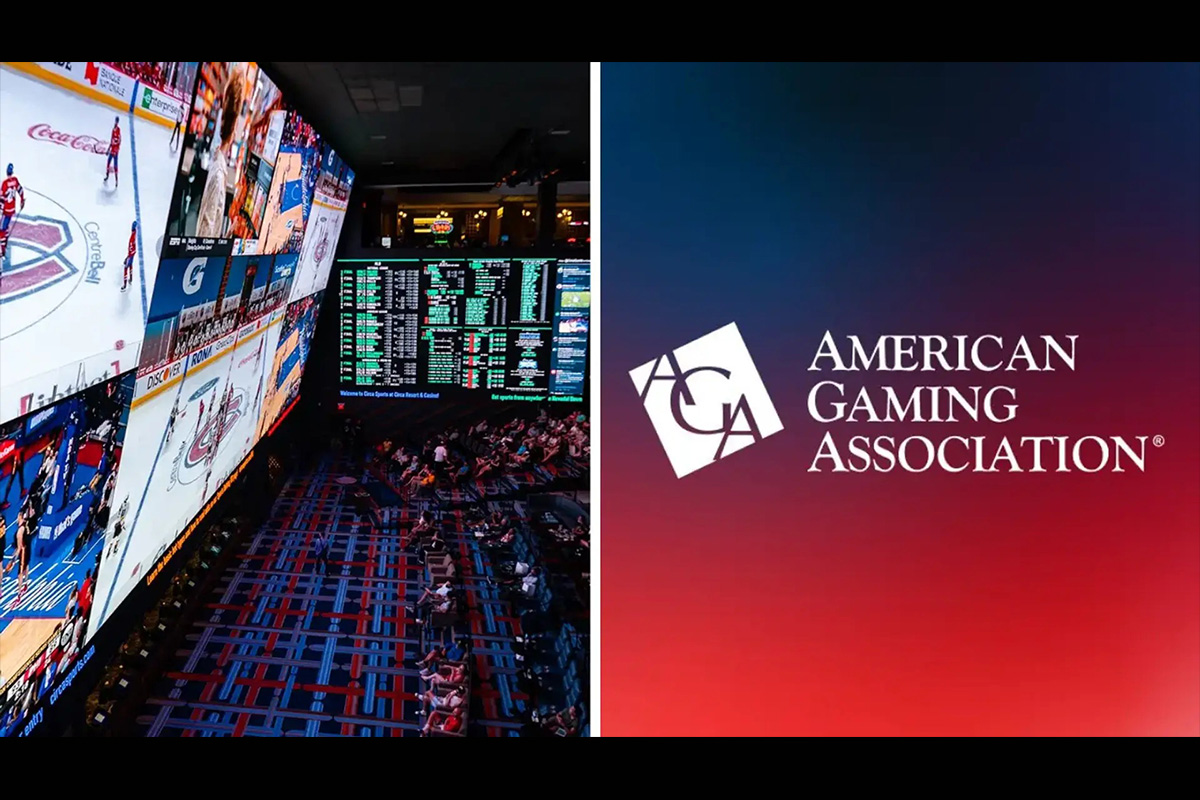
The U.S. commercial gaming industry reached a record high in 2025, generating $78.72 billion in gross gaming revenue (GGR), a 9.2% increase over the previous year, according to the American Gaming Association’s (AGA) Commercial Gaming Revenue Tracker. In 2025, legal, state-regulated gaming generated $18.09 billion in gaming tax revenue, supporting state and local education, infrastructure, and other services across the country, up 15.1% over last year.
“For another year, legal commercial gaming in the United States has delivered exceptional results for consumers, operators, and the communities we serve. These record revenues and tax contributions demonstrate the broad appeal of regulated gaming markets and why strong state oversight remains essential as our industry evolves,” said Bill Miller, President and CEO of the American Gaming Association.
Growth Across the Industry in 2025:
• Traditional Gaming generated $50.94 billion in revenue, up 2.3%, while contributing $11.33 billion in taxes, a 7.2% increase.
• Sports Betting revenue rose to $16.96 billion, a 22.8% increase, on a total handle of $166.94 billion (+11.0%). State-regulated sportsbooks generated $3.71 billion in taxes, up 32.4% year-over-year.
• iGaming reached $10.74 billion in revenue (+27.6%) and delivered $2.59 billion in taxes, a 36.9% increase.
All 38 commercial gaming markets saw annual revenue increases in 2025. These figures reinforce strong consumer enthusiasm for legal, regulated gaming and highlight the expanding economic impact of state-regulated markets.
Protecting State- and Tribal-Regulated Gaming
Industry leaders and lawmakers continue to take a stand against prediction markets offering sports contracts outside state and tribal regulatory frameworks. These platforms operate without state oversight, are not subject to the same consumer protection and responsible gaming standards, and do not contribute tax revenue.
Even with a record state-regulated gaming tax impact in 2025, the AGA estimates that prediction markets offering sports event contracts have diverted more than $500 million in potential sports betting tax revenue to date.
“With 2025 marking another record year, the industry’s performance reinforces a clear principle. Sports betting belongs under state and tribal regulation. That’s how consumers are protected and how communities share in the benefits,” added Miller.
The post U.S. Commercial Gaming Revenue Hits $78.7 Billion in 2025 appeared first on Americas iGaming & Sports Betting News.

The American Gaming Association (AGA) estimates that Americans will wager a record $1.76 billion legally on Super Bowl LX. This figure reflects the continued growth and strength of the legal, state- and tribal-regulated sports betting market.
“No single event brings fans together like the Super Bowl, and this record figure shows just how much Americans enjoy sports betting as part of the experience. By choosing legal, regulated sportsbooks, fans are having fun while supporting a safe and responsible market,” said Bill Miller, AGA President and CEO.
A new AGA study shows that prediction markets are confusing consumers by promoting sports betting as an investment rather than entertainment, underscoring concerns about how these products are marketed and their lack of responsible gaming tools.
Confusion Around Regulatory Oversight
78% of sports event contract bettors believe state regulators could assist in resolving disputes on their platform, even though prediction markets operate entirely outside state sports betting regulatory frameworks. These findings underscore widespread confusion among sports event contract users on the regulatory oversight governing prediction markets.
Perceptions of Gambling and Investment
Sports event contract bettors are three times more likely than sportsbook bettors to frame their trading as an investment: 28% of sports event contract bettors describe their activity as investing, compared to 9% of sportsbook users.
Additionally:
• 31% of sports event contract bettors report encountering trading or investing comparisons in platform messaging, versus 7% among sportsbook users.
• 25% of sports event contract bettors report funding activity from their investment budget, compared to only 9% of sportsbook users.
• Though more than a quarter of sports event contract bettors believe they are investing, most sports event contract users (58%) still view the activity as gambling, suggesting at least some users distinguish between platform messaging and underlying risk.
Access to Responsible Gaming Tools
Only 28% of sports event contract bettors say responsible gaming tools are easy to find on their platform, compared to 58% of sportsbook users, reflecting substantially lower visibility and accessibility of safeguards on prediction market platforms.
“This research reinforces why state- and tribal-regulated sportsbooks are critical, offering strong oversight and consumer protections that prediction markets simply do not match,” added Miller.
The post Americans to Legally Wager Estimated $1.76 Billion on Super Bowl LX appeared first on Americas iGaming & Sports Betting News.
Below is a joint letter from the American Gaming Association and Indian Gaming Association on addressing unregulated sports event contracts in upcoming cryptocurrency market structure legislation.
Dear Members of the United States Senate and House of Representatives,
On behalf of the American Gaming Association (AGA) and the Indian Gaming Association (IGA), we write to urge timely congressional action to address the explosion of unregulated sports event contracts being offered by prediction markets. Since these contracts, that are indistinguishable from legal sports betting, were launched last January, they have grown exponentially in trading volume and have expanded beyond the outcome of single games to include complex parlays and even potential wagers on the collegiate transfer portal. This growth has occurred by exploiting regulatory inaction by the Commodity Futures Trading Commission (CFTC), which undermines state law and tribal sovereignty and flies in the face of existing federal laws and regulation intended to protect consumers and the integrity of our nation’s financial markets. We firmly believe that congressional consideration of cryptocurrency market structure legislation provides an important, bipartisan opportunity to prevent sports betting and casino gambling under the guise of “event contracts.”
Together, our associations represent the legal regulated gaming industry in the United States that generates $329 billion in annual economic impact, produces $53 billion in tax revenue, and supports 1.8 million jobs. As one of the most highly regulated industries in the United States, licensed gaming operators work with more than 8,400 state and tribal regulators across the country to ensure our industry has transparency, integrity, strict consumer safeguards and responsible gaming practices. It’s a proven framework that ensures local control and protects players and the public while delivering billions of dollars in community benefits.
For decades, we have followed a uniquely American approach to gaming – an approach that has been the foundation of our success. This system gives the people a voice on whether and how to allow gaming, which creates a social contract between states, tribes and our industry: when we earn the privilege to enter your community, we deliver benefits in return.
In 2018, the Supreme Court overturned the Professional and Amateur Sports Protection Act and ruled that states have the right to determine whether to legalize sports betting. Since then, 39 states and the District of Columbia have done so, which in many jurisdictions has included close coordination with tribal authorities. Where sports betting has been legalized, states and tribes have set strict guardrails to ensure strong protections such as:
• Minimum betting ages (21+ in most jurisdictions)
• Licensing and suitability requirements for operators
• Anti-money laundering (AML) and Know Your Customer (KYC) protocols
• Mandatory responsible gaming resources, including self-exclusion programs
• Independent integrity monitoring and compliance audits
In contrast, several CFTC registered prediction market platforms have made self-certified event contracts available to anyone 18 and over, in all 50 states, circumventing state and tribal gaming laws and denying states and tribes hundreds of millions of dollars of critically needed revenue for schools, roads and first responders. The CFTC has not reviewed or approved any of these contracts as more entities enter the market, and their offerings get more audacious.
The CFTC’s own regulations – adopted pursuant to the Commodity Exchange Act (CEA) – prohibit event contracts regarding terrorism, assassination, war, gaming, or an activity that is unlawful under any State or Federal law. According to 39 state Attorneys General, these contracts are contrary to their state laws. They violate the Indian Gaming Regulatory Act (IGRA) that gives tribes exclusivity to offer gaming products on their land. Sports event contracts also violate the federal Wire Act that makes it illegal to offer sports wagers across state lines.
And while the gaming industry has focused our efforts on stopping unregulated sports wagering, we have seen a troubling proliferation of other concerning betting categories that seek to capitalize on tragedy, invite manipulation, and undermine public trust. Most recently, questions and concerns have been raised regarding contracts tied to the capture of Venezuelan President Nicolas Maduro and ongoing armed conflicts abroad – categories that would never be permitted under state or tribal law.
These contracts are being offered in flagrant disregard of state laws, tribal sovereignty, the Commodity Exchange Act, and CFTC regulations. They mislead consumers into believing that a sports bet is an investment, fail to protect the young and the vulnerable, open the door to money laundering, match fixing and insider trading. They rob state budgets and tribal finances while simultaneously forcing states and tribes to expend massive legal resources to defend their sovereignty.
During his confirmation hearing, Chairman Selig made it clear that the CFTC would not rein in sports betting contracts under his leadership, instead deferring to the outcome of litigation that could take years to be fully resolved. However, Mr. Selig also said that the CFTC would follow Congress if they were to step in and speak on these contracts. Therefore, it is critical that Congress act swiftly to include legislative language in the cryptocurrency market structure legislation that reenforces existing law and prohibits gaming through CFTC-registered platforms. We stand ready to work with you on this issue and appreciate your consideration.
Sincerely,
Bill Miller
President & CEO
American Gaming Association
David Z. Bean
Chairman
Indian Gaming Association
The post Joint AGA-IGA Letter Addressing Unregulated Sports Event Contracts appeared first on Americas iGaming & Sports Betting News.

-

 Centurion Winner Grand Chance™7 days ago
New from Inspired: Luck It Up™ and Centurion Winner Grand Chance™ available online & on mobile
-
Blazin' Bonus7 days ago
Booming Games releases Blazin’ Bonus
-
Australasian Hospitality and Gaming Expo7 days ago
IGT Showcases Integrated Gaming, Systems, and FinTech Innovations Designed to Drive Growth at Australasian Hospitality and Gaming Expo 2026
-
Cristiano Blanco CEO of SpinCore Group7 days ago
SpinCore Group Enters Finnish Market via Finnplay Partnership
-
Conferences6 days ago
NOVOMATIC Gaming Colombia to Showcase its Latest Innovations at GAT Cartagena 2026
-
Enjoy7 days ago
ENJOY Unveils Hotfire Diamonds XXL to Elevate an Iconic Franchise
-
Aristocrat Gaming7 days ago
Aristocrat Gaming to Participate in Australian Hospitality & Gaming Expo
-
Central Europe7 days ago
GGL Study Says Regulated Online Offerings Make Up the Majority of the Market