Eastern Europe
Lack Of Professional Approach To Legalization Of Gambling

The necessity of legalization of gambling in Ukraine has been the topic of interest for a long time. The new government, at the initiative of President Zelensky, has been trying to do this for almost a year now. Experts gave hundreds of comments about this process, journalists wrote dozens of articles, and deputies held many meetings of various working groups. In general, the relevant bill has undergone a number of changes and for a long time has been evolving step by step to an increasingly acceptable form: the general opinion of the market is that the law should be the same for everyone, everyone is ready to certain compromises, and even a high fixed cost of licenses is considered acceptable when the tax on gross gaming revenue (GGR) is abolished. But today the improvement of the bill hit up against the interests of the lottery pool of deputies, who are trying in every possible way to maintain the monopoly position of the lotteries and the associated gray schemes of work of other types of gambling. For this reason, the bill 2258-d on second reading runs the risk of entering the session hall with a number of fundamental problems that will simply nullify the positive effect of the legalization of gambling in Ukraine.
The motivation of the deputies from the lottery circle is obvious, they simply work off the corrupt rent of their patrons. But the motives of the deputies close to President Zelensky are not clear. In case of collapse of legalization or failure to get the expected results, this initiative will turn into a pile of stones that will be thrown at the President by both the opposition and other enemies without hesitation. Especially considering the fact that the President took this issue under his personal control.
Two main factors have caused the current unfavorable situation regarding the legalization of gambling in Ukraine: 1) the subjectivity of certain influence groups (strongly represented by the lottery pool of deputies), and 2) an exclusively theoretical understanding of the mechanism of work and specific features of the gambling business, which can be observed in the statements made by the head of the relevant committee, Daniil Getmantsev. Thus, instead of a broad discussion with future gambling operators, which could contribute to the development of a realistic draft law, we get a substitute for lottery “wishlist”, and an ordinary incompetence.
It will take more than one article to describe all the mistakes of legalization of gambling “in the Ukrainian style”. But nevertheless, the most striking moments can be singled out, without the resolution of which all the previous work will go down the drain.
So, the biggest problem is that the work on the relevant law is carried out without regulating the tax aspect of the organization of gambling. This approach may result in gambling operators paying taxes of 50-60% of profits for doing business legally. In this case, legalization will remain only on paper, as well as the long-awaited income to the treasury. Therefore, it is now extremely important to start a broad discussion on the tax burden for the gambling business. Since the budget of Ukraine needs fast money, and setting up an online monitoring system to track gross gaming revenue (GGR) requires considerable amount of time and specialist training, it would be logical to keep high license fees, but abolish the GGR tax. To understand the numbers, we want to remind you that for one license for 5 years, gambling operators in Ukraine will have to pay (ed. – take into account currency rate fluctuations): a casino – from $5.8 million to $20 million, depending on the number of rooms in the hotel; bookmakers – more than $21 million; lottery distributors – $14.7 million; gambling rooms – $145 thousand; online casinos – $2.4 million. At the same time, legislators plan to establish the GGR tax in the range of 18-25%, in spite of the bill 2713-3, which abolishes the tax on gross gaming revenue (GGR).
In general, world experience provides a choice between two options – either a high license fee or a GGR tax. More precisely, with a GGR tax a license fee may be levied, but then its amount is set at a very low level. In fact, a high fixed license fee is a tax on gross revenue paid in advance. Here are some examples from world experience.
In Britain, for example, a one-time fee for applying for a gambling license is €5,730, and a staff/ management license is about £330. The head of a gambling establishment is also obliged to pay an annual fee to ensure that his current license continues to be valid. The annual license fee depends on the gross turnover of the company. Gambling in England is subject to two taxes: 15% tax on total gaming revenue, and 18% income tax.
In the Netherlands, taxation on the organization and conduct of gambling is also quite high. Casino operators must pay a 29-percent gross revenue tax on games. In addition, they must also contribute 1.5% to the development of the gambling association and 0.25% to the fund against drug addiction.
Swedish casinos are obliged to pay a tax of 18% of their total gaming revenue. For doing business in the country you also need to purchase a license. It can cost from 6 to 70 thousand euros.
In Malta, the gaming tax makes up 5% of the revenue generated from certain gaming services during the relevant tax period. The tax on gaming devices in Malta varies from 12.5% to 30% for different types of licenses. Malta gambling management requires a company applying for a gaming service license to have a minimum share capital from 40 thousand euros to 100 thousand euros, depending on the type of gambling establishment in terms of profitability.
In France, the rules for calculating tax rates are as follows: the gambling turnover tax is 8.5%, and income tax is additionally paid at the standard rate of 28%.
In addition to taxes, all casinos also pay certain fixed fees. So, the budgets of municipalities on a daily basis receive 12 euros from the first roulette that opens and 6 euros from each subsequent roulette that opens.
Thus, the tax on GGR is usually used in those countries where there is no license fee or it is symbolic. In most countries where gambling is legalized, the authorities understand that gambling brings sufficient revenues to the budget, but it requires an adequate tax base.
To introduce the GGR tax, an optimal monitoring system is needed. It shouldn’t be overloaded, the way our parliamentarians do this, striving to stuff everything possible and impossible into monitoring. This approach is an evidence of a superficial and purely theoretical knowledge of the authors of such ideas. For the GGR tax, the most important thing is to control the entry and exit of funds. For example, if 2 million UAH was brought during quarter, and 1.8 million UAH was given away as wins, then out of 200 thousand the GGR tax will be calculated. Everything is extremely simple. It is better to transmit information in the online monitoring system in non-personalized form and in a package, rather than in real time format and with all the data about the player, because otherwise, any halting will lead to an interruption in the operator’s work or to an unintentional violation of the law. But until such a simple and effective system is offered, it is better to use a high license rate and not charge the GGR tax.
If the gambling business is nipped in the bud, then the budget will not get any money. Therefore, the philosophy of the attitude to this type of business needs to be changed, it is necessary to create an adequate tax base and equal conditions for all operators. In response, the state will receive both substantial revenues to the budget and substantial amount of money for charity. Historically, gambling money goes to support social projects. For example, in France, theaters were built on taxes from the organizers of gambling establishments, and a famous opera house was built in Baden-Baden (Germany) on the tax revenues from the gambling industry. In the Netherlands, the representatives of the gambling industry sponsor the football championship, and in Canada – the annual stage of Formula 1 auto racing. In the USA, casinos finance basketball and hockey clubs.
In many countries, the distribution of tax revenues from the gambling business goes under special budget items. In Denmark, 65% goes directly to the Ministry of Culture and is directed to the development of sports and cultural life. In Finland, profits from lotteries and casinos are directed through the Ministry of Education to finance the development of national culture, and state revenues from betting on horse races are used to stimulate the development of national horse breeding and to conduct equestrian competitions.
For centuries, the authorities of various states have been convinced that human passions, including excitement, can’t be eradicated and prohibited, and therefore the only adequate solution is to find a reasonable compromise between the state, business and player. Many European countries have accepted such a philosophy a long time ago, and it’s time for Ukraine to finally take this path by creating a competitive market that will: a) be attractive to foreign investors; b) create hundreds of thousands of well-paid jobs, and c) replenish the budget with tax payments.
Powered by WPeMatico


Deal would add a Romanian engineering base and 50 planned hires, expanding Super’s European technology footprint.
Super has agreed to acquire Crafting Technologies, a software development company based in Cluj-Napoca, Romania, as it moves to open its first technology hub in the country. The transaction is subject to customary approvals.
Super said the acquisition will establish a Romania hub alongside its existing tech hubs in Croatia, Spain, Netherlands, United Kingdom and Brazil, which it says together include more than 900 software engineers and developers.
As part of the expansion in Cluj, Super plans to open an initial 50 new positions and bring Crafting Technologies’ engineering team into the organisation.
Albert Simsensohn, Deputy CEO, Super, said: “We are confident that Romania’s mature and competitive technology ecosystem provides access to specialized engineering capabilities essential for Super’s future roadmap. Moreover, the city of Cluj-Napoca offers a vibrant environment of innovation combined with operational efficiency and proximity to our regional hubs.
“Crafting Technologies will bring a proven internal talent academy that develops engineers and upskills existing talent, strengthening our long-term capacity and supporting the execution of our technology roadmap.”
Gabriel Bota, Co-founder & CEO, Crafting Technologies, added: “Over the past 10 years, through Crafting Software and now Crafting Technologies, we have built a team focused on engineering quality, trust, and long-term partnerships. What started as a small group of friends, passionate engineers, evolved into a company delivering critical systems for high-growth businesses.
“Joining forces with Super feels like a natural next step for us. We already share a strong technical connection, and also a very similar way of thinking about ownership, speed, and building reliable technology that can scale over time.
“We’re excited about continuing to grow the Cluj technology hub together and bringing the same culture and mindset that shaped Crafting since day one.”
The post Super agrees to acquire Romania’s Crafting Technologies for new Cluj tech hub appeared first on EE Gaming | Global iGaming & Tech Intelligence Hub.
Alina Mihaela Popa Chief Commercial Officer at ICONIC21
ICONIC21 launches live casino and RNG titles with Maxbet in Romania

Gravity Blackjack, Gravity Roulette and Grand Bonus Blackjack join Maxbet’s lobby, with more ICONIC21 content planned in coming weeks.
ICONIC21 has gone live with Maxbet in Romania, adding a selection of the supplier’s live casino and RNG titles to the operator’s platform. The companies said additional titles are scheduled to roll out in the coming weeks.
The initial live casino lineup includes Gravity Blackjack and Gravity Roulette from ICONIC21’s Gravity Series, alongside Grand Bonus Blackjack. ICONIC21 noted that Grand Bonus Blackjack was “recently recognized at the SBC Awards” for its progressive bonus system.
From ICONIC21’s RNG portfolio, Maxbet players now have access to Lightspeed, described by the supplier as a crash game, and Gravity Plinko. ICONIC21 said further portfolio adoption has already been confirmed for the coming weeks.
Alina Mihaela Popa, Chief Commercial Officer at ICONIC21, said: “We’ve put a lot of thought and effort into our growth in Romania, so launching with Maxbet is yet another milestone for us in the market. Maxbet is trusted and has a loyal community of players, so being included in their lineup will further increase our games’ popularity in the Romanian market.
What really stands out with this deal is that we’re continuing to lay the foundation for a lasting presence in Romania, with more launches on the way. ICONIC21 is becoming a familiar name for players and operators here, and collaborations like this are making it happen.”
Manuel Bauer, CEO at Maxbet, said: “There’s definitely interest among our community every time something new lands in the lobby, and ICONIC21’s games are already generating plenty of interest. Our players are quick to spot quality and innovation, and we’re confident these new additions will become favorites, especially with the multiplier mechanics ICONIC introduces. This partnership opens the door to even more exciting releases in the near future.”
The post ICONIC21 launches live casino and RNG titles with Maxbet in Romania appeared first on EE Gaming | Global iGaming & Tech Intelligence Hub.
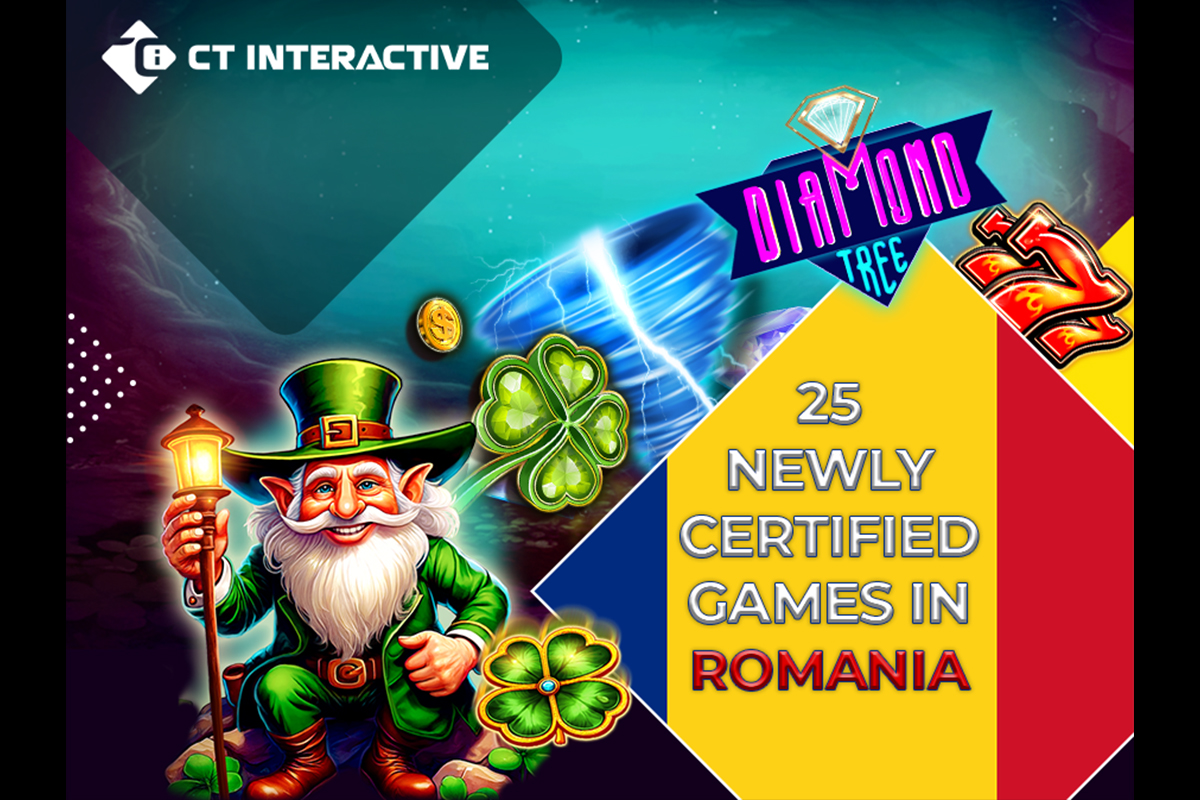
CT Interactive continues to strengthen its position in Romania’s regulated iGaming market with the certification of 25 additional game titles. Following this expansion, the company’s certified portfolio in the country now comprises 126 games, reinforcing its commitment to growth across regulated European markets.
Among the newly certified titles is Diamond Tree, CT Interactive’s latest progressive jackpot, featuring some of the company’s best-performing games. The progressive jackpot includes popular titles such as 20 Mega Slot, 20 Star Party, 40 Mega Slot, 40 Treasures, Chilli Fruits, HOT 7’s x 2, King of Clovers, Lord of Luck, Lucky Clover, Lucky Clover 20, Moon Lord, Mystic Moon, The Big Chilli, Wild Clover and Win Storm.
In addition, several standout games have also received certification for the Romanian market, including Hell’s Cherries, Happy Miner, Blazing Flower, Win Storm Deluxe and other player-favourite titles.
“Certification in Romania is an important part of our European growth strategy. This expansion not only strengthens our presence in the market but also enables us to deliver a broader and more diverse range of premium gaming content to licensed operators and their players,” said Martin Ivanov, Chief Operating Officer of CT Interactive.
Bogdan Smeu, Regional Manager Romania, added: “Romania continues to be one of the most dynamic regulated markets in the region, with increasing demand for high-quality gaming content. Expanding our certified portfolio allows us to better support our operator partners while providing players with access to proven, high-performing titles.”
With these new certifications, CT Interactive further strengthens its position in Romania, offering operators a diverse portfolio of engaging and fully compliant gaming content.
The post CT Interactive Strengthens its Presence in Romania with Newly Certified Games appeared first on EE Gaming | Global iGaming & Tech Intelligence Hub.

-

 Bonusetu.com6 days ago
Finland Sets Casino Gambling Risk Limits at 2% of Income, 4 Days, 2 Game Types
-
Compliance Updates5 days ago
Dutch Gambling Trade Association Sues Meta Over Illegal Gambling Ads
-
30-0 Kongeserien6 days ago
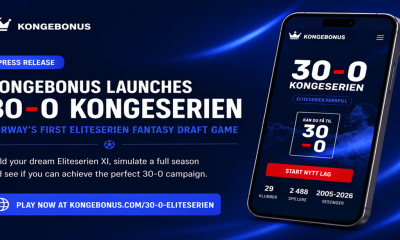
Kongebonus launches 30-0 Kongeserien Eliteserien fantasy draft game
-
Acquisitions/Merger6 days ago
Super agrees to acquire Romania’s Crafting Technologies for new Cluj tech hub
-
BetWarrior5 days ago
Kambi Group Extends its Partnership with BetWarrior
-
Latest News6 days ago
Play’n GO Releases its Latest Slot Game “Shark Feast”
-
Amusnet5 days ago
Amusnet Strengthens its Position Among Bulgaria’s Leading Employers in ICAP CRIF Ranking
-
Alex Baliukonis Game Producer at BGaming6 days ago
BGaming releases Frenzy Clusters slot with expanding grid feature