eSports
Esports Betting – Overview Of The Esports Gambling Vertical

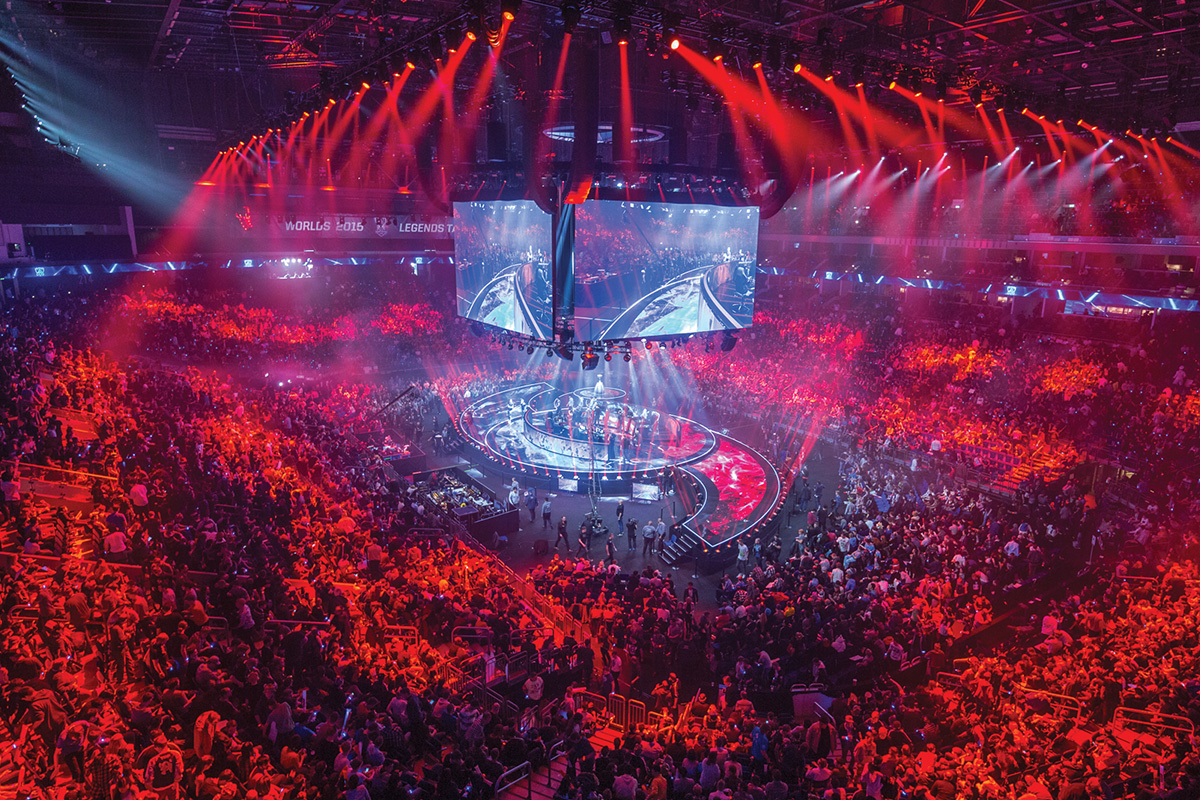
Gambling on – and around – esports is a much bigger market than many assume.
The market can basically be divided by product and then by currency. Let’s start by talking a bit about the currencies that underpin gambling on esports.
Esports gambling: Popular currencies
For esports gamblers, the currency choice comes down to a decision between cash and skins (virtual items from video games).
Cash requires little explanation. The market for cash gambling on esports works identically to the cash-based market for traditional online wagering, such as sports betting or online casino games, visit Esportsbetting.gg for more information
Skin betting on esports
Skins require a bit more explanation. Skins are virtual items that can be used in games like Counter-Strike: Global Offensive (CS:GO). The term “skin” is derived from the typical function of these virtual items: changing the appearance of a player’s in-game avatar, weapons, or equipment.
While a number of games employ some sort of skin system, CS:GO skins are the dominant currency in the skin betting market, accounting for over 80 percent of total wagering activity.
For example: Below is an image of the “stock” knife used as a weapon in CS:GO. Players can opt to replace that stock knife with unique skins of the knife that change the appearance of the knife, as shown in the images to the right of the stock knife.
Note that the skins do not improve the functionality or power of the knife. The skin only changes the appearance of the knife. Skins play a purely cosmetic role.
CS:GO skins can be easily transferred between players (the same is not true for all games). That condition allows skins to act as a quasi-currency – something like a casino chip. Given that ability to move skins between players, layering a gambling site on top of that ability is a relatively easy task.
Here’s how it works:
- Players “deposit” a skin at a skin betting site (popular types of sites include sportsbooks, lotteries, roulette, and coin flips) by transferring the skin to the skin betting site.
- They gamble using their deposited skins (or in some sort of internal currency that the player receives in exchange for their skin).
- If they win, they’re paid in additional skins, which they “cash out” by requesting that the skin betting site transfer skins back to the player.
Once players have skins in their Steam account, they can:
- Leave the skins dormant in their inventory.
- Use the skins to change the appearance of their weapons.
- Trade skins with other players.
- Sell skins on the Steam marketplace for Steam credit (not cash) that can be used to buy other skins and games via Steam.
- Exchange skins for cash on third-party sites outside of Steam.
Right now, skin gambling is far more popular than cash betting, but a crackdown on skin gambling activity by CS:GO publisher Valve could fundamentally undermine the ability of skin gambling sites to operate.
Esports gambling: Popular games
A few basic types of gambling dominate the esports gambling market.
Sports betting
Sports betting represents the most popular product among esports fans. Betting on esports is more or less identical to betting on traditional sports, with the caveat that the esports betting product is far less developed than the traditional sports betting product.
Fantasy esports
While markedly smaller than sports betting on esports matches, there is nonetheless a demand for fantasy esports.
Most of the sites serving this space deal in cash betting. The major players are just who you’d expect when thinking about daily fantasy sports, visit Esportsbetting.gg to know more
The basics of daily fantasy eSports
Fantasy eSports sites offer some variant of the “salary cap” model, in which users select a roster of players for their fantasy team under the restrictions of a salary cap set by the site. After picking a team, the eSports competitors score fantasy points for users based on their performances in competition. The users that end a contest with the most fantasy points win cash prizes.
Casino-style games
A handful of casino-style games (including roulette, blackjack, and raffles) make up the majority of the remaining interest in gambling among esports fans.
Powered by WPeMatico


The Esports Awards is set to return in 2026, bringing together the global esports community for its annual celebration of excellence.
Scheduled to take place in North America later this year, the awards will honor the top players, teams, creators, and innovators who defined the past year in competitive gaming. Exact dates and venues will be revealed in the coming months.
Last year marked a major milestone for the Esports Awards, celebrating 10 years of esports achievements at the HyperX Arena in Las Vegas. The ceremony recognized industry icons such as Mathieu “Zywoo” Herbaut, iShowSpeed, and Animesh “Thug” Agarwal, while inducting six new members into the Lifetime Achievement in Esports: Class of 2025. Earlier in 2025, the Esports Awards hosted the one-off Decade Awards, which drew a global audience of 36.25 million live viewers.
For the 2026 edition, fan-favorite categories such as Esports Game of the Year, Esports Personality of the Year, Streamer of the Year, and Esports Team of the Year will return, giving fans a direct voice in recognizing the standout moments and figures in esports over the past year. Winners will be determined through a combination of community voting and input from the Esports Awards Panel, which includes seasoned industry veterans, broadcasters, creators, and professional players, ensuring both credibility and integrity.
In addition to the main ceremony, the Esports Awards Golf Invitational will make a comeback, offering a day of networking and friendly competition for industry leaders, creators, and esports competitors ahead of the awards.
Michael Ashford, CEO of the Esports Awards, said: “The Esports Awards continues to shine a spotlight on the very best in esports and gaming, and we’re pleased to return for 2026. Following the success of the Decade Awards and our 10th anniversary celebrations, we look forward to recognizing the individuals, teams, and moments that defined the past year in esports.”
Fans are encouraged to follow the Esports Awards’ official X account for updates on venues, dates, nominees, and voting.
The post Esports Awards 2026 Returns for Global Honors appeared first on Eastern European Gaming | Global iGaming & Tech Intelligence Hub.

- The Esports Awards will return later this year for its 2026 edition, taking place in North America and honouring the outstanding players, teams, creators and innovators of the past year in esports
- Last year marked a major milestone for the Esports Awards, celebrating 10 years of excellence at the HyperX Arena, alongside the one-off Decade Awards, which reached 36.25M live views globally
- The Esports Awards Golf Invitational will also return, bringing together industry leaders, creators and competitors for a day of networking and competition ahead of the main ceremony
- Full details on the venue, date, nominees and voting will be revealed in the coming months
The Esports Awards has announced the return of its annual ceremony for 2026. Bringing together the global esports community under one roof, the Esports Awards will once again recognise the players, teams, creators and innovators who have defined the past year. The ceremony will take place in North America later this year, with exact dates and venue to be revealed in the coming months.
Last year’s edition of the Esports Awards marked a significant milestone, celebrating 10 years of esports excellence at the HyperX Arena in Las Vegas. The ceremony honoured some of the industry’s most recognised figures, including Mathieu “Zywoo” Herbaut, iShowSpeed and Animesh “Thug” Agarwal, while welcoming six new inductees into the Lifetime Achievement in Esports: Class of 2025 award. Earlier in the year, the Esports Awards also hosted the one-off Decade Awards in August, presented by Trevor “Quickshot” Henry, Jessica “JessGOAT” Bolden and Barney Banks, reaching 36.25M live views globally.
For the 2026 edition, fan-favourite categories including Esports Game of the Year, Esports Personality of the Year, Streamer of the Year and Esports Team of the Year will return, giving the community a voice in recognising the moments and individuals that shaped the past year in esports.
Winners will be determined through a combination of community voting and input from the Esports Awards Panel, a group of industry veterans, broadcasters, creators and players, ensuring the integrity and credibility of the awards.
In addition to the main ceremony, the Esports Awards Golf Invitational will return, bringing together industry leaders, creators and competitors for a day of networking and competition ahead of the awards.
“The Esports Awards continues to shine a spotlight on the very best in esports and gaming, and we’re pleased to return for 2026” said Michael Ashford, CEO of the Esports Awards. “Following the success of the Decade Awards and our 10th anniversary celebrations, we look forward to recognising the individuals, teams and moments that defined the past year in esports.”
Further updates regarding the venue, date, nominees and voting will be announced in the coming months. Fans are encouraged to follow the Esports Awards’ X account for the latest updates.
The post THE ESPORTS AWARDS RETURNS IN 2026 FOR A CELEBRATION OF ESPORTS EXCELLENCE appeared first on Americas iGaming & Sports Betting News.

Team Vitality celebrated its first Age of Empires II LAN victory as Hamzah “Hera” El-Baher triumphed in the Red Bull Wololo: Londinium final, defeating teammate Kai “Liereyy” Kallinger 5-4. Held at London’s iconic Royal Albert Hall, the event drew a packed live audience and thousands of online viewers, transforming the historic venue into a competitive arena for the world’s best players.
Hera dominated the tournament, following up his recent win at the T90 Titans League 5: Platinum League, consolidating his status as one of the top players globally. Team Vitality’s depth was evident, with Liereyy finishing second and Hernan “Hearttt” Pizarro placing sixth.
“Winning at our first LAN on Age of Empires II, and at the Royal Albert Hall no less, is incredible,” said Danny Engels, Team Vitality’s Corporate Director of Global Operations. “A first and second place for our roster reflects our dedication, training, and the support of our fans worldwide.”
This win marks Team Vitality’s successful entry into Age of Empires II, strengthening the French club’s presence in competitive esports. The team will continue its momentum by co-hosting The Garrison 2026 LAN in Hamburg, Germany, from November 25–29, 2026, expected to draw up to 1,000 spectators and become a major fixture on the AoE2 circuit.
The post HERA WINS RED BULL WOLOLO: LONDINIUM AGE OF EMPIRES II appeared first on Eastern European Gaming | Global iGaming & Tech Intelligence Hub.

-

 Booming Games6 days ago
Booming Games releases Ultra Buffalo Hold and Win
-
Baroness Fiona Twycross6 days ago
BGC AGM 2026 Discussed About Surging Illegal Gambling Black Market
-
Big Time Gaming6 days ago
BTG brings iconic board game action to the reels with MONOPOLY MEGAPOTS™
-
Bonus Rush7 days ago
RAW iGaming launches BONUS RUSH® – a new family of feature-focused games
-
Latest News5 days ago
ELA Games Contributes to Discussions on Scalable iGaming Ecosystems and Studio Innovation at HIPTHER Prague Summit
-
Arkansas7 days ago
CATALIST SPORTS SECURES NEW SUPPLIER LICENSES IN ARKANSAS AND NEBRASKA
-
Brazil6 days ago
Brazil advances integrity agenda amid strong market growth
-
Brazil7 days ago
EGT to showcase its gaming portfolio for Brazil at SiGMA Americas 2026