Latest News
Scottish FA to Cut Ties with William Hill

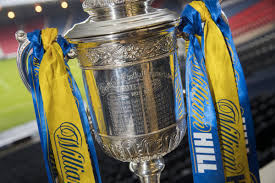
The Scottish FA is going to end its partnership with William Hill, after the current season. William Hill is the title sponsor of the Scottish Cup and Official Betting Partner of the Scotland National Team since 2011.
The news follows on from Everton and Kenyan betting firm SportPesa cutting ties two years into a five-year deal and the English FA having dropped its deal with Ladbrokes in 2017 getting into hot water this season after the sale of FA Cup broadcast rights to Bet365 that could only be watched by Bet365 account holders.
The announcement of the William Hill and the SFA does not give a specific reason for the end of the almost 10-year partnership, though it would appear to be a friendly parting of the ways in light of the increased focus on the role of betting sponsorships in football.
“The Scottish FA would like to thank William Hill for their investment in Scottish football over the past decade. Their sponsorship has enabled development in many aspects of the game, through the Scottish Cup, men’s national team and Hampden Park, but has also supported key initiatives such as the Hampden Sports Clinic’s mental health programme,” Ian Maxwell, Chief Executive of Scottish FA, said.
“The Scottish Cup is a unique and vibrant competition and it has been honour to be associated with it. We would like to thank the Scottish FA for being a great partner and wish Ian Maxwell and his team the best of luck in the future,” Liam McKee, Head of Media and Sponsorship at William Hill, said.










Bwloto has gone live with Loterie Maxa in the Czech Republic, the company confirmed on 26 June 2026. The rollout is a direct integration that brings five Bwloto eInstant games to Maxa’s players.
The initial game line-up includes Piratzy, Piratzy Gold, Diamonds ‘R’ Forever, GoFish Frenzy and Fruitastic Wins.
The launch marks Bwloto’s entry into the Czech market and extends Loterie Maxa’s online instant-win content offering.
“Going live with Loterie Maxa is a milestone we’re proud of. Maxa moved quickly and professionally, and the result is five of our games in the hands of Czech players. It’s exactly the kind of partnership we build for.” — Ivar H. Unnthorsson, CEO, Bwloto
“We’re always looking for fresh, high-quality content for our players, and Bwloto delivered exactly that. The integration was smooth, the games look great on mobile, and the early response has been positive. We look forward to building on this.” — David Vincenc, Product Manager, Loterie Maxa
The post Bwloto goes live with Loterie Maxa in the Czech Republic appeared first on EE Gaming | Global iGaming & Tech Intelligence Hub.
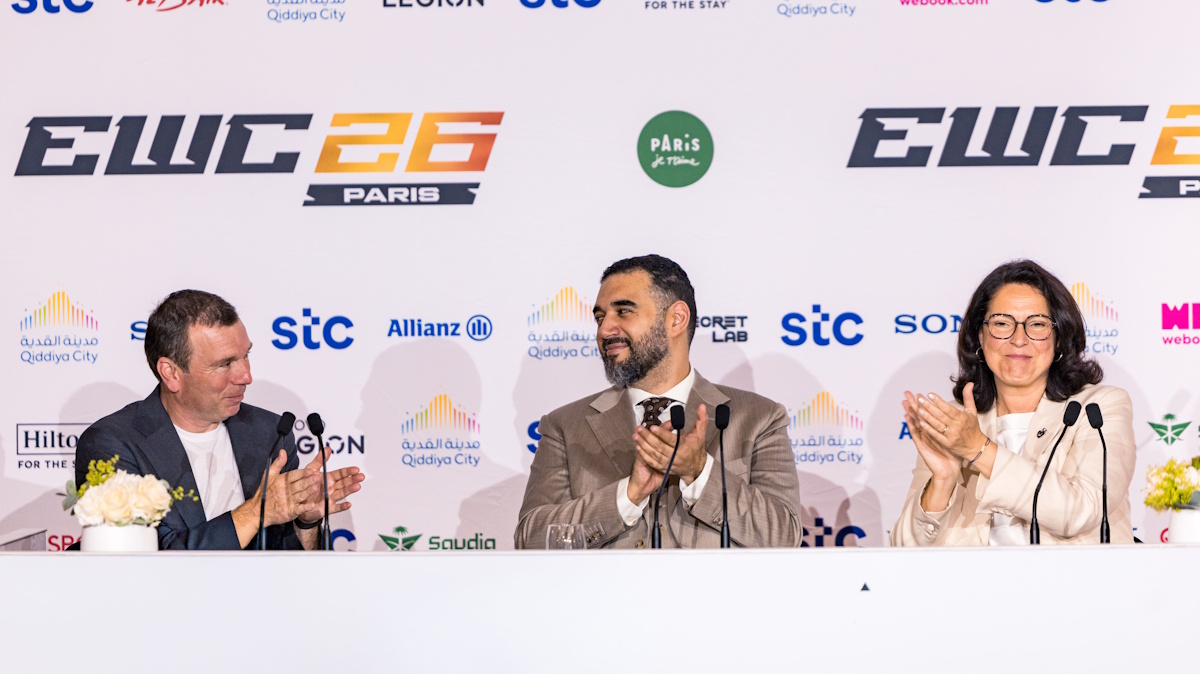
Seven-week event runs through August 23 with 2,000 players, 200 clubs and 25 tournaments across 24 games at Paris Expo Porte de Versailles.
The Esports Foundation has opened the Esports World Cup 2026 in Paris, marking the first international edition of the event. The tournament runs through August 23 at Paris Expo Porte de Versailles and will feature more than 2,000 players and 200 esports Clubs from over 100 countries competing across 25 tournaments in 24 games for a $75 million prize pool.
Organisers said the Paris finals follow the largest “Road to EWC” qualification programme to date, with more than 1.5 million players participating across 330 qualifying events spanning tournaments, publisher leagues and international circuits.
The opening press conference took place at the Hôtel de Ville with opening remarks by Emmanuel Grégoire, the Mayor of the City of Paris.
Ralf Reichert, CEO of the Esports Foundation, said: “Competitive gaming has always had great players, great games and unforgettable champions. The Esports World Cup brings them together in one defining annual stage. For seven weeks in Paris, every title crowns its own winner, but every result also contributes to a bigger race: the Club Championship. That is what makes EWC different. It rewards not only individual brilliance, but the depth, consistency and ambition of an entire Club.”
The Esports Foundation said Cristiano Ronaldo and Magnus Carlsen return as Esports World Cup Global Ambassadors. The event’s Club Championship will distribute $30 million of the overall prize pool, including $7 million for the winning Club, with Team Falcons aiming to defend its title after wins in 2024 and 2025.
On distribution, the organiser said EWC 2026 will be available in 160 countries via more than 100 broadcast and OTT partners, with more than 7,000 hours of live programming planned and coverage in over 40 languages. The Esports Foundation also said it expects up to 5,000 official co-streamers via its Creator Program, which it described as up 42% year-on-year.
The post Esports World Cup 2026 opens in Paris with $75m prize pool appeared first on EE Gaming | Global iGaming & Tech Intelligence Hub.
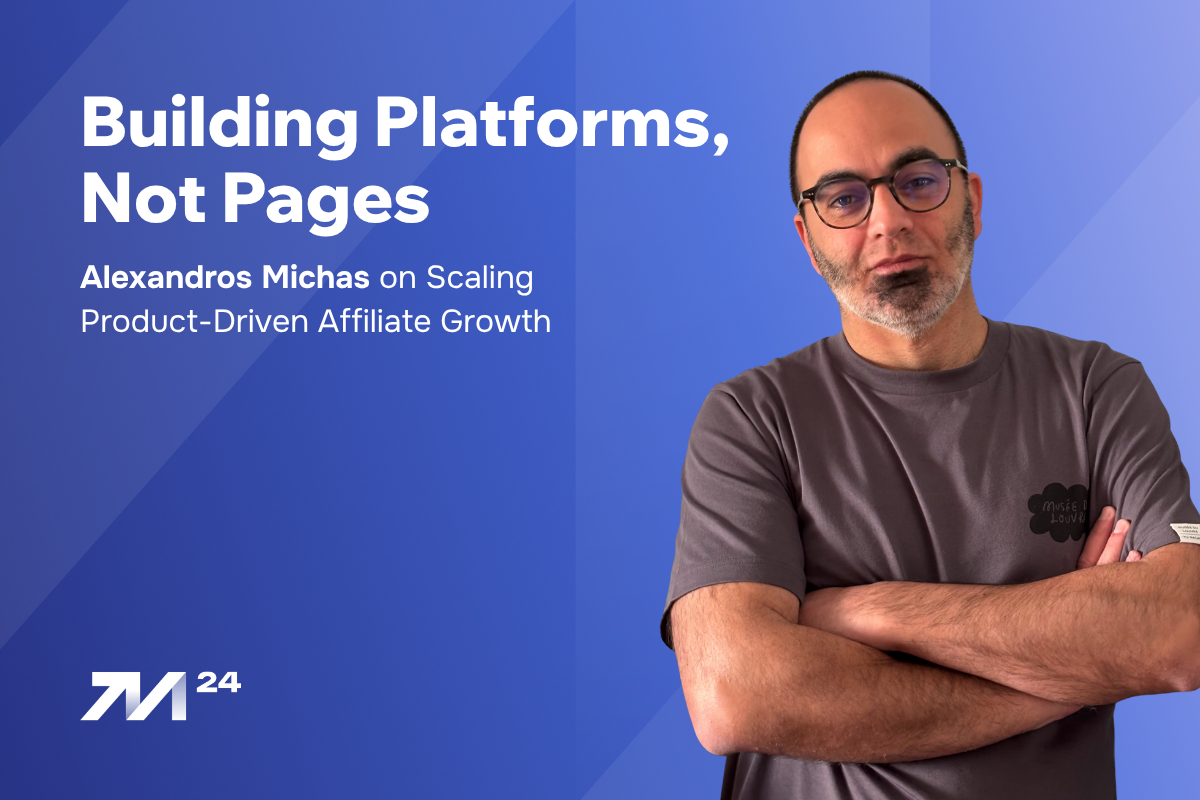
In the world of affiliate marketing, a little chaos is usually the norm. Managing dozens of websites across different regions often means endless firefighting. Enter Alexandros Michas, who was recently appointed as the Head of Website Operations at Media 24. In this interview, we talked with Alexandros about how he is replacing chaotic, site-by-site fixes with a single blueprint to turn standard affiliate sites into true digital platforms.
A few months ago, you were appointed as the Head of Website Operations at Media 24. To give our readers a look behind the scenes, what exactly does this role involve, and what are the main things you focus on in this position?
My job is to take the big-picture goals discussed with our CEO and figure out how we actually build them. I translate high-level business strategy into a concrete technical roadmap and take responsibility for it and everything that goes into our websites.
Day-to-day, I am leading our talented and experienced team of site managers. Together, we look at our portfolio of websites not just as platforms, but as products. We are constantly tweaking site functionality, brainstorming new product features, and upgrading the user experience. The ultimate goal is to move past standard affiliate landing pages and build something stickier. We want our websites to be the definitive, go-to destination where sports bettors in any given region don’t just visit once to find a bookmaker, but actively want to return to for value.
With dozens of websites in the portfolio, how do you prevent operational chaos? What does a scalable architecture look like for a modern affiliate house?
Honestly, if you treat every site like its own special project, you’ll drown in chaos overnight. The secret is standardisation.
Of course, every region has its own local specifics that we have to adapt to, and we do so by having locals as website managers. But underneath it all, we build everything on a single, shared blueprint. When we design a new feature, we don’t just build it for one site. We build it to level up the whole portfolio at once. It also makes expanding into a new market much easier. If a promising new region opens up tomorrow, we don’t have to start from scratch. We just drop in a product that’s already battle-tested and ready to go.
I’ve also set up teams around each GEO and manager, which include SEO specialists, content managers, and others, to ensure a smooth and efficient workflow.
Since you rely on a single blueprint, how do you manage the human element? How much freedom do your site managers have to experiment in their local markets versus sticking to the playbook?
Our site managers are the true experts in their specific regions, so they have total autonomy over their local content plans and figuring out what makes bettors in their area tick. They own that local strategy completely, while the blueprint just ensures they are building on a rock-solid foundation.
Because they are on the ground, I actually encourage them to constantly pitch product improvements. I always listen to their suggestions because a great idea shouldn’t just stay on one site. If a manager finds a feature that works incredibly well for their audience, we don’t just keep it there. We roll it into our core blueprint so the entire portfolio benefits from it.
The company has shifted toward building true digital platforms rather than just simple affiliate sites that rank. In practice, what is the biggest difference between those two approaches?
The biggest difference is value and retention. A simple affiliate site is transactional. It’s built entirely around SEO keywords just to capture a click, send the user to a sportsbook, and hope for a conversion. If Google tweaks its algorithm, that site is incredibly vulnerable because users have no real loyalty to it.
A digital platform, on the other hand, is an actual product. We aren’t just trying to get a click. We are trying to be a helpful place for the sports bettor. That means building features, community, and data hubs. It takes a lot more time and energy to maintain, but it turns a casual visitor into a loyal user. They don’t just find us on Google once. They bookmark the site and keep coming back because the product itself is valuable.
The World Cup is live right now. An event of this scale is a massive test for any affiliate. How did you approach the preparation for this global tournament from a product perspective, and what features did you ship to keep bettors engaged?
We knew the traffic spikes would be insane, so preparation actually started months ago. From a product perspective, the ultimate goal was instant utility. During a massive event like this, users want their information immediately, without any friction.
Feature-wise, we shipped an advanced match centre, a tournament bracket simulator, and worked heavily on upgrading our entire content strategy specifically for the World Cup. Because of the shared framework we talked about earlier, we didn’t have to build these tools site-by-site. Our blueprint allowed us to deploy these advanced features across all of our sports betting properties simultaneously, giving every region a premium product at the same time.
When the final whistle blows on the World Cup and we look back at the rest of 2026, what will have to happen for you to look back and say we absolutely nailed it?
On the data side, I want to look at our metrics and see a clear spike in returning users. That will be the ultimate proof that our platform strategy is actually working.
But our upgrades and feature improvements don’t just stop with the World Cup. We already have plenty of things in the pipeline, and we are planning a massive push right before the main European leagues kick off late this summer.
At the end of the day, I’ll know we nailed it if our site managers are effortlessly launching these new features, seeing the direct results of their work, and feeling like they have the absolute best tools in the industry to win their markets. That would be proof that we didn’t just build websites. We built a highly scalable affiliate product.
The post Alexandros Michas on Building Platforms, Not Pages appeared first on EE Gaming | Global iGaming & Tech Intelligence Hub.

-

 AGCO7 days ago
AGCO Fines Great Canadian Entertainment $120,000 for Using Unauthorised Gaming System Software at Four Casinos
-
Affiliate Industry5 days ago
Hub Affiliations Triumphs at the iGB Affiliate Awards 2026: Winner of Programme/Network Campaign of the Year
-
Asia7 days ago
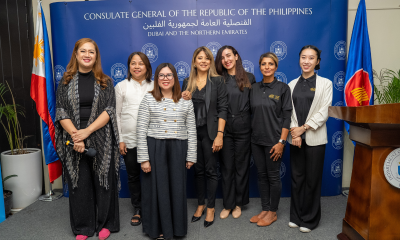
The UAE Lottery joins SAGIP outreach with Philippine Consulate and Infinite Communities
-
Canada7 days ago
St8 extends Octoplay partnership into Ontario and the UK
-
Latest News6 days ago
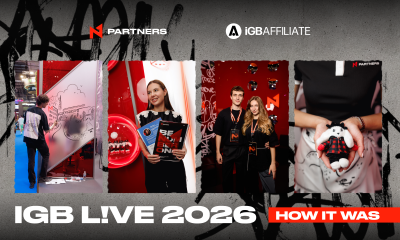
N1 Partners at iGB L!VE 2026: Bringing Together Affiliates, Art and Innovation
-
Latest News7 days ago
LEON announces LEON.bet Masters, a new CS2 tournament in Portugal
-
0007 days ago
Booming Games launches Booming Buffalo Hold and Win Extreme 25,000
-
Austria6 days ago
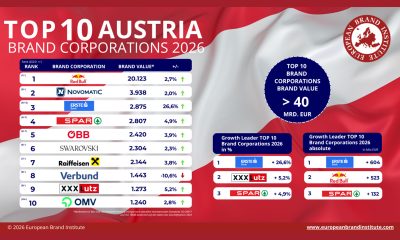
Austrian Brand Value Study: NOVOMATIC Defends Top Ranking