AI
FlexPlay: building a platform made to grow with its partners

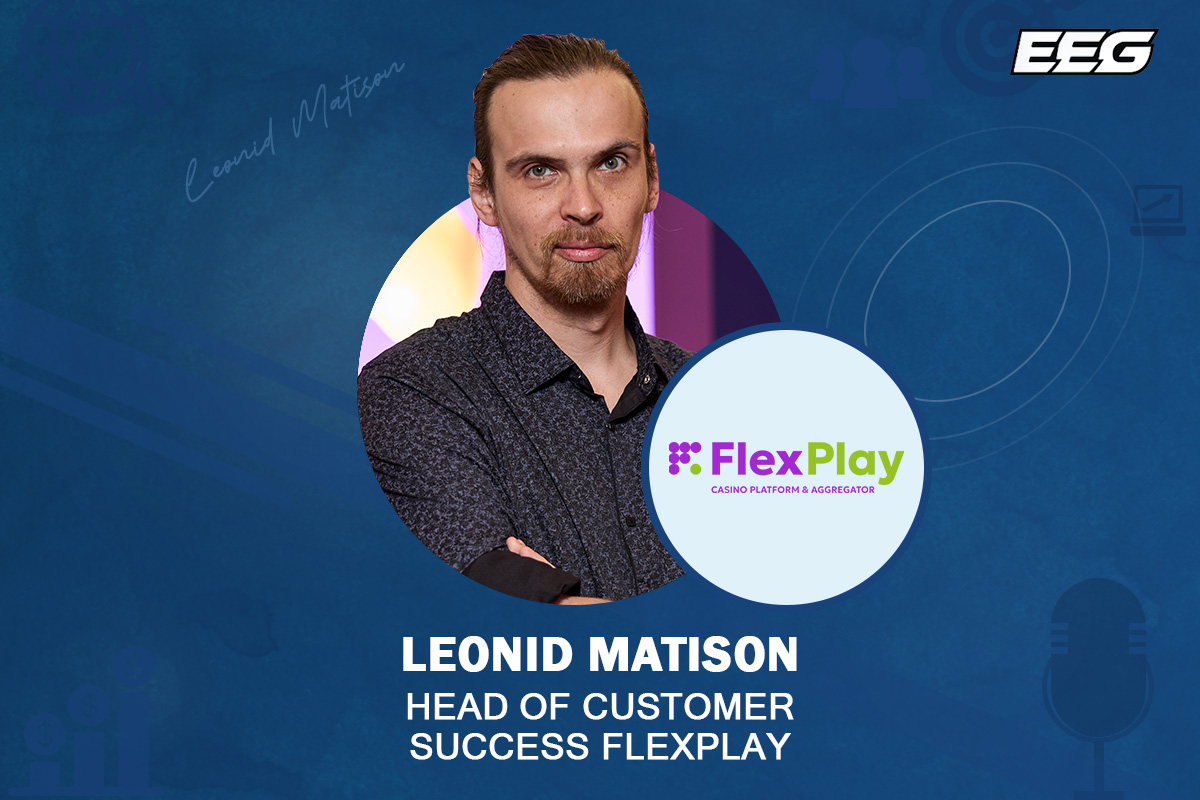
FlexPlay is entering a new phase with the launch of its own casino platform. Leonid Matison, Head of Customer Success, speaks with EEGaming about what inspired the company’s evolution, how it is helping partners adapt to change, and why a focus on flexibility, creativity, and collaboration is driving its vision for the future.
What inspired the move into the platform space, and how did that background shape your approach to creating it?
FlexPlay was born from EvenBet Gaming out of working closely with operators and studios as an aggregator, so we had a very clear view of where existing platforms were falling short. Many operators were forced to adapt their business models to rigid technology instead of the other way around.
Moving into the platform space was a natural evolution. We wanted to build a product that reflects how the market actually works today: fragmented regulation, fast-changing player behaviour, and the need to launch, test, and adapt quickly. That background shaped our approach significantly. Instead of building a “one-size-fits-all” platform, we focused on modularity, flexibility, and speed, so operators can grow without having to rebuild their infrastructure every time their strategy changes.
The platform market is full of established names. What makes FlexPlay stand out, and what kind of identity are you building for the brand?
Our differentiation isn’t about being louder or bigger — it’s about being more adaptable. FlexPlay is designed as a partner-centric platform, not a closed ecosystem.
We are building an identity around flexibility, transparency, and collaboration. Operators can customise their product, UX, content strategy, and growth roadmap instead of fitting into predefined templates. Commercially, we also remove unnecessary pressure at early stages, for example with models where partners don’t pay content fees until they actually start growing.
In a crowded market, identity comes from how you work with partners day-to-day, not just from features on a website.
You have described FlexPlay as a platform that “evolves alongside its partners.” What does that look like in practice for operators working with you?
We don’t treat launch as the finish line. We stay actively involved after go-live.
Operators receive ongoing support in analysing performance, adjusting content portfolios, testing new mechanics, and refining player engagement strategies. Our platform allows operators to add, remove, or prioritise content quickly, run experiments, and respond to real player data instead of assumptions.
We also actively listen to partner feedback and translate it into platform improvements. If a feature or workflow doesn’t serve operators in real conditions, we adjust it.
How does that flexibility help brands entering fast-changing or emerging markets where conditions can shift quickly?
Emerging markets rarely follow a stable or predictable path. This year, we are going to SiGMA Africa for the first time, and this continent is just the right example of how quickly and often market transforms. Regulation changes, payment preferences evolve, and player behaviour can shift very quickly.
FlexPlay’s flexibility allows operators to adapt without disruption: adjusting payment flows, reconfiguring bonuses, changing content focus, or localising UX. The platform isn’t locked into rigid structures, so operators can react to market signals in weeks rather than months.
This is especially important for brands entering highly volatile markets in Africa or LatAm, where the ability to pivot often determines success.
AI is a hot topic right now. How are you exploring its potential at FlexPlay, and what do you find most exciting about how it can genuinely support operators and players?
We approach AI very pragmatically. For us, it’s not about replacing people or creating black-box systems, but about enhancing decision-making.
We are exploring AI in areas like player segmentation, behavioural analysis, and content recommendations. It may help operators understand what players actually want and when. AI can also support smarter lobbies, more relevant promotions, and better detection of engagement patterns.
What excites us most is AI’s ability to reduce noise. It can highlight what truly matters and help them act faster and more confidently. But it can’t and will not fully replace strategic decision-making by humans.
Personalisation has become an essential part of modern player engagement. What does it mean to you in practice, and how is FlexPlay helping operators bring it to life?
For us, personalisation means relevance. Not just visuals or messages, but the entire player journey. FlexPlay enables operators to segment players based on behaviour, preferences, and performance, and then tailor content, bonuses, and communication accordingly. This helps players discover games that actually match their interests instead of scrolling through endless lobbies.
Good personalisation improves retention and trust. Players feel understood rather than pushed, and operators benefit from stronger long-term engagement.
But we suggest avoiding over-personalisation: if the players see only the recommended “long tail”, it may affect the operator’s revenue. Manual curation in addition to personalisation (like featuring a seasonal game during a holiday, or an operator’s personal favourite) allows for strategic promotions and branding.
Growth can be exciting but also challenging for operators. How do you and your team at FlexPlay support partners as they take that next step?
Growth often exposes weaknesses in technology or strategy. Our role is to help operators scale without losing control.
We support partners with analytics, reviews, and strategic guidance, helping them prioritise what to scale and what to optimise first. Technically, the platform is built to handle growth without forcing structural changes. Commercially, we remain flexible so that a transition is easier for operators.
Looking ahead, what are the key milestones or developments you are focused on for the year ahead?
Our focus is on deepening platform intelligence and partner value. This includes expanding AI-driven tools, improving content discoverability, and enhancing automation where it adds efficiency.
We are also investing in better insights for operators: not just reporting, but actionable recommendations that help them make smarter decisions faster.
Another priority is continuing to refine our platform based on real partner use cases, not theoretical ones.
And finally, when you think about FlexPlay’s future, what do you hope the company will represent within the wider iGaming industry?
I hope FlexPlay will be seen as a trusted growth partner — a company that helped operators build sustainable businesses rather than short-term results.
In an industry that often focuses on speed and scale, we want to represent balance: technology that adapts, content that makes sense, and partnerships built on mutual success.
If operators look back and say, “FlexPlay helped us grow the right way,” that will be the real measure of success.
The post FlexPlay: building a platform made to grow with its partners appeared first on Eastern European Gaming | Global iGaming & Tech Intelligence Hub.









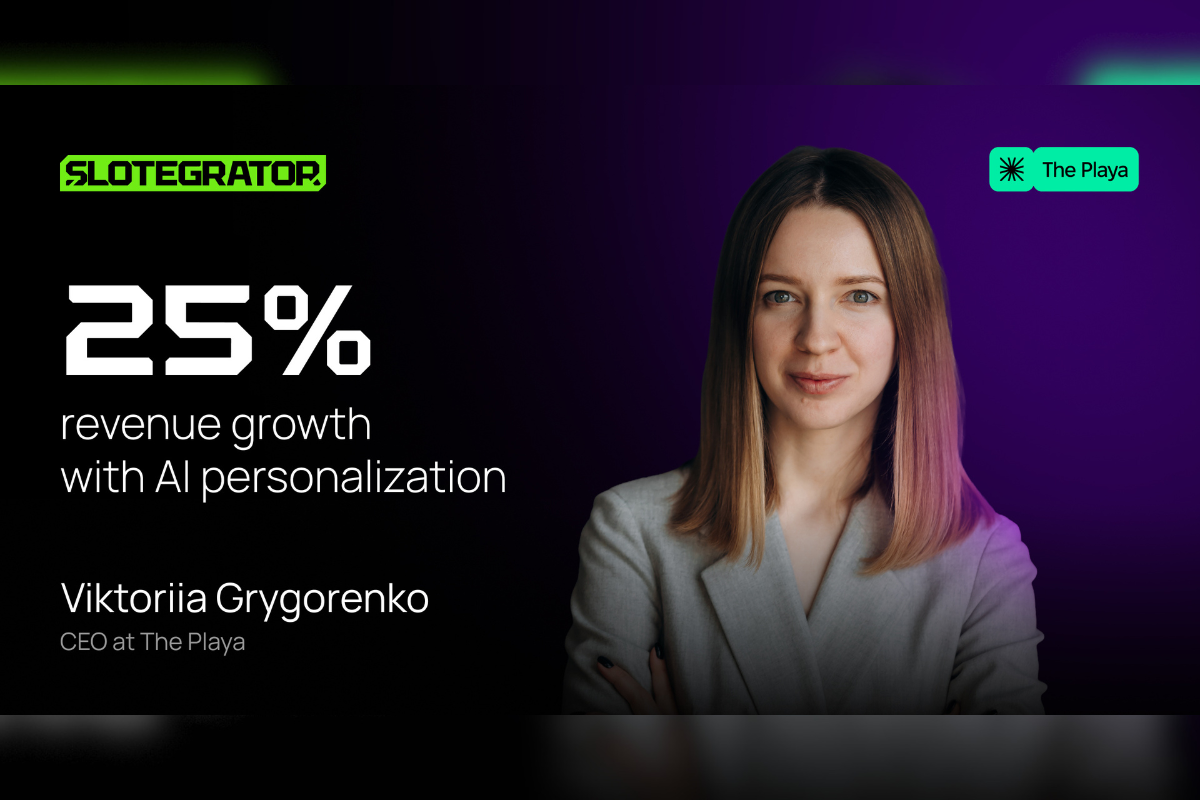
As player expectations rise, generic casino lobbies are no longer enough — AI-driven personalization is becoming essential to engage, retain, and grow audiences.
In this evolving landscape, The Playa is positioning itself at the forefront of iGaming personalization. Slotegrator spoke with Viktoriia Grygorenko, CEO, about the company’s journey, emerging industry trends, and how data-driven experiences can boost revenue by up to 25%, and often beyond.
Founded at the intersection of artificial intelligence and iGaming, The Playa started as a small experimental project and quickly grew into a full-scale platform. Today, the company delivers solutions across the entire player lifecycle — from lobby personalization and acquisition intelligence to VIP insights and retention optimization — serving operators with a monthly GGR of over $10 million.
According to Viktoriia, the industry has long underutilized one of its most valuable assets: player data. “iGaming generates enormous amounts of behavioral data — from game preferences to betting patterns — but most operators still rely on basic segmentation,” she explains. “That’s a missed opportunity.”
The gap is even more obvious compared to global entertainment platforms competing for audience attention. As Viktoriia points out, top companies invest billions in learning what their users want and delivering it instantly, while many online casinos offer identical experiences to all players. However, the industry is beginning to catch up.
Internal research by The Playa shows that 77% of iGaming companies leaders believe AI will be a key competitive advantage within the next two to three years. At the same time, major operators are rapidly expanding their data science capabilities — a clear signal of where the market is heading.
Beyond technology, player behavior itself is evolving. A new generation of users is entering the market, bringing different expectations around user experience. Behavioral data can reveal differences in preferences and risk patterns — opening the door to more effective personalization strategies.
Looking ahead to 2026, Viktoriia highlights three major trends shaping the industry: a stronger focus on retention, the rise of true one-to-one personalization, and a redefinition of loyalty. Retention, in particular, is becoming critical as rising acquisition costs and tighter regulations put pressure on margins.
Read the full interview to discover how The Playa is transforming player experiences with AI-driven personalization and why growth in iGaming depends on understanding players at every step of their journey.
Contact Slotegrator to learn how customized solutions can help grow your business.
Slotegrator
ABOUT THE COMPANY
Since 2012, Slotegrator has been one of the iGaming industry’s leading software and business solution providers for online casino and sportsbook operators.
The company’s main focus is software development and support for online casino platforms, as well as the integration of game content and payment systems.
The company works with licensed game developers and offers a vast portfolio of casino content: slots, live casino games, poker, virtual sports, table games, lotteries, casual games, and data feeds for betting.
Slotegrator also provides consulting services in gambling license acquisition and business incorporation.
ABOUT THE PLAYA
The Playa is a leading iGaming company specializing in AI-powered personalization solutions, enabling operators to deliver tailored player experiences across the full lifecycle — from lobby personalization and acquisition intelligence to VIP insights and retention optimization.
Through advanced behavioral profiling and personalized player recommendations, the company provides iGaming operators with the tools they need to grow, retain players, and maximize revenue.
The post The Playa for Slotegrator: why personalized player experiences are the future of growth appeared first on Eastern European Gaming | Global iGaming & Tech Intelligence Hub.

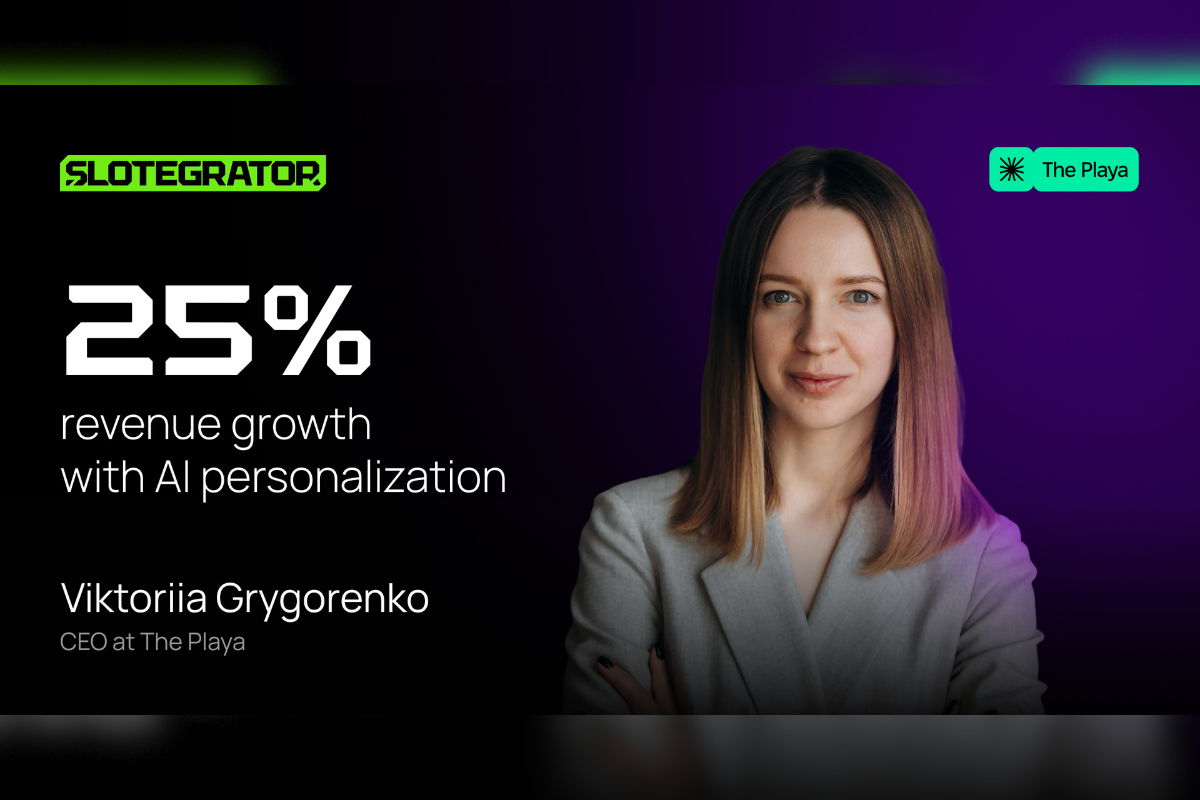
As player expectations rise, generic casino lobbies are no longer enough — AI-driven personalization is becoming essential to engage, retain, and grow audiences.
In this evolving landscape, The Playa is positioning itself at the forefront of iGaming personalization. Slotegrator spoke with Viktoriia Grygorenko, CEO, about the company’s journey, emerging industry trends, and how data-driven experiences can boost revenue by up to 25%, and often beyond.
Founded at the intersection of artificial intelligence and iGaming, The Playa started as a small experimental project and quickly grew into a full-scale platform. Today, the company delivers solutions across the entire player lifecycle — from lobby personalization and acquisition intelligence to VIP insights and retention optimization — serving operators with a monthly GGR of over $10 million.
According to Viktoriia, the industry has long underutilized one of its most valuable assets: player data. “iGaming generates enormous amounts of behavioral data — from game preferences to betting patterns — but most operators still rely on basic segmentation,” she explains. “That’s a missed opportunity.”
The gap is even more obvious compared to global entertainment platforms competing for audience attention. As Viktoriia points out, top companies invest billions in learning what their users want and delivering it instantly, while many online casinos offer identical experiences to all players. However, the industry is beginning to catch up.
Internal research by The Playa shows that 77% of iGaming companies leaders believe AI will be a key competitive advantage within the next two to three years. At the same time, major operators are rapidly expanding their data science capabilities — a clear signal of where the market is heading.
Beyond technology, player behavior itself is evolving. A new generation of users is entering the market, bringing different expectations around user experience. Behavioral data can reveal differences in preferences and risk patterns — opening the door to more effective personalization strategies.
Looking ahead to 2026, Viktoriia highlights three major trends shaping the industry: a stronger focus on retention, the rise of true one-to-one personalization, and a redefinition of loyalty. Retention, in particular, is becoming critical as rising acquisition costs and tighter regulations put pressure on margins.
Read the full interview to discover how The Playa is transforming player experiences with AI-driven personalization and why growth in iGaming depends on understanding players at every step of their journey.
Contact Slotegrator to learn how customized solutions can help grow your business.
Slotegrator
ABOUT THE COMPANY
Since 2012, Slotegrator has been one of the iGaming industry’s leading software and business solution providers for online casino and sportsbook operators.
The company’s main focus is software development and support for online casino platforms, as well as the integration of game content and payment systems.
The company works with licensed game developers and offers a vast portfolio of casino content: slots, live casino games, poker, virtual sports, table games, lotteries, casual games, and data feeds for betting.
Slotegrator also provides consulting services in gambling license acquisition and business incorporation.
ABOUT THE PLAYA
The Playa is a leading iGaming company specializing in AI-powered personalization solutions, enabling operators to deliver tailored player experiences across the full lifecycle — from lobby personalization and acquisition intelligence to VIP insights and retention optimization.
Through advanced behavioral profiling and personalized player recommendations, the company provides iGaming operators with the tools they need to grow, retain players, and maximize revenue.
The post The Playa for Slotegrator: why personalized player experiences are the future of growth appeared first on Americas iGaming & Sports Betting News.
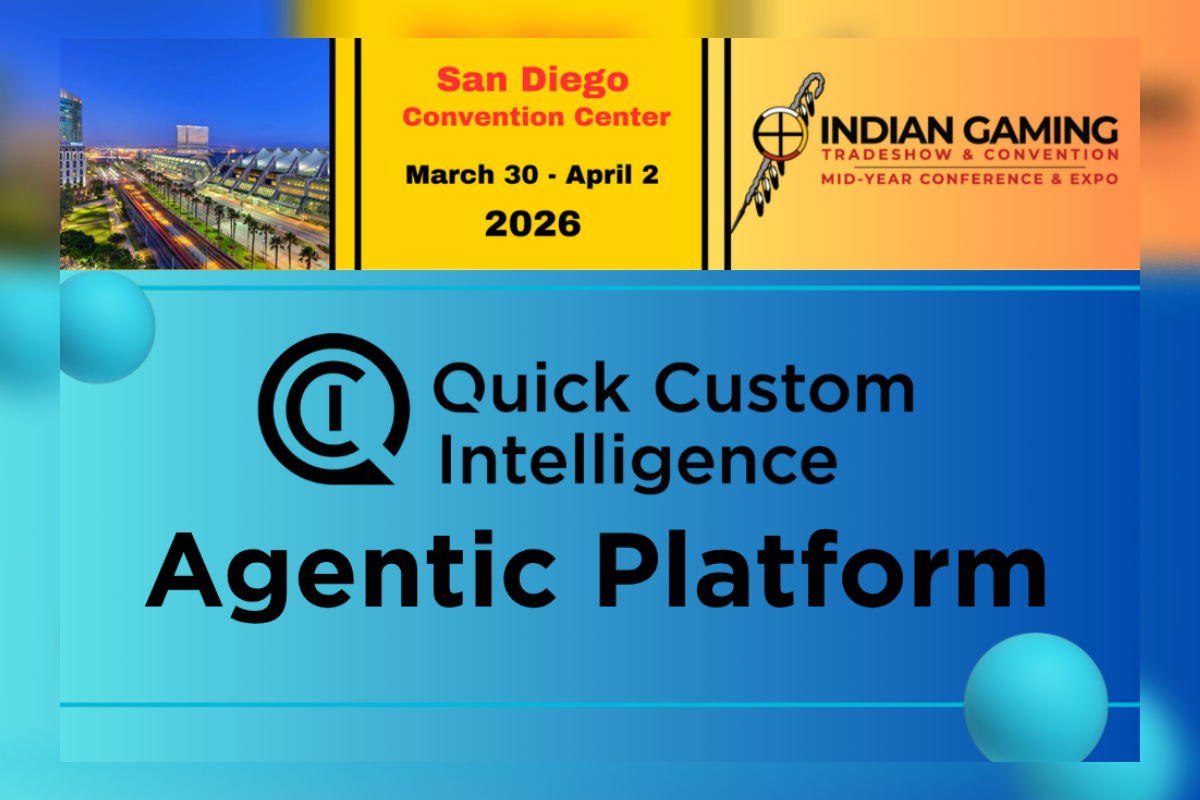
Quick Custom Intelligence (QCI), a leading provider of AI-driven operations software for tribal gaming resorts, announced it will showcase its evolving QCI Agentic Platform at the Indian Gaming Association (IGA) Tradeshow & Convention, March 31–April 2, 2026, at the San Diego Convention Center (Booth #2735).
The QCI Agentic Platform reflects the continued advancement of the company’s enterprise system, enabling operators to move from real-time insight to real-time action across gaming, marketing, player development, and hotel operations. Designed for on-premise and hybrid environments, the platform supports secure, property-level AI deployment while maintaining full operational control.
Rather than introducing a new system, QCI’s approach extends the capabilities operators already use—bringing analysis and execution closer together within a unified operational environment.
“This is a continuation of the platform our customers already rely on. We’re building on what works and extending it, so operators can act on information faster, without changing the way their business runs,” said Dr. Ralph Thomas, Co-Founder and CEO of QCI.
The QCI Agentic Platform builds on QCI’s established product suite, including:
• AGI56.1, a major platform release featuring more than 1000 enhancements across operations
• Chatalytics, QCI’s conversational analytics interface for real-time data access
• QCI Dispatch, a new core operational tool supporting real-time coordination and execution
Together, these capabilities enable operators to unify data, streamline workflows, and respond more quickly to changing conditions across the property.
Attendees will experience how QCI connects data, decision-making, and execution within a single operational system.
“We’re focused on practical improvements that help teams do their jobs more effectively. This is about making systems more responsive, more connected, and easier to use in day-to-day operations,” added Thomas.
The post QCI to Showcase Agentic Platform Capabilities at IGA 2026 appeared first on Americas iGaming & Sports Betting News.

-

 Booming Games5 days ago
Booming Games releases Ultra Buffalo Hold and Win
-
Big Time Gaming5 days ago
BTG brings iconic board game action to the reels with MONOPOLY MEGAPOTS™
-
Baroness Fiona Twycross6 days ago
BGC AGM 2026 Discussed About Surging Illegal Gambling Black Market
-
Latest News4 days ago
ELA Games Contributes to Discussions on Scalable iGaming Ecosystems and Studio Innovation at HIPTHER Prague Summit
-
Bonus Rush6 days ago
RAW iGaming launches BONUS RUSH® – a new family of feature-focused games
-
Brazil6 days ago
EGT to showcase its gaming portfolio for Brazil at SiGMA Americas 2026
-
Arkansas6 days ago
CATALIST SPORTS SECURES NEW SUPPLIER LICENSES IN ARKANSAS AND NEBRASKA
-
Brazil5 days ago
Brazil advances integrity agenda amid strong market growth