Interviews
European Gaming Streamers Roundtable

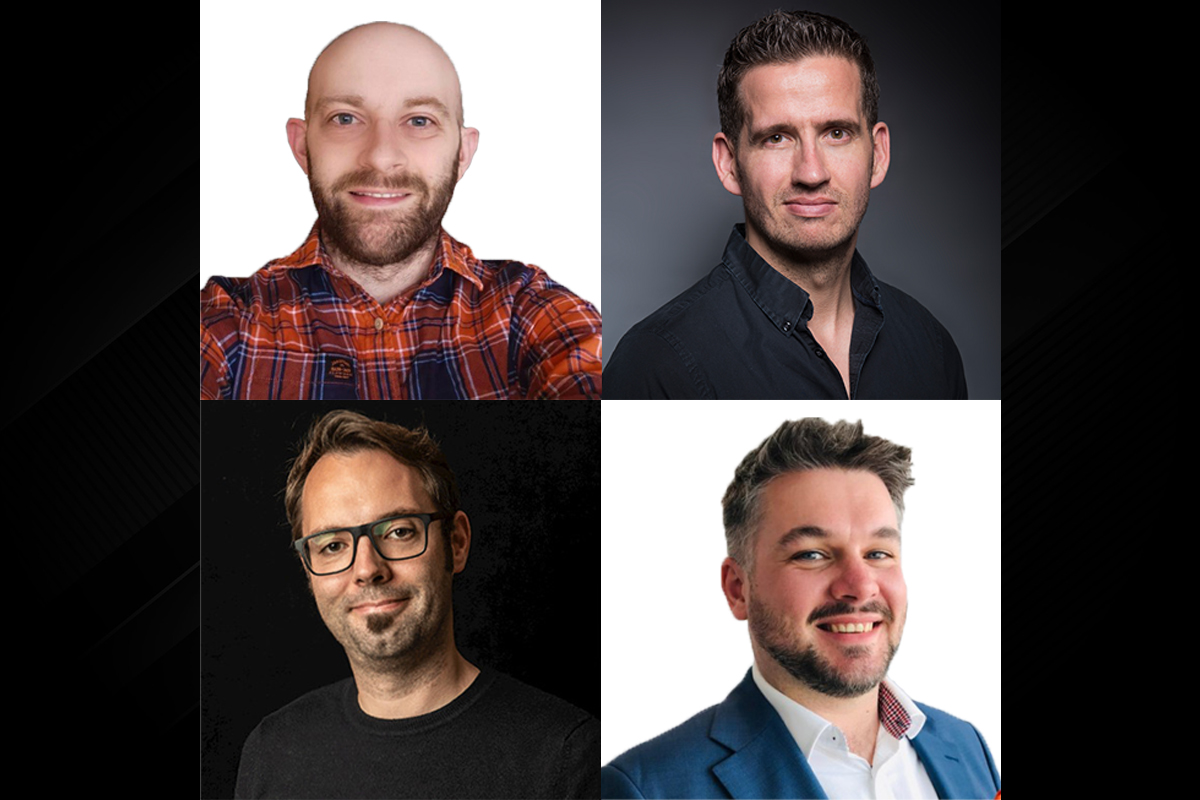
Participants
Michael Pedersen, CCO at Livespins
Will Barnes, Owner at Hideous Slots
Bryan Upton, Founder at Lucksome
David Mann, Chief Commercial Officer at Swintt
There is no question that online slot streaming is enjoying a meteoric rise in popularity? What are you doing to leverage the potential it provides?
Michael Pedersen, CCO at Livespins
We have launched an entire company with the sole purpose of leveraging the meteoric rise of online slot streaming, Livespins. For a long time, people have been asking if online casino can be social, but you only have to look to Twitch to see that it absolutely can be. To date, there have been more than 280 million hours of streaming footage consumed in the slots category and the chat is on fire. With the hypothesis well and truly proved, we launched Livespins to take this a step further by allowing players to get in on the action by betting behind the streamer and to also offer operators and developers a reputable, compliant platform via which they too can capitalise on the popularity of streaming. We really are going all-in on this as, ultimately, we believe that it is the future of online casino.
Will Barnes, Owner at Hideous Slots
Hideous Slots was always meant to be about community, and the live streams themselves are really at the core of audience engagement. I consider that streaming and video promotion has already overtaken traditional methods of content discovery amongst key demographics. For me, this means using online streaming to achieve the things that would previously have been achieved elsewhere – for example, remembering to lead viewers to your website through streams, comments and Live Chat has now become just as important as traditional SEO. Working with game providers is becoming more common for streamers – as you’ve said, online slot streaming is massively on the rise, and streamers are now proving to be one of the most direct tools in marketing. But we still need to maintain our integrity and the trust of the audience – so commentary on specific products must always fair and balanced.
Bryan Upton, Founder at Lucksome
Not enough would be the honest answer. We are a small and new studio going through a normal start-up process of improvement, scaling and hitting our rhythm. I would say that we are building Slots that the streaming community would have an affinity for. Voodoo Temple, our latest slot has a lot of punch and enough big wins behind it in the first week of launch to have proven that. This is a starting point at least. Now, for us it’s about getting our games and brand in front of the streamers around the world and letting them do what they do best – play and entertain. We are just starting to push in this direction and learning how this part of the industry is working. With this meteoric rise, has come a premium for streamers’ time, and that is something smaller studios like Lucksome would need to understand in terms of return before taking that cost on. Is there some solid data on this to prove the business case? It would be great to be able to have those discussions, and how to help the younger, innovative studios into the limelight.
David Mann, Chief Commercial Officer at Swintt
I agree that the popularity of slot streaming is increasing every month. And for us, as a slot supplier, it is very important that the streaming community knows about our game releases so they can share our latest titles with their followers. A good relationship with the streamers that share the same culture and beliefs as the studio is key as this ensures they are aware of new games coming to the market. However, it is also important to release games that are liked by the community that follows the streamers, because ultimately big wins are what are people interested in. So high volatility games with high max wins should definitely be a part of the portfolio of anyone who wants to succeed in gaining visibility for their games among streamers and their audiences.
We are seeing some studios build out their own teams of streamers. What are the pros and cons of doing this?
Michael Pedersen, CCO at Livespins
I am a great believer in knowing what you are good at and making that your focus. Game studios are great at developing engaging and entertaining slots and that is where they should deploy their resources. They can then partner with streamers or platforms such as Livespins and get in on the action that way. Of course, this means that streamers and streaming platforms need to be driving progress.
The way I see it, live streaming consists of two parts – the technical and the human. Over time, everyone will nail the technology but because there is such a reliance on the human element this is where the real difference will be made. That is why at Livespins we provide our streamers with access to coaches, props, themes, etc and this is something that studios will struggle to do while also ensuring their games continue to top the charts.
Will Barnes, Owner at Hideous Slots
I think the biggest advantage of building your own team is that you’re going to have complete control over the content. Ultimately the engagement will always be with the individuals on screen and I think this might be difficult to manage if things become successful. The danger will always be that people are tuning in for the influencer and not the brand itself. An associated issue is that social media success often involves interaction across platforms and this can be a 24/7 job. Motivating a team to make personalised social media posts, and to be passionate about your product would be a challenge – especially when competing against streamers who are offering this with ease. To really enjoy success, you need to find someone who is not just passionate about entertaining, but also passionate about engaging with the audience, and passionate about the gambling!
Bryan Upton, Founder at Lucksome
The pros are pretty obvious, if you set up something well, you gain influence and the exposure of your games, which all studios, big and small need and want. It would also create a stream of solid and direct feedback on a segment of the market to allow you to hone your product even more. The cons, personally I think the truly GREAT streamers are not just the ones that are fun to watch but are also authentic and independent. Meaning they play everyone’s games, they play the games they love, the games their audience love. Asking them to play a game they don’t like falls flat on the stream and the watchers feel it. If you have your own streamer set up, you need to make sure what you’re producing in terms of content is spot on for the community you are serving and your streamers really need play other competitor games as well – otherwise you’ll lose the audience. I guess another con is scale. You’ll need a lot of people to tackle those important local markets, Italy, German speaking, Spanish etc etc. In the same way as a provide you try to push your games all over the world, you would want your reach and influence to match. I would say that is out of reach for smaller studios and a different business to that of running a game studio. I think it would be great to see some stronger relationships between streamers and suppliers to produce some great original content and experiences – so there is something to be had there.
David Mann, Chief Commercial Officer at Swintt
I believe studios that build a team of their own streamers lose the legitimacy and trust of the viewers because it is very probable that in-house streamers will not criticise the studios’ games even if they are not up to standard. However, by having your own team of streamers, you a studio can ensure that all of their games are played and see the light of the streaming community. So, there are pros and cons to both, but if studios want to engage and entertain players in an authentic way it is important for streamers to remain independent.
Just how difficult is it to launch streaming channels and build sizable audiences? What are the key challenges faced and how can they be overcome?
Michael Pedersen, CCO at Livespins
Livespins is a very different beast. We are not an affiliate streamer and we do not depend on building large audiences and a loyal community of fans. This is because we integrate directly with an online casino operator and engage with their existing player base. For affiliate streamers, it is insanely difficult to launch a channel and build a sizeable following, and then also convert that following into paying players at partner online casino brands. That is why Livespins is so innovative – it allows operators to capitalise on the popularity of streaming by offering it to their players and by also letting them bet behind the action taking place across the reels.
Will Barnes, Owner at Hideous Slots
Launching a channel comes with a number of challenges, and the most significant challenge is building an audience. Often, finding those first 20-30 viewers comes quite easily – friends, friends of friends, or those who enjoy the high level of engagement that a smaller stream can provide. Again, once you surpass 150-200 viewers, growth is more consistent, as your content is pushed out by YouTube and Twitch organically. But between 30-150 viewers is a real struggle, and I think the quickest way to overcome this hurdle is to try and offer something a bit different, and to keep trying. Keep showing up, keep offering somewhere for people to join together, and hope that eventually these numbers continue to grow. There’s no shortcut to building huge numbers – it’s about being authentic, and if you have something interesting or unique enough, eventually it will pay off.
Bryan Upton, Founder at Lucksome
We are seeing this continued trend in European markets of high volatility game play – but we have hit the ceiling in terms of how much we can push this, factors from high exposure to the Operators and squeezing of margins with very harsh, high risk math profiles are, in my opinion, creating the beginnings of player fatigue and burnout and reticence from the industry. I feel player tastes are settling into a happy medium between the extremes that our industry tends to have an affinity with, with is a good thing. From our side, we continuously have to avoided falling into the noise of all the other game releases, and having something to talk about directly to players and through influencers I think is key. We pride ourselves on being more transparent on the games we’re producing and how they work, as we think it is key to attracting the right players to your games. We keep an eye on new trends in and outside our industry and how we can utilise or jump on them to make better gaming experiences, which is our life blood, as is as adjusting our design processes looking at the new generation of players out there.
David Mann, Chief Commercial Officer at Swintt
This is definitely not the easiest task. You need to be trustworthy, entertaining and stream on a regular basis to gain a sizable audience. But trust is really key here. Viewers follow streamers to see their reactions so during a stream they need to interact with the audience and react to the important moments when they play. Streamers are also trying to help to change the perception of gaming, so it is important to set the key goals when launching a streaming channel. I see it being of huge importance to be a legit streamer and to stay away from adopting the practices of so-called fake streamers.
What tactics are you using to drive growth? Are audience demands changing? If so, how? And what impact is this having on streams?
Michael Pedersen, CCO at Livespins
Because we are coming at live streaming from a B2B perspective, we are driving growth by integrating with more operators and partnering with more slot providers. Audience demands are changing – no longer are players happy sitting at home just spinning the reels. They want to engage and interact with streamers and other players, and they also want to be involved in a more direct way and that is why we offer the option to bet behind.
The quality of streams is going to have to improve, and that is why we offer our streamers coaching and the tools they need to create entertaining environments. I think we will also see players demand more transparency from streamers and ultimately concerns about responsible marketing and safe gambling will probably lead to regulatory oversight. Of course, this is something that has already been built into the Livespins platform.
Will Barnes, Owner at Hideous Slots
As I’ve said previously, I always try to put a unique spin on any content I produce, which in itself can be difficult when working within a niche category. I recognise that a commonality amongst successful influencers is to share as much as possibly – and so I endeavour to put myself out there, engaging with social media at every opportunity. Over time, the audience changes. You bring in new viewers, and you begin to notice some of the older ones drop off – this is natural, but as a result of a changing audience, sometimes we have to move along with content too. Some months our viewers primarily want to see bonus buys, and at another time there may be a demand in the chat for an exciting new release. What endures is the desire to have a say in the content – taking requests from the chat, so we keep this at all times. There’s no denying this has a huge impact on streams – our bonus hunt streams receive the most engagement, especially in terms of live viewers when we open the bonuses we have saved. Often it’s about weighing up what gets the most viewers against the cost of producing the content, and keeping the majority of viewers happy with the decisions made.
David Mann, Chief Commercial Officer at Swintt
To have your game streamed by popular streamers introduces the game to a much wider audience and can bring potential players, therefore we like to team up with the streamers and run promotions together to reward the players for trying out our games. We believe that by doing this it’s fun for the players, streamers, and ourselves as well. The audience loves to see huge wins but at the same time, it is important to keep bets within a realistic range so the streamer can show their followers that they can hit nice multipliers with affordable bets.
Where is slot streaming ultimately headed? And what role will you/your organisation play in pushing the sector towards its ultimate destination?
Michael Pedersen, CCO at Livespins
I touched on it in the last question, but I believe that affiliate slot streamers are heading into troubled waters. It is only a matter of time before regulators, operators and providers in regulated markets and even Twitch distance themselves from some of the more unsustainable practices that we are unfortunately seeing many affiliates adopt today.
For example, many have their gameplay sponsored in some way, but do not always disclose this to their viewers, essentially misleading their community into thinking their often-lavish lifestyle can be afforded due to gambling winnings, which is not the case.
As affiliate streamers have their income strongly correlated with the size of their community, unfortunately, we often see practices like view botting, very large bet amounts and extreme studio behaviour, often engineered to create virality and subsequently, increase their following.
Again, this is where Livespins comes in. We really do not like what we are seeing right now with affiliate streamers on Twitch, and we do not think that it is a sustainable platform or practice in the long term. Of course, the appetite for streaming content is only going to intensify. Livespins is an alternative to this; it is regulated, and all of the streaming and betting is taking place inside a licensed entity. We are also leaving unsustainably large bet amounts behind.
Ultimately, the experience that we offer means that we don’t need to wager irresponsibly to create viral videos that engage audiences and allow us to monetise.
Will Barnes, Owner at Hideous Slots
As time goes on and streaming continues to build in popularity, I think we will only see growth and diversification within video promotion. Even outside of slot streaming, influencers are leading the charge in marketing. Long gone are the days of radio or television advertising driving the majority of sales – nowadays, the endorsement by a trustworthy influencer, can make a real difference. What’s most interesting about this is that for a person to earn that position of trust, they just have to be well known, even if no one is quite sure why they’re well known. I believe slot streaming will go in the same direction.
I think we all play a part in this by continuing to build the streaming community, but on a personal level I’d like to play a role in showing viewers that yes, I advertise a product, and yes I am an ‘influencer’, but I take that position of trust seriously. I want my viewers to know that whether they’ve watched me for a week or for three years, I stand by the things that I say, the content I produce, and the products that I advertise, and I think it’s important that anyone involved in the streaming community shares this goal. Streaming will continue to drive marketing, and it’s up to those of us currently involved to decide how we are viewed in this time.
Bryan Upton, Founder at Lucksome
It’s headed to a more interactive experience with the audience becoming more involved with the stream. New platforms will emerge that will add tools to allow this form of gambling interaction and socialisation. We are a fast-growing industry that is mainstreaming, and now, therefore, I believe can support this level of community that perhaps before would not have been impossible. We hope to be a content partner in this, supplying a core part of the experience, but also meaning that we are aware will may need to look at how to adapt our games design in this direction in the future. Until then we will watch, learn and see where we can add value in what we do best, games.
David Mann, Chief Commercial Officer at Swintt
In my opinion, streaming is undoubtably a very important part of the gaming industry and its future and it will only grow over the coming months and years. I hope that we will see an increase in legit and trustworthy streamers who will help to improve the perception of slots and gaming. Our plan is to release more games that will be liked by the streaming community and to cooperate with the streamers who we believe run their business in the right way.
Powered by WPeMatico


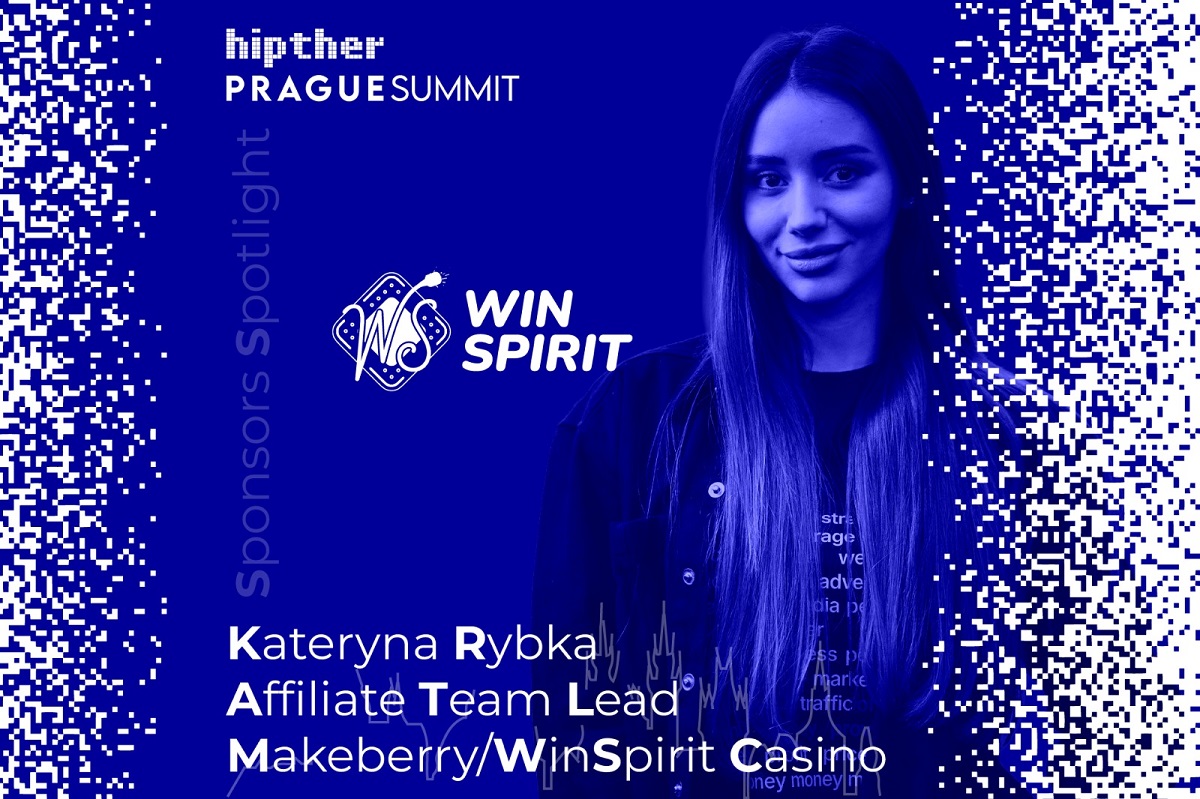
Interview with Kateryna Rybka, Affiliate Team Lead
Ahead of HIPTHER Prague Summit 2026, we speak with Kateryna Rybka, Affiliate Team Lead representing WinSpirit Casino, one of the fastest-growing brands in the global iGaming ecosystem. WinSpirit is a General Sponsor of the HIPTHER Prague Summit 2026, boasting a portfolio now exceeding 17,000 games. Kateryna shares insights into WinSpirit’s product vision, marketing approach, and the role responsible gaming plays in building sustainable growth.
Kateryna, WinSpirit positions itself as a fast-growing brand built on player-centric technology. From your perspective, what are the key pillars currently driving the brand’s momentum in today’s competitive iGaming landscape?
The core difference is that WinSpirit doesn’t treat players as traffic — we treat them as people. Most operators optimize around bonuses and acquisition. We optimize around behavior. What keeps a user engaged beyond the first deposit? What makes them return because the experience is compelling, not just because there’s a promo? That’s our focus.
Speed is critical. Hypothesis-driven experimentation happens weekly, not quarterly. Product, marketing, and affiliates work in tight loops, and if something isn’t working, we adjust fast. We prioritize LTV over volume — affiliate partnerships are strategic, not transactional. We work with partners who value engaged players, not one-time depositors.
Responsibility is non-negotiable. Responsible gaming isn’t compliance for us — it’s a product principle. Session reminders, deposit limits, reality checks are core features, because if our audience burns out or loses trust, no bonus will bring them back. That balance — innovation with measured execution — is what drives our momentum. We’re building something sustainable.
With a portfolio of more than 17,000 games, content depth is clearly a major strength. How does WinSpirit ensure that scale translates into meaningful player engagement rather than just catalogue size?
Scale without curation is just noise. We don’t treat our portfolio as a static catalogue — we treat it as a personalized experience. Our UX adapts based on player behavior through intelligent filtering and recommendations. If someone gravitates toward high-volatility slots or live tables, the experience reflects that. We use data to understand which games retain players beyond the first session and optimize accordingly.
Provider partnerships give us an edge here. We work with top studios to secure exclusive conditions, early access, and unique variants — so our users get something they can’t find everywhere else. Genre diversity also supports retention. Players evolve, and a deep portfolio lets us keep them engaged as preferences shift from slots to live casino to crash games, without them looking elsewhere.
Scale is only valuable if it serves engagement. We’re building an experience that evolves with our players, not just a library.
WinSpirit emphasises experience-driven growth over short-term promotional tactics. How is this philosophy reflected in your marketing campaigns and affiliate strategy today?
Our campaigns are built around ideas and narratives, not just bonuses. We try to go where the industry doesn’t — creating experiences that feel emotionally engaging, not transactional.
For example, WishExpress was a feature where players could send virtual gifts to each other during the holidays. It wasn’t about driving deposits — it was about creating connections. UnValentine’s Day flipped the traditional romantic narrative and resonated with users who don’t buy into the Valentine’s hype. Both saw strong engagement because they tapped into something real.
WinSpirit works with emotion, not just CPA. Our affiliate strategy reflects that — we look for partners who understand storytelling and retention, not just volume. And we pay close attention to player feedback. Long-term reputation matters more than short-term spikes.
Responsible gaming is becoming a defining factor for sustainable operators. How is WinSpirit embedding responsible gaming principles into both the product experience and its broader marketing approach?
Responsible gaming isn’t a separate feature for us — it’s embedded in the product. Session reminders, deposit limits, self-regulation tools, transparent bonus terms — these are core, not optional. Beyond that, we’re actively collaborating on education. SmartPlay, our partnership with Casino Guru, focuses on helping our audience make informed decisions through educational content and tools. The response has been strong — players engage more when they feel empowered, not just marketed to.
We’re also working with the Digital Wellness Center, which specializes in behavioral health and digital well-being. This partnership is rolling out now, and it’s about providing users with resources that go beyond gaming — addressing habits, balance, and long-term health. It’s about balancing engagement with ethics. Growth that compromises player well-being isn’t sustainable.
As WinSpirit strengthens its long-term market positioning, what key developments – whether product, partnerships, or player experience – should the industry be watching from the brand in the months ahead?
We’re doubling down on brand positioning and experience innovation. There’s a new creative campaign launching very soon — I can’t spoil it, but it follows the same philosophy as WishExpress and UnValentine’s Day. Players should expect something unexpected.
On the product side, we’re deepening gamification and personalization. The goal is to adapt the experience to each user — not just through recommendations, but through mechanics and features that respond to individual behavior. We’re also optimizing retention tools and expanding our responsible gaming framework, including the Digital Wellness Center partnership I mentioned earlier.
Sustainable growth remains the priority. We’re not chasing shortcuts — we’re building infrastructure that scales responsibly. And innovation is ongoing. Recently, WinSpirit received Special Recognition as Most Innovative Online Casino Operator for AI-driven customer support, automated query handling, and behavioral analytics that improve service quality. For us, that’s just the beginning. We’re applying similar thinking across WinSpirit — smarter systems, better player experiences, stronger foundations. The industry should watch for a brand that’s moving with intention, not just speed.
And it’s worth noting — platforms like EEG Intelligence Hub play a role in that evolution. Congratulations on 11 years of holding this industry to a higher standard. That kind of journalism matters.
The post How WinSpirit Builds Sustainable Growth Through Player-Centric Innovation appeared first on Eastern European Gaming | Global iGaming & Tech Intelligence Hub.
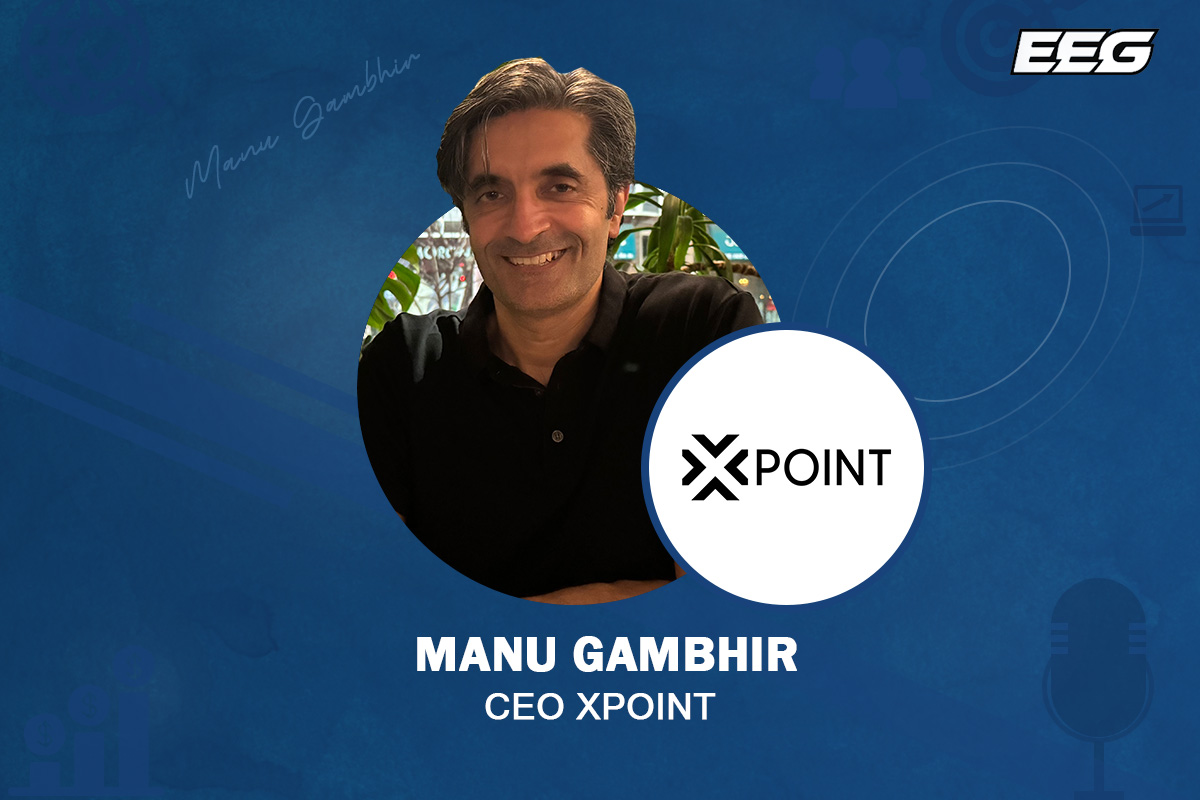
Having built its reputation as a trusted geolocation partner for North American gambling operators, Xpoint is now setting its sights on Europe. With Italy as its entry point, the company is looking to bring the same compliance precision and seamless player experience it has delivered stateside to a continent where regulatory boundaries are anything but straightforward. CEO Manu Gambhir sets out what is driving the expansion.
With a previous focus on the North American gambling market, what is driving your expansion into Europe now?
Our success in North America has given us an understanding of the complexities around geolocation as well as invaluable insights into what operators truly need from a geolocation provider. We have spent years building technology that balances compliance precision with user experience, and we have seen firsthand how critical that balance is. Europe presents a natural next step as markets like Italy have sophisticated regulatory frameworks and operators who understand the value of reliable geolocation. Our technology already handles complex multi-jurisdictional scenarios in the US where you might have different rules between states, or even between counties. That granular precision translates well to markets where regulatory boundaries don’t always follow national borders. We are not just looking to export our North American solution, we aim to bring our proven technology and adapting it to meet European requirements.
You mentioned Italy, how does Xpoint’s approach address that market’s specific compliance needs?
In Italy, geolocation rules for online gambling have recently undergone a massive overhaul. As of late 2025, the regulatory body Agenzia delle Dogane e dei Monopoli (ADM) has transitioned the country into one of the strictest geolocation and identity verification frameworks in Europe. The core principle is simple. To gamble on an Italian-licensed site, you must be physically located within Italian borders. The complexity is added with the requirement of excluding specific territories like Vatican City and San Marino which are not covered by the local gambling laws. Some regional legislation also dictates safe distances from military zones, schools and places of worship which operators need to block activity from.
The ADM now also requires operators to use multi-layered location verification and to implement anti-spoofing technology, blocking access if VPN, proxies or Remote Desktop Software is detected.
Italy’s regulatory environment is rigorous, and rightfully so. Our approach has always been to work closely with regulators rather than simply meeting minimum standards. We are now focused on understanding ADM’s requirements around player location verification and responsible gambling measures.
What lessons from the North American market are most applicable as you expand into Europe?
The biggest lesson is that geolocation technology must be invisible when it works and transparent when questions arise. Operators in North America initially worried that location checks would create friction in the player experience. We have proven that accurate geolocation can happen seamlessly as players barely notice it. But when disputes arise, or when regulators have questions, our audit trails and documentation provide complete clarity. European operators have the same concerns, and we’re looking to bring solutions that have already solved them at scale.
Beyond Italy, what’s your broader vision for Xpoint’s presence in Europe?
Italy is our intended entry point, but we are also starting to look at Europe as a whole. In the US, we are seeing the use cases for geolocation evolve, with certain states like Illinois, introducing a higher levy in one county, making it even more important to identify the exact location of players. Similar challenges may emerge in Europe, too.
We are currently in a learning phase about Europe and what each market might need. As we have found in North America, what will definitely be essential is local expertise, responsive support, and technology that evolves appropriately with each market’s regulatory landscape.
The post Xpoint aims to bring battle-tested geolocation tech to Italy as regulatory complexity grows appeared first on Eastern European Gaming | Global iGaming & Tech Intelligence Hub.

In less than a year since its launch, BlueBull.tech has positioned itself as a versatile partner within the iGaming ecosystem, providing managed services, strategic consulting, marketing, operations, and technology support to operators across multiple markets.
Led by the founder Lucas Lebleu, the company aims to act as an external growth and execution arm for operators seeking speed and market expertise.
Alongside this B2B services model, the group is also expanding its affiliate media presence through AffPlus.io, an independent network of international money sites and satellite platforms designed to capture qualified traffic and connect operators with targeted audiences across Brazil, Latin America, the United States, and other English-speaking markets.
“We are not just building websites. We are building media, acquisition, and positioning assets that are aligned with the new phase of global iGaming.” (L.L)
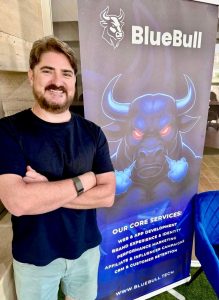
Before we talk about Cazinho.com, it is worth starting with BlueBull.tech. In just a few months, you have already positioned yourselves across several fronts in the sector. How do you define BlueBull.tech today?
BlueBull.tech was born with a very clear proposal: to be a strategic execution platform for operators. We did not want to be seen merely as an agency, nor just as a consultancy, and certainly not as a one-off supplier. What we built is something more transversal.
Today, BlueBull.tech acts as a managed services partner for operators of different sizes and realities. This includes fronts such as growth strategy, acquisition, CRM, content, marketing, operations, commercial expansion, business development, brand positioning, and technological support. In some cases, we come in in a very tactical way; in others, in a much more structural capacity, almost as an extension of the operator itself.
We have experience supporting operators in regulated markets such as France, as well as in markets with other international licensing structures.
This gives us a very broad reading of the sector, because we understand the differences between regulatory maturity, competitive dynamics, acquisition channels, and the operational requirements of each market.
Most importantly, BlueBull.tech was built to generate real impact. Less theory, more execution.

And where does AffPlus.io fit into this vision?
AffPlus.io is a separate business unit. This is very important to make absolutely clear. It has a different team, its own operation, and a specific focus on media, content, SEO, performance, and monetization through an international network of digital assets.
If BlueBull.tech was designed to serve operators and partners from the B2B side, AffPlus.io was created to develop our own acquisition, audience, and authority channels.
In other words: BlueBull.tech provides services, structures solutions, and drives business forward; AffPlus.io builds and scales proprietary affiliate and media assets.
The two fronts complement each other extremely well, because we have vision from both the operator side and the acquisition side.
This allows us to better understand what truly generates value, what converts with quality, what supports retention, and what makes sense in increasingly professional markets.
In addition to these two fronts, you also maintain important strategic partnerships within the industry. Does that remain a central part of the operation?
Without a doubt. We remain a strategic partner of Alea, and we continue to support different partners in the sector through a logic of consulting, commercial development, and strategic support.
That is also part of the DNA of BlueBull.tech. We have always viewed the business from an ecosystem perspective.
iGaming is an industry built on relationships between operators, aggregators, providers, affiliates, platforms, payment methods, technology, and distribution.
Our proposal has always been to operate with a broad rather than isolated vision.
Now moving into AffPlus.io: Cazinho.com is the first major hub announced for Brazil. How did the idea come about and what opportunity did you identify?
Cazinho.com was born from the perception that Brazil has entered a new stage. There is a huge market, a very active audience, operators seeking scale, and at the same time a growing need for professionalism, segmentation, and trust.
What we saw was that there was still room to build something better structured. Many affiliate projects remain overly generic, too dependent on a single site, weakly segmented by search intent, and in some cases insufficiently prepared for the new reality of the Brazilian market.
Cazinho.com was created precisely to respond to that. Not as a simple reviews site, but as a central hub within a broader acquisition ecosystem, with satellites designed to capture specific interests, reinforce thematic authority, and feed a smarter scaling strategy.
Who is behind the project? Is there a group operating this network?
Yes. The project sits within AffPlus.io, which is our unit dedicated to the network of money sites and satellite sites. It is an operation separate from BlueBull.tech, although both are led by me.
This distinction matters because it shows that this is not a side experiment, but a structured business line.
BlueBull.tech and AffPlus.io operate with different teams, different objectives, and different roles, even though they are aligned in vision and leadership.
What was the main gap you wanted to fill in the affiliate market with this initiative?
The main gap was the absence of a truly integrated model.
In many cases, the affiliate operates only with a focus on clicks and immediate conversion. In others, there is content, but without acquisition intelligence.
In still others, there is traffic, but no concern for reputation, regulatory context, or long-term value for the operator.
We wanted to fill exactly that space between media, content, segmentation, performance, and strategic positioning.
We want to build assets that function not only as traffic channels, but as authority and qualified acquisition platforms.

Cazinho.com was presented as the main portal of a broader network. What is the role of satellite sites such as Joga360.com, JogaTigrinho.com, AviatorCassino.com, and JogaAviaozinho.com?
They are fundamental to the strategy. Cazinho.com is the central hub of the brand in Brazil. It is where we consolidate editorial breadth, institutional positioning, comparisons, reviews, promotions, and the main authority architecture.
The satellites, in turn, allow us to attack niches, behaviors, and specific search intentions with much greater precision.
Joga360.com broadens reach into a wider layer of interest and discovery. JogaTigrinho.com speaks directly to an extremely strong vertical in Brazil.
AviatorCassino.com and JogaAviaozinho.com speak to a very specific type of search with enormous cultural and commercial relevance in the country.
This logic matters because high-quality traffic today does not come simply from being present, but from being present with the right asset, for the right intent, in the right language.
So will segmentation be based on game type, player profile, or another logic?
In practice, on several layers at the same time.
We segment by game type, by theme, by search intent, by stage of the funnel, by language, by geography, and by commercial fit between audience and operator.
This is an important point. We are not thinking only about more traffic. We are thinking about a better match between audience, context, and offer.
This increases the quality of acquisition and tends to generate more sustainable relationships with operator partners.
How do you intend to integrate all these sites to generate scale and qualified traffic?
Integration happens at different levels.
At the editorial level, each site has its own role, but all are part of a coherent architecture. At the SEO and intent level, each domain covers specific search fields, reinforcing the group’s presence as a whole.
At the commercial level, we are able to organize delivery for operators more intelligently, observing conversion, product fit, retention, and real value.
This creates a network effect. Instead of concentrating everything in a single asset, we are building several entry points that feed one another in terms of reach, authority, and monetization capacity.
Will the model be purely affiliate, based on CPA and RevShare, or will you offer something beyond that?
The affiliate model remains central, of course. CPA, RevShare, and hybrid structures are part of the natural logic of this business.
But the difference is that we do not think about our relationship with operators only in that way.
Behind AffPlus.io sits the full background of BlueBull.tech, which allows us to understand branding, acquisition, positioning, expansion, content, campaigns, operations, and strategy.
So yes: we can build much broader relationships with partners when that makes sense.
That is perhaps one of the group’s greatest differentiators.
The Brazilian market already has many affiliates. What makes the Cazinho network different?
I would say the difference lies in the combination of real industry experience, ecosystem vision, operational capability, and international ambition.
We are not entering the market merely as publishers.
We have hands-on experience supporting operators, an understanding of regulated and non-regulated markets, sensitivity to brand positioning, and a very strong commercial vision.
In addition, we are not building just one site. We are building a network of assets.
And that makes a difference, because it creates more touchpoints with the user, greater editorial depth, and more flexibility to work across different verticals and search intentions.
Editorial content seems to play a central role. How important will it be within the strategy?
Absolutely central.
Content will be one of the backbone elements of the project. In more mature or more regulated markets, you do not build value only with commercial pages.
You need trust, context, education, and credibility.
Reviews, guides, comparisons, editorials, thematic pages, and well-structured promotions will be an essential part of our operation.
But we want to do this in a useful, relevant, and consistent way, not as simple filler content to rank.
The best content is the kind that helps the user make better decisions — while at the same time helping the right operator find the right audience.
Brazil is going through a new regulatory phase for betting. How does that change the way of thinking about an affiliate project like this?
It changes a lot, and for the better, in my opinion.
This new regulatory phase tends to raise the level of requirements, reduce the space for improvisation, and favor more serious, more responsible structures that are aligned with a long-term vision.
For us, it reinforces exactly the direction we were already taking: operating responsibly, constantly reviewing content, adjusting communication quickly, respecting limits, working on reputation, and building something sustainable.
In a more regulated environment, trust becomes even more valuable.
And trust cannot be improvised.
Do you intend to work exclusively with licensed operators in Brazil?
In the Brazilian context, our direction is very clear: we want to build an operation aligned with the new reality of the market and with the consolidation of a more trustworthy environment for everyone.
The natural tendency is to strongly prioritize operators that are properly framed and prepared to operate within the new Brazilian scenario.
This is important for the project’s reputation, for audience protection, and for the type of positioning we want to build.
At the same time, as a group, we have international operations and continue to work through BlueBull.tech with markets of different regulatory natures.
But in Brazil’s case, the strategic path is one of increasing alignment with the new local environment.
You are launching not only in Brazil, but in several markets at the same time. What is the logic behind this international expansion?
The logic is to build an international architecture with localized execution.
In Brazil, we are moving forward with Cazinho.com and its satellites. In Spanish-speaking Latin America, with CasaDeApuestas.com and its complementary domains.
In the United States, in the sweepstakes vertical, with Sweeptakes.com and its satellites. And in the English-speaking market, with BetsWatch.com.
Each of these assets was designed for a distinct market context, behavior, regulation, and language. We do not believe in blind replication. We believe in strategic adaptation.
How is the CasaDeApuestas.com project positioned in relation to the Brazilian ecosystem?CasaDeApuestas.com represents our front for all of Spanish-speaking Latin America. It is a huge geography, with important particularities between Mexico, Chile, Peru, Colombia, Argentina, and other countries, but also with points of convergence in search behavior, gaming culture, and acquisition opportunities.
The satellites — jugaaviator.com, bonos247.com, jugaruleta.com, and gano365.com — follow the same logic as Brazil: thematic specialization, coverage of specific intentions, and reinforcement of the main hub.
And in the case of the United States, why enter through the sweepstakes vertical?
Because the North American market requires its own reading. It cannot be treated as a direct extension of traditional casino and betting models.
The sweepstakes vertical has a specific dynamic, a specific audience, and its own acquisition and positioning logic.
Sweeptakes.com, together with sweepsflix.com, sweepstake365.com, and sweepzon.com, was created precisely to respond to that reality, with an approach tailored to the local context.
What does BetsWatch.com represent within this strategy?
BetsWatch.com gives us an English-language asset with the potential to engage with a broader audience and also offer a more editorial and observational coverage of the market.
It expands our sphere of action and strengthens the group’s presence in English, which matters both from an audience standpoint and from an institutional positioning perspective.
In just 10 months of operation, you are already combining consultancy, managed services, proprietary affiliation, strategic partnerships, and international expansion. What explains this speed?
I would say there are three factors. First, accumulated experience.
We are not starting from zero in terms of industry knowledge. Second, clarity of vision.
From the beginning, we knew we wanted to build something bigger than a niche operation.
Third, execution. We have a mindset of making things happen, testing fast, adjusting fast, and moving forward.
The market moves quickly. Those who wait too long lose timing.

And what is the long-term ambition for Cazinho.com within the Brazilian iGaming ecosystem?
We want Cazinho.com to become one of the sector’s references in Brazil — not only in volume, but in credibility, editorial relevance, qualified acquisition capacity, and value delivered to partners.
We want to be recognized as a serious, useful platform, strong in content, strong in positioning, and aligned with the professionalization of the Brazilian market.
But in the end, Cazinho.com is also the symbol of something bigger: the construction of a new generation of international media and performance assets within iGaming.
To close: where will the market be able to find you in the coming months?
We will be at BIS / SiGMA São Paulo and, shortly after that, in Paraguay.
It will be an excellent opportunity to reconnect with partners, open new conversations, and show in greater depth everything we are building with BlueBull.tech and AffPlus.io.
We are only at the beginning.
With a proposal that combines B2B execution, ecosystem vision, proprietary media assets, and international ambition, Lucas Lebleu is shaping an operation that is still uncommon in today’s iGaming landscape.
On one side, BlueBull.tech is consolidating itself as a strategic partner for operators of different profiles and markets. On the other, AffPlus.io is accelerating the launch of its own network of hubs and satellites spanning Brazil, Spanish-speaking Latin America, the United States, and English-speaking markets.
In a sector that is becoming increasingly competitive, regulated, and professionalized, the message is clear: this is not just about generating traffic or providing services.
It is about building structures with commercial depth, market intelligence, and long-term vision.
The post BlueBull.tech strengthens as AffPlus.io launches new LatAm affiliate assets appeared first on Americas iGaming & Sports Betting News.

-

 Africa7 days ago
EGT Digital Announces New Partnership with Sunbet
-
Cod of Thunder Dream Drop7 days ago
Prime Casino Rolls Out Exclusive Slot Developed by Relax Gaming
-
Canada6 days ago
Soft2Bet Evaluates Alberta Market Entry to Strengthen its Canadian Footprint
-
CULT.7 days ago
Pragmatic Play Earns a Spot in Cult’s Inner Circle
-
ANJL7 days ago
Brazil betting market adjusts to regulation as football sponsorship boom slows
-
AiGC6 days ago
Soft2Bet Eyes Alberta iGaming Market Expansion in Canada
-
Edvardas Sadovskis CPO at ICONIC216 days ago
Patrick’s Lucky Fortune by ICONIC21 Rolls Out to Power Operator Growth and Seasonal Offers
-
Games Global6 days ago
Games Global and Stormcraft Studios dive into aquatic adventure with Mermaid’s Millions Cashingo™