Interviews
Spain Spotlight: Relax’s upcoming Spanish debut

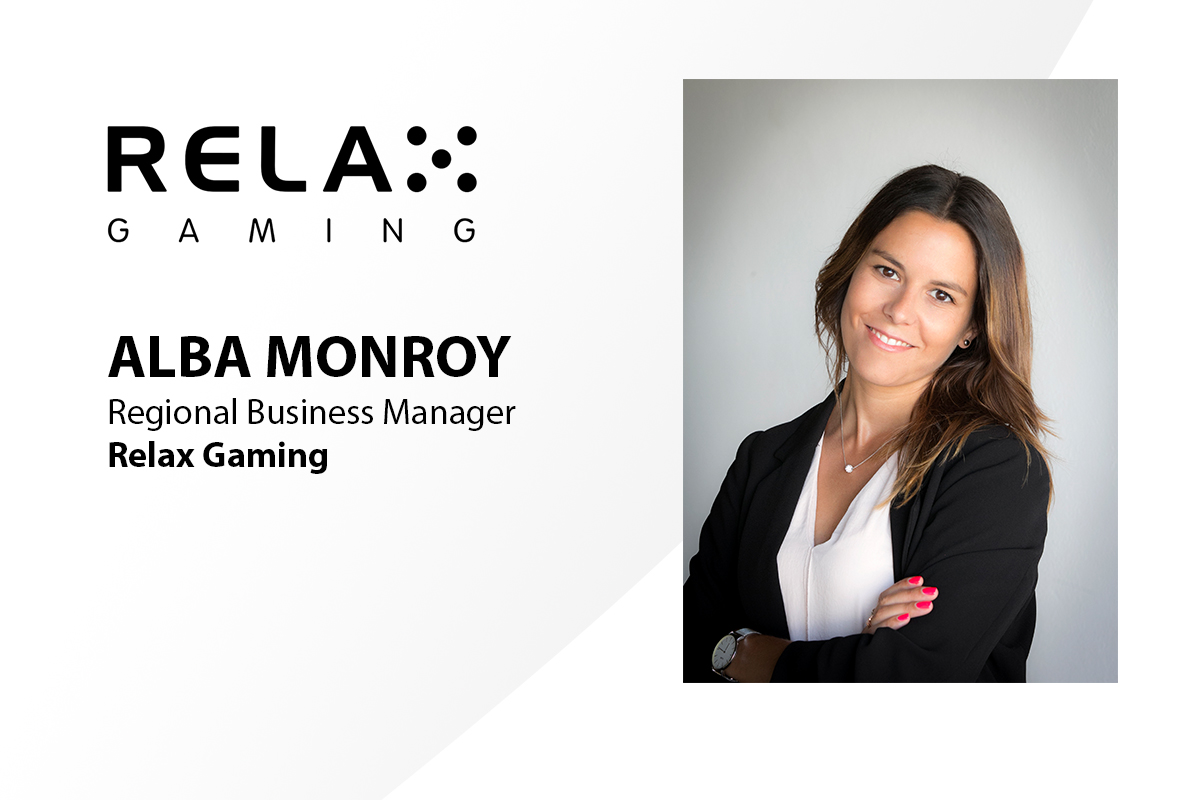
In the second of our two-part series on Spain, Alba Monroy, Regional Business Manager at Relax Gaming, talks through the award-winning provider’s plans for its Spanish debut – as well as the post-pandemic growth opportunities available to suppliers and operators.
Looking at Spain’s performance over 2021 and into the beginning of this year – how much has the market recovered post-pandemic and what are we seeing in terms of trends for verticals?
While 2021 proved to be a difficult year for almost every vertical within the gaming sector in Spain, there are signs for recovery, with online casino enjoying better fortunes than most. I believe this is down to the growing popularity of slots and live casino games, mostly driven by the shift of players moving from land-based to online.
What’s genuinely exciting about this part of the casino space is that there is still a lot of room for growth, especially given that there are some talented slot studios operating within the Spanish market, and I fully expect a number of new and established studios to begin operating in the region in the not-so-distant future.
With regards to live casino products, I feel that there’s still a notable gap in the market here and there aren’t too many suppliers that cater specifically to the Spanish market. This lack of offering means that there’s prime opportunity for someone to come in and take the initiative – as it’s certainly ripe for disruption.
When it comes to online do you see potential for this year to return to business as usual? Are there any strong growth areas our readers should be keeping an eye on?
There’s no doubt the environment for operators in Spain is a challenging one, things became even more difficult in 2020 when the Royal Decree on the Commercial Communications of Gambling Activities was introduced, significantly restricting all gambling advertising.
That being said, I still think that there’s significant space for the iGaming market to grow within Spain. New products and features within games are beginning to create notable trends within a certain demographic of players. The new demographics of players are also starting to appreciate and enjoy innovative content that provides them with that same videogaming they’re experience accustomed to.
Looking back, when iGaming was first regulated within the country more than a decade ago it was simple three-reel slots and table games that reigned supreme, mainly because that was all that was on offer. Nowadays that’s all different – casino players are inundated with exciting content that offers them added value such as table games with side bets and online slots with engaging bonus features and lucrative jackpots.
What’s the current climate for retail and how much do you see land-based players acquired by online to continue there? Is it a case of players returning to their preferred channel once most restrictions are lifted in the coming months?
The pandemic helped the gaming industry in Spain move from something that was primarily land-based towards more of an online landscape, very much resembling something we already see in established regulated markets across Europe.
There will always be players out there that prefer the experience of physically going into a casino and playing games surrounded by other people with real dealers, however, I think a lot of these players have now begun to realise the opportunities that the online casino brings.
The vast offering online casino can bring far outweighs its land-based counterpart, there are so many different games players can access in an instant through a computer or their mobile device. It’s evident that land-based casinos have no way of competing in this sense, you just can’t get the same vast range of products there as you can online.
In addition to this, with current restrictions we can’t predict when or if players will return to casinos en masse, and in many ways, there’s not really any reason for them to do so if they feel comfortable playing games at home or on-the-go when playing from their phone.
How do you see the enhanced marketing restrictions currently coming into force in Spain? Will it affect the jurisdiction’s development, and do you see it as a challenge for operators to differentiate themselves?
Marketing spend within Spain started to decline dramatically back when the pandemic first began, this can be pinpointed to when operators were banned from promoting their brands. Of course, the Royal Decree that followed then only made things even more difficult for operators and suppliers.
Frustratingly, things still aren’t getting any better for them. Advertising restrictions are getting tougher and tougher, pushing operators to focus on other areas such as their product selection and variety of games
That’s why at Relax Gaming we are trying to have the best slots content, as well as the best partners for Spain, so we can at least help them offer some differentiation.
Given Spain’s passion for sports betting, how much potential do you see for introducing sports fans to casino verticals? What’s key for attracting interest?
Cross selling is key regardless of the market, it’s certainly one of the best ways to drive growth. Even though instant sports games aren’t that popular in Spain, I do believe that this a good direction for operators to go. We’re currently entering the Spanish market with one of our partners that offers instant sports games. I believe they offer a great opportunity and with the right strategy can help introduce players to other verticals – it will be very interesting to see how they perform.
Last but not least, talk us through the Spanish online environment when it comes to online tech – do the likes of platform provision vary at all when compared to neighbouring markets such as Italy and the UK?
iGaming, just like the rest of the world, has experienced large-scale disruption due to the pandemic. These disruptions have brought in some significant changes in terms of both employment, delivery execution and restrictions to growth potential.
It’s encouraging to see that we’re starting to get back to some degree of normality now as restrictions soften, both of us as individuals and as professionals within the iGaming industry. We’re under no illusions that it might take a while, but we’re slowly returning to business as usual.
There are huge growth areas within iGaming in Spain, and now trends are starting to set in amongst players, however this is mostly rooted in existing factors that have been on the table for the last year or two, so we’re still waiting for greater innovation, as we’ve already mentioned, it is in many ways ripe for disruption!
Powered by WPeMatico



Rafael Brunati and Celso Basílio, lawyers at Silveiro Advogados specializing in regulated markets, corporate law, and competition law, analyze the recent measures adopted by Brazil’s National Monetary Council (CMN) and the Secretariat of Prizes and Betting (SPA/MF) and their impact on the iGaming and sports betting industry.
In this article, they examine how the new regulatory framework reshapes the boundaries between betting, financial instruments, and emerging digital market models, while reinforcing Law No. 14,790/2023 as the central pillar of regulation in the sector.
ByRafael Brunati and Celso Basílio
The set of measures recently adopted by the National Monetary Council (CMN) and the Secretariat of Prizes and Betting of the Ministry of Finance (SPA/MF) marks a new chapter in the regulatory consolidation of Brazil’s iGaming and sports betting market.
More than a targeted response to so-called predictive markets, these initiatives signal a broader effort to redefine the boundaries between authorized betting activities, financial instruments, and operations considered irregular in the country.
CMN Resolution No. 5,298/2026 prohibited the offering and trading of derivatives linked to betting, sports events, online games, and political, electoral, cultural, or entertainment themes without a financial-economic reference.
In the same direction, SPA/MF Technical Note No. 2,958/2026 classified predictive market platforms as illegal fixed-odds betting operations, leading to the blocking of dozens of platforms by Anatel.
The move clearly reinforces Law No. 14,790/2023 as the exclusive regulatory framework for fixed-odds betting in Brazil.
In practice, the government has begun to draw a sharper line around who can operate in this market and under what conditions.
Platforms that previously positioned themselves as financial markets, event-based contracts, or alternative technological structures are now being materially treated as betting operators.
The regulatory message is direct: if a product targets the same audience, uses similar economic logic to betting, and involves risk linked to future events, it is likely to fall within the SPA’s regulatory perimeter.
From a competitive and regulatory standpoint, this produces a meaningful effect for licensed operators. Companies that have invested in licensing, compliance, anti-money laundering controls, sports integrity, responsible gaming policies, and regulatory infrastructure are no longer competing with platforms operating outside these requirements under alternative legal interpretations.
This indirectly strengthens the economic value of the license granted by the SPA.
At the same time, this strengthening comes with a significant increase in operational and compliance obligations.
The recent measures also reopen an important discussion on the regulatory limits of so-called betting exchanges and peer-to-peer models.
SPA/MF Technical Note No. 2,958/2026 itself acknowledges that betting between users and the existence of dynamic pricing do not necessarily alter the nature of fixed-odds betting.
This interpretation is relevant because it brings predictive markets closer to exchange-style betting structures already contemplated under Law No. 14,790/2023.
This point could, in the future, open space for regulated betting exchange models in Brazil, provided they fall within the SPA’s authorized perimeter. However, operational rules for such formats have not yet been defined by the regulator, leaving a significant area of uncertainty for operators seeking product innovation.
From another perspective, these measures are also likely to generate substantial litigation.
There are important debates regarding the limits of the CMN’s authority to restrict certain types of derivatives, the SPA’s interpretative role regarding predictive markets, and even the blocking of platforms without judicial orders.
Regardless of the outcome of these disputes, the fact is that Brazil’s iGaming and sports betting market is entering a new phase.
Regulatory logic is no longer focused solely on formal authorization to operate, but increasingly incorporates issues such as financial integrity, protection of vulnerable users, data governance, payment traceability, and continuous operational supervision.
The sector continues to grow, but now within a significantly more sophisticated—and more demanding—environment. For licensed operators, this simultaneously creates a barrier to entry for unregulated competitors and increases compliance costs.
In an increasingly regulated market, competitive advantage is likely to depend less on the ability to offer bets and more on the capacity to operate with regulatory security, operational integrity, and rapid adaptation to new state requirements.
Rafael Brunati is a lawyer specializing in Corporate Law, Contracts, M&A, Private Equity, and Banking Law at Silveiro Advogados.
He holds a Law degree from Universidade Presbiteriana Mackenzie, an LL.M in Corporate Law from INSPER, and is a member of the Banking Law Commission of the São Paulo Chapter of the Brazilian Bar Association (OAB/SP).
Celso Basílio is a lawyer specializing in Regulated Markets, Telecommunications, Contracts, and Competition Law at Silveiro Advogados.
He holds a Master’s degree in Law from FGV Direito SP, an LL.M in Contract Law from INSPER, and a Law degree from Universidade Presbiteriana Mackenzie.
The post New CMN and SPA rules reorganize the iGaming and sports betting landscape in Brazil appeared first on Americas iGaming & Sports Betting News.
La Resolución 5.298 del Consejo Monetario Nacional de Brasil establece un límite regulatorio claro para los mercados de predicción como Polymarket y Kalshi.
En este análisis, Carlos Akira Sato examina cómo la medida refleja un cambio profundo en la arquitectura financiera de Brasil, redefiniendo qué califica como un instrumento financiero legítimo y estableciendo límites a la financiarización de eventos no económicos.
Carlos Akira Sato es cofundador de Fenynx Digital Assets y especialista en mercados regulados, infraestructura financiera y juego responsable.
En este artículo de opinión, argumenta que la Resolución 5.298 de Brasil no se trata tanto de prohibir Polymarket y Kalshi, sino de definir los límites de la próxima generación del sistema financiero.
La publicación de la Resolución nº 5.298 del Consejo Monetario Nacional establece, de forma inequívoca, un nuevo límite para la actuación de plataformas como Polymarket y Kalshi en el país. La conclusión es directa: estos modelos dejan de encontrar espacio regulatorio en Brasil. Pero la relevancia de la decisión no reside en la prohibición en sí, sino en lo que revela sobre el futuro de la arquitectura financiera.
La Resolución 5.298 no aborda explícitamente los mercados predictivos. Actúa en un plano más profundo, al redefinir qué puede considerarse un instrumento financiero legítimo.
Al exigir que los contratos estén vinculados a variables económicas con formación objetiva de precios, el regulador elimina la posibilidad de estructurar instrumentos —por sofisticados que parezcan— basados en eventos políticos, sociales o conductuales. No se trata de un ajuste periférico, sino de un reposicionamiento conceptual.
Durante años, plataformas como Polymarket y Kalshi prosperaron precisamente en la ambigüedad. No son casas de apuestas tradicionales ni encajan completamente como bolsas de derivados.
Operan en un territorio intermedio: contratos basados en probabilidades, lenguaje financiero y una promesa implícita de descubrimiento eficiente de precios sobre el futuro. Esa zona gris siempre fue su principal activo y también su mayor riesgo regulatorio. Lo que Brasil ha hecho ahora es eliminarla.
El punto más sofisticado de la resolución está en su diseño. El Consejo Monetario Nacional no atacó la tecnología, ni el formato de las plataformas, ni su ubicación. Atacó la esencia: la naturaleza del riesgo negociado.
Al hacerlo, volvió irrelevante si la operación se realiza mediante contratos bilaterales, plataformas offshore o protocolos basados en blockchain. Si el riesgo no es económico, el contrato no es admisible. Es una forma de regulación que privilegia la sustancia sobre la forma y que, por ello, tiende a ser más resiliente.
Esta decisión proyecta efectos más allá del debate sobre apuestas. Dialoga directamente con la discusión sobre tokenización y con la idea, ampliamente difundida en los últimos años, de que cualquier evento podría convertirse en un activo digital.
Brasil señala lo contrario: la innovación es bienvenida, pero no ilimitada. La tokenización encuentra legitimidad cuando está anclada en la economía real —crédito, cuentas por cobrar, activos productivos— y la pierde cuando intenta capturar comportamientos, opiniones o eventos sociales como base de negociación.
Es en este punto donde la resolución también revela una tensión institucional. El propio texto normativo asigna a la CVM la responsabilidad de emitir regulación complementaria. La elección es jurídicamente comprensible, pero institucionalmente discutible.
Si el propio diagnóstico del regulador reconoce que se trata de instrumentos híbridos —que transitan entre derivados, valores mobiliarios y estructuras de captación—, la ausencia de una iniciativa conjunta desde el inicio resulta llamativa. La opción de una regulación secuencial, con el CMN estableciendo directrices y la CVM detallando la normativa, introduce un desfase que puede reabrir temporalmente la misma zona gris que se busca cerrar.
La paradoja es evidente. La resolución es sofisticada al atacar la esencia económica de los contratos, pero fragmenta la ejecución regulatoria al distribuir competencias de forma no simultánea.
En un entorno donde la innovación financiera ocurre en la intersección de distintos regímenes —bancario, mercado de capitales y, en ciertos casos, apuestas—, la coordinación deja de ser deseable para convertirse en necesaria. La falta de sincronía puede generar interpretaciones divergentes, inseguridad jurídica y, sobre todo, oportunidades residuales de arbitraje.
Aun así, el núcleo de la decisión permanece sólido. Al restringir lo que puede considerarse un activo financiero, Brasil establece un límite silencioso pero poderoso a la financiarización de la realidad. No todo evento puede convertirse en un contrato. No toda expectativa puede convertirse en un precio. Y no todo lo que puede tokenizarse debe necesariamente negociarse.
Decir que Polymarket y Kalshi no pueden operar en Brasil es, por tanto, correcto. Pero es solo la superficie. Lo que está en juego es la definición de las fronteras de la próxima generación del sistema financiero.
Un sistema que seguirá incorporando tecnología e innovación, pero que, al menos en el caso brasileño, permanecerá anclado en la economía real. Y en ese proceso, la calidad de la coordinación entre reguladores será tan determinante como la claridad de las propias reglas.
Carlos Akira Sato – Cofundador de Fenynx Digital Assets. Especialista en mercados regulados, infraestructura financiera, gobernanza, innovación y juego responsable.
The post Una decisión inequívoca para los mercados predictivos en Brasil appeared first on Americas iGaming & Sports Betting News.
Brazil’s National Monetary Council Resolution 5.298 marks a clear regulatory boundary for prediction markets such as Polymarket and Kalshi.
In this analysis, Carlos Akira Sato examines how the measure reflects a deeper shift in Brazil’s financial architecture, redefining what qualifies as a legitimate financial instrument and setting limits on the financialisation of non-economic events.
Carlos Akira Sato is co-founder of Fenynx Digital Assets and a specialist in regulated markets, financial infrastructure and responsible gambling.
In this op-ed, he argues that Brazil’s Resolution 5.298 is less about banning Polymarket and Kalshi than about defining the boundaries of the next generation of the financial system.
Brazil’s National Monetary Council Resolution 5.298 sets an unambiguous limit for platforms such as Polymarket and Kalshi in the country. The conclusion is straightforward: these models no longer find regulatory space in Brazil. But the significance of the decision lies not in the prohibition itself, it lies in what it reveals about the future of financial architecture.
Resolution 5.298 does not explicitly address prediction markets. It operates at a deeper level, redefining what can be considered a legitimate financial instrument. By requiring that contracts be tied to economic variables with objective price formation, the regulator eliminates the possibility of structuring instruments, however sophisticated in appearance, based on political, social or behavioural events. This is not a peripheral adjustment. It is a conceptual repositioning.
For years, platforms like Polymarket and Kalshi thrived precisely on ambiguity. They are not traditional bookmakers, nor do they fit neatly as derivatives exchanges. They operate in an intermediate territory, contracts based on probabilities, financial language and an implicit promise of efficient price discovery about the future. That grey zone was always their main asset, and their greatest regulatory risk. What Brazil has now done is eliminate it.
The most sophisticated aspect of the resolution lies in its design. The CMN did not target the technology, the format of the platforms, or their location. It targeted the essence: the nature of the risk being traded. In doing so, it made irrelevant whether the operation occurs through bilateral contracts, offshore platforms or blockchain-based protocols. If the risk is not economic, the contract is not admissible. It is a form of regulation that privileges substance over form — and is, for that reason, likely to prove more resilient.
This decision projects effects well beyond the gambling debate. It speaks directly to the discussion around tokenisation and the widely held idea in recent years that any event could be converted into a digital asset. Brazil signals the opposite. Innovation is welcome, but not unlimited. Tokenisation finds legitimacy when anchored in the real economy, credit, receivables, productive assets, and loses it when it attempts to capture behaviour, opinion or social events as the basis for trading.
It is at this point that the resolution also reveals an institutional tension. The normative text itself assigns to the CVM the responsibility of issuing complementary regulation. The choice is legally understandable, but institutionally questionable.
If the regulator’s own diagnosis recognises that these are hybrid instruments, moving between derivatives, securities and fundraising structures, the absence of a joint initiative from the outset is notable. The option for sequential regulation, with the CMN setting guidelines and the CVM filling in the detail, introduces a lag that may temporarily reopen the very grey zone it intends to close.
The paradox is evident. The resolution is sophisticated in attacking the economic essence of contracts, but fragments regulatory execution by distributing competencies non-simultaneously.
In an environment where financial innovation occurs at the intersection of different regimes, banking, capital markets and, in certain cases, gambling, coordination ceases to be desirable and becomes necessary. The lack of synchrony may generate divergent interpretations, legal uncertainty and, above all, residual arbitrage opportunities.
Even so, the core of the decision remains solid. By restricting what can be considered a financial asset, Brazil establishes a silent but powerful limit on the financialisation of reality. Not every event can be turned into a contract. Not every expectation can be converted into a price. And not everything that can be tokenised should necessarily be traded.
To say that Polymarket and Kalshi cannot operate in Brazil is therefore correct, but it is only the surface. What is at stake is the definition of boundaries for the next generation of the financial system. A system that will continue to incorporate technology and innovation, but that, at least in the Brazilian case, will remain anchored in the real economy. And in that process, the quality of coordination between regulators will be as decisive as the clarity of the rules themselves.
Carlos Akira Sato is co-founder of Fenynx Digital Assets and a specialist in regulated markets, financial infrastructure and responsible gambling. In this op-ed, he argues that Brazil’s Resolution 5.298 is less about banning Polymarket and Kalshi than about defining the boundaries of the next generation of the financial system.
The post An unequivocal decision for prediction markets in Brazil appeared first on Americas iGaming & Sports Betting News.

-

 Africa7 days ago
BetConstruct AI to present World Cup 2026 sportsbook offer at iGaming Afrika
-
apuestas6 days ago
Brasil: gobierno prohíbe los mercados de predicción, avanzan las reformas de integridad y crece el debate publicitario
-
AML7 days ago
Isle of Man Adopts New Laws Ahead of Vital AML Review
-
AI7 days ago
SoftConstruct unveils RecSys AI game recommendation system at AIBC Eurasia
-
Blokotech7 days ago
Blokotech completes Malta stop of Bloko Padel Tour 2026 with 35 teams
-
API integration7 days ago
Reliability in Motion: Why Modern Digital Businesses are Abandoning the Single-Vendor Model
-
Asia3 days ago
NOVOMATIC to Debut New Linked Progressive Innovations and Expanded Portfolio at G2E Asia 2026
-
Africa3 days ago
Springbok Casino Presents “Wild Galaxy Month” with 25 Free Spins on Prosperity Pots