Interviews
Exclusive Q&A with GAMING1 COO Interactive David Carrion

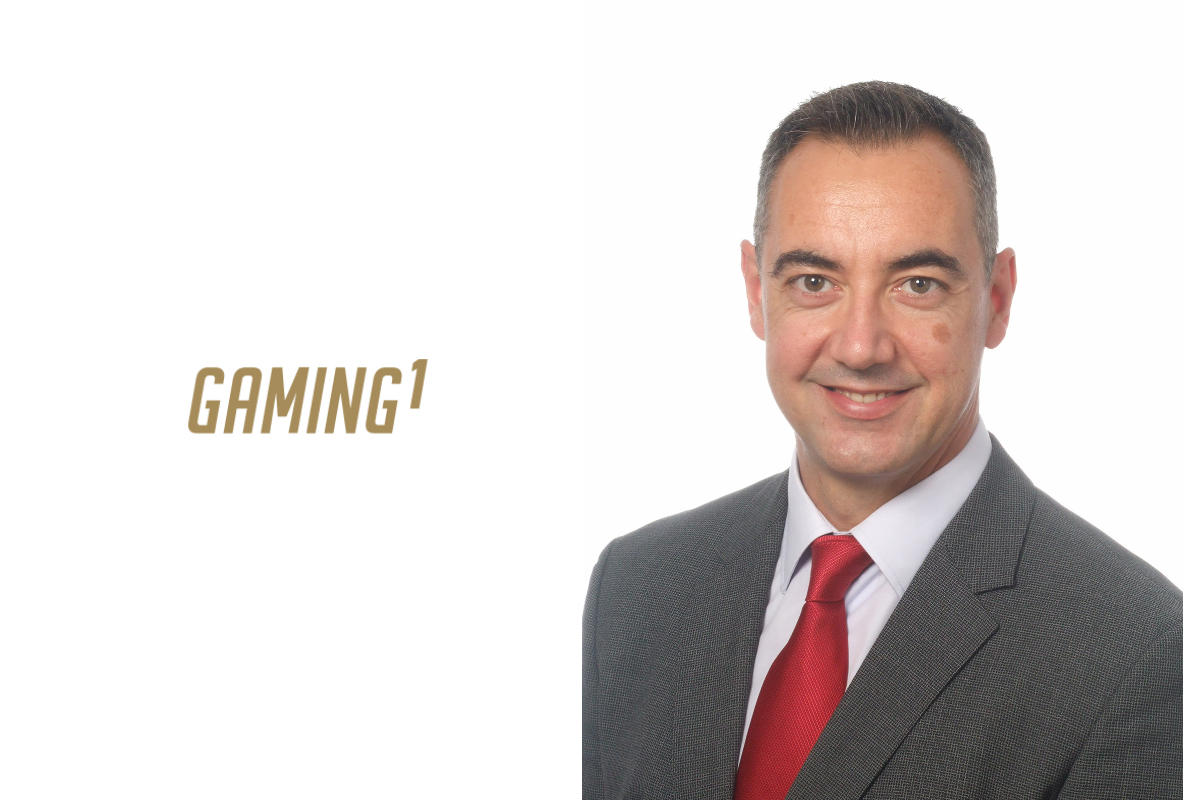
Having made the leap from CMO to COO Interactive, GAMING1’s David Carrion has set his sights on the company’s expansion in the Netherlands, the US and other regulated markets as it develops at pace.
European Gaming caught up with him on the leading gaming and sports betting partner’s exciting plans for these markets as well as his philosophy towards work.
Since joining GAMING1 as a CMO over year ago, before being promoted to COO Interactive, how would you say your time at the company has gone?
So far, my time at GAMING1 has been better than I ever could have imagined. It’s been a fantastic journey that has allowed me the opportunity to meet some incredible people who have shown me exactly why it’s such as exciting company to work for.
Together, we’ve been able to lay the groundwork and infrastructure around scalable, data-driven products that will help the company grow in regulated markets considerably in line with our clear five-year strategic plan.
How has the change from CMO to COO Interactive been, was there anything that stood out as you’ve began to upgrade what you’ve delivered for Belgium’s favourite supplier?
Naturally, I’ve taken on a lot more responsibility with regards to our product offering. This has proved to be a very exciting challenge, especially with regards to expanding into new markets. Next on my list of objectives is to focus on aligning our business and technology objectives, which will ensure that we can dictate our own pace and set us on the right path to international success.
Your data-driven skills and experience have been a valuable asset to the company so far, how will you expand on these in your new role as COO Interactive?
We have a very strong vision of what we want to build, however, our customers often have other ideas on how to use our products. Because of this we’ve been able to utilise data and customer behaviour analytics as a great tool to drive us forward, while also helping us find a competitive advantage in the market. Naturally, customers expect the scalability and flexibility to grow their offering and we continue to optimise our products to facilitate that.
As GAMING1’s new COO, what are your main goals and aspirations?
Ultimately, my long-term aspiration is to see GAMING1’s growth and development explode way beyond our expectations by building an operational model based on scalability and speed. I would also like to see us consolidate our strong position as a market leader, while mounting a real challenge in new and emerging markets, such as the United States and the Netherlands.
With GAMING1 set to launch in the US and Netherlands towards the end of 2021, can you speak more about the company’s growth plans?
We already hold a strong market share in some of the biggest existing regulated iGaming markets such as Belgium and Portugal, and we now have a real opportunity to grow in betting, which is incredibly exciting.
Our flexible business model and the way we operate our brands, joint ventures and turnkey solutions allows us to take on exciting opportunities in the United States and Netherlands. Our plan is to double our revenue by 2025, outperform market trends and become a truly international operator.
Last but not least, plenty of the people in the industry know about your extensive track record – how are you looking to bring that expertise to the table in the coming years as we enter a new era of gaming?
Firstly, it’s important to realise that people are the company, not just one individual. But in terms of how I’m going to bring my own expertise to the table, one day at a time! My approach has always been very straightforward: Be humble, have fun, and realise that difficult is not the same as impossible, as long as you’re well prepared.
As a result of hard work, common sense and a strong desire to succeed, I’ve gotten to where I am today. With those principles in hand, I believe I can elevate the performance of our talented teams to deliver on this new era of gaming, whatever direction that may take.
Powered by WPeMatico

David Black Chief Growth Officer beBettor
iGaming in 2026: Emerging Markets, Changing Player Demands, and Winning Strategies

From shifting regulatory pressures and emerging markets to changing player expectations and the looming presence of AI, the iGaming industry will be a very different place at the end of 2026 than at the start.
For this roundtable, we have invited a group of industry professionals to discuss what markets are going to be the big talking points of the year, how player expectations will continue to evolve, and what strategies will best position you for success over the coming 12 months.
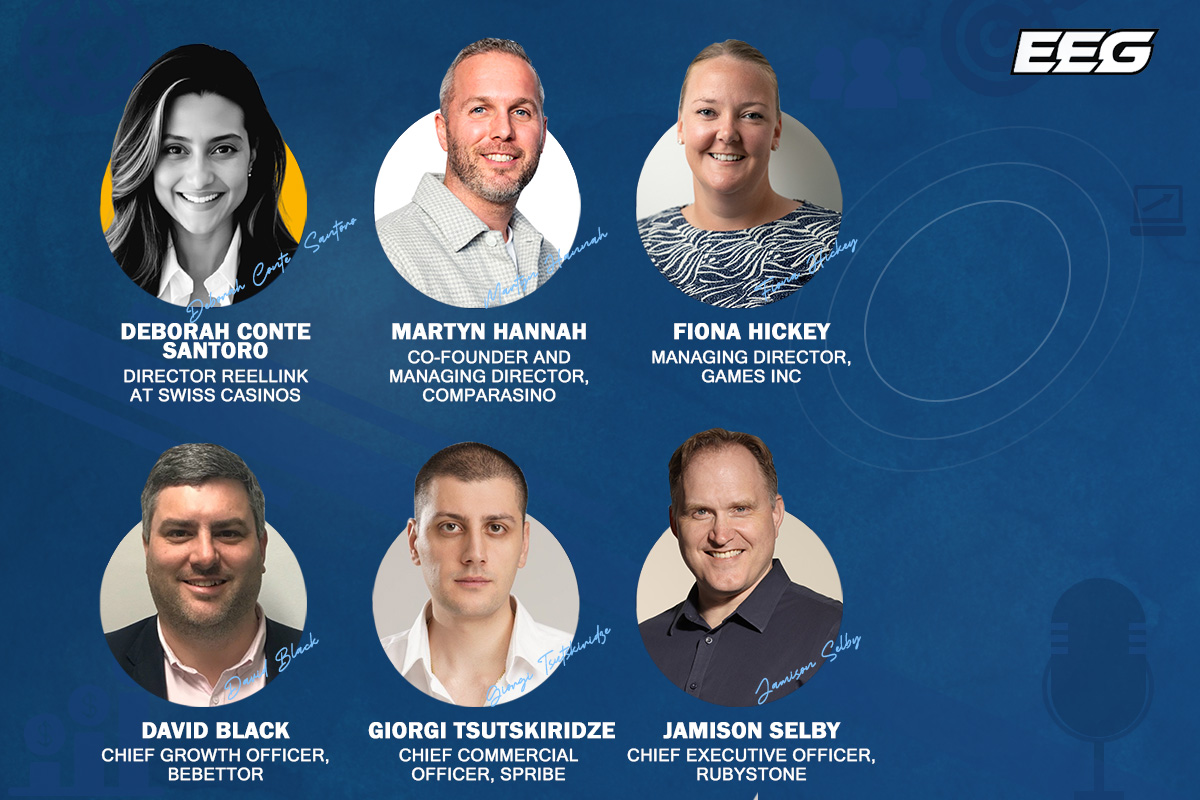
The following have all contributed to this discussion:
- Deborah Conte Santoro: Managing Director, ReelLink at Swiss Casinos
- Martyn Hannah: Co-founder and Managing Director, Comparasino
- Fiona Hickey: Managing Director, Games Inc
- David Black: Chief Growth Officer, beBettor
- Giorgi Tsutskiridze: Chief Commercial Officer, SPRIBE
- Jamison Selby: Chief Executive Officer, Rubystone
Which regions or markets do you expect to offer the most meaningful growth opportunities in 2026, and what makes them attractive?
Fiona Hickey: The markets everyone will talk about in 2026, Finland, Alberta, New Zealand, and the UAE, are attractive, but let’s be honest: once regulation lands, revenues drop. Taxes rise, RG tightens, marketing gets capped, and the commercial upside isn’t nearly as big as the headlines suggest. Great for stability, not great for margins.
The real growth, the uncomfortable kind nobody puts in a press release, will still come from unregulated and grey markets. Latin America, outside tightly regulated pockets, large parts of Africa, and India’s semi-regulated landscape will deliver higher yields and faster scaling simply because they’re less restricted, and operators aren’t drowning in 40% duties and endless compliance cycles.
So the honest picture is this: regulated markets offer credibility and long-term sustainability for large organisations, but unregulated markets offer commercial returns, and for many, this is hard to ignore.
David Black: Growth in that sense is limited to the total addressable market and associated market-share strategies. So the question deserves an answer around growth that moves the needle. The game changer always comes from innovation. It would be great to see the opening of new regulated markets as a means of driving growth. Still, both this and corporate consolidation, whilst always sound, appear to be relegated to second and third place, respectively.
First place, this year is how and when operators will introduce new edge-type technologies which enhance an entertaining and profitable player experience. It feels like we are in another phase of product innovation, which is very exciting. This will inevitably cycle to M&A in the coming years, but for now, it is all about innovation.
Jamison Selby: The most interesting growth in 2026 won’t come from the regions people usually name at conferences. The U.S., LATAM, and parts of APAC will all continue to expand, but the real upside is in how those markets are evolving, not simply their geography.
In the United States, the traditional regulatory map of betting has become an increasingly narrow lens. The real story is happening in parallel markets (sweepstakes, skill gaming, and prediction platforms) operating under entirely different regulatory structures. These categories scale faster than licensed products because they aren’t boxed in by state-by-state fragmentation. They offer national reach, healthier margins, and a player demographic much closer to mainstream digital entertainment. That’s where the opportunity is shifting.
LATAM remains attractive, but not in a monolithic way. Brazil will draw the headlines as formal regulation takes shape, yet Mexico and Colombia often present cleaner, more immediately scalable conditions. What unifies the region isn’t regulatory uniformity; it’s a young, mobile-native audience that treats interactive entertainment as a daily habit rather than an occasional activity. That dynamic alone makes LATAM a sustained growth engine. APAC, similarly, is not a single story. India’s scale, particularly within skill-based formats, creates an environment where even modest regulatory clarity can unlock enormous upside.
But the markets likely to shape the industry’s direction in 2026 aren’t defined by geography at all. They’re defined by the regulatory lanes that allow new product categories to emerge. Prediction markets, skill-based ecosystems, and hybrid entertainment formats are absorbing demand that once belonged exclusively to gambling. They’re doing so with lower acquisition costs, fewer structural constraints, and far more room for product innovation. That combination doesn’t just produce growth. It produces the kind of explosive scaling that reshapes industries.
The common thread across all these markets is simple. The operators with flexible product architectures, those capable of moving between regulatory frameworks rather than being confined by them, will capture the most meaningful share of that growth.
What changes in 2026 do you expect in player behaviour, product formats, and entertainment consumption that operators must prepare for?
Deborah Conte Santoro: Operators must prepare for several things:
Players see gaming as broader entertainment. Expect blended formats that mix casino, sports, live shows, social gaming, streaming and influencer-driven experiences.
Seamless, omni-channel continuity. Players expect the same favourites and progression across mobile and the casino floor, with no perceptible boundary. Technologies like ReelLink will be essential to deliver identical content and unified loyalty across channels.
Younger players demand modern UX. Instant load times, mobile-first design, social features, community tools and rewarding progression systems will be table stakes. They’ll favour experiences that feel fresh, discoverable and shareable.
New formats rise. Multiplayer, skill elements, live game shows, AR/VR lounges and metaverse-style interactions will gain traction for engagement and retention. Higher expectations on payments and onboarding. Instant KYC, fast payouts, local rails and compliant crypto options will dramatically impact conversion and LTV. Operators must treat content, data, and payments as a single, cohesive product experience, online and on the floor.
Martyn Hannah: Instead of looking at what’s going to change, I think it’s just as important, if not more so, to consider what’s going to stay the same. No matter what laws, regulations and tax requirements come into force, consumers are still going to want to play online slot and casino games. The question is where. Will players drift to the black market in search of bigger bonuses and higher RTPs, or will they favour licensed brands they trust?
Some players will knowingly turn to black-market sites, while others will stick with licensed brands they consider safe and reputable. But there’s a large cohort of players in the middle that don’t know the difference between the two, with many unknowingly playing at offshore sites. These are your swing voters, and with the right education and messaging, I believe many will swing towards licensed online casinos.
This, combined with effective enforcement action against unlicensed operators and the comparison sites promoting them, will stunt black market growth, improve channelisation to licensed brands and better protect players.
Jamison Selby: Players don’t want gambling. They want entertainment with stakes. This distinction will define 2026. The convergence everyone talks about isn’t casino-meets-sports. It’s gambling-meets-everything-else.
Traditional gambling’s biggest competitor isn’t another operator. It’s every other form of digital entertainment. When players can bet on their Fortnite matches, predict which TikTok trend will explode next, or wager on reality TV outcomes in real-time, is spinning a slot still fun?
We see a rising cohort of players who spend less time in single-session environments and more time in continuous, ambient ecosystems where their progression, status, and social capital persist over time and across products. Operators still building for the traditional “gambling consumer” are targeting a segment that’s rapidly ageing out. Operators that treat their platforms as entertainment networks rather than isolated casinos will win the battle.
The next generation doesn’t see boundaries between gaming, trading, betting, and socialising. It’s all just having skin in the game.
What strategic capabilities, across compliance, marketing, payments, or responsible gaming, will separate the winners from the rest in 2026?
Fiona Hickey: If I actually knew the secret formula for winning 2026, I’d already be on a yacht off my private island with a very smug LinkedIn bio, pretending my days were long and tough, so no, I don’t have the magic answer, but here are a few things I think are key;
All business operators and suppliers alike need a compliance team that understands the rules and the intent. People who can read between the lines keep you competitive and avoid the trap of over-compliance.
Instant payouts aren’t a nice-to-have; they are essential. Offshore sites pay in minutes; regulated operators need to stop pretending players won’t notice the difference.
Regulated ecosystems are crowded, slower, more restricted and, yes, getting duller. Players chasing excitement will drift elsewhere. Operators who ignore that are simply handing them over. If you are arrogant enough to think your brand is important to players and they won’t go elsewhere, you are in trouble.
Giorgi Tsutskiridze: The companies that succeed will be those that combine strong regulatory discipline with the ability to move quickly. Compliance can’t be an afterthought; it needs to be built into every part of the business, supported by real-time tools and responsible gaming systems that actually help players. Marketing will shift toward community and storytelling, not just performance-driven numbers. And payments have to be smooth and localised, no friction, no confusion. Ultimately, the winners will be the brands that can scale globally but still feel local, personal, and trustworthy to every player they reach.
Jamison Selby: The winners of 2026 and beyond won’t be the best gambling operators. They’ll be the best platform and ecosystem builders who happen to offer gambling.
Three capabilities will matter above all else:
Community building over customer acquisition: Traditional CAC and LTV metrics are being hammered by increasing competition and lower revenues. Winners will build ecosystems where players recruit players, where the product is the marketing. Pure product-community fit wins.
Regulatory-inspired innovation: Those who master building within existing regulatory boxes have a path. Those who use the regulations as a map to seek new verticals have a path. Those who are slow to adapt face a painful decline.
Multi-vertical brand elasticity: The ability to stretch a single brand across different regulatory structures and product categories. Traditional betting where it’s licensed, sweepstakes where it’s legal, same with prediction markets, skill gaming, and social casino. Same brand equity, different regulatory wrappers. Winners won’t be solely defined by their licensing but by their ability to meet players wherever regulations allow, in whatever form works.
The post iGaming in 2026: Emerging Markets, Changing Player Demands, and Winning Strategies appeared first on Eastern European Gaming | Global iGaming & Tech Intelligence Hub.

Reading Time: 3 minutes
Black Cow Technology Founder and CEO, Max Francis, on why the company has shifted focus from software development to game development, and why he believes multiplayer is the future of online gambling entertainment
Black Cow has just announced its transition into a multiplayer content provider. What made you refocus the business in such a way?
We truly believe that multiplayer is the future of online gambling entertainment, and with our own technology capable of building next-gen multiplayer experiences, we wanted to transition into a content-led business and release some innovative games of our own. Our Multiplayer RGS is especially powerful, allowing operators and suppliers to bring multiplayer gameplay to any game format, even including non-gambling events. Black Cow’s robust, reliable and highly flexible technology is already used by some of the biggest organisations in the industry, including the likes of DraftKings and Light & Wonder. The shift into creating our own multiplayer content enables us to build on our successful Remote Game Server (RGS) and Jackpot Server technology to create first-of-its kind games offering unique player experiences via our Multiplayer RGS platform.
Tell us more about your Multiplayer RGS and its capabilities. What sets it apart from similar solutions in the market?
Our Multiplayer RGS has been several years in the making and is already live with Light & Wonder. Our Multiplayer RGS can be used to create multiplayer experiences across anything from slots and table games to crash, plinko, lottery, live dealer and bingo. Games can be player-cooperative or player versus player. The system’s capabilities are really only limited by the imagination of the people using it, and that’s why we’re so excited to be moving into the realm of game development so that we can push its limits to disrupt online casino lobbies with Black Cow content.
Taking a business in a new direction is a significant undertaking, not without its risks. How have you approached this transition?
It was clear to me that we had the technology to create multiplayer content, but not necessarily the experience to date, and that’s why we’ve been making strategic hires. This year we have promoted Paul Jefferson to the role of Chief Technical Officer and we have welcomed two more big-hitters to the business – Ernie Lafky as Chief Product Officer and Shelley Hannah as Chief Operations Officer. Ernie is taking the lead when it comes to what our games will look like and how we combine key elements like multiplayer, gamification and social interaction. Shelley is managing the operational aspects of our transition to a hosted product-first model. In terms of mitigating the risk, it comes down to the deep rooted confidence we have in our technology and our fantastic team, plus our belief that players are seeking social multiplayer entertainment.
Why do you have such a firm belief that multiplayer content is the future? And to what extent will it dominate online casino game lobbies?
It’s not the future, it’s the now. You just have to look at the experiences offered by other online entertainment options to see that they are becoming increasingly multiplayer and social. From dating to streaming, social media to mobile gaming, consumers want to engage with products and experiences that can be enjoyed with others. But online casino and sports betting sit at odds with this as they have been, and remain, mostly solitary experiences. We have started to see a bit of a shift away from this, first with live casino and then the rise of the crash game format. But this is just the start of what multiplayer online gambling entertainment can look like, and at Black Cow we have the vision, people and technology to really spearhead the multiplayer movement and be a true leader in the space.
As for the degree to which multiplayer content will dominate online casino and sportsbook lobbies, I think it has the potential to be significant but there will always be players that want to engage with more traditional games, products and experiences, so it will be down to each operator as to how they promote multiplayer games. Naturally, this approach will differ from brand to brand based on their specific player-base.
What can we expect from Black Cow now that your transition into a multiplayer game developer is well underway?
Paul, Ernie, Shelley and the team are working hard on our initial product roadmap, including the first run of games that will leave our production line. This is a really exciting moment for me and the whole team, as it will bring our vision to life and set the blueprint for what our multiplayer games will look like moving forward. It goes without saying that our multiplayer games will embody the core values we have built Black Cow on – reliability, flexibility and robustness. This is a big change for Black Cow, and change does bring challenges. But we are all aligned and excited by the new direction. Success is never guaranteed, but we are walking into the next chapter of the Black Cow story confident that it will be our best yet.
The post Inside Black Cow’s Decision To Go All In On Multiplayer appeared first on European Gaming Industry News.

Reading Time: 7 minutes
At SiGMA Central Europe in Rome, European Gaming Media sat down with Yevhenii Yankovyi, Vice President of Technology and Deputy CTO at RedCore, for a deep look into what truly powers RedCore’s large-scale engineering operations.
RedCore is known for innovating at enterprise level, yet moving with the agility of a fast-growing tech company. In this conversation, Yevhenii breaks down how the organization manages that balance: how engineering teams maintain both speed and reliability, how automation empowers creativity, and why culture must remain a daily practice rather than a one-time achievement.
Can you introduce yourself and RedCore’s approach to engineering at scale?
Sure. My name is Yevhenii, I’m the Vice President of Technology at RedCore and Deputy CTO. RedCore is a large company with many products and projects, so everything we do operates at a significant scale. And when people hear “enterprise-level engineering,” the usual assumption is that scale automatically means slowness: slow decision-making, slow implementation, slow testing, slow time to market.
That’s the mindset we challenge. We don’t believe speed and stability are opposites. In our experience, at this level of complexity, the two actually reinforce each other. When you build the right processes, the right technical foundations, and the right organizational structure, speed becomes a natural result of stability – not something that contradicts it.
We plan for scaling from day one. For us, that’s a fundamental requirement. We build products with the expectation that they will grow, and growth means scale. So we design with that in mind from the very first line of architecture.
But that doesn’t mean disappearing for six or ten months to design the “perfect” system. That’s the common mistake people make when they hear “design for scale.” Our approach is different: we keep the long-term vision in mind, but we move fast, iterate, and make sure the product can evolve without slowing the team down. Stability and speed working together – that’s the engineering culture we build at RedCore.
How does RedCore balance speed and stability in daily engineering?
I will explain this with a simple metaphor: think about a car. Everyone talks about acceleration and top speed, but none of that matters if you can’t take a corner. Speed alone is not the winning formula – you also need control.
That’s exactly how we look at engineering at RedCore. We want to accelerate, make decisions quickly, and develop fast. But we also need the ability to slow down at the right moment, change direction, and stay agile. Balancing speed with stability is the only way to move at scale.
There are many layers to this – it’s a topic I could talk about for days – but in a nutshell:
at a big scale, you must have strong standards, clear policies, and a high level of automation. We rely heavily on automation: infrastructure as code, CI/CD pipelines, automated testing, and all the tools that remove repetitive, routine work from engineers’ daily lives. When the routine disappears, people can focus on what humans actually do best: creativity, problem-solving, and innovation.
However, automation doesn’t build the software for you. It creates a safety net. It catches mistakes, guards quality, and supports engineers when their creativity pushes boundaries. In other words: tools give freedom, and also protect that freedom.
And of course, this includes AI and many other modern tools. We use whatever helps us keep the balance: give people space to think, create, and experiment, while ensuring the system stays stable, predictable, and high-quality.
How does RedCore’s management keep teams aligned yet fast?
First of all, we provide clear goals. As I mentioned earlier, we always design for scale from day zero – but you can only do that if you know exactly what you’re building, for whom, and why. We have a very strong business team that understands the market and what needs to be delivered. The technology team works side by side with them, reinforcing them.
Once the goals are clear, we begin small. If you try to build a huge system from the beginning and get it wrong, you create a nightmare: something no one can support, change, or grow. Complexity grows exponentially, and humans don’t think exponentially; we think linearly. That’s where companies often get lost.
So we avoid that by validating early and validating often. We start with small steps, keep a close eye on every direction we take, and confirm that what we’re building is truly needed by the market. When we see that the direction is right, then we scale – and by that point, the foundation is already in place. It’s like preparing a launchpad so that when the time comes, the team can accelerate immediately.
We build block by block and work in iterations. We take a small team – one, two, maybe three people – and let them experiment for a week. We test the idea fast, get quick feedback, and bring it to the business side: “Do you like it?” If the answer is yes, then we continue, still following all the proper engineering practices before anything goes into production.
This constant loop between business and technology keeps everyone aligned. We give feedback, we receive feedback, and we move together. That’s how we stay both fast and coordinated, always ready to scale when the direction is confirmed.
How does automation empower engineers without slowing them down?
When we talk about automation, we’re really talking about optimization at scale. It doesn’t make sense to over-engineer small things, but at the scale we operate, the cost efficiency and speed gains are enormous. And people often assume that big systems and automation automatically slow everything down. For us, it’s the opposite.
The tools we introduce are not meant to tie engineers’ hands with bureaucracy. We don’t force strict guidelines or heavy processes that kill creativity. Our tools exist to help: to prevent mistakes, to collect feedback quickly, and to give teams the shortest possible path from idea to validation.
Here’s a simple example: we start experimenting with a small feature. We build a tiny prototype to see if the idea works. If it’s promising, the next step is testing, pipelines, deployment – all the things that normally take time. In many companies, engineers would try to do all of this manually because “building the tools will take too long.” But with us, the tools are already there. The infrastructure, the CI/CD, the automation – everything is ready to use. Our engineers are essentially customers of this internal platform that supports fast, safe delivery.
We have many different teams that have different great ideas. If one team tries something new and it works better, great – we learn from it. If another team has a different approach because of product specifics or release schedules, that’s fine too. We give freedom to the teams to work, share their experiences, and then scale.
Of course, there are non-negotiables. When it comes to security and data privacy there is zero tolerance. These are areas where strict rules are absolutely necessary. I always tell the security people: everyone should be a little afraid of you, because these things must be perfect. But outside those critical areas, we don’t impose rules that slow teams down. We experiment, gather feedback, adjust, and keep improving.
We’re constantly researching, experimenting, and customizing our automation depending on the product and the market. But when it comes to system design, we don’t reinvent the wheel. We choose globally recognized tools and industry-validated technologies. So yes, we empower engineers with automation and the right tools, built on a solid, modern foundation.
How does culture work for you – is it an achievement, or part of your routine?
Culture is a critical element in balancing speed and stability. Tools and processes matter, but culture is what truly empowers a team and keeps everything together at scale.
For us, culture starts with giving people freedom: the freedom to experiment, the freedom to make mistakes, and the freedom to challenge ideas. We don’t want engineers to be afraid of trying something new. We build a culture where mistakes are acceptable and manageable. If we try something and it doesn’t work, great – now we know better. We learn, adjust, and move on.
We encourage ideas from every level. Some of our most interesting insights come from developers who notice something while working on a small task. They can come directly to me or to the CTO and say, “I see a problem here.” It’s completely okay. A small detail in one corner of the system can become a huge issue at scale, so we listen. That’s how we avoid blind spots.
We also give teams autonomy. Small teams can make their own decisions and experiment in their own ways. If different teams want to do things differently, that’s fine – as long as they validate everything and share their findings. We want people to help each other and to understand that even top engineers have ups and downs. Even senior management makes mistakes. I constantly ask my team: “If I make a wrong decision, tell me.” It’s not about transparency as a buzzword – it’s about behavior. People observe how you respond, and they learn from that.
The biggest mistake any leader can make is demotivating people. We work with intelligent, educated, passionate professionals. They want to contribute. You just need to give them the space to do it. That’s when you see people shine and bring forward brilliant ideas.
As for the question of whether culture is an achievement or a routine – for us, it’s definitely a routine. People often talk about “building a strong engineering culture” as if it’s a success. We treat it as a routine as a process. Culture is the daily interactions between people in an organization. Those interactions change: people come and go, someone has a bad day, someone disagrees with a decision. Culture is shaped every day by how we communicate, how we argue, how we respect each other, and how we resolve differences.
Going to a colleague in the kitchen and asking, “Hey, what do you think about this?” – that’s culture. Anyone can talk to anyone, openly. And when engineers realize they can make a real impact, that they are heard, that they can influence the product — that motivates them. That’s what keeps the culture alive.
How do you balance standards with creative freedom?
The first thing is that we don’t pressure people. We set strict standards only where they are truly critical for the business. Security, data privacy, stability at scale – those areas demand clear rules. But everywhere else, we try not to push people. And when we do introduce a standard or guideline, we listen carefully to feedback. If the team tells us we made the wrong call, that’s okay – we rethink it and look for better approaches.
The second thing is that as the projects grow, the teams scale as well. Even in the design phase, we don’t start with a huge team. I prefer a small group: one key person who leads the design initiative, plus two or three contributors who constantly review, test, question, and give feedback. If three or four people align in one direction, that’s a good signal we’re on the right track. Then we take that proposal to a larger group – people who might use it or need it.. We refine it again based on their input. The idea evolves, but we don’t need to start from the beginning.
Finally, when we have a strong direction, we present it to the entire tech team. And even then – even if top management already supports the decision – it’s completely acceptable for a mid-level developer to raise concerns. Maybe they’ve seen something before, maybe they read an article, maybe they faced a similar issue. We listen, because at scale, one overlooked detail can cost millions.
So once again, balancing standards with creative freedom is about scaling the processes step by step: we start with a small group, validate in small cycles, and then scale the decision up gradually. This approach protects creativity, ensures high quality, and keeps us aligned. And combined with our culture, it makes the process both fast and safe.
The post Scaling With Purpose: RedCore’s Tech Vision Explained appeared first on European Gaming Industry News.

-

 Barbarossa Dragon Empire6 days ago
Peter & Sons Expands Ontario Footprint with Major Casino Time Content Deal
-
Akshat Rathee6 days ago
Indian Esports 2026: Strategic Growth and the Asian Games Milestone
-
16-Reel Slot5 days ago
Mighty Wild™: Gorilla Unleashed – Wazdan Scales New Heights in Jungle Series
-
Arizona4 days ago
Arizona Department of Gaming Reports $44.9 Million in Tribal Gaming Contributions for the Second Quarter of Fiscal Year 2026
-
California6 days ago
CGCC Gaming Policy Advisory Committee (GPAC) Meeting: Jan 20, 2026
-
Affiliate Events3 days ago
Taking Off with N1 Partners at iGB Affiliate 2026 in Barcelona: Grand Final and a Helicopter for the N1 Puzzle Promo Winner
-
Affiliate Management3 days ago
N1 Faces: Daria Maichuk — “Communication as the Key to Strong, Effective Partnerships in Affiliate Marketing”
-
 Alex Lorimer4 days ago
Mega Mammoth – Multiplier Mayhem Charges into the Gaming Corps Portfolio