eSports
Exclusive Q&A with Alex Shybanov, Senior Sales Manager for CEE Region/PandaScore


What is the difference between PandaScore and big suppliers?
The biggest difference is that we’re solely focused on esports whereas a lot of the bigger suppliers concentrated on traditional sports. For PandaScore esports is the only priority. We’re also fast and agile – we can implement new products and features incredibly quickly allowing our partners to leverage the fast-growing nature of the sector.
Another major difference is the data-led approach we take. We combine this with AI, our own trading models and a team of highly skilled traders which allows us to present one of the best esports betting products in the market.
Our trading models are worth highlighting as this is what really sets us apart. They’re fully automated and cover all of the sports that we have. In comparison, most of the big suppliers are still using manual or semi-manual models.
Finally, the number of markets we offer and our uptime (the percentage of time that lines are open and available for players to place bets) is unrivalled. We are also open to feedback and regularly work with our partners to implement new tools and features.
This enables us to satisfy their individual needs and continually improve performance, something that the big providers cannot offer especially if esports is not considered a priority for them.
What do you have to say about the esports market in Central & Eastern Europe?
It is fast-growing, for sure, and is really well developed when compared with other European regions and markets like the UK. In fact, across CEE esports is often among the top five bets on sports in terms of revenues and turnover.
What is driving this? Several factors but in particular there are some really strong teams that are based out of CEE countries. This includes Na’Vi (CS:GO) and Team Spirit (Dota 2) – 2021 TI champions. This has helped to elevate the popularity of esports across the region.
To bet on esports, you really have to play esports and CEE is a big market in terms of the number of players that play video games. This in turn helps to drive esports engagement and betting on esports as there is a larger pool of consumers that understand how it all works.
What is interesting is the popularity of certain games in CEE, which differs from other European markets. CS:GO is by far the most popular game to play, with Dota 2 number two across the market. But globally, League of Legends is the most popular.
Why is your trading solution specifically suited for the CEE market?
There are several key reasons why PandaScore is perfectly suited for operators targeting the CEE market. The first is our local coverage; we offer odds and markets on all local tournaments across the region including in Poland, the Czech Republic and Russia.
Next, our data-driven approach and unique models allows us to achieve the best uptime. For CS:GO uptime levels are in excess of 90% and with Dota 2 it is 75%. This is between 20-25% more than our rivals which means our partners can offer their players more betting opportunities.
This is achieved via our automated models and not having to change the lines manually. With players able to bet 25% more during the game, this is a major value driver for operators. This is only set to become more significant with the continued growth of live esports betting.
Finally, we have comprehensive margin management, and this is important for operators targeting the region because esports bettors are sophisticated. They are not recreational players and have a deep understanding of how games work and the betting options available to them.
Our partners can set different margins across a range of factors such as pre-match, live, games, markets, and more.
This allows them to maximise their margin but also run promotions around particular games and markets, lowering the odds to make them more attractive on a specific game and then setting a higher margin on second and third-tier games to balance this off.
How do you balance this approach for your partner operators, who may have different needs?
Our trading dashboard has been designed to put the power in an operator’s hands. Their traders can manage everything from booking (such as by game, tournament tier, automated) to margin management (possibility to set different margins for different games, markets, tournaments) and more.We have many different markets, especially for live betting. For CS:GO, for instance, we have 60 pre-match markets and 24 live markets.
As an example, we have recently rolled out player markets for total kills over/under. This allows operators to increase revenues by offering markets on specific players and teams that are popular in that region or market. And it’s becoming more and more popular.
What are PandaScore’s goals for 2022 and esports?
Esports will continue on its rapid growth trajectory. It is already in the top five sports in some markets and I believe this will become the case in more and more regions in 2022. Offline tournaments are also returning which will be a further catalyst for growth.
Regarding PandaScore, we will continue to increase the scale and scope of our coverage and particularly when it comes to local coverage. This will be driven in part by cooperating with local tournaments and securing additional data partnerships.
We will keep building out our market and product offerings – player markets have launched with CS:GO but we plan to extend this to other games such as Dota 2. We are also working on offering multiples for specific games with a bet builder feature also in the works.
2022 is set to be another breakthrough year for esports and esports betting, and as always PandaScore will be at the cutting edge of this incredible sector.
Powered by WPeMatico

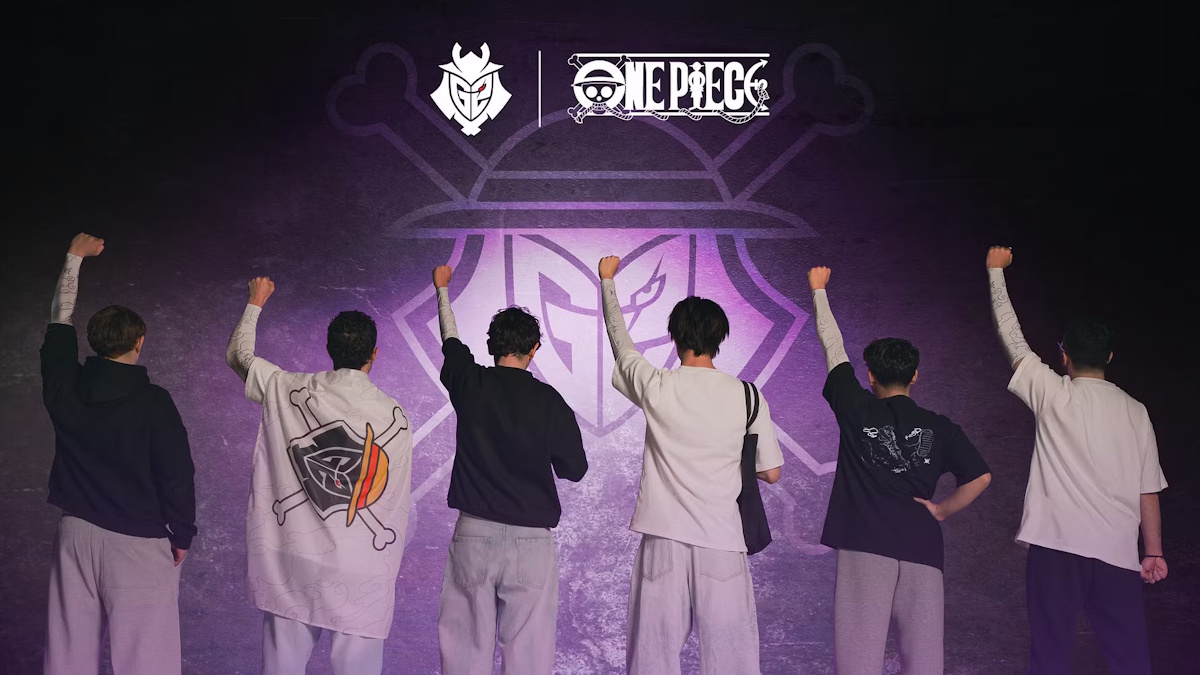
The esports organisation’s second anime apparel collaboration will be sold exclusively via g2esports.com/shop.
G2 is launching a limited-edition G2 | One Piece capsule collection on June 25, with the drop available exclusively through the organisation’s online store at g2esports.com/shop.
The collection is inspired by One Piece’s Gear 5 Monkey D. Luffy and includes hoodies, zip-ups, t-shirts, caps, sleeves, and tote bags. According to G2, the items use a black-and-white palette and feature a minimalist embroidered logo alongside a custom G2 | One Piece Jolly Roger that combines the G2 samurai emblem with Luffy’s straw hat.
“At G2, we’re continuing to push the culture and fashion of esports beyond competition alone, and this One Piece collection is a natural extension of that,” says Sabrina Ratih, COO of G2 Esports. “We wanted to create a capsule that continues to elevate the esports fashion space – understated, premium, and stylish enough for everyday wear, while still carrying the spirit of adventure, ambition, and individuality that defines One Piece and G2 alike. Every piece is designed to bridge the gap between fandom and everyday style, and continuing our mission to redefine what esports fashion can be.”
G2 described the drop as its second anime collaboration, following a previous apparel collaboration with Solo Leveling. The company positioned the release as part of its broader effort to connect esports, anime, and streetwear.
One Piece debuted in 1999 and remains one of the largest anime franchises globally. G2 cited over 600 million manga copies sold and more than 1,160 episodes for the series.
The post G2 drops limited-edition One Piece streetwear capsule on June 25 appeared first on EE Gaming | Global iGaming & Tech Intelligence Hub.
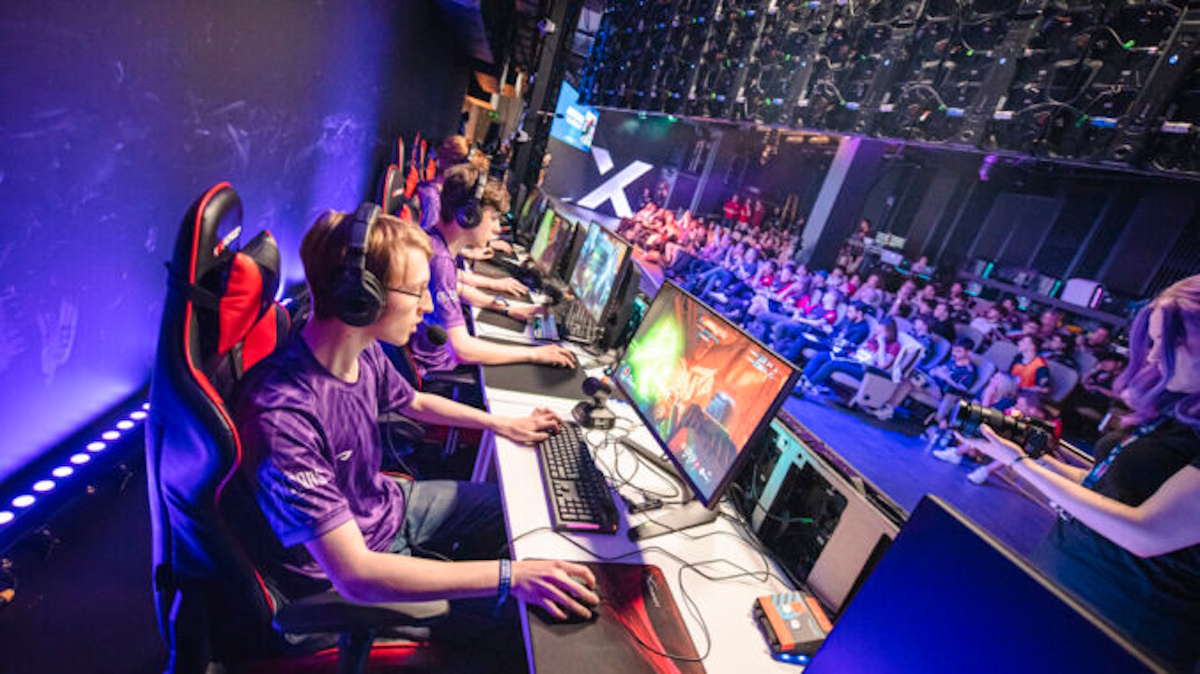
EFG, Hero Esports and Niko Partners survey 8,000 fans across eight markets; 74% report ads and brand presence influence buying.
ESL FACEIT Group (EFG), Hero Esports and Niko Partners have released a multi-country Gen Z esports study claiming around 400 million Gen Z consumers (20%) regularly engage with esports. The findings were published on 25th June 2026 in Cannes, France, in a white paper titled The Esports Generation: Who They Are & Why They Spend.
The report is based on survey data from 8,000 Gen Z esports fans aged 13-30 across eight markets. It positions esports as a high-attention channel for brands: 85% of respondents said they notice branding in esports, while 74% self-reported that advertising and brand participation in gaming spaces influences their purchasing behaviour. The study also reports that 66% have bought a product following a collaboration or co-branding partnership with an esports team, game or player.
On consumption and fandom touchpoints, the study found 71% regularly watch gaming content, including 66% who watch gaming livestreams and 33% who watch or listen to gaming podcasts. It also points to offline reach: 21% said they regularly attend gaming conventions and esports events, with the average respondent attending at least one in-person event in the past nine months.
The white paper also breaks out claimed purchase categories linked to esports collaborations over the past year, led by food and beverage (33%), electronics (33%) and fashion (32%). Beyond core categories, it reports 28% bought esports-related collectibles, 17% purchased makeup, beauty, or skincare products, and 10% bought from partnered brands in other categories.
Niccolo Maisto, CEO at ESL FACEIT Group said: “Esports has evolved into one of the most effective channels for companies looking to connect with Gen Z audiences at scale. What makes it unique is not just its reach, but the depth of engagement and trust that exists between fans, players, teams, and events. This research shows that esports fans are highly invested participants, not passive viewers, creating an opportunity for brands that show up authentically and build meaningful and lasting connections with this key audience.”
Danny Tang, Co-Founder and CEO of Hero Esports said: “This whitepaper confirms what we at Hero Esports have long believed: esports has evolved into a global cultural and economic force. The data shows an audience that is young, diverse, and deeply engaged. For brands, the message is clear—esports is no longer a niche market; it is the premier platform to connect with the next generation of consumers. We are proud to partner with Niko Partners and EFG to provide this blueprint for understanding and succeeding in this dynamic industry.”
Lisa Hanson, CEO at Niko Partners said: “Our data shows that, much like fans of other sports, Gen Z esports fans are incredibly passionate and have formed strong bonds within their communities. However, their media and consumer affinities extend well beyond gaming and esports, with our research revealing naturally connected interest areas that create valuable overlapping opportunities for brands and partners that show up authentically in this ecosystem.”
The post Study: 400m Gen Z esports fans say brand activations drive purchases appeared first on EE Gaming | Global iGaming & Tech Intelligence Hub.
eSports
How Not to Tilt When Facing Challenges: NAVI Performance Coach Urszula Klimczak and GG.BET Have Released a Special Project about Mental Health

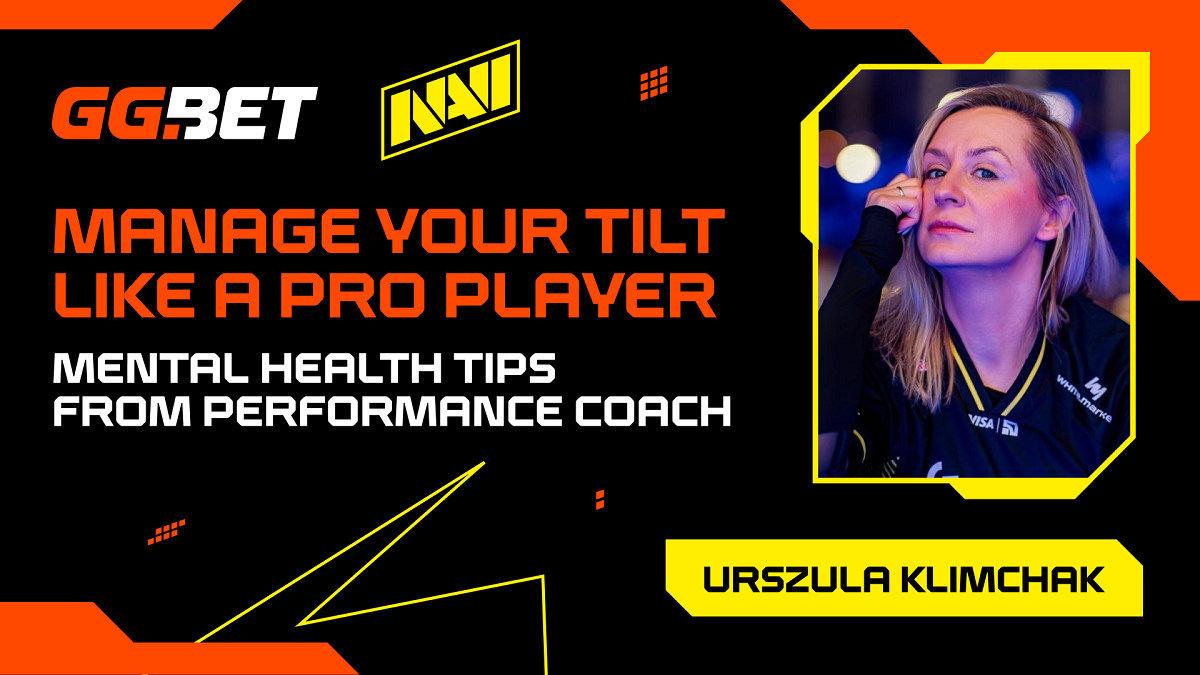
NAVI Performance Coach Urszula Klimczak and NAVI’s title sponsor GG.BET have unveiled Tilt Management, a special project dedicated to mental health. The initiative consists of three in-depth articles covering demotivation, burnout, and dealing with hate – some of the most common mental health challenges faced not only by esports players, but also by their fans. The project places a strong emphasis on practical value, featuring real-life esports cases, proven advice and everyday practices, as well as self-support exercises readers can apply on their own.
Mental health is becoming increasingly relevant year after year, regardless of profession or lifestyle. Many of the challenges professional players experience are familiar to millions of people in their everyday lives. These include loss of purpose, poor work-life balance, conflicts within teams, vulnerability to criticism, and more. While esports professionals can rely on performance coaches and team staff for support, people outside the industry often have to seek professional help on their own – something that does not always happen. One of the key goals of the project is to support people who may not have access to professional guidance by explaining how different issues manifest themselves, offering practical tools for self-care and recovery, and highlighting when it is important to seek help from specialists.
The first article focuses on demotivation. It explains how to recognize its early signs, how to distinguish it from simple exhaustion, and what NAVI does to prevent players from reaching this state. Particular attention is paid to techniques that help regain focus, manage daily routines, and gradually restore energy.
The second article explores burnout both within and beyond esports. Readers can assess themselves using descriptions of the five stages of burnout and their symptoms, learn about NAVI’s approach to maintaining performance under a demanding schedule, and discover why variety in everyday life and taking smaller, more frequent breaks are essential elements of burnout prevention.
The final chapter of the project addresses hate and negativity. It explains why hatred and aggression ultimately say more about the hater than the target, how to establish healthy boundaries, and how to avoid being consumed by criticism – especially self-criticism. NAVI’s strategy for dealing with hate, combined with practical exercises, can help readers to challenge negative thoughts and distinguish constructive feedback from a stream of harmful negativity.
All articles from the Tilt Management special project are available on EGamersWorld.
The post How Not to Tilt When Facing Challenges: NAVI Performance Coach Urszula Klimczak and GG.BET Have Released a Special Project about Mental Health appeared first on EE Gaming | Global iGaming & Tech Intelligence Hub.

-

 Australia7 days ago
Former Star Entertainment Executives Mathias Bekier and Paula Martin Disqualified and Ordered to Pay Penalties
-
Alejandra Burato7 days ago
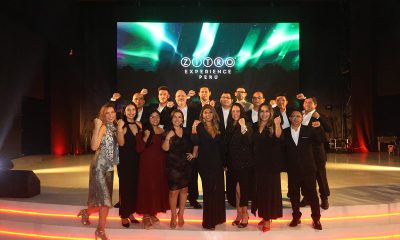
Record Attendance, Exciting New Releases, and a Resounding Success: This was Zitro Experience Peru
-
Amusnet7 days ago
Weekend Reels | Week 25: Slot Drops & Trends
-
ArenaPlus7 days ago
DigiPlus Wins “Digital Operator of the Year” Award at 2026 Global Gaming Awards Asia-Pacific
-
Anthony Dalla-Giacoma7 days ago
Elysium Studios Releases its Latest Slot Game “Hood and Loot”
-
Greece7 days ago
SYNOT Games Announces New Partnership with Superbet
-
Bragg Gaming Group4 days ago
Massive Gaming launches Blitzcrown titles on Superbet Brazil via Bragg Hub
-
BurraPay7 days ago
Byte Federal Announces Successful Launch of Custom-Built Integration Supporting BurraPay’s Historic Entry into America’s Regulated Gaming Market