eSports
Esports player engagement: Latency Vs Delay

How does latency impact the success of the esports market? Is the industry paying this issue enough attention?
Regardless of whether it’s esports or traditional sports betting, latency is a critical issue that must always be considered in your market offering. The current levels of latency and delay in esports means that punters are at a significant disadvantage when they place bets – to the point that it detracts from the overall experience. Improving latency and delay is essential to achieving parity with the broader sports betting sector, and the future growth of esports betting more broadly.
The most important differentiator between esports and traditional sports is not latency but delay. Latency only refers to the common and often unavoidable situation where the video stream is lagging behind the real time gameplay. Delay, however, is an intentional feature in esports, used as a tool to increase the Tournament Organiser’s control over the broadcast content.
Purposely inputting delay is an industry standard these days and has a direct impact on player engagement. TO’s are constantly trying to find the right balance for delay, as they need to manage competitive and betting integrity against risk, while maintaining broadcast quality.
Although the issue of latency is being handled well in industry, the issue of delay is not. Many industry stakeholders are not attempting to overcome this challenge at all. It’s not just a matter of a few seconds, but many video streams can have up to 10 minutes delay!
The scale of this issue is completely different to any latency related issues. The impact it’s having on player engagement is game changing and I believe it’s an aspect that needs a lot more attention from our sector.
How important is the tier of tournament as a factor when influencing the impact of latency or delay in betting markets?
In esports, latency levels are heavily influenced by the tier of tournament or match. The lower tier esports leagues with more niche gaming titles typically will not have an official data supplier. There is no mass data feed for everyone to access. For matches like these, the punters, operators, players and spectators are all receiving their information from one place; the online stream, meaning no unfair edge when comparing data speed to stream speed. In situations like this, nobody has an advantage, so issues of delay and latency are far less problematic.
The biggest risks to gaming integrity are usually observed in the highest tiers of esports. Top level games that are being broadcast all over the globe and have official data feeds are where the issues of latency and delay have the biggest impact.
The delay between video feed and odds feed is most disparate with MOBA (Multiplayer Online Battle Arena) games such as League of Legends or DOTA 2.
MOBA games usually consist of continuous gameplay for 40 – 50 minutes with no pauses or rounds. Even with delays of up to 5 minutes, a lot can happen that will change the dynamic of the game and moreover, change the final result. This puts the operator at a greatly increased risk, making it unfair for punters using the stream content to make bets from irrelevant odds.
Games such as Counter-Strike and Valorant are ‘rounds based’ games, meaning their gameplay is a lot more fragmented. So, with a 5-minute delay, the viewer will only be 1 or 2 rounds behind at most which is typically not enough of a window to impact the final result of an entire match. Added to this the fact that punters are only allowed to bet on one round at a time, the opportunity to benefit from the time delay is notably minimised.
What can the key stakeholders in the top tier of esports do to decrease delay in the streams whilst still upholding the highest standards to sports integrity?
In esports there will always be an element of delay to ensure broadcast quality and the integrity of competition – particularly to prevent stream sniping and cheating during games. With this in mind there are two different approaches to this: decreasing delay or aligning data with this delay.
For broadcast and integrity reasons you can only reduce the delay to a certain level, but that still doesn’t get to the heart of the problem. Punters are still behind not by seconds, but by several minutes. And it’s the top tier esports events, particularly ones with exclusive data feeds, that have the biggest disparity of information between operator and punter. Which in turn stifles the live betting potential of the biggest events of the year.
The more equitable solution for the industry would be to align the delay of the data feed with that of the stream. It sounds very simple right?
Applying this change in a way that parallels the sports betting ecosystem not only creates a fairer environment for the end user, the punter, but unlocks so many more opportunities for live engagement.
Official rights holders should think carefully and partner with companies that will create a fair ecosystem and who give betting operators the best ability to not only maximise revenues but who can deliver the best customer betting experience. This status quo has gone on for too long with suppliers of non esports specific betting products holding rights packages for some (not all) tournaments and throttling betting turnover and user experience.
Even with no perceived delay, operators using suppliers with quality products will still be able to price markets efficiently, while giving the punters a better overall experience.
How does latency impact sports integrity and how can it be improved going forward?
The answer to this question is a double-edged sword: Latency and Delay.
For esports and its general viewing experience, latency plays a key role. Most data providers are already utilising advanced technology to optimise every part of the streaming process and keep latency levels to a minimum. I don’t believe there to be too much of an issue there.
The core challenge is associated with Delay. We’ve heard from many stakeholders in the industry who say that there is a major problem with unfair betting in esports because punters are being supplied old information.
Most esports bettors prefer to watch the live match stream while betting, enhancing their in-game experience. However, when they notice that the odds on screen are not accurately reflecting the streamed gameplay, players understandably become discouraged from further engagement as the levels of credibility are impacted.
Sports integrity and fairness are important factors but not the only side effect of delay in esports. Being able to create an exciting experience for the punter is business critical. They need to be able to interact with the gameplay in as close to real time as possible. Statistics show that matches with the biggest delays also have the lowest betting volume, further demonstrating the need for improvement in this area. Latency itself is not a problem, the current industry level is under 10 seconds which is not perfect but is not problematic as most people don’t have the means or knowledge to be able to exploit that level of latency. The key to enhanced customer experience and the highest levels of sports integrity is in being able to better manage the delay, keeping the most up to date data possible displayed on the screen.
Powered by WPeMatico


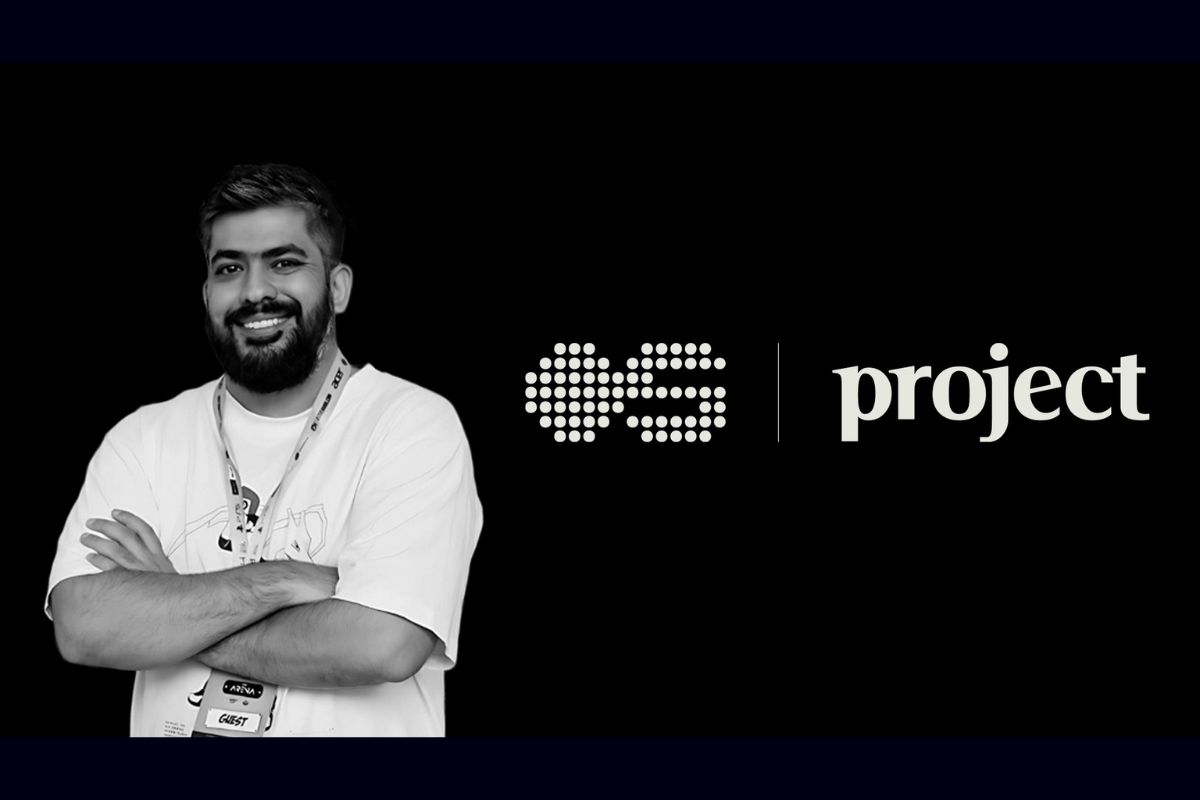
OS Studios has appointed Ishaan Arya as Country Manager for India, tasking him with leading the agency’s expansion across newly established hubs in Bengaluru, New Delhi, and Mumbai. The appointment was announced on 25 June, 2026 in Bengaluru.
OS Studios, a Project Worldwide agency, said it recently entered the Indian market and will deploy its ‘Fan Z’ approach for brands looking to engage with gaming, esports and live events audiences in South Asia. The company said the expansion will leverage the infrastructure and production capabilities of sister agency George P. Johnson (GPJ) India.
“The future of gaming will be shaped by the communities that care about it most, and few markets embody that more than India,” said John Higgins, CEO of OS Studios. “To build something meaningful, you have to be part of the culture, not looking in from the outside. Ishaan understands that better than anyone. He’s exactly the kind of leader we want building the future of OS Studios in India.”
In the role, Arya will oversee operations, drive strategic brand partnerships, and scale local capabilities, according to the company. “Brands are investing heavily in Indian gaming, but true fan experience is too often an afterthought,” said Rasheed Sait, Chief Growth Officer for India and South Asia at Project Worldwide. “Alongside GPJ India’s experiential footprint, OS Studios will set a new standard for fan engagement in the region.”
Arya previously co-founded The Esports Club and most recently served as Vice President of Partnerships at Nodwin Gaming, where he led Comic Con India. “A massive gap remains between brand intent and authentic community engagement in India,” said Arya. “I’m thrilled to leverage Project Worldwide and GPJ India’s operational strength to build culture-defining experiences for brands and fans alike.”
The post OS Studios names Ishaan Arya country manager to lead India expansion appeared first on EE Gaming | Global iGaming & Tech Intelligence Hub.
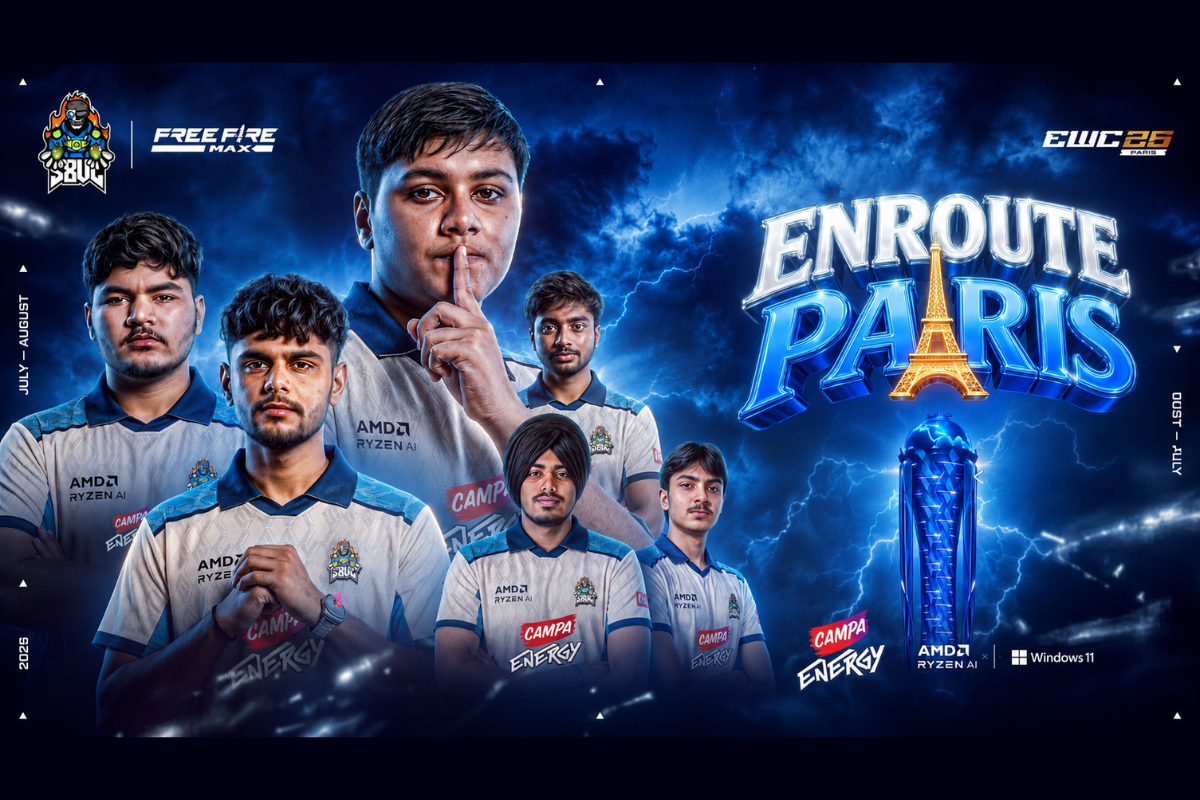
S8UL Esports has qualified for the Esports World Cup (EWC) 2026 in Free Fire, adding a sixth title to its confirmed lineup for the event. The organisation said its Free Fire MAX roster secured the berth after finishing second at the Free Fire MAX India Cup (FFMIC) 2026 Spring.
S8UL’s recently acquired roster—Naitik Sharma (Troll), Prince Saini (Prinxz), Jay Verma (Bunny), Harshit Nain (Jack07), and Abhishek Gupta (Stiven)—earned one of three invitations allocated to Indian representatives at EWC 2026. Free Fire at EWC 2026 is scheduled for July 15 to 18 in Paris, France, featuring 24 teams and a USD 1 million prize pool (approximately INR 9.4 crore), according to the company.
FFMIC 2026 Spring ran a multi-stage format from City Qualifiers and In-Game Qualifiers through to Group Stage, Knockout Stage, Point Rush and Champion Rush. S8UL said the roster posted 186 points in Knockout Stage Week 1 to place sixth, then carried momentum into the final phase. In Champion Rush, the team entered with three Headstart Points from Point Rush and finished second overall after scoring 131 points and two Booyahs across eight matches. The result also delivered INR 17 lakh in prize money, S8UL said.
Prince Saini aka Prinxz, captain of S8UL’s Free Fire Max roster said, “What makes this team special is the chemistry we’ve developed over time. We have a shared understanding of how we want to approach the game, and that allows us to stay composed and adapt quickly in different situations. Qualifying for the Esports World Cup is an important milestone for us, and doing so as part of S8UL makes the opportunity even more exciting. We are looking forward to representing the organization on the global stage and showing what this roster can achieve against some of the best teams in the world.”
S8UL Co-founder and CEO Animesh Agarwal aka 8Bit Thug linked the qualification to the wider Indian mobile esports ecosystem, saying, “Free Fire MAX has been one of the driving forces behind the growth of mobile esports in India, helping create a highly competitive ecosystem and a pipeline of talented players. When those players get the opportunity to compete at an event like the Esports World Cup, it is not just a milestone for the team but also a reflection of how far the Indian scene has come. Facing the world’s best teams provides invaluable experience and helps raise the overall standard of competition back home. At S8UL, we remain committed to identifying and supporting Indian talent, and we are proud to see our Free Fire MAX roster earn the chance to represent both the organization and the country on one of esports’ biggest stages,”. The organisation added it is also confirmed for EWC 2026 in Apex Legends, Chess, Fortnite, Honor of Kings and Trackmania, and remains in contention in EA SPORTS FC, Fatal Fury, Street Fighter 6 and Tekken 8. EWC 2026 runs July 6 to August 23 with a stated total prize pool of USD 75 million (~INR 714 crore).
The post S8UL qualifies for Esports World Cup 2026 Free Fire after FFMIC runner-up finish appeared first on EE Gaming | Global iGaming & Tech Intelligence Hub.
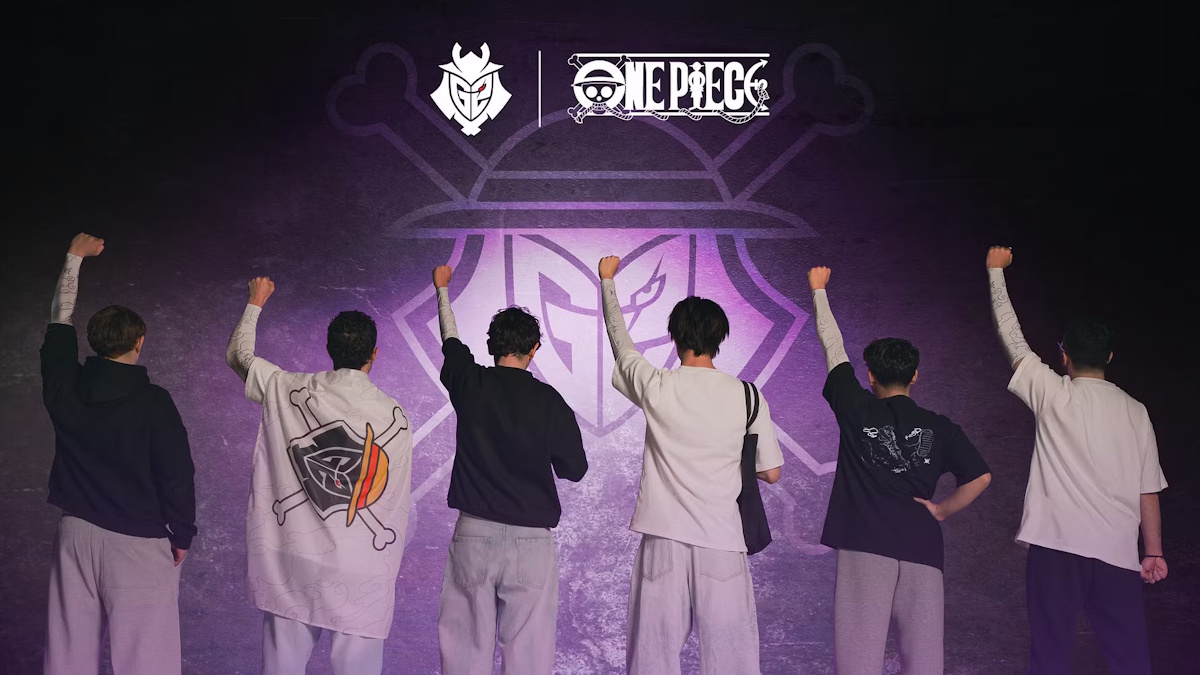
The esports organisation’s second anime apparel collaboration will be sold exclusively via g2esports.com/shop.
G2 is launching a limited-edition G2 | One Piece capsule collection on June 25, with the drop available exclusively through the organisation’s online store at g2esports.com/shop.
The collection is inspired by One Piece’s Gear 5 Monkey D. Luffy and includes hoodies, zip-ups, t-shirts, caps, sleeves, and tote bags. According to G2, the items use a black-and-white palette and feature a minimalist embroidered logo alongside a custom G2 | One Piece Jolly Roger that combines the G2 samurai emblem with Luffy’s straw hat.
“At G2, we’re continuing to push the culture and fashion of esports beyond competition alone, and this One Piece collection is a natural extension of that,” says Sabrina Ratih, COO of G2 Esports. “We wanted to create a capsule that continues to elevate the esports fashion space – understated, premium, and stylish enough for everyday wear, while still carrying the spirit of adventure, ambition, and individuality that defines One Piece and G2 alike. Every piece is designed to bridge the gap between fandom and everyday style, and continuing our mission to redefine what esports fashion can be.”
G2 described the drop as its second anime collaboration, following a previous apparel collaboration with Solo Leveling. The company positioned the release as part of its broader effort to connect esports, anime, and streetwear.
One Piece debuted in 1999 and remains one of the largest anime franchises globally. G2 cited over 600 million manga copies sold and more than 1,160 episodes for the series.
The post G2 drops limited-edition One Piece streetwear capsule on June 25 appeared first on EE Gaming | Global iGaming & Tech Intelligence Hub.

-

 Bragg Gaming Group4 days ago
Massive Gaming launches Blitzcrown titles on Superbet Brazil via Bragg Hub
-
Compliance4 days ago
HIPTHER Launches HALLO: The Standard in Compliance Expertise
-
Compliance Updates4 days ago
HIPTHER Launches HALLO: The Standard in Compliance Expertise
-
Alex Cuoci4 days ago
Wealthsimple and Kalshi Partner to Bring Prediction Markets to Canada
-
7Games4 days ago
7Games, Betão & R7 Launch FIRST.bet Sportsbook in Brazil
-
30-0 Kongeserien3 days ago
Kongebonus launches 30-0 Kongeserien Eliteserien fantasy draft game
-
Channelisation4 days ago
Swedish Gambling Authority consults tighter duty of care rules as channelisation slips
-
Bonusetu.com3 days ago
Finland Sets Casino Gambling Risk Limits at 2% of Income, 4 Days, 2 Game Types