Interviews
Q&A with Michael Maokhmphiou, Operations Manager at Lightning Box

Tell us about the CEE region for you in 2020 – what’s been your major highlights?
We’ve watched with interest as iGaming within the CEE region has developed in recent years, with a number of different countries choosing to regulate. Our games have now been certified in Croatia, Bulgaria, the Czech Republic, Romania, Latvia, Lithuania and Estonia. We’ve seen player engagement rise as a result. Numbers have been steady, in spite of the pandemic, which is encouraging, and it is definitely an area with potential growth, particularly as we look to replicate our larger presence in neighbouring western Europe and the Nordics.
To give readers a view of how you see the market – where’s been key for you and what regions are you keeping a close eye on?
The key for Lightning Box has been to build up a catalogue with a wide range of innovative and entertaining slots that have broad appeal. We’ve found recently that players are enjoying a new spin on some of our classic games, particularly when we add new features. A case in point is our recent release Chicken Fox5x Skillstar, which now has an added skill feature and a leader board. This has made it more engaging for players as they look to compete against one another. It is also a popular element of social gaming and can be a good way of introducing new customers to real money gaming as countries regulate. Slovenia may be one of the next in the CEE region and we are monitoring it alongside a few others at the moment.
How have events in since last March changed your approach to the region? Would you say it’s changed the landscape and demographics?
Our approach remains the same for all regions and hasn’t been guided by the pandemic, to be honest. We want to build entertaining slot games that appeal to all demographics. That will continue in spite of external factors which are beyond our control. As statistics have shown, there has been an overall increase in iGaming activities since the pandemic began in March last year. Due to restrictions and betting venues remaining shut, players who like to play in land-based venues have transitioned online. The trick for suppliers like us is to keep them engaged and to make sure they enjoy the experience whilst they’re here in order that they stay.
Looking to the future – what should our readers be watching out for in the next 12 months?
Hopefully will see more entertaining and innovative slots coming out from our studio and others around the world. Popularity in iGaming during the pandemic has increased worldwide due to the ease of access to online casino entertainment and retail businesses being shuttered. We feel as more regions open, there will be more and more players coming online. That’s an opportunity that we need to manage responsibly by working within each jurisdiction’s regulations to ensure player protection.
And last but not least, looking outside of the gaming industry, can you name an industry figure or company that we’d do well to learn from in the year ahead?
I’ve been impressed with the progress of a number of fintech companies recently and the Dutch ecommerce payments specialists Adyen have really caught the eye. Not only were they able to sustain traffic during the global pandemic they also increased it, as well as tailoring their services to businesses so they were still able to operate effectively and efficiently online. To adapt so quickly and with a minimum of fuss is no mean feat. There is a lot that gaming companies can learn from some of these more dexterous fintech giants.
Powered by WPeMatico


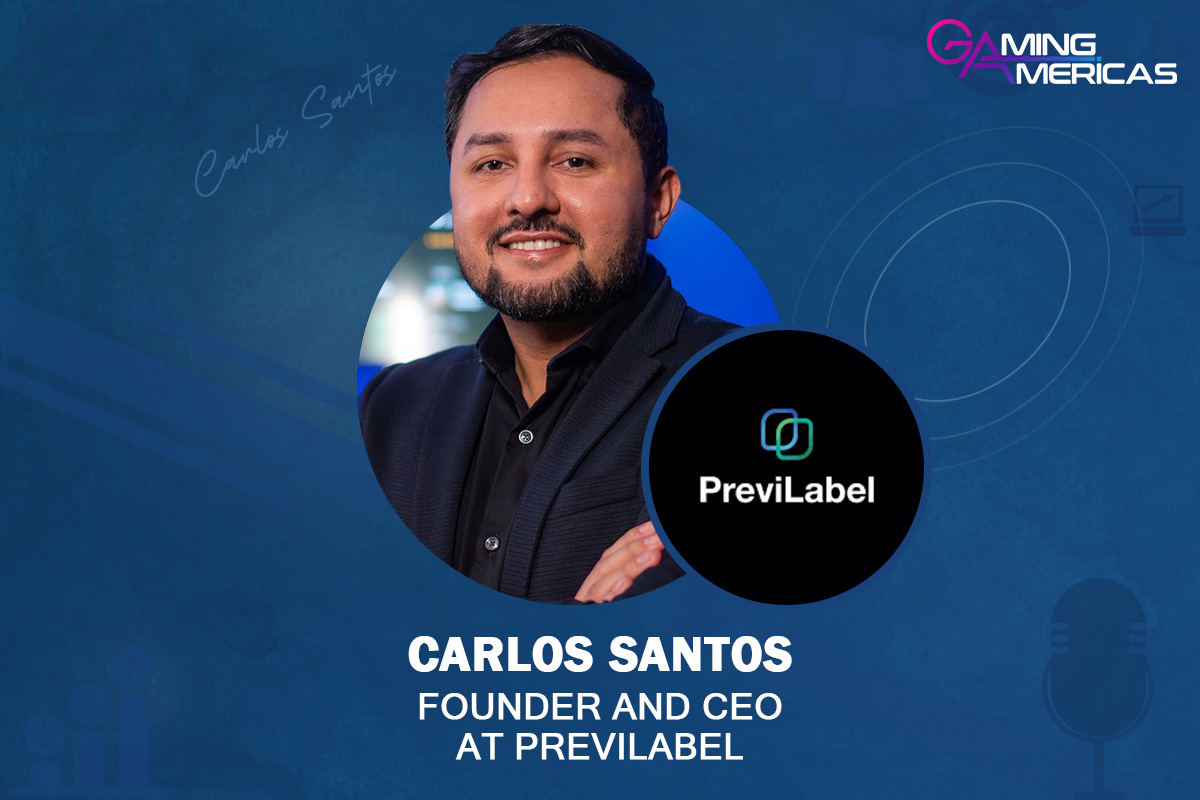
“En el mercado regulado de apuestas sentí que estaba intentando nadar en un océano dominado por tiburones. En el mercado de predicciones, estamos ayudando a construir el propio océano.” (C.S)
El mercado de predicciones comienza a ganar espacio en Brasil en un momento de transformación para la industria del gaming y los productos digitales basados en probabilidades.
Aunque todavía es un concepto incipiente en el país, y contradictorio en países vecinos, este modelo, que combina elementos de mercados financieros, tecnología y comportamiento del usuario, ya ha demostrado su potencial en otras regiones al ofrecer estimaciones colectivas sobre eventos futuros.
Sin embargo, su avance ha sido conflictivo en América Latina.
En mercados como Argentina, por ejemplo, está enfrentado restricciones e incluso prohibiciones, en medio de debates regulatorios sobre su naturaleza y su posible similitud con las apuestas tradicionales.
En este contexto, Brasil aparece como un terreno aún en definición, donde la reciente regulación de las apuestas deportivas abre espacio para discutir nuevos formatos digitales basados en probabilidades.
Es en este escenario donde surge la figura de Carlos Santos, CEO y uno de los impulsores de este segmento en el mercado brasileño con el lanzamiento de Previlabel.
Con experiencia previa en el ecosistema de apuestas, Santos decidió dar un paso más allá del modelo tradicional para apostar por la construcción de una nueva categoría en el país: los mercados de predicción.
A través de su visión y su proyecto, el ejecutivo busca no solo introducir este concepto en Brasil, sino también desarrollar la infraestructura tecnológica necesaria para que nuevos operadores y empresas puedan formar parte de este ecosistema emergente.
En esta entrevista, Carlos Santos analiza el potencial del mercado de predicciones en Brasil, los desafíos de su desarrollo y las oportunidades que pueden definir el futuro de este segmento en la región.
¿El mercado de predicciones aún es poco conocido en Brasil. ¿Cómo explicaría este concepto a alguien que nunca ha oído hablar de él?
Los mercados de predicción son plataformas donde las personas negocian probabilidades sobre eventos futuros.
En lugar de simplemente apostar por un resultado, los usuarios compran o venden posiciones basadas en la probabilidad de que algo ocurra.
El precio de estas posiciones termina reflejando lo que el mercado cree que es la probabilidad de ese evento.
Por eso, muchos describen este modelo como una especie de bolsa de valores de probabilidades, donde la información, la opinión y el dinero se combinan para formar una estimación colectiva del futuro.
¿Por qué cree que Brasil puede convertirse en un mercado relevante para plataformas de predicción?
Brasil tiene varios factores que favorecen este tipo de mercado. En primer lugar, es un país altamente conectado digitalmente y con una gran adopción de nuevas tecnologías financieras.
En segundo lugar, existe una cultura muy fuerte en torno a los deportes y a los eventos públicos, lo que genera naturalmente interés por las predicciones.
Además, la reciente regulación de las apuestas deportivas ha abierto espacio para nuevas discusiones sobre productos relacionados con probabilidades y mercados digitales.
El país acaba de regular las apuestas deportivas. ¿Los mercados de predicción son una evolución natural de esto o una industria diferente?
Están relacionados, pero no son exactamente lo mismo.
En las apuestas deportivas tradicionales, las probabilidades son definidas por la casa de apuestas.
En los mercados de predicción, en cambio, son los propios usuarios quienes forman esas probabilidades al negociar posiciones entre sí.
Esto crea una dinámica más cercana a un mercado financiero, donde el precio cambia a medida que surgen nuevas informaciones y las personas ajustan sus expectativas.
¿Cuáles son los principales tipos de eventos que podrían volverse populares en este mercado en Brasil?
El deporte probablemente será el punto de entrada más natural, ya que existe una gran base de usuarios interesados en este tipo de eventos.
Pero con el tiempo, estos mercados pueden expandirse hacia áreas como política, economía, entretenimiento e incluso tecnología.
En otros países ya existen mercados de predicción sobre elecciones, indicadores económicos y grandes eventos globales.
Esto demuestra que el modelo tiene potencial para ir más allá del entretenimiento.
¿Existe el riesgo de que el mercado de predicciones sea confundido con las apuestas tradicionales?
Sí, especialmente al inicio.
Como ambos involucran dinero y probabilidades, es natural que exista cierta confusión. Sin embargo, la diferencia está en la dinámica del mercado.
En las plataformas de predicción, los usuarios pueden negociar probabilidades y reaccionar ante nueva información, lo que hace que el sistema sea más parecido a un mercado financiero que a una apuesta tradicional.
Con el tiempo, a medida que el público entienda mejor el funcionamiento, esta distinción tenderá a ser más clara.
En el exterior, las plataformas de predicción ya existen desde hace tiempo. ¿Qué puede aprender Brasil de estas experiencias?
La principal lección es que estos mercados funcionan mejor cuando hay transparencia, liquidez y reglas claras de operación.
Las experiencias internacionales muestran que, cuando están bien estructurados, los mercados de predicción pueden generar estimaciones bastante precisas sobre eventos futuros. Sin embargo, también ha quedado claro que es fundamental contar con mecanismos de integridad y un entorno regulatorio que acompañe la innovación.
Brasil tiene la ventaja de poder observar estos ejemplos y adaptar las mejores prácticas a su propio contexto.
¿Qué le hizo mirar hacia los mercados de predicción en lugar de continuar únicamente en el mercado tradicional de apuestas?
Durante el último SBC en Lisboa tuve un momento muy claro de reflexión sobre el mercado. Me di cuenta de que estaba intentando competir en un entorno extremadamente difícil para empresas nuevas: enfrentar directamente a gigantes ya consolidados en el sector de apuestas.
El mercado regulado de apuestas en Brasil es altamente competitivo y está dominado por empresas con gran capital. Es como intentar nadar junto a tiburones en un océano que ya les pertenece.
Fue entonces cuando entendí que tal vez la oportunidad no era competir en ese mercado de la forma tradicional, sino participar en la construcción de una nueva categoría dentro del sector. El mercado de predicciones aún está en sus inicios en Brasil, lo que abre espacio para la innovación, la tecnología y el liderazgo.
Percibí que podía aprovechar toda la experiencia adquirida en el sector de apuestas para ayudar a estructurar este nuevo momento del mercado en el país.
¿Cuál fue el momento en que decidió convertir esto en un negocio?
Cuando regresé a Brasil después del SBC Lisboa, mi visión de negocio cambió completamente.
Comencé a estudiar más profundamente el mercado de predicciones y entendí que no era solo una tendencia global, sino también una oportunidad real para construir infraestructura en este sector en Brasil.
A partir de esta visión, iniciamos una asociación con Brasil Bitcoin, aprovechando toda su experiencia en Web3 e infraestructura digital para desarrollar esta tecnología.
La idea fue combinar esa experiencia en blockchain con nuestra visión de producto y mercado, creando una base tecnológica capaz de aportar más competitividad e innovación a este nuevo segmento.
¿Cuáles fueron los mayores desafíos al comenzar en este sector?
El principal desafío fue construir la tecnología.
Los mercados de predicción requieren una infraestructura muy específica, que incluye sistemas de negociación de probabilidades, liquidez, gestión de eventos y mecanismos de integridad.
Como este mercado aún es muy nuevo en Brasil, prácticamente no existían soluciones listas adaptadas a la realidad local. Esto exigió un gran esfuerzo de desarrollo para crear una tecnología sólida capaz de sostener el crecimiento de este ecosistema.
¿El público brasileño está preparado para entender y utilizar los mercados de predicción?
Creo que sí. El brasileño ya ha demostrado una gran capacidad de adaptación a nuevos productos digitales.
Basta observar el crecimiento de las apuestas deportivas, las criptomonedas y las plataformas financieras en los últimos años.
Cuando el modelo se explica bien y la experiencia es simple, la adopción tiende a ocurrir rápidamente.
¿Qué hace exactamente Previlabel dentro de este mercado?
Previlabel es una empresa de tecnología enfocada en infraestructura para mercados de predicción.
Desarrollamos la tecnología que permite a emprendedores crear sus propias plataformas de predicción y construir negocios dentro de este nuevo segmento que está comenzando a surgir en Brasil.
Nuestro objetivo es facilitar la entrada de nuevos operadores en este mercado.
Ustedes no operan solo una plataforma — venden tecnología para quienes quieren crear la suya. ¿Cómo funciona este modelo?
Exactamente.
Previlabel funciona como un proveedor de tecnología para este mercado. En lugar de operar una única plataforma, desarrollamos la infraestructura que los operadores pueden utilizar para lanzar sus propias marcas dentro del mercado de predicciones.
Esto permite que emprendedores y empresas ingresen en este sector de forma mucho más rápida, sin necesidad de desarrollar toda la tecnología desde cero.
¿Cree que veremos muchas plataformas de predicción surgir en Brasil en los próximos años?
Creo que esto ocurrirá muy rápidamente. En los próximos meses ya deberíamos ver varias plataformas emergiendo en Brasil.
Históricamente, el país siempre ha atraído nuevos modelos de negocio digitales debido al tamaño del mercado y al alto nivel de adopción tecnológica.
Cuando surge un nuevo segmento prometedor, Brasil suele convertirse en uno de los principales mercados de experimentación.
¿Existe una especie de “carrera” para crear el primer gran mercado de predicción brasileño?
Sí, esto es algo natural en cualquier industria naciente.
Cuando un nuevo mercado comienza a formarse, siempre existe una competencia inicial entre empresas para ver quién logra posicionarse primero y convertirse en referencia.
Probablemente estamos en el inicio de este proceso en Brasil, y quien consiga construir una tecnología sólida, ganar la confianza del público y escalar primero tendrá una ventaja muy importante.
The post Los mercados de predicción ganan terreno en Brasil con la entrada de Previlabel appeared first on Americas iGaming & Sports Betting News.
The prediction market is beginning to gain traction in Brazil at a time of transformation for the gaming industry and probability-based digital products.
Although it is still an emerging concept in the country, and a controversial one in neighboring markets, this model, which combines elements of financial markets, technology, and user behavior, has already demonstrated its potential in other regions by offering collective estimations of future events.
However, its development has been uneven across Latin America.
In markets such as Argentina, for example, it has faced restrictions and even bans, amid regulatory debates over its nature and its possible similarity to traditional betting.
In this context, Brazil emerges as a market still in formation, where the recent regulation of sports betting opens the door to discussions around new probability-based digital formats.
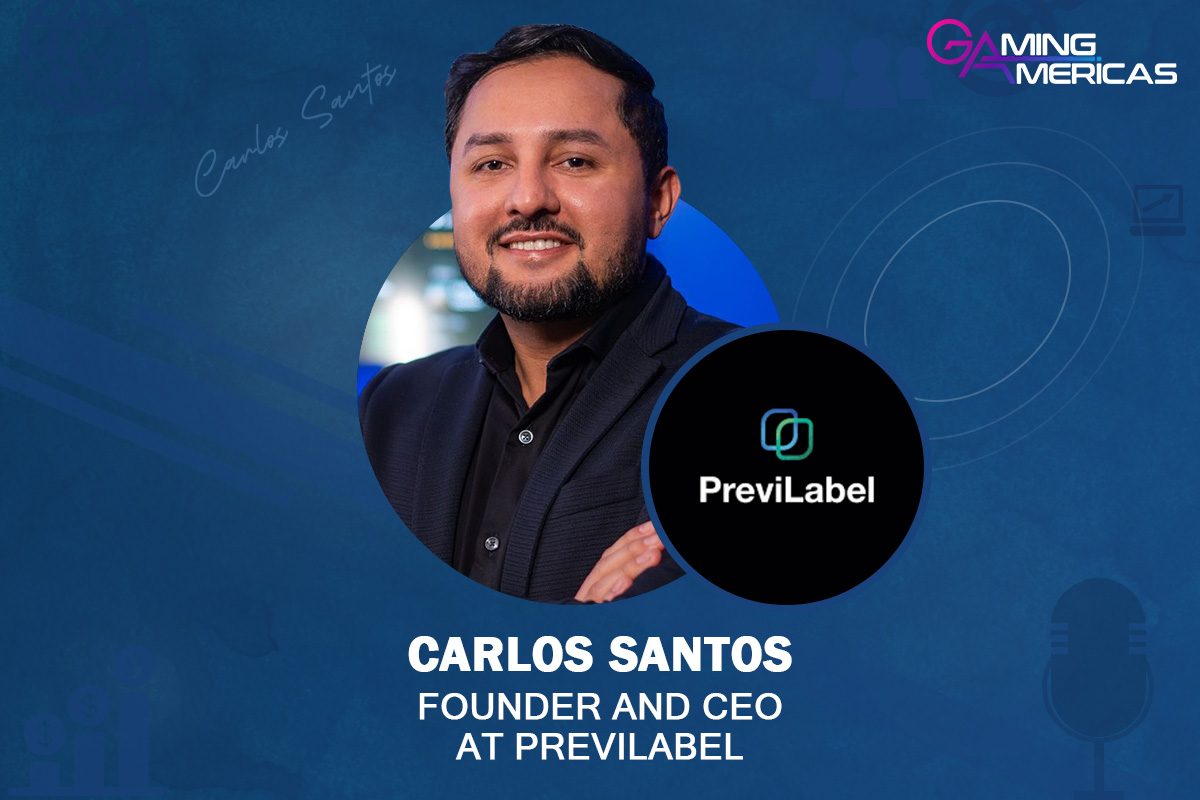
It is in this scenario that the figure of Carlos Santos emerges, CEO and one of the promoters of this segment in the Brazilian market with the launch of Previlabel.
With prior experience in the betting ecosystem, Santos chose to move beyond the traditional model and focus on building a new category in the country: prediction markets.
Through his vision and his project, the executive aims not only to introduce this concept in Brazil, but also to develop the technological infrastructure needed for new operators and companies to participate in this emerging ecosystem.
In this interview, Carlos Santos discusses the potential of prediction markets in Brazil, the challenges of their development, and the opportunities that could shape the future of this segment in the region.
Prediction Markets in Brazil
The prediction market is still relatively unknown in Brazil. How would you explain this concept to someone who has never heard of it?
Prediction markets are platforms where people trade probabilities about future events. Instead of simply betting on an outcome, users buy or sell positions based on the likelihood of something happening.
The price of these positions ultimately reflects what the market believes is the probability of that event.
That’s why many people describe this model as a kind of stock exchange for probabilities, where information, opinion, and money come together to form a collective estimate of the future.
Why do you believe Brazil could become a relevant market for prediction platforms?
Brazil has several factors that strongly support this type of market.
First, it is a highly digitally connected country with strong adoption of new financial technologies. Second, there is a strong cultural interest in sports and public events, which naturally drives interest in predictions.
Additionally, the recent regulation of sports betting has opened the door to discussions around products related to probabilities and digital markets.
The country has just regulated sports betting. Are prediction markets a natural evolution of this, or a different industry?
They are related, but not exactly the same. In traditional sports betting, probabilities are set by the bookmaker. In prediction markets, however, users themselves create those probabilities by trading positions with each other.
This creates a dynamic closer to a financial market, where prices change as new information emerges and as people adjust their expectations.
What types of events do you believe could become popular in this market in Brazil?
Sports will likely be the most natural entry point, as there is already a large audience interested in this type of content.
But over time, these markets can expand into areas such as politics, economics, entertainment, and even technology.
In other countries, prediction markets already exist around elections, economic indicators, and major global events.
This shows that the model has the potential to go beyond entertainment.
Is there a risk that prediction markets could be confused with traditional betting?
Yes, especially in the early stages. Since both involve money and probabilities, some confusion is natural. However, the key difference lies in the market dynamics.
In prediction platforms, users can trade probabilities and react to new information, making the system closer to a financial market than a traditional bet.
Over time, as users better understand how it works, this distinction tends to become clearer.
Abroad, prediction platforms have existed for some time. What can Brazil learn from these experiences?
The main lesson is that these markets work best when there is transparency, liquidity, and clear operational rules.
International experiences show that, when well structured, prediction markets can generate highly accurate estimates of future events.
However, they also highlight the importance of integrity mechanisms and a regulatory environment that keeps pace with innovation.
Brazil has the advantage of being able to observe these examples and adapt best practices to its own context.
What made you look at prediction markets instead of continuing only in the traditional betting industry?
At the last SBC in Lisbon, I had a very clear moment of realization about the market.
I understood that I was trying to compete in a very difficult environment for new companies, going directly against well-established giants in the betting sector.
The regulated betting market in Brazil is extremely competitive and dominated by companies with significant capital.
It’s like trying to swim alongside sharks in an ocean that already belongs to them.
That’s when I realized that the opportunity might not be to compete in that market in the traditional way, but rather to help build a new category within the industry.
Prediction markets are still at an early stage in Brazil, which creates space for innovation, technology, and leadership.
I saw that I could bring all the knowledge I developed in the betting sector to help structure this new phase of the market in the country.
When did you decide to turn this into a business?
When I returned to Brazil after SBC Lisbon, my business perspective changed completely.
I began studying prediction markets more deeply and realized that this was not just a global trend, but also a real opportunity to build infrastructure for this sector in Brazil.
From that point, we started a partnership with Mercado Bitcoin, leveraging the company’s expertise in Web3 and digital infrastructure to develop this technology.
The idea was to combine this blockchain experience with our product and market vision, creating a technological foundation capable of bringing more competitiveness and innovation to this new segment.
What were the biggest challenges when starting in this sector?
The main challenge was building the technology.
Prediction markets require very specific infrastructure, including probability trading systems, liquidity management, event handling, and integrity mechanisms.
Since this is still a very new market in Brazil, there were virtually no ready-made solutions adapted to the local reality.
This required a significant development effort to build a robust technology capable of supporting the growth of this ecosystem.
Is the Brazilian public ready to understand and use prediction markets?
I believe so. Brazilians have already demonstrated a strong ability to adapt to new digital products.
Just look at the growth of sports betting, cryptocurrencies, and financial platforms in recent years.
When the model is well explained and the user experience is simple, adoption tends to happen quickly.
What exactly does Previlabel do within this market?
Previlabel is a technology company focused on infrastructure for prediction markets.
We develop the technology that allows entrepreneurs to create their own prediction platforms and build businesses within this new segment that is starting to emerge in Brazil.
Our goal is to make it easier for new operators to enter this market.
You don’t operate just one platform, you sell technology for others to build their own. How does this model work?
Exactly. Previlabel operates as a technology provider for this market. Instead of running a single platform, we develop the infrastructure that operators can use to launch their own brands within the prediction market space.
This allows entrepreneurs and companies to enter the sector much faster, without needing to build the entire technology from scratch.
Do you believe we will see many prediction platforms emerging in Brazil in the coming years?
I believe this will happen very quickly. In the coming months, we should already see several platforms emerging in Brazil.
Historically, the country has always attracted new digital business models due to the size of its market and the high level of technological engagement.
When a promising new segment appears, Brazil often becomes one of the main markets for experimentation.
Is there a kind of “race” to create the first major Brazilian prediction market?
Yes, this is natural in any emerging industry.
When a new market begins to take shape, there is always an initial competition between companies to see who can position themselves first and become a reference.
We are likely at the beginning of this process in Brazil, and those who manage to build solid technology, gain user trust, and scale quickly will have a significant advantage.
The post Prediction Markets Gain Ground in Brazil as Previlabel Enters the Market appeared first on Americas iGaming & Sports Betting News.


Interview with Ivan Korkin, Head of Account Management at Kanggiten
After his successful participation at the HIPTHER Prague Summit 2026, we speak with Ivan Korkin, Head of Account Management at Kanggiten, to explore how real-world B2C operational experience can strengthen B2B platform stability in today’s high-demand iGaming environment — and why resilience, real-time monitoring, and proactive infrastructure design are becoming critical competitive differentiators.
Ivan, your discussion at HIPTHER Prague Summit focused on applying high-volume B2C operational lessons to B2B platform stability. From your perspective, what are the most overlooked insights that B2B providers can learn from real-world B2C environments?
The most overlooked insight is that B2B and B2C platforms do not require fundamentally different security and operational standards. In reality, the B2C experience differs mainly on the client side; the underlying security protocols needed to combat fraudsters, hackers, and bonus hunters remain exactly the same.
When designing platform architecture for long-term reliability, which core principles matter most today – and how has your approach evolved as traffic volumes and player expectations continue to rise?
The foundational principle is ensuring the platform is “Modular by Design”. Monolithic systems are simply too rigid for modern scaling. At Kanggiten, our platform is built from independent modules that communicate either through a shared data channel or via APIs. This ensures that if one module, like a tournament or bonus engine, gets overloaded, it does not bring down the entire platform; core functions like payments remain fully operational. This approach, called “graceful degradation,” keeps the platform reliable under pressure. Additionally, as expectations have risen, our approach has evolved to include self-healing capabilities, automatically restoring needed instances if a hardware failure occurs.
System resilience under load is a growing concern across the industry. What practical strategies should operators and suppliers implement to ensure performance remains consistent during peak demand moments?
Operators must utilize systems built for fast, automatic scaling without human intervention. When data volume grows, the platform should simply add more hardware on the fly. From a data hygiene perspective, peak loads often cause statistics to lag or duplicate. We prevent this by utilizing specialized columnar databases that scale horizontally for heavy analytical workloads. If a technical glitch sends the same data twice, our system recognizes it and refuses to double-count. Finally, resilience requires full system redundancy to achieve 99.9% uptime, ensuring there is zero single point of failure and that live database backups are hosted in physically separate data centers.
Kanggiten places strong emphasis on real-time analytics and monitoring. How do real-time metrics function as early-warning systems in modern iGaming infrastructure, and what signals should teams be watching most closely?
Real-time metrics are critical for identifying anomalies and root causes instantly. Many operators focus solely on technical metrics, but we closely watch business metrics like user registrations, deposits, bonus activations, and critical user chains. A server might appear healthy on a backend dashboard, but a sudden drop in these business metrics serves as an early-warning signal that issues are occurring on the user journey. Tracking these in real time prevents isolated technical glitches from turning into massive revenue losses.
Many teams still operate in reactive mode when incidents occur. What does a truly proactive issue-detection framework look like in 2026, and what cultural or technical shifts are required to get there?
A proactive framework utilizes dynamic product alerts and retrospective data analysis. Instead of waiting for a system crash, our alerting system compares the current volume of events against historical data—such as traffic from three weeks ago—to automatically determine if current metrics are normal or if human intervention is needed. Culturally, moving away from reactive firefighting requires a commitment to continuous testing; we run automated tests, manual checks, and cloud-based load testing before any code ever reaches production.
Looking ahead, as modular and full-stack platforms continue to evolve, what should operators prioritize now to ensure their infrastructure remains secure, scalable, and future-ready over the next three to five years?
Operators must prioritize a “provider-agnostic” approach to their infrastructure. Over the next few years, the ability to rapidly adapt to changing regulations and execute seamless, disruption-free migrations between cloud providers will be paramount. Security must also remain a top priority; operators should demand infrastructure that holds the highest-level PCI DSS certification (Level 1 v4.0) , where card data is encrypted with strong algorithms and in-transit data is secured using Sectigo and Google SSL certificates over TLS 1.2 or higher.
Kanggiten was the Silver Sponsor and Badge & Bracelet Sponsor at HIPTHER Prague Summit 2026. What key conversations did you have with operators and partners during the event, and what should the industry be watching next from your team?
We were delighted to speak with ambitious operators who demand speed, control, and performance without the bureaucracy of traditional platforms. We always want to discuss how our modular ecosystem allows businesses to launch in weeks, not months, and scale reliably under any load. As for what’s next, the industry should watch how Kanggiten continues to merge premium B2C conversion tactics with robust B2B infrastructure, delivering technology engineered specifically for measurable revenue growth and uncompromising stability.
The post From B2C Scale to B2B Stability: Kanggiten’s Real-World Lessons in Platform Resilience appeared first on Eastern European Gaming | Global iGaming & Tech Intelligence Hub.

-

 Asia7 days ago
GLI Becomes the First Company Accredited by PAGCOR to Test and Certify iGaming Platforms in the Philippines
-
Betnacional5 days ago
Operational Leadership and the Driving Force Behind LatAm’s Largest Event
-
Compliance Updates7 days ago
Playtech Enters Connecticut iGaming Market
-
Asia7 days ago
Team India and Türkiye Win Gold at the Global Esports Games Mumbai
-
Australia5 days ago
NSW: More Than 650 Gaming Machine Exemptions Revoked to Address Gambling Harm
-
Compliance Updates5 days ago
UK Government proposals to undermine the ‘aim to permit’ of the Gambling Act 2005?
-
2026 SPiCE South Asia Awards5 days ago
QTech Games wins Innovation of the Year at the 2026 SPiCE South Asia Awards
-
Andrea Rossi6 days ago
REEVO Goes Live with Betsson in Brazil