AI
5 AI Trends on the Horizon for 2024


Without a doubt, 2023 has proven to be the year for artificial intelligence (AI), and the upcoming year, 2024, is expected to follow suit.
According to Forrester’s data, 2024 is set to be another significant year for AI, bringing about what we can call “intentional AI.” This means AI is moving away from mere experimentation and gimmicks, focusing instead on purposeful applications. Evidence of this shift is apparent in Forrester’s July 2023 AI Pulse Survey, which shows that 67% of businesses are actively incorporating genAI (AI technology) into their broader AI strategies.
In summary, 2023 has laid the foundation for AI’s continued growth, and 2024 promises to be a year where AI becomes more purposeful and integral to businesses.
Let me now share the five trends that we at InclusionCloud predict will dominate the AI landscape in 2024 and beyond.
Trend 1: AI Changing Jobs Forever
Is AI ready to take over all human jobs? It’s a widespread concern, but let’s check whether there’s any truth behind it. While AI undoubtedly excels in certain areas, it falls short of matching human creativity and nuanced thinking in others. This distinction becomes evident when we dissect AI systems into two categories: open and closed. Open systems, characterized by external variables that remain beyond the machine’s control, are prone to unpredictability. For example,autonomous cars where another driver could unexpectedly cross a red light. On the contrary, closed AI systems, operating within controlled environments, exhibit remarkable efficiency, as seen in AI-powered chess software where the machine knows all potential moves.
However, within this context of AI’s transformative potential, real-world collaborations between humans and AI underscore a different narrative. In healthcare, AI-powered diagnostics equip doctors with faster and more accurate insights, ultimately improving patient care. Similarly, the manufacturing sector showcases seamless collaboration between AI-powered robots and human workers, resulting in heightened productivity and superior quality control. As I often emphasize, this collaborative approach shows that AI’s role is not in displacing jobs but in enriching them.
Trend 2: Who Is in Charge? The Year of AI Laws
The rapid proliferation of AI has inevitably captured the attention of governments worldwide. Striking a delicate balance between fostering AI innovation and safeguarding public interests is the central challenge. In 2024, laws and regulations will be indispensable for deciding the worldwide trajectory of AI.
We’re now finding ourselves at an intersection where robust AI regulations aren’t just a choice, but actually imperative if we are to continue to move forward. It’s about ensuring responsible AI deployment without stifling innovation. Various industries, including the autonomous vehicle sector, grapple with complex regulatory questions. The adoption of AI ethics frameworks, as exemplified by initiatives such as the European Union’s, will delineate the boundaries of responsible AI implementation.
Trend 3: The Growing Impact of AI on Creative Work
The amalgamation of AI and human creativity ushers in an exciting new era of innovation. AI-generated “hallucinations” are not mere glitches but powerful catalysts that inspire fresh perspectives and serve as creative brainstorming tools. However, as we navigate this creative frontier, ethical considerations take center stage.
In the entertainment industry, AI algorithms meticulously analyze viewer preferences to offer highly personalized content recommendations, enhancing the user experience. In design and art, AI collaborates with human creatives, suggesting novel ideas and even autonomously producing art. I believe that AI amplifies human creativity, but it is vital to establish ethical guidelines to navigate this exciting yet delicate collaboration.
Trend 4: AI Models Learning from Synthetic Data
The effectiveness of AI models is determined on the quality and quantity of training data available. This brings us to the debated subject of synthetic data, which has the potential to replace real-world data in a wide range of industries. For instance, in the insurance sector, synthetic data has emerged as a valuable tool for simulating complex risk scenarios, enabling insurance companies to refine their risk assessment models and streamline underwriting processes.
We see synthetic data as a means to democratize AI development, making it accessible across various sectors. However, ensuring its reliability through strict testing and validation is key.
Trend 5: Supercomputers for Super AI
AI’s continual development and sophistication needs unparalleled processing power. As AI models get increasingly complex, cutting-edge hardware developments become critical. From banking to scientific research, industries largely reliant on AI are spending considerably in infrastructure capabilities to support these emerging models.
Supercomputers are the backbone of AI’s future, enabling the training of massive models and unlocking new frontiers of possibility. Quantum computing, in particular, has the ability to tackle complicated problems at unprecedented rates. According to IBM, this innovative technique has the potential to transform sectors such as medicine research and climate modeling.
Conclusion
As we venture into 2024, the AI landscape promises a captivating narrative of change and innovation. These five trends encapsulate the profound impact of AI on our lives and industries. It’s a future where AI serves as an enhancement rather than a replacement, a future where navigating evolving regulations, fostering creative collaboration, exploring the potential of synthetic data, and investing in cutting-edge infrastructure are the guiding principles.
As the CRO of Inclusion Cloud, Nick Baca-Storni leverages his extensive industry experience to spearhead digital transformation initiatives, building strategic partnerships with tech giants such as Google, Salesforce, AWS, Oracle, and ServiceNow.













Online casino and iGaming developer MadMen is marking its 10th anniversary this year, reflecting a decade of technology work for operators in regulated and emerging markets.
Founded in 2016, MadMen said it began in B2C before moving to a B2B model. The company now provides front-end and back-end development for iGaming operators, spanning brand launches, platform integrations, market expansions, and bespoke product work.
MadMen said it works with established operators, challenger brands, and land-based casinos moving online, and highlighted supplier relationships including its Official Gold Partner status with EveryMatrix (2022) and a partnership with Omega Systems (2024).
Since its first major B2B project in 2021, the company said it has delivered more than 35 custom solutions for operators worldwide and launched its first US sweepstakes project in 2025.
Commenting on the milestone, Michel Groenendijk, co-founder of MadMen, said: “We’ve been fortunate to spend the last decade working in an industry that has changed significantly in a relatively short space of time.
“Since we started, we’ve seen major regulatory developments across multiple markets, the growth of cryptocurrency, the emergence of sweepstakes models, and, more recently, the rapid rise of artificial intelligence. At the same time, operators have become increasingly focused on specific audiences and territories.
“Launching and growing an iGaming business today involves far more than developing a website. Payment integrations, compliance requirements, supplier relationships, and platform infrastructure all need to work together seamlessly, and our role is to help operators navigate that complexity. It’s a common misconception that once you have a fully functioning product, success is guaranteed, but in reality, the tech side is only one part of the equation. A deep understanding of the industry, proper relationships with suppliers, and years of experience are all essential for achieving success, which is why clients choose to work with a business like ours.
“Looking ahead, we see significant opportunities in areas such as AI-driven development, testing, and player engagement. Our focus will remain on helping operators adapt to new technologies and market requirements while bringing ambitious projects to market practically and sustainably.
“By embedding AI into our delivery and product development processes, we can significantly reduce the time required to deliver solutions for both new and existing clients, allowing us to take on more projects of a larger size, as well as spend more time allowing our expert team to experiment with new features.
“It’s worth noting that whilst AI has its place within the company, there’s still plenty that it’s not able to automate. This is where our experience shines, managing different pipelines across different teams to keep everything aligned and integrated into the final product.
“We’re grateful to our team and clients who have been part of our journey over the last ten years.”
The post MadMen marks 10 years as iGaming development supplier appeared first on EE Gaming | Global iGaming & Tech Intelligence Hub.
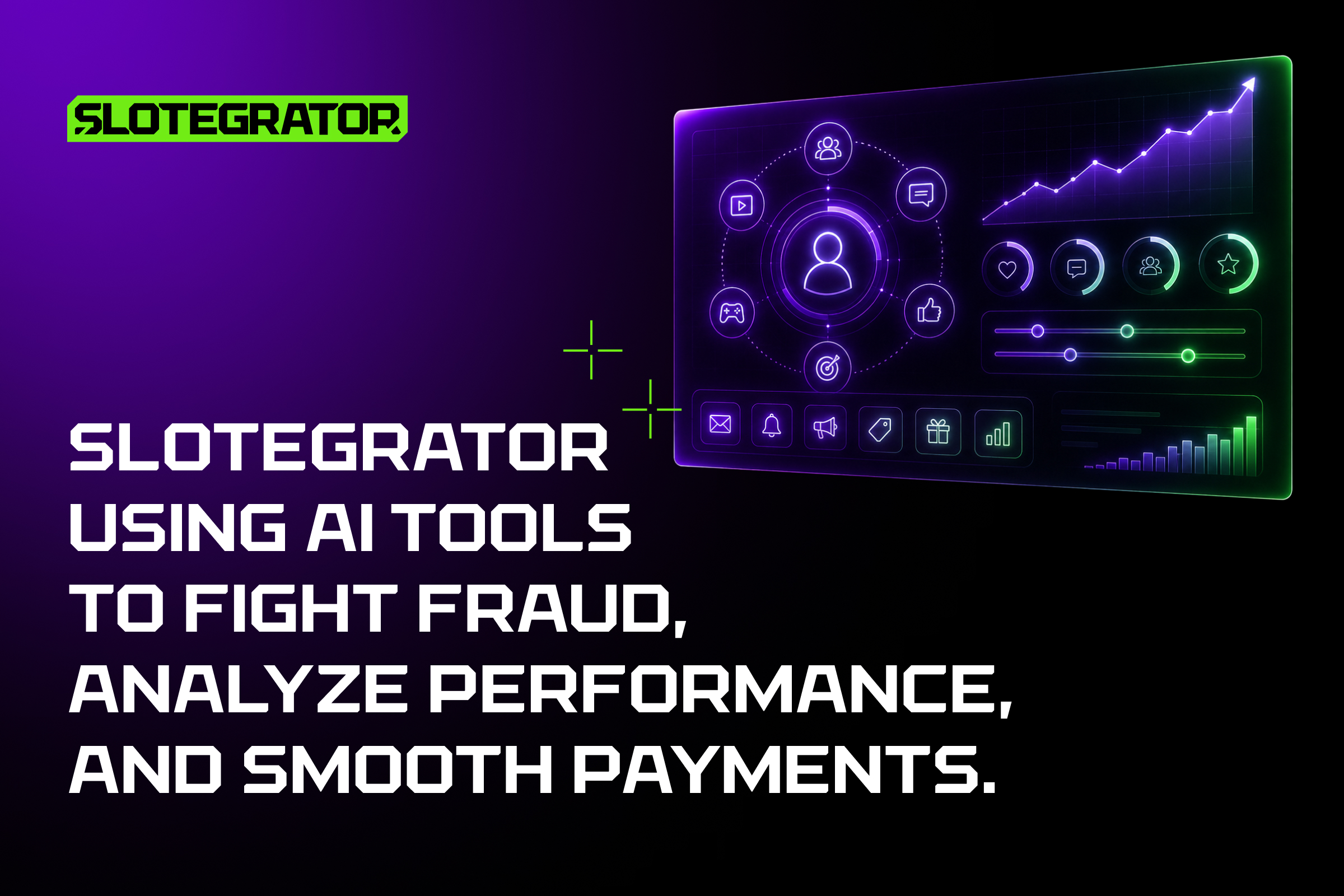
When everyone has access to AI, the future belongs to those who use it strategically. Slotegrator’s updated platform has a suite of AI-powered tools that do the heavy lifting so clients can focus on strategy and business development.
Suppliers are racing to incorporate AI features. Instead of just keeping up with the hype, Slotegrator updated its platform with a suite of AI tools that help its clients by doing most of the heavy lifting and handling tasks that require large amounts of processing power. The company’s platform software now features AI tools for fighting fraud, analyzing essential business data, and reducing payment friction.
Fraud is a major concern for online casino operators, particularly when it comes to bonus abuse.
Bonus abusers are constantly developing new techniques and tactics to defraud casinos — even more so now that they have access to AI tools. Good deepfakes can potentially even pass liveness checks, and synthetic IDs (fake IDs made of real parts) are difficult to spot.
Slotegrator’s Anti-fraud module has an AI assistant to help operators combat fraud. The assistant provides summaries of real-time situations with just the touch of a button. Operators choose from one of three preset questions: 1. What is the overall risk situation? 2. Which risk categories are currently the most critical? And 3. What should be prioritized right now?
When they choose one of them, the assistant automatically analyzes the relevant data, yields structured conclusions, and makes recommendations for next steps. After you’ve made a selection, the AI assistant instantly processes dashboard metrics and provides a brief summary. The assistant works at both the project and individual level.
“As artificial intelligence becomes commonplace, the companies that integrate AI into core aspects of their business will be the ones that get ahead,” explains Slotegrator COO Olga Ivanchik. “AI is capable of more than automation. Incorporating AI at a strategic level, making it a core part of the business architecture, is the only way to stay competitive in the long run.”
Slotegrator’s platform also has an AI business intelligence module.
The AI BI module not only tracks KPIs such as GGR, unique players, active players, average bet sum, average withdrawal sum, average FD sum, profitability, CPR, and others, but filters and presents them for the chosen period and the particular project. All the data are displayed in convenient and clear tables and diagrams and can be exported as CSV and XLS files for convenience.
Users can segment players and apply bulk actions, depending on whether they need to be encouraged with a bonus or blocked due to risky behavior. Additionally, the module can filter players by affiliate partner ID to see which partner sent them.
Payments always present complex issues. Slotegrator’s Moneygrator simplifies payments by providing a unified infrastructure for managing payment providers in different GEOs.
But the Moneygrator AI bot takes the service to a new level.
The Moneygrator AI Bot automatically processes up to 80% of standard requests that previously required the involvement of an account manager. Instead of studying documentation or waiting for a response, teams receive structured data in minutes, significantly accelerating time-to-market.
ABOUT THE COMPANY
Since 2012, Slotegrator has been one of the iGaming industry’s leading software and business solution providers for online casino and sportsbook operators.
The company’s main focus is software development and support for online casino platforms, as well as the integration of game content and payment systems.
The company works with licensed game developers and offers a vast portfolio of casino content: slots, live casino games, poker, virtual sports, table games, lotteries, casual games, and data feeds for betting.
Slotegrator also provides consulting services in gambling license acquisition and business incorporation.
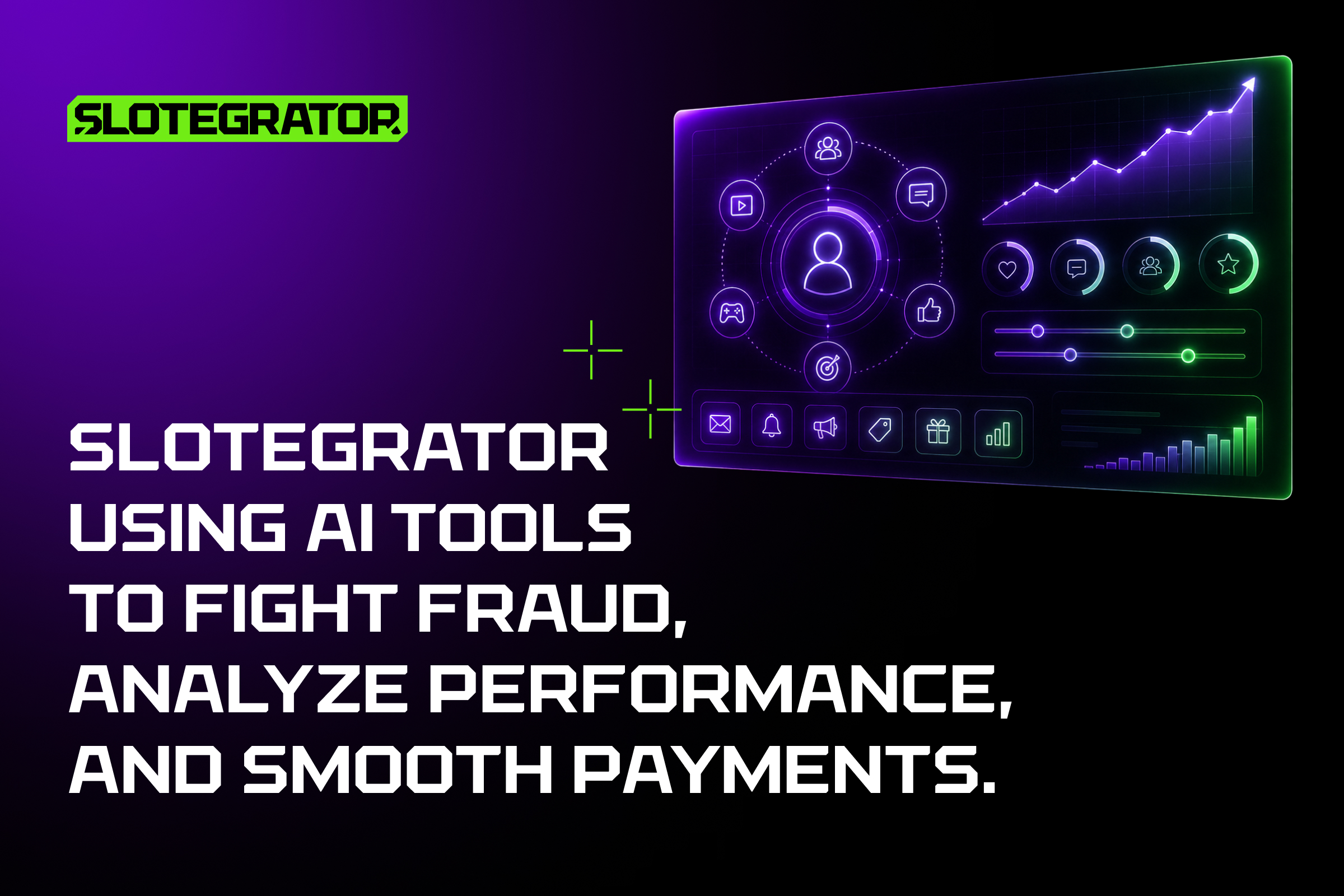
When everyone has access to AI, the future belongs to those who use it strategically. Slotegrator’s updated platform has a suite of AI-powered tools that do the heavy lifting so clients can focus on strategy and business development.
Suppliers are racing to incorporate AI features. Instead of just keeping up with the hype, Slotegrator updated its platform with a suite of AI tools that help its clients by doing most of the heavy lifting and handling tasks that require large amounts of processing power. The company’s platform software now features AI tools for fighting fraud, analyzing essential business data, and reducing payment friction.
Fraud is a major concern for online casino operators, particularly when it comes to bonus abuse.
Bonus abusers are constantly developing new techniques and tactics to defraud casinos — even more so now that they have access to AI tools. Good deepfakes can potentially even pass liveness checks, and synthetic IDs (fake IDs made of real parts) are difficult to spot.
Slotegrator’s Anti-fraud module has an AI assistant to help operators combat fraud. The assistant provides summaries of real-time situations with just the touch of a button. Operators choose from one of three preset questions: 1. What is the overall risk situation? 2. Which risk categories are currently the most critical? And 3. What should be prioritized right now?
When they choose one of them, the assistant automatically analyzes the relevant data, yields structured conclusions, and makes recommendations for next steps. After you’ve made a selection, the AI assistant instantly processes dashboard metrics and provides a brief summary. The assistant works at both the project and individual level.
“As artificial intelligence becomes commonplace, the companies that integrate AI into core aspects of their business will be the ones that get ahead,” explains Slotegrator COO Olga Ivanchik. “AI is capable of more than automation. Incorporating AI at a strategic level, making it a core part of the business architecture, is the only way to stay competitive in the long run.”
Slotegrator’s platform also has an AI business intelligence module.
The post Slotegrator using AI tools to fight fraud, analyze performance, and smooth payments appeared first on EE Gaming | Global iGaming & Tech Intelligence Hub.

-

 Australia7 days ago
Former Star Entertainment Executives Mathias Bekier and Paula Martin Disqualified and Ordered to Pay Penalties
-
Alejandra Burato7 days ago
Record Attendance, Exciting New Releases, and a Resounding Success: This was Zitro Experience Peru
-
Amusnet7 days ago
Weekend Reels | Week 25: Slot Drops & Trends
-
ArenaPlus7 days ago
DigiPlus Wins “Digital Operator of the Year” Award at 2026 Global Gaming Awards Asia-Pacific
-
Anthony Dalla-Giacoma7 days ago
Elysium Studios Releases its Latest Slot Game “Hood and Loot”
-
Greece7 days ago
SYNOT Games Announces New Partnership with Superbet
-
Bragg Gaming Group4 days ago
Massive Gaming launches Blitzcrown titles on Superbet Brazil via Bragg Hub
-
BurraPay7 days ago
Byte Federal Announces Successful Launch of Custom-Built Integration Supporting BurraPay’s Historic Entry into America’s Regulated Gaming Market