Industry News
PokerStars Players Can “Level Up With Lex” with Innovative Personalised Poker Advice Videos


The PokerStars community will now be able to “level up” their poker strategy and hone their poker skills with the help of one of the most well-known faces in poker and a ground-breaking innovation from PokerStars.
“Level Up With Lex” with PokerStars Ambassador Lex Veldhuis provides clear, simple and personalised poker advice videos based on a player’s real money Spin & Go game, helping to improve their skills in a safe environment and create more winning moments.
Veldhuis’ tips are highly personalised to the player and focus on improvement and education. Each piece of advice is based on data generated by PokerStars’ proprietary machine learning platform, which reads and analyses hand histories to detect mistakes. Each is therefore correct and true to the individual’s actions at the table.
“Level Up With Lex aims to help the PokerStars community develop their skills in a unique way and I’m proud to be part of this innovation. Learning poker strategy as a beginner can be challenging as there’s so many resources out there, but Level Up With Lex gives clear and simple advice that’s easy to take on board, meaning players get the most out of their time at the tables. It’s taken a lot of hard work and effort and I’m looking forward to seeing players benefitting from this technology,” PokerStars Ambassador Lex Veldhuis said.
The personalised videos can be created by opting in on “The Rail” in the PokerStars software. The videos can then be viewed on The Rail or received via email or push notification if players have their poker communication preferences enabled in “settings”.
Severin Rasset, PokerStars Managing Director & Commercial Officer, Poker, Product and Innovation, said: “Personalisation of our players’ experience and making their time with us more beneficial is at the heart of this innovation. We wanted to give our players a seamless and interesting way to improve and learn. When people are improving and progressing their skills, they generally enjoy the experience more and this is great for the game. This is the first large-scale, consumer facing use of AI for online poker and we are truly excited to bring this to our players who get the benefit of learning from Lex and one of the most sophisticated tools in online gaming.”
PokerStars recognised and invested in the potential of machine learning early on and its proprietary technologies have been active for some time. Today, they are an important tool to vigorously police poker tables to protect the integrity of the game, ensure a level playing field for all and enhance the customer experience.
Lex is one of the most well-known and successful faces in poker and has the biggest poker stream on Twitch. He has had big scores in major tournaments like the Spring Championship of Online Poker (SCOOP) and the World Championship of Online Poker (WCOOP) and has a personal record of a massive 58,543 concurrent viewers watching his stream in the 2020 SCOOP Main Event High.
Powered by WPeMatico

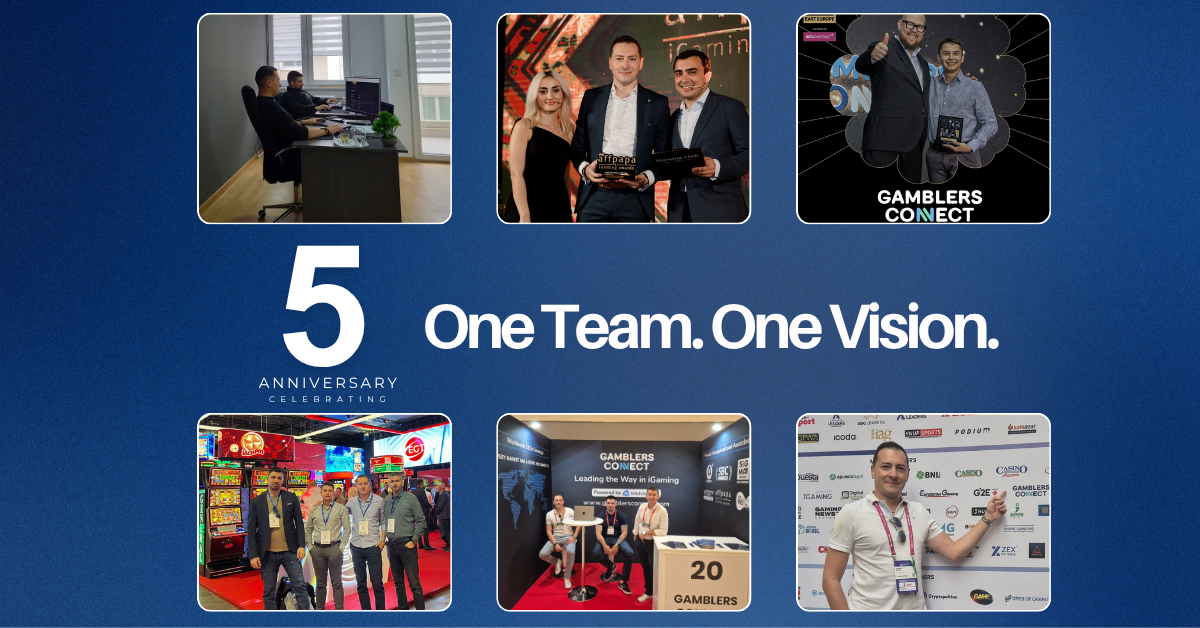
Gamblers Connect, the acclaimed iGaming media and affiliate platform, is marking its fifth anniversary and currently ranks as one of the most prominent affiliate media brands in the iGaming sector.
Gamblers Connect was established with a distinct purpose: to create a transparent, player-centric platform. What started as a simple idea rapidly transformed into something much more important. In its inaugural year, the company had already obtained its initial industry accolade. Since that time, Gamblers Connect has kept broadening its services by introducing new sections, tools, and features, while consistently achieving significant milestones and enhancing its visibility at prominent industry events, conferences, and speaking engagements.
The launch of the Responsible Gambling Index enhanced the platform’s offerings, serving as a unique assessment tool that has become a key aspect, encompassing both game providers and casino operators.
This advancement has been evident in industry accolades, featuring several awards and nominations at major events, such as Casino Affiliate of the Year, News Affiliate of the Year, Crypto Affiliate of the Year, and Best Affiliate of the Year.
In the last five years, Gamblers Connect has transformed past the conventional affiliate framework. The platform currently functions as a comprehensive iGaming media brand, generating a wide variety of editorial content, industry news, interviews, and B2B-related coverage, catering to both players and industry stakeholders.
Gjorgje Ristikj, Founder of Gamblers Connect, said: “2026 marks not just an anniversary, but a clear step forward. The launch of the GC Contributors Program, the introduction of the iHub, and an entirely new platform currently in development signal where Gamblers Connect is headed — deeper into the industry, more ambitious in scope, and built for what the next five years demand.”
The post Gamblers Connect Marks Its Fifth Anniversary appeared first on Eastern European Gaming | Global iGaming & Tech Intelligence Hub.

Kiron Interactive has unveiled FANS World Cup, a fast-paced football betting product designed to keep players engaged during the 2026 international tournament, particularly in between live matches when traffic typically dips.
Built on Kiron’s Goal Premier Engine, FANS World Cup integrates seamlessly into existing operator deployments with no additional cost or technical requirements.
The game features international teams competing in matches that resolve in just 60 to 90 seconds, giving players frequent opportunities to bet during breaks in the live schedule. By offering standalone mini-matches, the platform helps operators maintain player activity and reduce drop-off between fixtures.
Using familiar national teams ensures players stay connected to the real tournament, keeping the football context consistent rather than losing engagement between matches.
FANS World Cup covers all core betting markets, including full-time result, correct score, goalscorers, and card outcomes. Operators can also configure jackpot features and bonus multipliers to match their preferred risk profiles.
Steven Spartinos, Co-CEO of Kiron Interactive, commented:
“Tournament traffic comes in waves, and the challenge is keeping players engaged in between matches. FANS World Cup addresses that by offering short, exciting match cycles while staying connected to the teams fans are already following. It helps operators maintain steady engagement throughout the full tournament schedule.”
The post Kiron Interactive introduces FANS World Cup ahead of the 2026 FIFA World Cup appeared first on Eastern European Gaming | Global iGaming & Tech Intelligence Hub.
Gaming
Soft2Bet launches MEGA Islands, a new gamification engine designed to increase player retention

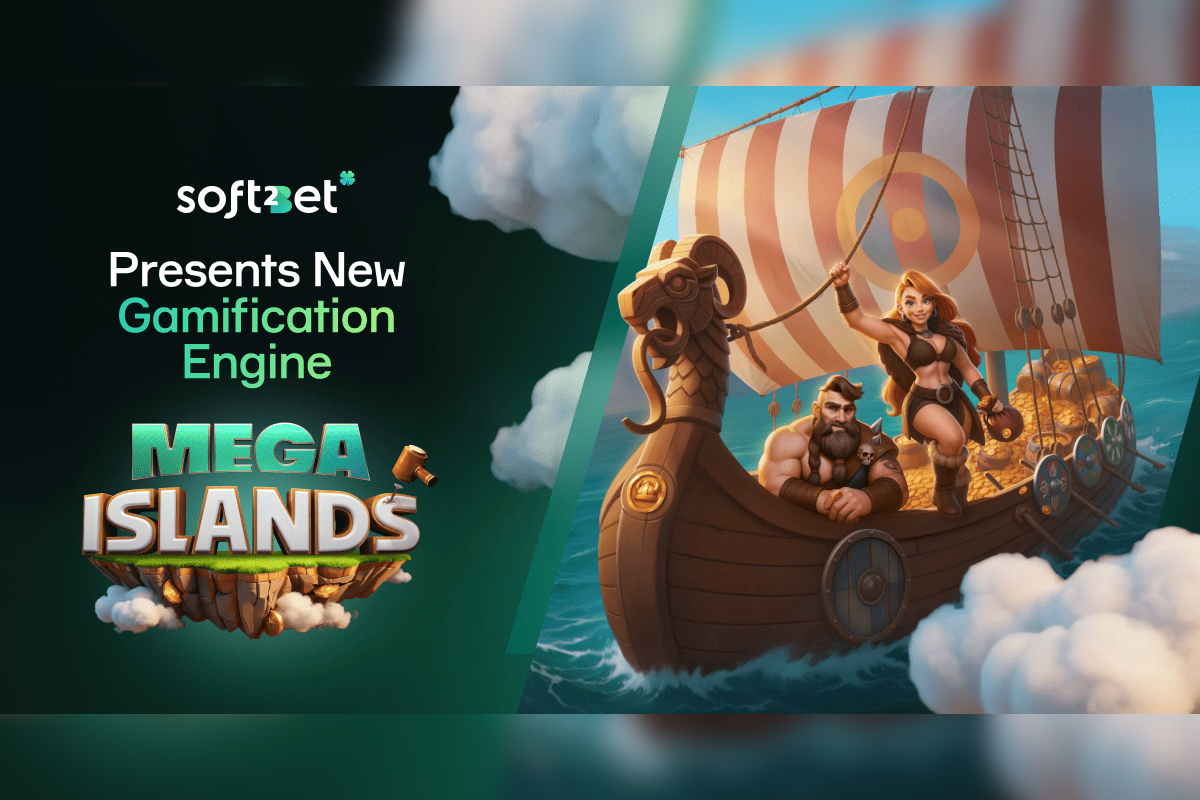
Soft2Bet has unveiled MEGA Islands, the latest addition to its MEGA Suite, designed to enhance player engagement and retention across both casino and sportsbook offerings.
The new engine introduces a persistent progression system that carries over across sessions, giving players an ongoing reason to return. Through island-building, resource collection, and continual advancement, players embark on a long-term journey that transforms short play sessions into sustained engagement.
First previewed in Soft2Bet’s recent Lodur release, the MEGA Islands system allows players to develop their own islands over time. Resources earned through gameplay can be used to construct new buildings, upgrade existing structures, and unlock further stages of progression. Each upgrade opens new goals, creating a loop of continuous advancement that keeps players invested.
The engine also incorporates plundering mechanics, giving players an additional path to gather resources by raiding other islands. This feature not only accelerates growth but also maintains a dynamic and engaging progression loop. With no fixed endpoint, MEGA Islands is built to encourage repeat play through a satisfying cycle of building, collecting, and advancing.
“MEGA Islands is designed to make retention feel natural by providing players with a progression journey they want to return to,” said Yoel Zuckerberg, CPO at Soft2Bet. “By building islands, collecting resources, and unlocking upgrades—including through plundering—each session becomes part of a longer experience. It gives players a clear reason to come back while providing operators with a retention tool that integrates seamlessly across casino and sportsbook.”
The launch of MEGA Islands underscores Soft2Bet’s commitment to gamification as a driver of long-term growth. As part of the MEGA Suite, the new engine offers operators a powerful tool to extend player journeys, increase engagement cycles, and deliver consistent value in competitive markets.
The post Soft2Bet launches MEGA Islands, a new gamification engine designed to increase player retention appeared first on Eastern European Gaming | Global iGaming & Tech Intelligence Hub.

-

 Asia6 days ago
GLI Becomes the First Company Accredited by PAGCOR to Test and Certify iGaming Platforms in the Philippines
-
Betnacional5 days ago
Operational Leadership and the Driving Force Behind LatAm’s Largest Event
-
Compliance Updates6 days ago
Playtech Enters Connecticut iGaming Market
-
Asia6 days ago
Team India and Türkiye Win Gold at the Global Esports Games Mumbai
-
Australia5 days ago
NSW: More Than 650 Gaming Machine Exemptions Revoked to Address Gambling Harm
-
Compliance Updates5 days ago
UK Government proposals to undermine the ‘aim to permit’ of the Gambling Act 2005?
-
2026 SPiCE South Asia Awards5 days ago
QTech Games wins Innovation of the Year at the 2026 SPiCE South Asia Awards
-
Andrea Rossi6 days ago
REEVO Goes Live with Betsson in Brazil