Brazil
Kratos Studios sets sights internationally, strategic expansion to Brazil

Recently launched gaming platform Kratos Studios expands to Brazil with the aim to empower gamers globally. The company has already taken concrete steps towards establishing a solid foundation in Brazil, handpicking a team of seasoned community builders and astute business developers. This strategic move is projected to propel Kratos Studios towards quadrupling the overall community income generated on its innovative platform.
Accel-led investee company Kratos Studios is set to expand to Brazil, a market which has massive gaming potential. This foray promises to amplify the size of Kratos’ global gaming community and at the same time attract an influx of captivating games onto the platform. Also, this will propel Kratos Studios towards multiplying the value exchanged on its innovative platform.
Kratos is co-founded by veteran Manish Agarwal, the former CEO of Nazara Technologies, and Ishank Gupta, a distinguished Wharton alumnus who boasts a rich background in senior leadership roles within AB InBev & BCG.
The company recently raised INR 160 cr at a valuation of INR 1200 cr for their new gaming venture and the acquisition of IndiGG DAO. The seed round was led by Accel, with participation from investors including Prosus Ventures, Courtside Ventures, Nexus Venture Partners, Nazara and others.
The company provided income opportunities for 150,000 gamers amounting to INR 5 crore within a span of six months. With access to 8.21 lakh gamer communities in South Asia, Kratos Studios, will aim to expand internationally, starting with Brazil.
The gaming venture has witnessed a surge, skyrocketing from 380,000 gamers in January 2023 to an astounding 821,000 by July 2023. With this move the company envisions seamlessly connecting curated gamers from Brazil with Kratos’s 147 esteemed partner game studios hailing from South Korea, Japan, USA, Europe, and Southeast Asia.
Elaborating on this Manish Agarwal, Founder of Kratos Studios articulated, “Our mission is inherently simple, to unlock avenues for gamers to monetize their time and expertise, while also granting them ownership over their valuable data. Given Brazil’s vibrant gaming population, reverence for local gaming heroes, and its status as a burgeoning market, our expansion aligns seamlessly with our overarching ethos.”
Kratos is on a mission to empower gamers with ownership of their data, and is now replicating the successful local model internationally. Notably, the company’s ingenious approach empowers top community members to generate an impressive average income of INR 40,000 per month.
Despite having a population only one-seventh the size of India’s, Brazil’s gaming market outpaces its larger counterpart. An impressive statistic reveals that out of its 220 million residents, over 96 million individuals are part of a fervent gaming community in Brazil, underscoring its potential as a lively and youthful market. Moreover, the country boasts a significantly higher proportion of PC gamers compared to India. These compelling elements spell great promise for Kratos Studios, a well-known entity recognized for its global partnerships with game developers.
This strategic manoeuvre with game developers across East Asia, North America, and Europe, provides undeniable allure for the Brazilian gaming ecosystem. Given their commitment to fostering micro gaming communities aligns with Brazil’s growing gaming market making it a sensible strategic expansion.
Kratos Studios continues to march forward, driven by its remarkable growth and unwavering commitment to its pioneering mission.












Looking beyond Brazil, which LatAm market stands out most right now, and what makes it attractive?
Liam Hoofe, Content Strategist at GameOn
Based on our research for GO Intel, I think Chile is the market to watch out for the most. The size of the opportunity is potentially massive, with the Chilean Senate’s own figures estimating that more than 5 million Chileans are already gambling online.
The demand is definitely there, and broader discussions about a regulatory framework are underway. Our estimates in GO Intel also put channelisation rates at 80% if enforcement and regulation ran smoothly.
The proposed ‘cooling-off’ period for operators already active there is also quite a unique approach, and it will benefit those who approach the market with the right foundations in place.
Of course, as we’ve seen with Brazil, there will no doubt be a lot of public debate around the market, and the tax structure could be complex, but of the three we researched, this one still stands out the most.
Paulina Hovar, Lead Sales Manager LATAM at BGaming
Right now, Mexico and Argentina stand out the most to me.
Mexico has been showing steady growth for a while now. It’s already a fairly mature market with strong operator presence, but there’s still plenty of room to scale. At the same time, one of the main things to watch is the tax situation and how regulation may develop in the future, since that could impact profitability and market dynamics.
Argentina is interesting for a different reason. The market is regulated at the provincial level, so it’s much more decentralized. That creates opportunities because entry can be more flexible, but it also means you need to understand the local landscape and choose partners and regions carefully.
Ramiro Atucha, Board Advisor to Kiron Interactive
Mexico stands out. The size of the market alone makes it attractive, and the current regulation is already acceptable enough for public companies to feel comfortable operating there. It’s also moving toward a more formal framework, so there’s still margin to grow. Beyond Mexico, I’d point to Chile, certain provinces in Argentina, and Colombia. All three have their own dynamics, but they’re markets you can’t ignore right now.
When entering markets that are still evolving from a regulatory perspective, what’s the right balance between moving early and waiting for clarity?
Liam Hoofe, Content Strategist at GameOn
That’s the million-dollar question, and it’s one I’m not sure there is a 100% correct answer to. For me, it’s about building relationships, ensuring you have the right infrastructure in place, and understanding a market before you invest.
Operators and studios that just enter with no understanding of the culture and of the way the regulatory landscape could adapt are putting themselves at risk of failing.
Trying to remain one step ahead of regulation and working alongside the regulators to help the market mature is always going to be a much better approach than just waiting for regulation to come into place and being reactive.
Paulina Hovar, Lead Sales Manager LATAM at BGaming
It depends on how mature the market is.
If the regulatory framework is already clear and established, then the best approach is to operate fully within the licensed model from day one.
But in markets that are still in a gray or transitional stage, where operators are already active, it can make sense to take a more gradual approach. That could mean building partnerships, adapting the product to local needs, and preparing for future regulation before fully committing.
You also have to be very careful about legal and reputational risks. Every market is different, so timing and level of involvement should be assessed on a case-by-case basis.
Ramiro Atucha, Board Advisor to Kiron Interactive
As early as possible, as long as it isn’t illegal or forbidden. That’s the right moment to enter and transition through the regulatory process. Brazil is the clearest example. Sports betting was legalized in 2018, but the full regulatory framework only came in late 2023, with licensed operations starting in 2025. The operators that used those years to attract players, test the market and build name recognition without breaking the law made a real difference. By the time regulation arrived, they were already established.
As markets like Chile, Peru, and Uruguay develop, what will separate the brands that succeed from those that struggle?
Liam Hoofe, Content Strategist at GameOn
The biggest differentiator for me is localisation, and by that, I mean real localisation, not just translating a game into Spanish and calling it a day. This means actually creating products and promotions that speak to local audiences. LatAm is not just some big monolithic market with a one-size-fits-all solution – brands that succeed there are the ones that understand this. The ones who know that a player in Chile is not the same as one in Uruguay or Brazil are going to be the big winners.
On top of that, working closely with regulators and showing genuine concern for players’ well-being in these markets will make a huge difference. It’s not enough anymore to just display simple responsible gambling tools; players want to see it in your actions, and it’s obvious to them which brands really care and which are just ticking boxes.
And finally, local partnerships. Some of the most successful companies we work with are those that really integrate themselves and find local partners that offer genuine insight into communities, and can be leveraged to build trust. This can be achieved in a number of different ways, whether it’s through working with local content creators and influencers or getting involved with local charities and events.
Paulina Hovar, Lead Sales Manager LATAM at BGaming
As markets like Chile, Peru, and Uruguay continue to develop, the following three factors will set successful brands apart from the rest.
First, strong local partnerships. Without people on the ground and a real understanding of how each market works, it’s very difficult to build a sustainable position.
Second, product adaptation. Translation alone is never enough. Companies need proper localization that reflects user behavior, cultural differences, and local audience preferences.
And third, regulatory readiness. The companies that invest early in certification, compliance, and building the right processes will have a major advantage later on. It’s expensive and takes time, but in regulated markets, long-term preparation usually makes the difference between short-term growth and lasting success.
Ramiro Atucha, Board Advisor to Kiron Interactive
Brands that bring international experience and proven competitiveness from other markets, combined with genuine local understanding, will get the best of both worlds. The international background gives you credibility and product depth. The local presence gives you a product that’s actually adapted to how players in that country behave. Neither side works on its own. In Chile, Peru, and Uruguay, the operators who get this combination right are the ones who’ll separate from the pack.
The post LatAm: Beyond Brazil – Chile, Uruguay and Peru’s Regulatory Trajectories appeared first on Americas iGaming & Sports Betting News.
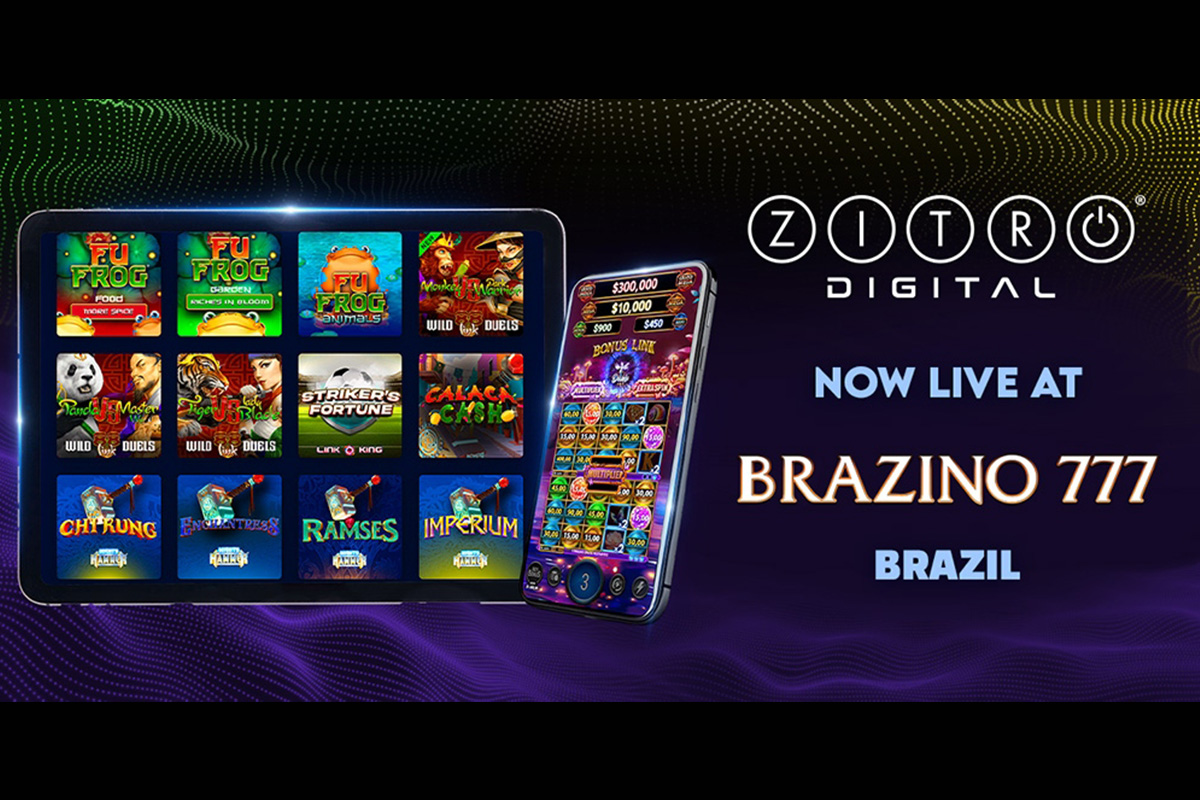
Zitro Digital, the online arm of leading gaming supplier Zitro, is further expanding its footprint in Brazil through a new partnership with Brazino777, one of the country’s most recognized online operators. The agreement strengthens Zitro Digital’s position in a key regulated market and reflects the company’s continued commitment to Latin America’s iGaming sector.
Brazino777 players now have access to Zitro Digital’s full portfolio, spanning slots and Video Bingo titles that combine the company’s proven land-based heritage with content developed exclusively for the digital space.
“At Brazino777, we are focused on delivering high-quality, top-performing games to our players. Zitro Digital’s portfolio strengthens our offering, and we’re confident it will resonate strongly with our Brazilian audience as we continue to grow and evolve our platform,” said Andre Medeiros, country manager for Brazil at Brazino777.
“Brazil is an important market for us, one where we see a strong connection with players and the local gaming culture. Launching our portfolio with Brazino777 gives us the opportunity to bring our content to a new segment of players, as part of our continued growth in the Latin American digital gaming scene,” said José Javier Martí, CCO at Zitro Digital.
The post Zitro Digital Goes Live on Brazino777 in Brazil appeared first on Americas iGaming & Sports Betting News.

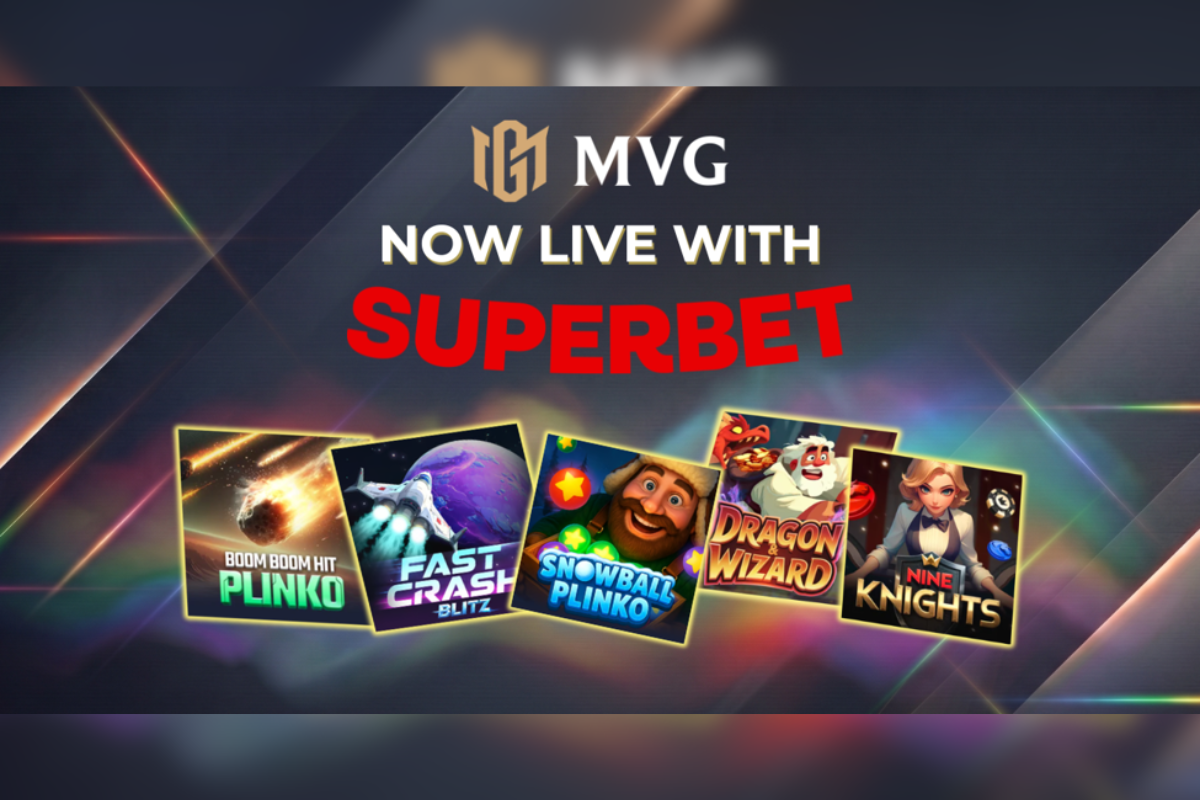
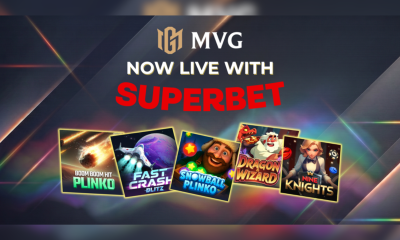
Massive Gaming (MVG) has gone live with Superbet Brazil, launching a selection of Blitzcrown studio titles via the Bragg hub game aggregation platform.
The initial rollout includes eight games from Blitzcrown, which focuses on non-traditional casino formats. Titles available at launch include Boom Boom Hit Plinko, Snowball Plinko, Fast Crash, and Dragon & Wizard.
The content is delivered through bragg hub, using Bragg Gaming Group’s existing aggregation relationship with Superbet in Brazil. The companies noted that Superbet secured a regulated licence ahead of the market’s January 2025 launch.
Blitzcrown’s instant-win games previously secured Brazil RGS, RNG, and individual game certifications from Gaming Laboratories International (GLI).
George Cho, Director at Massive Gaming, said: “Going live on Superbet Brazil is a landmark moment for Massive Gaming, and for Blitzcrown as a studio. Brazil is one of the most exciting regulated markets in the world, and being able to bring our content to Superbet’s players through Bragg’s platform is a testament to both the quality of our games, and the strength of these partnerships. We look forward to expanding our presence in the market as we continue to grow our portfolio.”
Hristofor Hristov, Commercial Director Aggregation at bragg, commented:
“We are thrilled to facilitate this exciting launch between Massive Gaming and Superbet in Brazil. Our bragg hub platform is specifically engineered to seamlessly deliver high-performing, localized content to major operators. Blitzcrown’s certified instant-win and non-traditional games are a perfect fit for the dynamic Brazilian audience, and this rollout underscores our commitment to fueling our partners’ growth in one of the world’s most vibrant regulated markets.”
The post Massive Gaming launches Blitzcrown titles on Superbet Brazil via Bragg Hub appeared first on EE Gaming | Global iGaming & Tech Intelligence Hub.

-

 Australia7 days ago
Former Star Entertainment Executives Mathias Bekier and Paula Martin Disqualified and Ordered to Pay Penalties
-
Alejandra Burato7 days ago
Record Attendance, Exciting New Releases, and a Resounding Success: This was Zitro Experience Peru
-
Amusnet7 days ago
Weekend Reels | Week 25: Slot Drops & Trends
-
ArenaPlus7 days ago
DigiPlus Wins “Digital Operator of the Year” Award at 2026 Global Gaming Awards Asia-Pacific
-
Anthony Dalla-Giacoma7 days ago
Elysium Studios Releases its Latest Slot Game “Hood and Loot”
-
Greece7 days ago
SYNOT Games Announces New Partnership with Superbet
-
Bragg Gaming Group4 days ago
Massive Gaming launches Blitzcrown titles on Superbet Brazil via Bragg Hub
-
Compliance4 days ago
HIPTHER Launches HALLO: The Standard in Compliance Expertise