Gaming
Pixaera raises $5.7 million to empower people through play with its metaverse for professional learning and collaboration


-
Pixaera’s app is built to the highest gaming standards with a focus on the global needs of enterprise businesses
-
A gaming studio, creating content to the standards of a AAA studio, Pixaera is helping enterprises move from traditional e-learning to highly-engaging 3D game-based learning
-
Businesses can access a library of learning experiences, allowing them to use Pixaera’s platform as a one-stop shop to build, deploy and measure immersive experiences at a global scale
-
The Seed funding round was led by LocalGlobe, and will be used to expand Pixaera’s team and further develop its platform to address even more learning needs worldwide
Pixaera – the immersive game-based learning platform dubbed ‘Roblox for Enterprise’ – has raised $5.7million in early-stage funding to bring the standard and engagement of high quality games from the world’s best studios to the professional world.
This funding consists of two rounds – $1.2 million of pre-seeding and $4.5 million led by early-stage EMEA investor, LocalGlobe. The founders of FACEIT, the leading competitive gaming platform for online multiplayer games, also participated; as did ERM, a leader in the renewable energy services sector, and York IE.
Built to bring the power, fun and emotion of online games like Roblox and Minecraft to the professional world, Pixaera is helping some of the world’s largest businesses upskill their workforce more effectively and efficiently. By leveraging the growing evidence that shows immersive training and VR are more effective than traditional methods, Pixaera’s highly-engaging immersive experiences bring a new paradigm to professional development in the workplace.
Closing the learning gap
Pixaera was founded in 2020 by avid gamer and industry veteran Mousa Yassin. Through his time playing the likes of Final Fantasy, World of Warcraft and more, he saw how gaming teaches players vital skills – from problem-solving, to creative thinking, teamwork, and goal-setting- whilst also being incredibly engaging.
“I started to wonder why the gaming industry, being so sophisticated and technologically mature, had not considered building for the corporate and professional world. There was such a gap between how players learn and collaborate organically and fluently in successful games, with the more old-school, unengaging learning experiences we have all been through as employees – even in roles where the stakes are high,” says CEO Mousa. “Gamers willingly spend hundreds of hours developing their skills while in contrast, companies pay vast sums for online content that has to be forced onto their workforce and fails to truly deliver value.”
Instead of making employees watch long training videos, or attend real-word, often expensive training exercises, Pixaera offers a growing catalogue of experiential VR and PC-based games. Each module is built using Pixaera’s development tools to address global training needs in safety, leadership, mental health and technical topics in a highly scalable way.
Pixaera has begun by addressing large industry standards that apply to millions of employees yearly. The product is being used by companies including Shell, GE, BP and more. To date, thousands of employees have used Pixaera’s immersive learning games to hone their skills, and 98% of these participants said they prefer Pixaera to any other training in their field.
However, the ambition of founder Mousa Yassin is to provide intuitive and simple tools for all experts, in any field, to build and deploy high-quality immersive 3D experiences as familiar and effective as the worlds of Minecraft and Roblox to a large ecosystem of professionals .
“There is no reason why VR/MR and gaming cannot be the leading tools for professional learning and collaboration across any industry, world-wide; as the technology develops, the applications are endless,” continues Mousa.
Bringing learning into the 21st century
Pixaera is a gaming platform for the professional world. The platform provides a single place to integrate, build, deploy, report and manage a growing list of next-level training simulations from safety to leadership, mental health and more. Once immersed in Pixaera games, via VR or PC, employees learn and hone their skills, and put theoretical training into practice in highly realistic environments. They can rehearse and repeat procedures to perfection.
By mirroring situations they find in their day-to-day job in a highly realistic way, trainees playing Pixaera’s games are also able to trigger real-world emotions. For example, the stressful feeling of being peer-pressured to cut corners, or the anxiety caused by seeing someone in danger because of your actions. It’s the sense of presence and the emotional connection that makes the games so impactful, while the immersive nature lends itself to the way humans interpret and retain information.
Pixaera’s learning platform can be integrated within each client’s learning management system, making it simple for learners to join training sessions and schedule development time. Clients can also cascade training through to a global workforce through a single app experience.
Pixaera’s fundraise comes as there is mounting evidence that learners absorb information and skills more effectively from immersive environments. Research from PWC found learners in immersive environments (such as VR) are 275% more confident in applying their skills. While a separate study by The University of Warwick found that not only does VR learning help people perform better in tests, but it has a positive impact on mood.
A collaborative platform for professionals
Pixaera’s ultimate aim is to to build an ecosystem of high-quality learning games created with the best global experts. Eventually, companies, topic experts and third party developers will be able to use Pixaera’s platform to develop their own, highly unique experiences. In the same way Roblox and Minecraft empower users to generate and share their own games, which in turn enhances the experiences of all users on these platforms, Pixaera is building a collaborative platform for professionals.
The funding will be used to expand Pixaera’s leading team of gaming and software developers, and to further advance the product.
Mousa Yassin, founder and CEO said: “We’re going through a transition. Video content is losing market share to interactive 3D worlds . A younger generation has grown up online, as familiar with gaming as with a classroom setting and they know which they prefer. By replicating the fun and absorbing nature of gaming, we can transform how professionals learn and connect with one another across all sectors and industries, with huge implications for productivity and business success.”
Ziv Reichert, partner at LocalGlobe said: “Our belief is that learning through ‘play’ is vastly more effective than learning through traditional educational formats. Playing is doing, playing is experiencing. The immersiveness of the medium creates real-lasting memories, which, in an educational context, translates directly to knowledge retention, retention that far outweighs that of video or text based learning. It is also fair to say that learning through gaming is significantly more enjoyable and that is not to be underestimated. There is now a whole generation of gamers entering the workforce who have grown up immersed in ‘play’ and will certainly opt to learn that way.”
Powered by WPeMatico


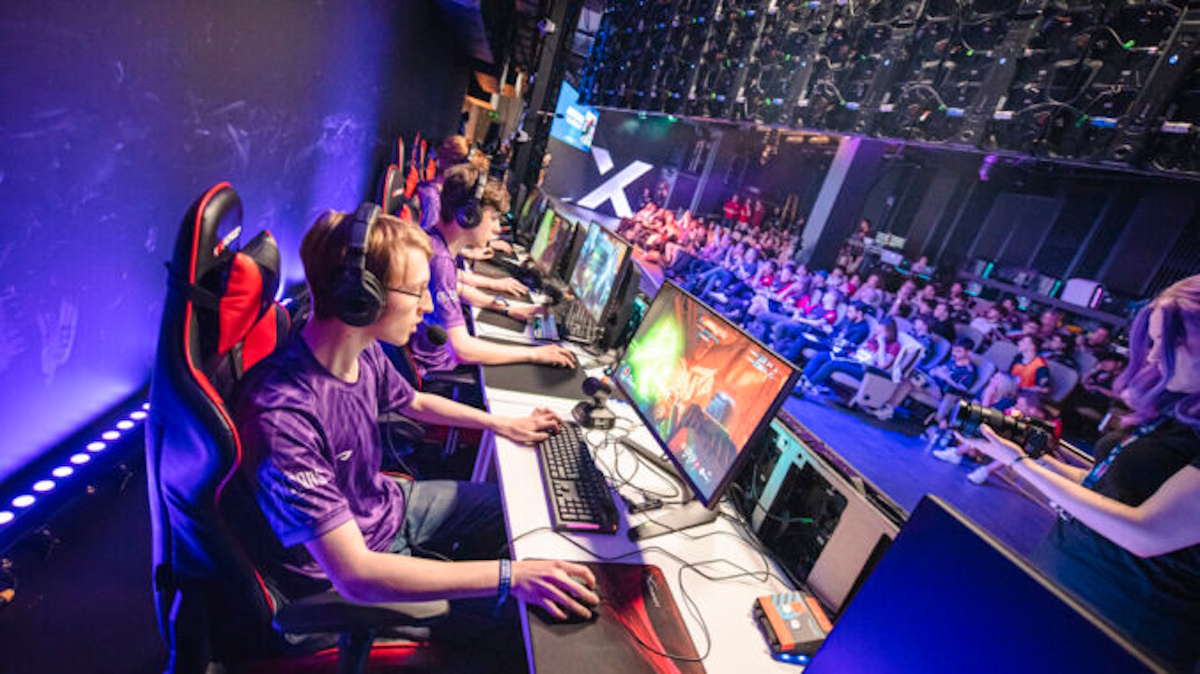
EFG, Hero Esports and Niko Partners survey 8,000 fans across eight markets; 74% report ads and brand presence influence buying.
ESL FACEIT Group (EFG), Hero Esports and Niko Partners have released a multi-country Gen Z esports study claiming around 400 million Gen Z consumers (20%) regularly engage with esports. The findings were published on 25th June 2026 in Cannes, France, in a white paper titled The Esports Generation: Who They Are & Why They Spend.
The report is based on survey data from 8,000 Gen Z esports fans aged 13-30 across eight markets. It positions esports as a high-attention channel for brands: 85% of respondents said they notice branding in esports, while 74% self-reported that advertising and brand participation in gaming spaces influences their purchasing behaviour. The study also reports that 66% have bought a product following a collaboration or co-branding partnership with an esports team, game or player.
On consumption and fandom touchpoints, the study found 71% regularly watch gaming content, including 66% who watch gaming livestreams and 33% who watch or listen to gaming podcasts. It also points to offline reach: 21% said they regularly attend gaming conventions and esports events, with the average respondent attending at least one in-person event in the past nine months.
The white paper also breaks out claimed purchase categories linked to esports collaborations over the past year, led by food and beverage (33%), electronics (33%) and fashion (32%). Beyond core categories, it reports 28% bought esports-related collectibles, 17% purchased makeup, beauty, or skincare products, and 10% bought from partnered brands in other categories.
Niccolo Maisto, CEO at ESL FACEIT Group said: “Esports has evolved into one of the most effective channels for companies looking to connect with Gen Z audiences at scale. What makes it unique is not just its reach, but the depth of engagement and trust that exists between fans, players, teams, and events. This research shows that esports fans are highly invested participants, not passive viewers, creating an opportunity for brands that show up authentically and build meaningful and lasting connections with this key audience.”
Danny Tang, Co-Founder and CEO of Hero Esports said: “This whitepaper confirms what we at Hero Esports have long believed: esports has evolved into a global cultural and economic force. The data shows an audience that is young, diverse, and deeply engaged. For brands, the message is clear—esports is no longer a niche market; it is the premier platform to connect with the next generation of consumers. We are proud to partner with Niko Partners and EFG to provide this blueprint for understanding and succeeding in this dynamic industry.”
Lisa Hanson, CEO at Niko Partners said: “Our data shows that, much like fans of other sports, Gen Z esports fans are incredibly passionate and have formed strong bonds within their communities. However, their media and consumer affinities extend well beyond gaming and esports, with our research revealing naturally connected interest areas that create valuable overlapping opportunities for brands and partners that show up authentically in this ecosystem.”
The post Study: 400m Gen Z esports fans say brand activations drive purchases appeared first on EE Gaming | Global iGaming & Tech Intelligence Hub.


HIPTHER has launched HALLO (Highly Aligned Leaders in Legal Operations), a new platform designed to help organizations find and engage compliance professionals, legal operations experts and industry vendors. The company announced the launch in Europe.
HIPTHER said HALLO brings together a professional directory, industry intelligence hub, community platform and visibility tools aimed at sectors including gaming, fintech, payments, AI, cybersecurity, digital identity, AML and blockchain. The platform includes an Individual Professional Membership and an Enterprise Membership, with HIPTHER stating that all memberships include a 14-day free trial.
Alongside membership options, HIPTHER said compliance professionals can create free, publicly visible “Expert” profiles outlining experience and areas of specialization, with additional premium visibility opportunities available. The company positioned the platform as a way for organizations to discover and evaluate qualified compliance and legal operations expertise.
A core feature at launch is “HALLO Resources,” which HIPTHER described as an open-access compliance intelligence section that aggregates more than 17,000 regulatory and compliance-focused articles from the HIPTHER media network. HIPTHER said the section is updated daily, includes search by topic, jurisdiction and keyword, and covers areas such as gaming, fintech, AI, payments, AML, digital policy, cybersecurity and regulatory affairs.
Zoltan Tuendik, Co-Founder & Head of Business at HIPTHER, said: “Navigating the modern regulatory landscape requires more than just standard legal advice; it demands highly specialized, agile compliance expertise. With the launch of HALLO, we are bridging the critical gap between organizations facing complex global standards and the elite professionals who can guide them through. By combining an active directory with a massive intelligence hub, we are setting a new standard for compliance collaboration and empowering businesses to move forward with absolute confidence.”
HIPTHER also linked HALLO to its conference and media activities, including advertising and thought leadership opportunities through the Wayseers Booklet, an annual handbook it said is distributed at HIPTHER conferences in Europe and reaches more than 1,500 professionals across gaming, fintech, AI, compliance and regulatory sectors.
The post HIPTHER Launches HALLO: The Standard in Compliance Expertise appeared first on Americas iGaming & Sports Betting News.

HLTV will stage the HLTV Awards presented by 1xBet in Belgrade, Serbia on January 9, 2027, returning to the Sava Center. The company said more than 1,000 players, industry professionals, creators, and fans are expected to attend.
HLTV also confirmed Dust2 creator David Johnston will feature as an award announcer. HLTV linked the booking to the 25th anniversary of Dust2.
For 2026, HLTV is updating its Hall of Fame process and eligibility rules. Four players will be inducted again, with “at least two and up to three” slots reserved for players from the Counter-Strike 1.6 and early eras. HLTV also removed the former “neo rule,” allowing players to be inducted for their playing careers even if they remain active in other roles such as coaching.
HLTV is adding a Lifetime Achievement Award, which will be decided by the Hall of Fame Board. The ceremony will also move Community Awards onto the main stage show for the first time, rather than the pre-show segment.
Separately, HLTV will kick off the 2027 Awards season with an invite-only “HLTV Awards by 1xBet Launch Party x GRID” in Cologne during the Major. HLTV said industry members can apply for an invite to the ceremony via its awards page.
The post HLTV Awards returns to Belgrade on January 9, 2027, adding Lifetime Achievement honor appeared first on EE Gaming | Global iGaming & Tech Intelligence Hub.

-

 Australia7 days ago
Former Star Entertainment Executives Mathias Bekier and Paula Martin Disqualified and Ordered to Pay Penalties
-
Alejandra Burato7 days ago
Record Attendance, Exciting New Releases, and a Resounding Success: This was Zitro Experience Peru
-
ArenaPlus7 days ago
DigiPlus Wins “Digital Operator of the Year” Award at 2026 Global Gaming Awards Asia-Pacific
-
Anthony Dalla-Giacoma7 days ago
Elysium Studios Releases its Latest Slot Game “Hood and Loot”
-
Greece7 days ago
SYNOT Games Announces New Partnership with Superbet
-
Bragg Gaming Group4 days ago
Massive Gaming launches Blitzcrown titles on Superbet Brazil via Bragg Hub
-
Compliance4 days ago
HIPTHER Launches HALLO: The Standard in Compliance Expertise
-
BurraPay7 days ago
Byte Federal Announces Successful Launch of Custom-Built Integration Supporting BurraPay’s Historic Entry into America’s Regulated Gaming Market